
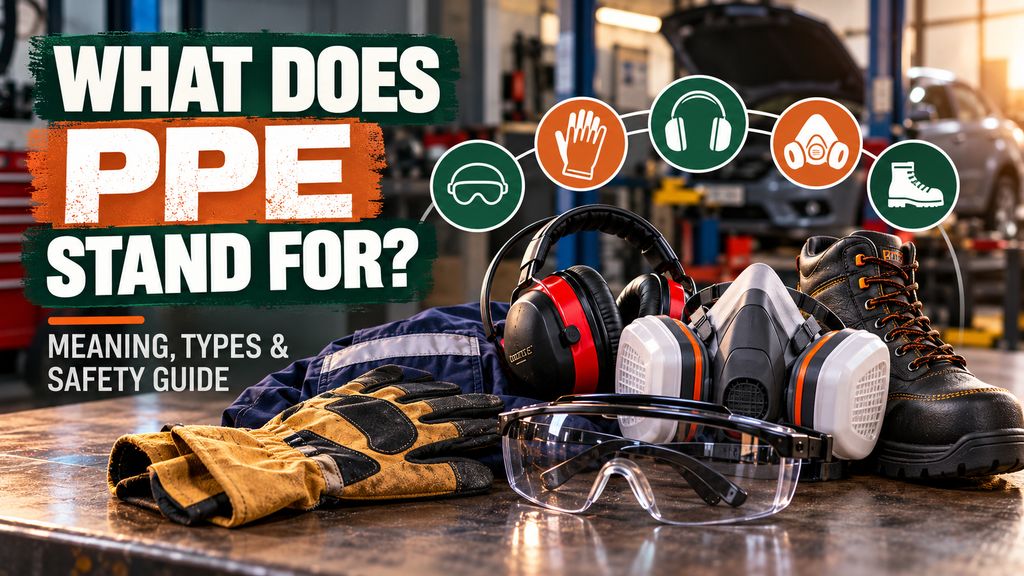
Have you ever watched a car repair tutorial or read workshop safety instructions and seen the words “Wear appropriate PPE”? If you’re new to DIY repairs, you might wonder what those letters mean.
PPE stands for Personal Protective Equipment. It includes equipment such as safety glasses, protective gloves, hearing protection, and respirators that help protect people from specific hazards.
Whether you’re changing engine oil, working around automotive chemicals, or using garage tools, understanding PPE can help you prepare for the job more safely.
This guide explains the PPE meaning, common types of protective equipment, how PPE is used during automotive maintenance, and the mistakes beginners should avoid.
What Does PPE Stand For?
PPE means Personal Protective Equipment.
It refers to equipment worn to reduce exposure to specific hazards, including flying particles, chemical splashes, excessive noise, and certain airborne contaminants.
Common examples include safety glasses, protective gloves, safety footwear, hearing protectors, and suitable respirators.
The correct PPE depends on the task and the hazards involved.
What Is PPE? Understanding Personal Protective Equipment
Personal Protective Equipment, commonly shortened to PPE, refers to wearable equipment designed to help reduce a person’s exposure to particular hazards.
These hazards can include flying debris, chemicals, excessive noise, harmful airborne particles, heat, and physical impacts.
For example, a mechanic working beneath a vehicle may need appropriate safety glasses to reduce the risk of debris entering their eyes. Someone handling certain automotive fluids may need chemical-resistant gloves compatible with those substances.
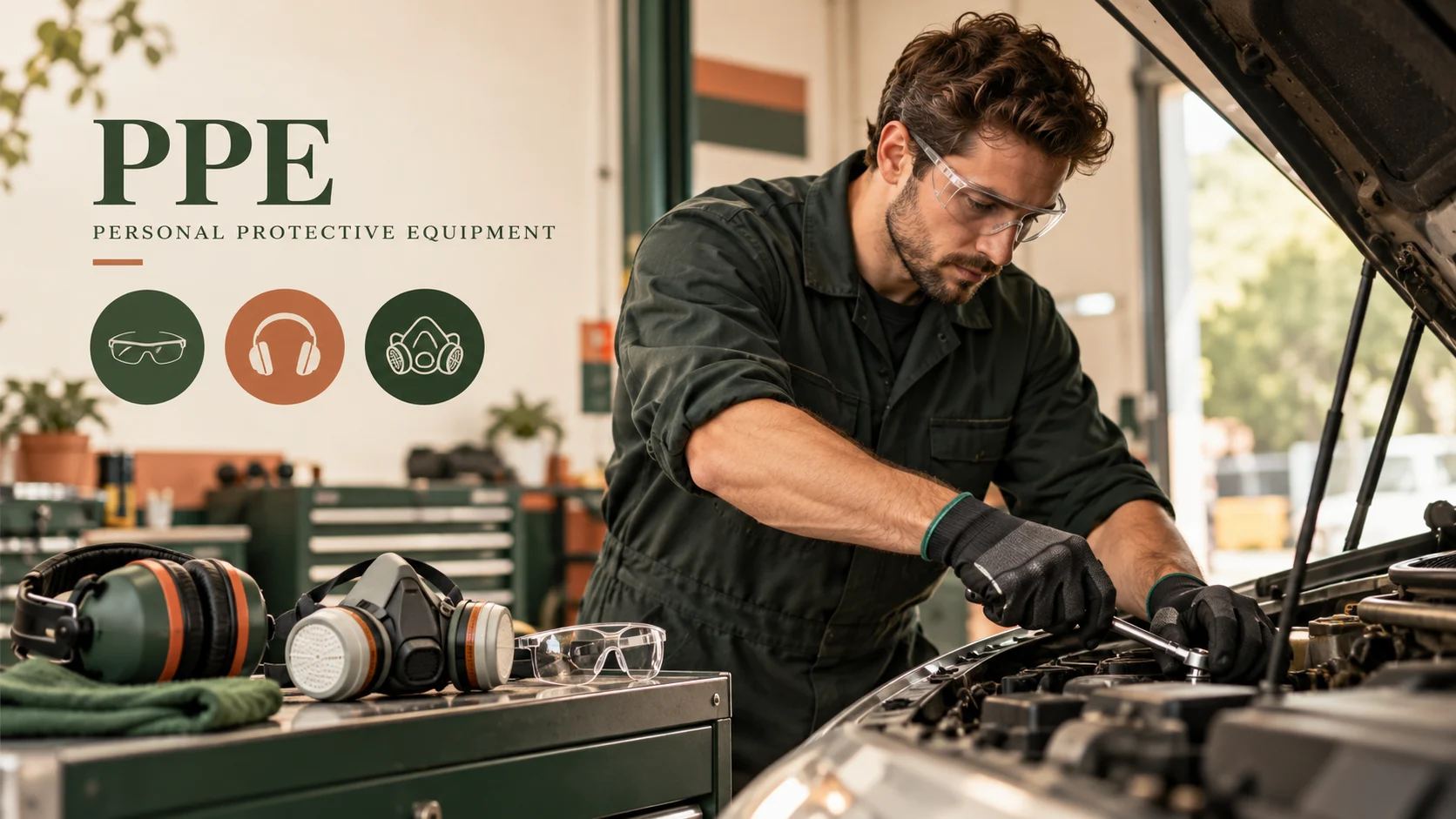
What PPE Does
PPE provides a protective barrier against particular hazards when properly selected, fitted, worn, and maintained.
What PPE Cannot Do
PPE cannot guarantee complete protection or replace proper tools, equipment safeguards, ventilation, and safe working practices.
Not everything worn in a garage is automatically PPE. Ordinary sunglasses, everyday shoes, and casual clothing may not meet the protection requirements for a particular task.
Simple way to remember it: PPE is equipment worn for personal protection, and its usefulness depends on the hazards it is designed to address.
Why Is PPE Important?
Working around cars, tools, machinery, and chemicals can expose people to hazards that are not always obvious.
A small piece of flying metal, a splash of corrosive liquid, or repeated exposure to loud equipment may cause injury or long-term harm.
Suitable personal protective equipment can help reduce exposure when hazards cannot be eliminated through safer methods.
Common Hazards That PPE Helps Address
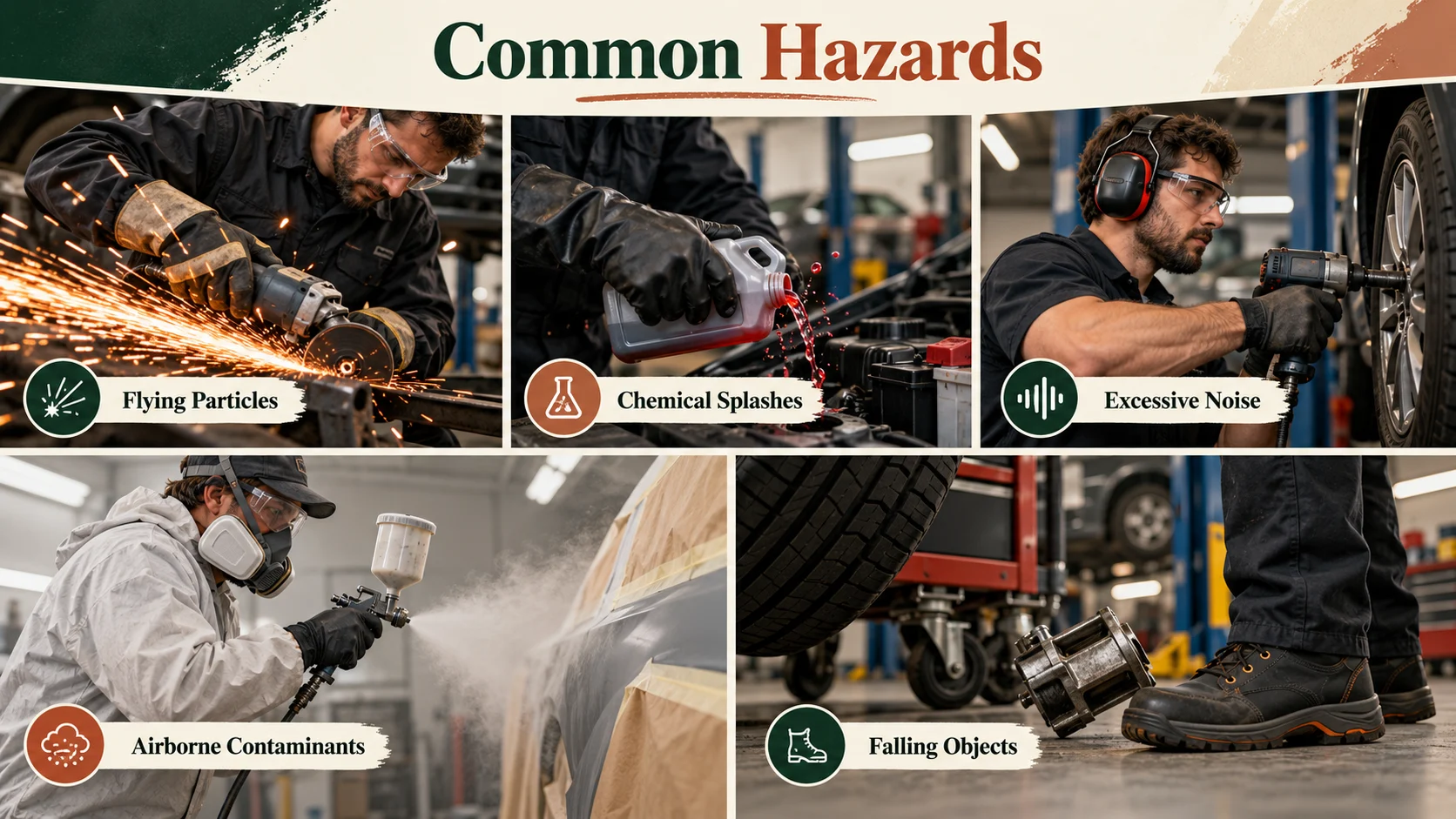
| Hazard | Automotive Example | Potential Protection |
|---|---|---|
| Flying particles | Grinding or cutting metal | Suitable impact-rated eye and face protection |
| Chemical splashes | Handling battery electrolyte or automotive fluids | Compatible eye, face, and hand protection |
| Excessive noise | Using loud power tools | Appropriate hearing protection |
| Airborne contaminants | Sanding, spraying, or working around certain dusts or vapors | Hazard-specific respiratory protection and ventilation |
| Falling objects | Moving heavy equipment or components | Appropriate protective footwear |
The important point is that no single piece of PPE protects against every hazard.
For instance, safety glasses may protect against certain flying particles but will not prevent harmful noise exposure. Gloves that resist mechanical abrasion may not offer suitable protection from corrosive chemicals.
Types of Personal Protective Equipment
PPE is available in several categories. Each protects a different part of the body or helps address a different exposure.
Understanding these categories makes it easier to recognize what equipment may be appropriate during a particular repair or workshop activity.
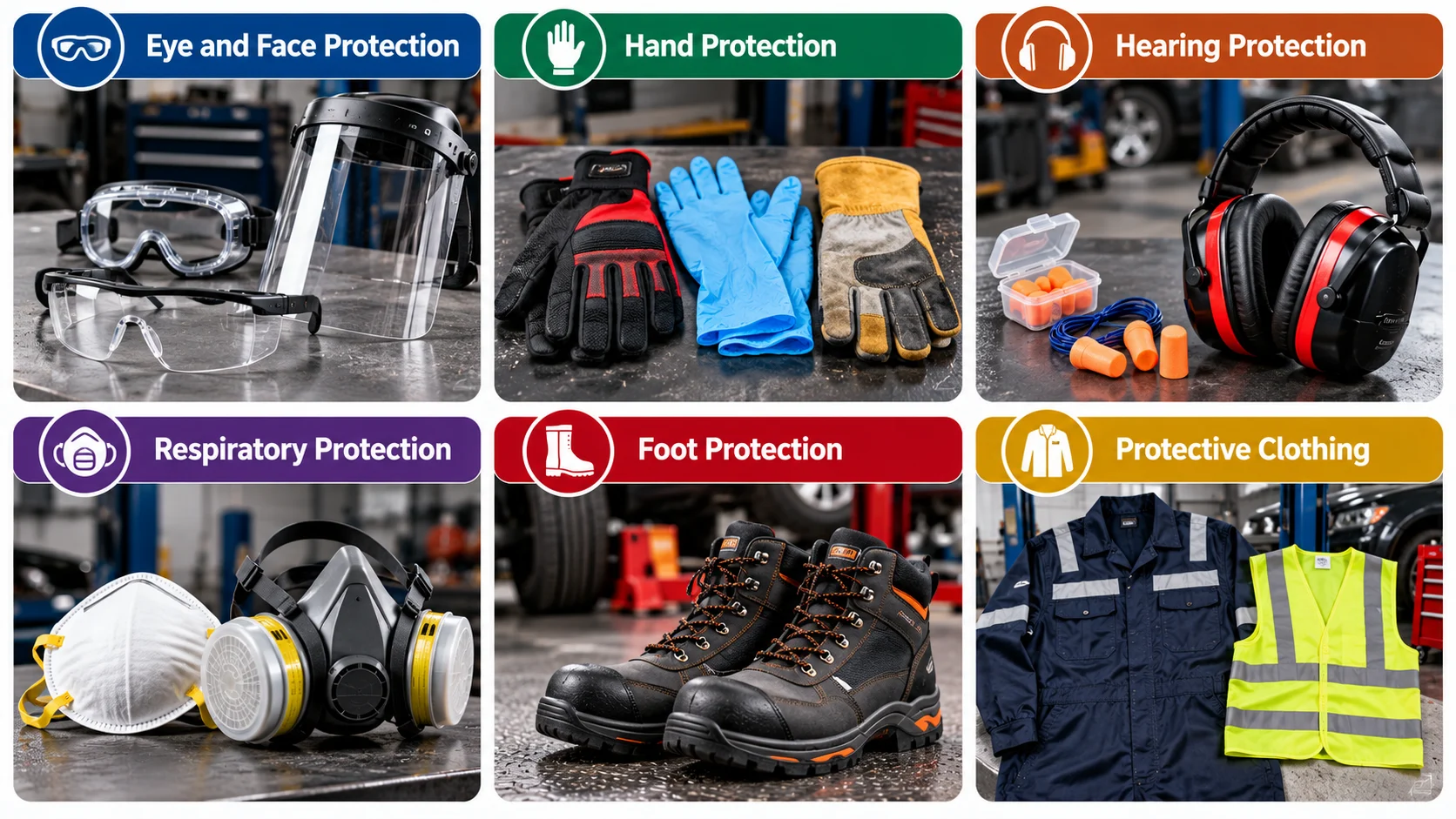
1. Eye and Face Protection
Safety glasses, goggles, and face shields help protect against specific hazards, including flying particles and certain chemical splashes.
For example, impact-rated safety glasses may be appropriate for some mechanical work, while chemical-splash goggles may be needed when handling corrosive liquids.
A face shield may provide additional coverage, but it should not be assumed to replace suitable primary eye protection.
2. Hand Protection
Protective gloves help address hazards such as chemical exposure, abrasion, cuts, and heat, depending on their material and construction.
Disposable nitrile gloves may be suitable for some automotive fluids, but glove compatibility must be checked for the actual substance.
Loose or inappropriate gloves can increase entanglement risks around rotating machinery.
3. Hearing Protection
Earplugs and earmuffs help reduce noise exposure when tools or equipment create potentially harmful sound levels.
The appropriate hearing protection depends on the noise environment, fit, and the level of attenuation required.
Not every quiet-looking workshop task is quiet enough to be safe without assessing exposure.
4. Respiratory Protection
Respirators are designed to protect against specific airborne contaminants when selected and used correctly.
Particulate-filtering respirators address suitable particulate hazards, while other respiratory protection may be required for particular gases or vapors.
A basic dust mask should not be assumed to protect against paint solvents, fuel vapors, or every workshop contaminant.
5. Foot Protection
Protective footwear can reduce the risk of certain injuries from falling objects, compression, punctures, or slipping.
The type of safety shoe or boot should match the specific risks present in the work area.
6. Protective Clothing
Task-appropriate protective clothing can help reduce exposure to certain splashes, abrasions, heat, sparks, or contamination.
The required material and coverage depend on the job. Loose clothing should be avoided around machinery where it could become caught.
Safety note: Respirator selection for hazardous airborne exposures may involve specialized requirements, including proper fit, training, medical evaluation, or workplace respiratory protection procedures. Consult qualified guidance rather than guessing which respirator is sufficient.
Common PPE Examples and Their Uses
The following reference shows everyday examples of personal protective equipment and the hazards they may help address.
| PPE Equipment | Typical Purpose | Important Consideration |
|---|---|---|
| Safety glasses | Protect eyes from specified impact hazards | Choose an appropriate safety rating and fit |
| Protective goggles | Protect against particular splashes or particles | Use the correct design for the exposure |
| Protective gloves | Help protect hands from specified hazards | Match material to chemicals or mechanical risks |
| Earplugs or earmuffs | Reduce harmful noise exposure | Select appropriate attenuation and ensure proper fit |
| Respirators | Protect against designated airborne hazards | Correct filter or cartridge, fit, and use are essential |
| Safety footwear | Reduce certain foot injury risks | Check the required protection level |
| Protective clothing | Help protect skin or clothing from certain exposures | Material and design must match the task |
These examples explain what PPE can include, but they are not a universal checklist. Different jobs require different protective measures.
What PPE Should You Wear When Working on a Car?
The appropriate PPE for automotive repair depends on what you’re doing, the tools you’re using, and the potential hazards involved.
For example, the safety considerations for an oil change are different from those for metal grinding or spray painting.
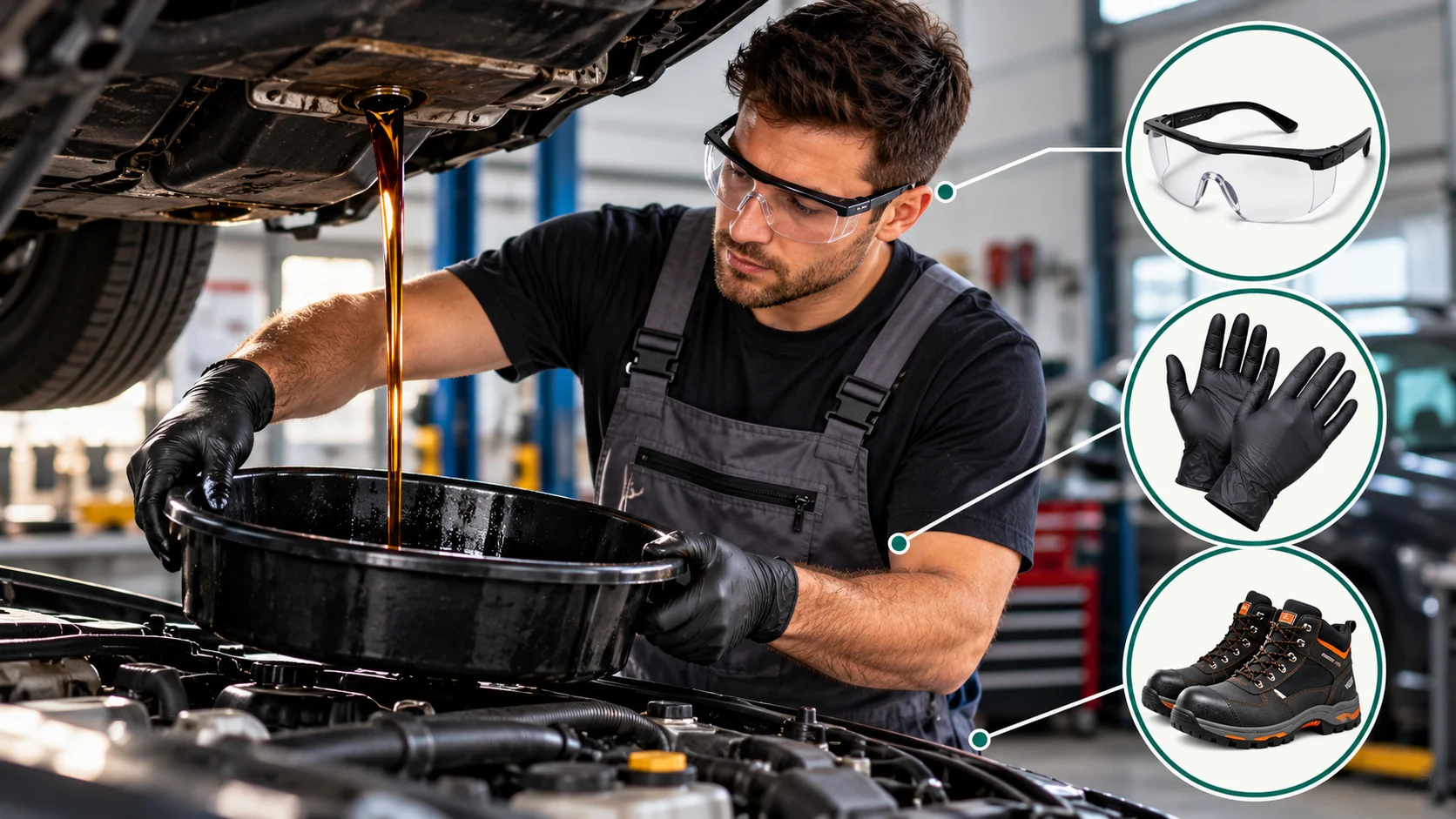
1. Changing Engine Oil
Oil changes may expose you to hot fluids, splashes, and contact with used engine oil.
Suitable eye protection and compatible gloves may help protect against these exposures. You should also allow hot components to cool as appropriate and use safe lifting and support procedures.
2. Working Around Car Batteries
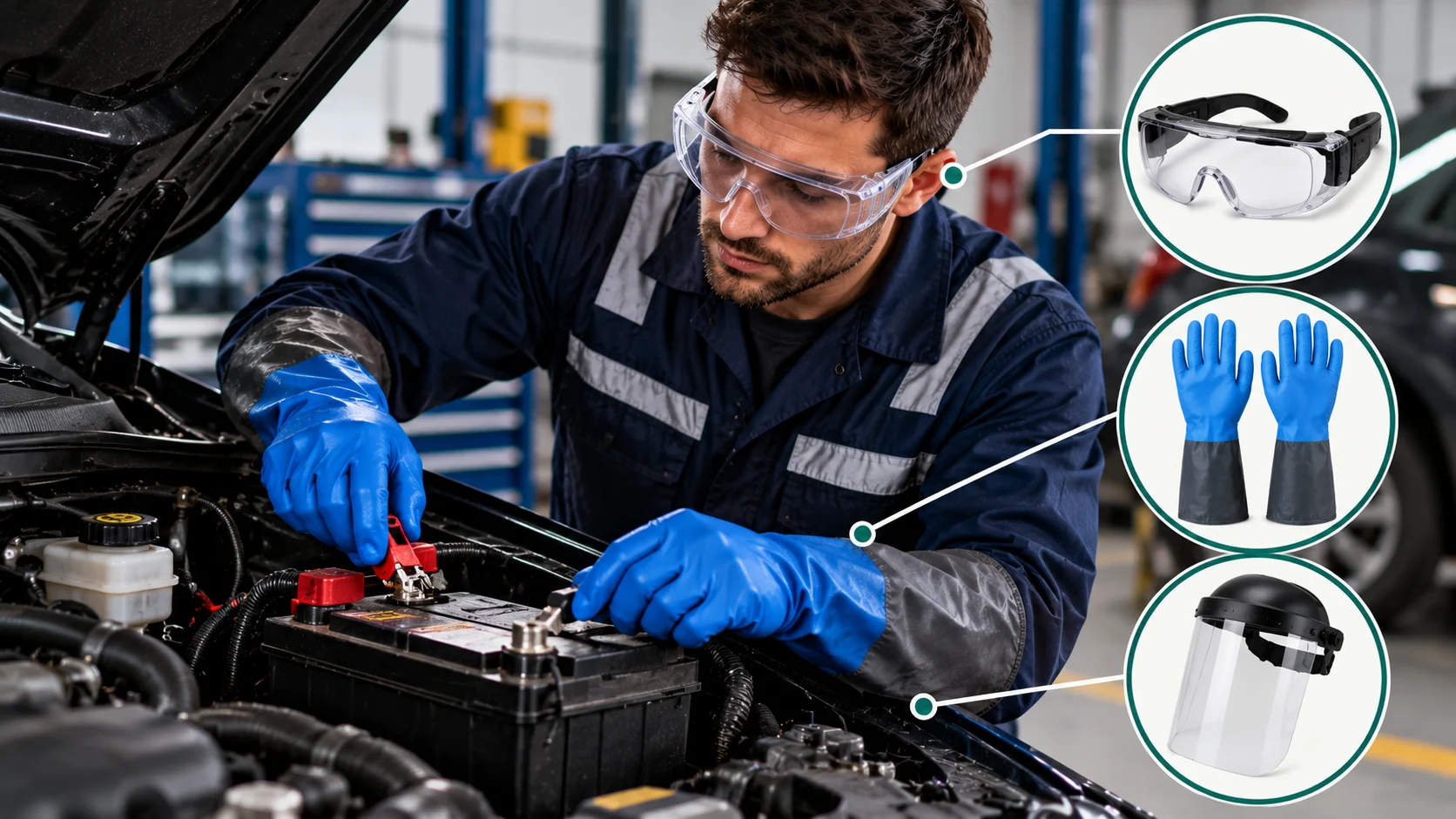
Lead-acid batteries can present hazards involving corrosive electrolyte, electrical short circuits, and potentially explosive gas.
Appropriate eye and face protection and acid-compatible gloves may be needed depending on the work.
Always follow the vehicle and battery manufacturer’s procedures. PPE does not remove electrical or explosion risks.
3. Grinding or Cutting Metal
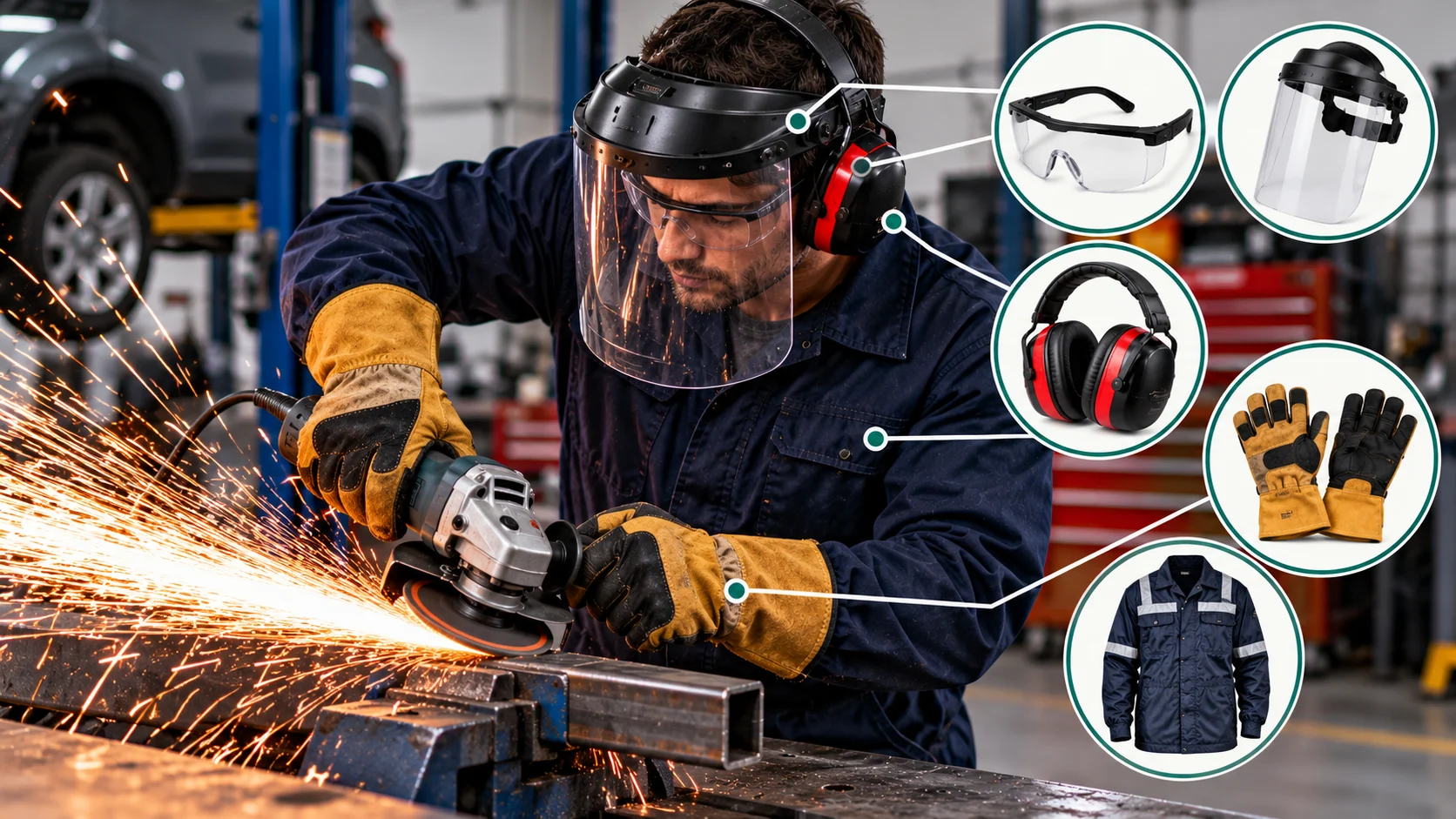
Grinding and cutting can produce flying fragments, sparks, heat, and excessive noise.
Appropriate eye and face protection, hearing protection, and task-suitable clothing may be necessary. Tool guarding, secure workpieces, safe positioning, and keeping flammable materials away are also essential.
Glove suitability depends on the equipment. Follow the tool manufacturer’s instructions regarding rotating parts and entanglement risks.
4. Sanding and Automotive Painting
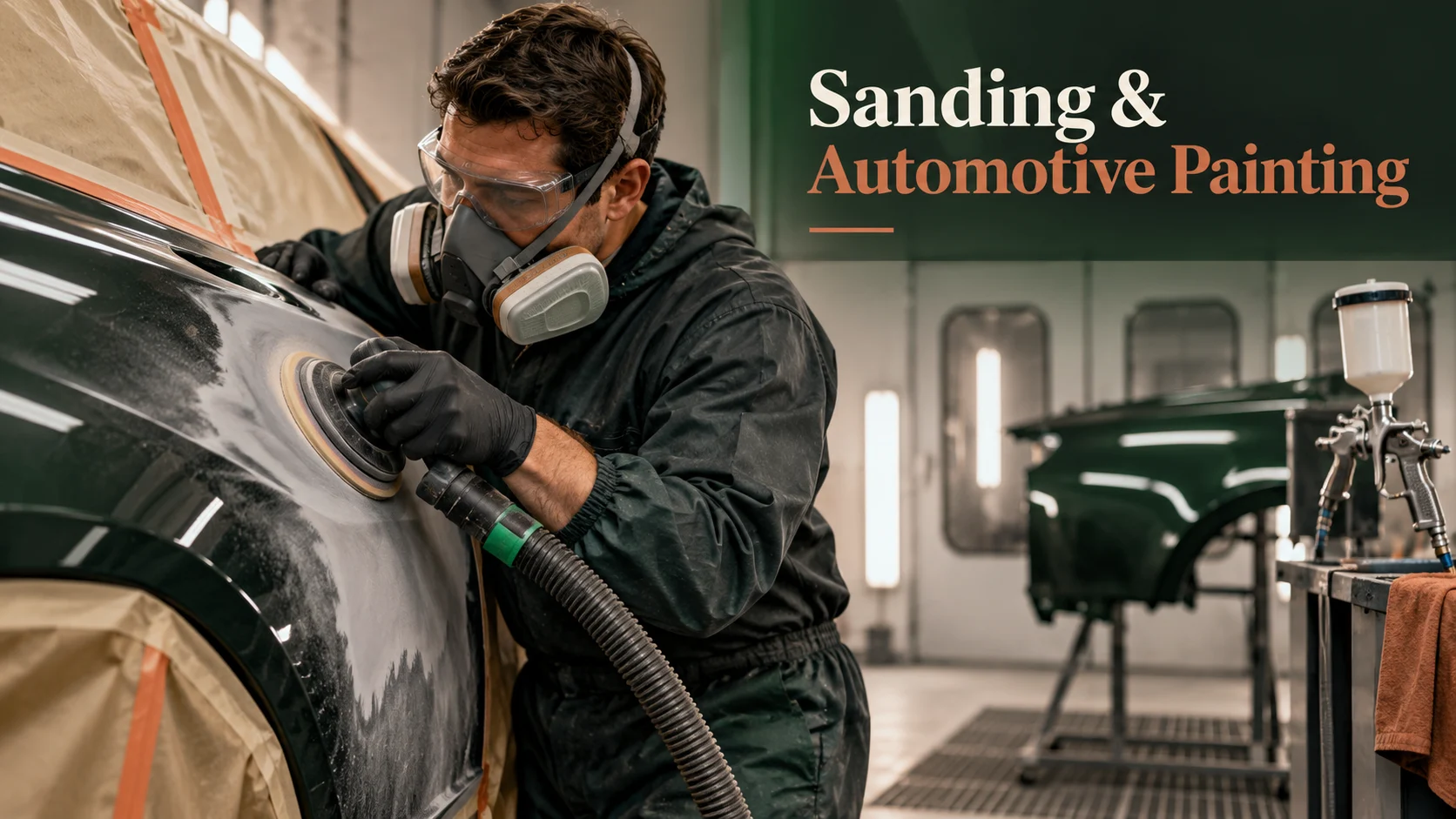
Sanding and refinishing may create hazardous dust, mists, and chemical vapors.
Control measures may include dust extraction, ventilation, suitable eye and skin protection, and task-specific respiratory protection.
Some professional automotive coatings contain highly hazardous substances and may require specialized facilities, equipment, and trained personnel. Do not assume an ordinary mask makes spraying safe.
5. General Garage Maintenance
Basic maintenance tasks may involve dirt, sharp edges, falling items, or unexpected movement of tools and components.
Inspect the work area and identify hazards before selecting protective equipment. Depending on the job, safety glasses, suitable footwear, and appropriate hand protection may be useful.
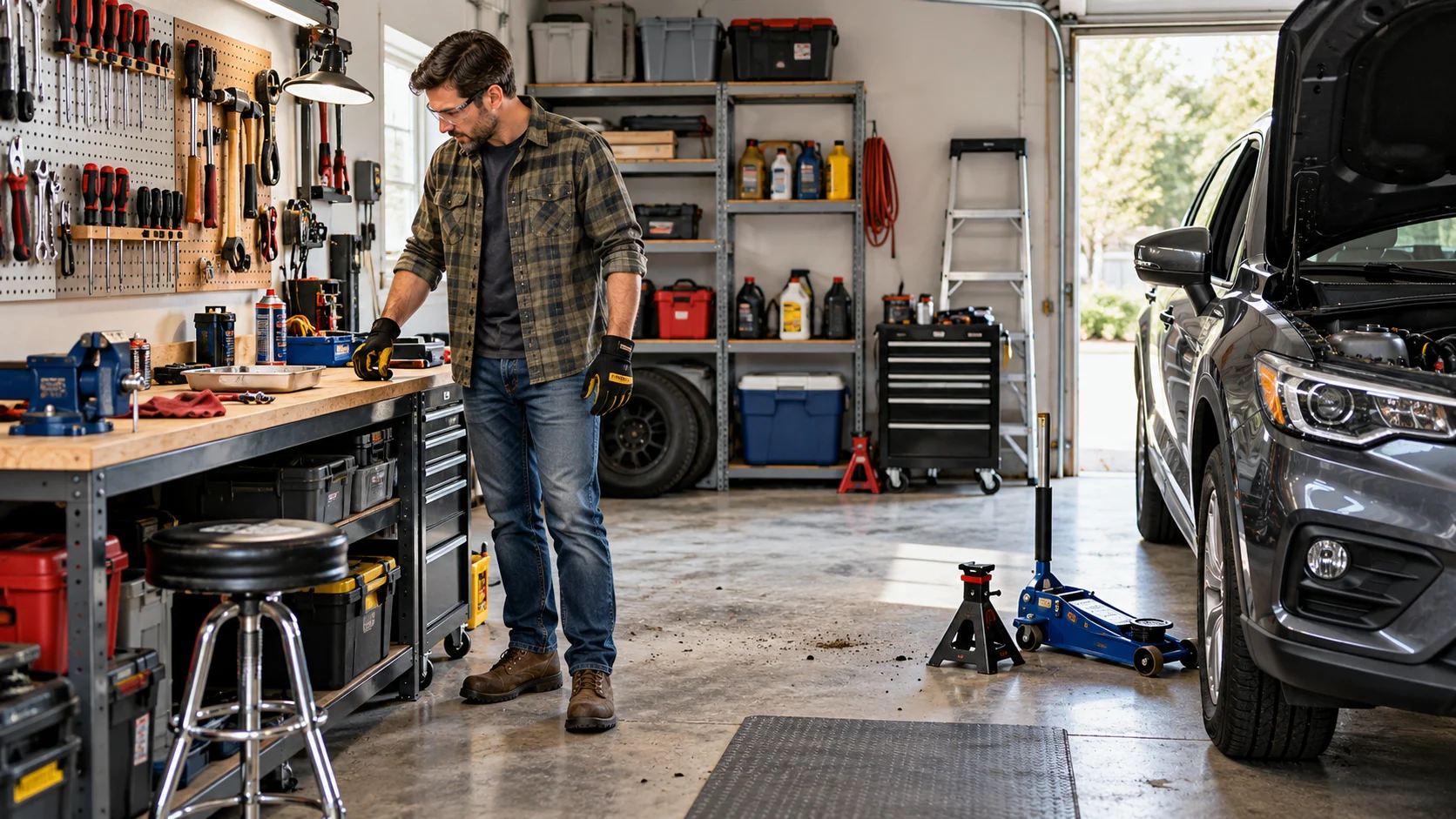
Remember: Choosing PPE starts with assessing the actual task. Wearing additional equipment is not always safer if that equipment creates a new hazard.
How to Choose the Right Personal Protective Equipment
Knowing what PPE stands for is a good start, but selecting suitable protection is more important than simply wearing whatever equipment is nearby.
Before starting a repair, follow this practical decision-making process.
Consider chemicals, flying particles, heat, noise, sharp edges, airborne contaminants, and moving machinery.
Check vehicle service procedures, equipment manuals, and safety data sheets for products used during the job.
Use safer procedures, guards, containment, and suitable ventilation before relying on PPE alone.
Choose protection specifically suitable for the identified exposure and relevant safety requirements.
Equipment must fit properly and work with any other protective equipment being worn.
Replace damaged or unsuitable equipment and follow the manufacturer’s cleaning, storage, and replacement guidance.
If you’re uncertain what protection is necessary for a hazardous job, consult the appropriate manufacturer instructions or a qualified safety professional rather than relying on guesswork.
Common PPE Mistakes to Avoid
PPE can only help when it is appropriate for the task and used correctly. A piece of equipment may give a false sense of security if it is unsuitable, worn incorrectly, or damaged.
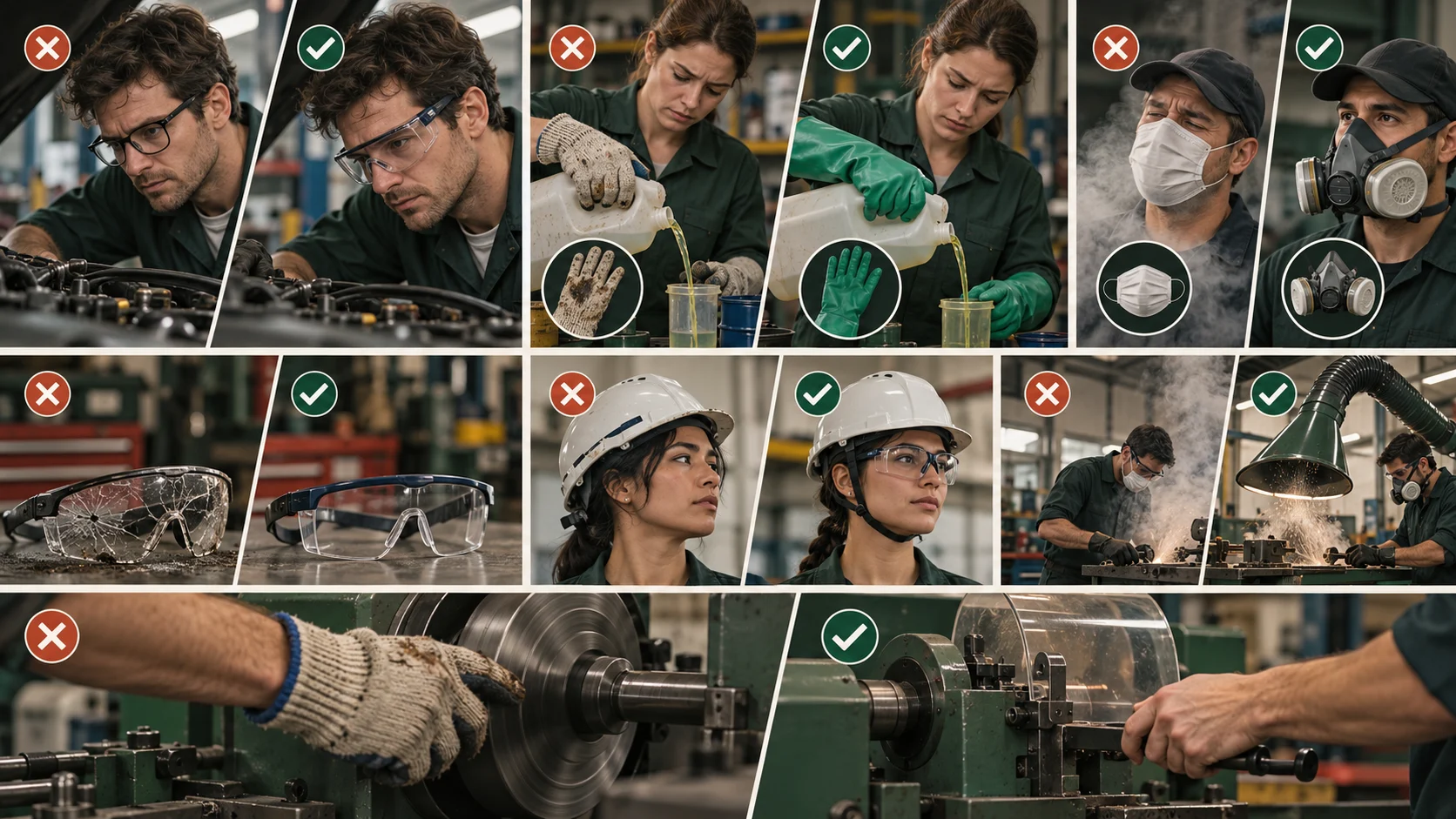
| Common Mistake | Why It Is a Problem | Better Approach |
|---|---|---|
| Using ordinary glasses for eye protection | They may lack the required impact or splash protection | Use appropriate safety-rated eyewear |
| Assuming every glove resists chemicals | Certain chemicals can penetrate or degrade glove materials | Check chemical compatibility |
| Using any mask for fumes or vapors | Different airborne hazards require different protection | Select appropriate respiratory equipment and controls |
| Wearing damaged PPE | Cracks, wear, and contamination can reduce protection | Inspect and replace as appropriate |
| Ignoring proper fit | Poor fit may reduce effectiveness or create additional risks | Follow fitting instructions |
| Relying entirely on PPE | The underlying hazard is still present | Use other safety controls first where feasible |
| Wearing inappropriate gloves near rotating machinery | Gloves may become caught in moving parts | Follow equipment instructions and avoid entanglement hazards |
Does PPE Eliminate All Safety Risks?
No. Personal protective equipment helps reduce exposure to specific hazards, but it does not eliminate all risks.
For example, safety glasses do not stop a grinding wheel from breaking, and gloves cannot prevent every chemical injury. These risks should also be addressed through suitable equipment, safe procedures, and other controls.
The Hierarchy of Controls
Safety professionals commonly use the hierarchy of controls to prioritize approaches to reducing hazards.
Controls higher in the hierarchy are generally preferred over reliance on PPE alone.
When working on a vehicle, this may mean selecting a safer process, using appropriate ventilation or guarding, and following correct procedures before determining what PPE remains necessary.
Important: PPE is an essential safety measure for many jobs, but it should be part of a broader strategy for controlling hazards rather than the only protective measure.
Frequently Asked Questions About PPE
Here are straightforward answers to common questions about the acronym, its meaning, and protective equipment used during practical work.
What does PPE stand for?
PPE stands for Personal Protective Equipment. It refers to equipment worn to help protect individuals from specific health and safety hazards.
What does PPE mean in safety?
In safety terminology, PPE means equipment designed to reduce exposure to particular hazards. Examples include suitable safety glasses, protective gloves, hearing protection, and respirators.
What is considered PPE?
Items considered PPE include hazard-appropriate eye protection, face protection, gloves, respiratory protection, hearing protection, protective footwear, and certain protective clothing.
What are five examples of PPE?
Five common examples are safety glasses, protective gloves, earplugs, respirators, and safety footwear. Each serves a different purpose and must be suitable for the relevant hazard.
Why is PPE important?
PPE helps reduce exposure to hazards that could cause injury or illness. It is especially useful when risks remain after other protective measures have been applied.
Is a face mask considered PPE?
Some face coverings and respirators may be classified or used as PPE, depending on their design and intended protective function. Ordinary face coverings should not be assumed to provide appropriate respiratory protection against workplace contaminants.
Are gloves always necessary when working on a car?
No. Gloves should be selected based on the task. They may help with chemical or mechanical hazards, but some gloves can create entanglement risks near rotating equipment.
What PPE do automotive mechanics use?
Mechanics may use safety glasses, suitable gloves, hearing protection, protective footwear, and task-specific respiratory or face protection. Requirements vary according to the repair being performed.
Is PPE required for every task?
Not every task requires the same equipment. The need for PPE depends on identified hazards and applicable rules. Professional workplaces may have specific PPE requirements that must be followed.
Does PPE guarantee complete protection?
No. PPE reduces certain exposures when correctly selected and used, but it does not eliminate every hazard. Safe work procedures and other protective controls remain essential.
Final Thoughts
PPE stands for Personal Protective Equipment. It includes equipment designed to help protect people against specific hazards during work and everyday practical activities.
For automotive enthusiasts, learning about PPE is an important part of developing safer repair habits. Safety glasses, gloves, hearing protection, and respirators each serve different purposes, and the correct choice depends on the task.
Before starting your next repair, identify the potential hazards, follow the relevant instructions, use appropriate controls, and select protective equipment suitable for the work. PPE is most effective when combined with sound safety practices.