
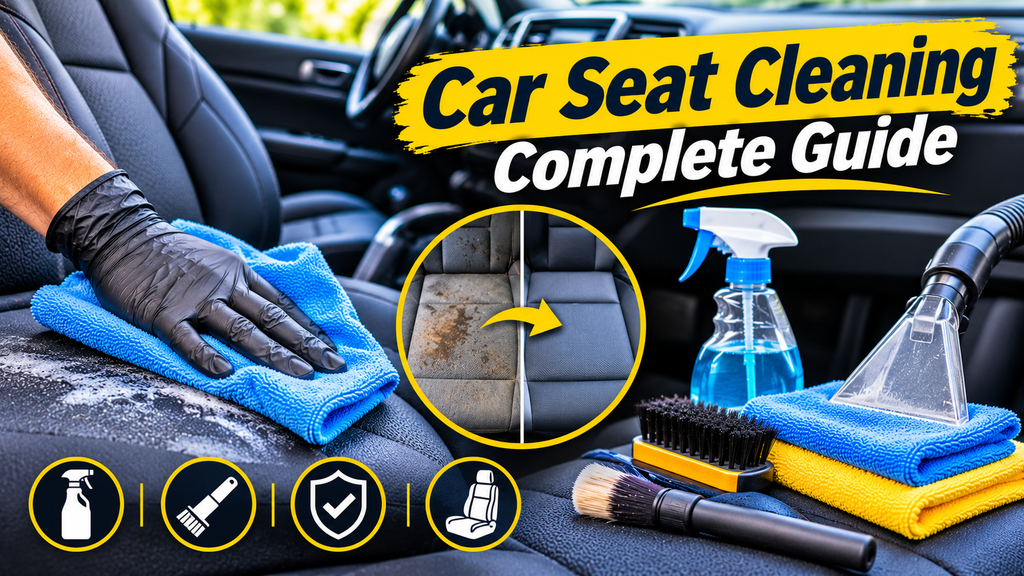
A clean car interior makes daily driving more comfortable, but dirty seats, spilled coffee, muddy footprints, and stubborn stains can quickly make your vehicle look neglected. The good news? Most everyday interior cleaning can be handled at home with simple tools and the right technique.
Learning how to clean car seats starts with identifying the upholstery material. Cloth, genuine leather, synthetic leather, and perforated seats require different care. Using an unsuitable cleaner or too much water can leave stains, damage finishes, or affect components inside the seat.
This guide explains how to clean cloth and leather upholstery, deal with common stains, maintain dashboards and other interior surfaces, and choose seat protection without compromising vehicle safety.
Quick Answer: How to Clean Car Seats
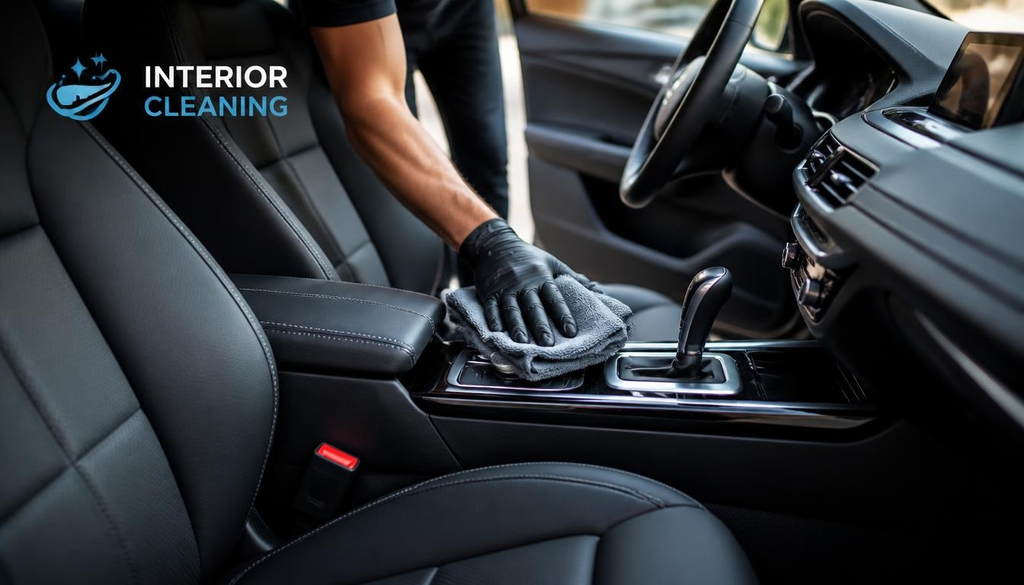
To clean most car seats safely, start by checking your owner’s manual and identifying the seat material. Vacuum thoroughly, apply a manufacturer-approved cleaning solution using a microfiber cloth, gently work on stains, wipe away residue, and allow the upholstery to dry completely.
Cloth seats
Vacuum, use a suitable fabric cleaner sparingly, blot, and allow thorough drying
Leather seats
Remove grit, clean gently with a compatible product, wipe dry, and condition only if appropriate.
Safety first: Always check material compatibility and spot-test the cleaner in an inconspicuous location before widespread use.
1. What Do You Need to Clean Car Seats?
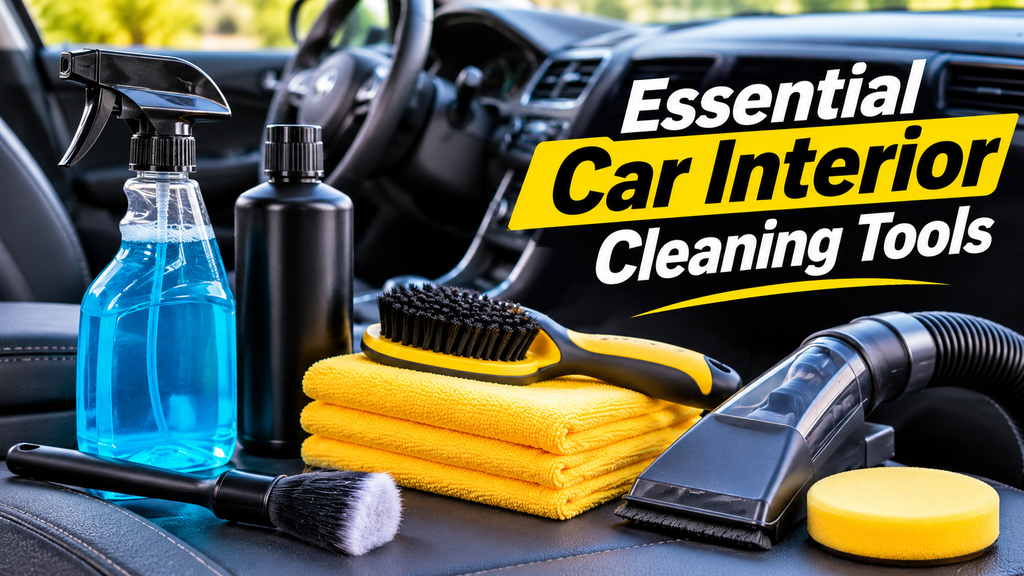
You do not need expensive detailing equipment for routine maintenance. A vacuum, soft cloths, and material-compatible cleaner are enough for many light cleaning jobs.
Vacuum Cleaner
Use a soft brush or upholstery attachment to remove dirt, crumbs, hair, and dust from seat surfaces and seams.
Microfiber Cloths
Keep separate clean cloths for cleaning, removing residue, and drying. Choose soft, nonabrasive material.
Upholstery Cleaner
Choose a product specifically approved for your vehicle’s fabric or upholstery material.
Leather-Safe Cleaner
For genuine leather, use a manufacturer-recommended cleaning method or a product suited to its finish.
Soft Upholstery Brush
A gentle brush may help loosen dirt from durable cloth upholstery when permitted by the manufacturer.
Drying Supplies
Keep clean, absorbent towels nearby and provide ventilation so cleaned seats can dry thoroughly.
Before you begin: Park safely, switch off the vehicle, remove loose belongings, inspect the upholstery for tears, and read the relevant cleaning instructions in the owner’s manual. Never apply an unfamiliar chemical directly to an entire seat.
2. Identify Your Car Seat Material Before Cleaning
The safest cleaning method depends on what covers the seat. Two seats may look similar while requiring different products and care routines.
| Seat material | Recommended approach | What to avoid |
|---|---|---|
| Cloth upholstery | Vacuum and use an approved fabric-cleaning method with minimal moisture. | Excessive soaking, harsh scrubbing, and unsuitable detergents. |
| Genuine leather | Gently remove grit, clean with a compatible solution, and dry with a soft cloth. | Harsh chemicals, abrasive pads, and unapproved oils. |
| Synthetic leather | Follow the manufacturer’s instructions for the specific synthetic surface. | Assuming genuine-leather conditioners are suitable. |
| Perforated or ventilated upholstery | Apply cleaner sparingly to a cloth and minimize moisture near perforations. | Flooding holes, spraying liquid into the seat, or using uncontrolled steam. |
| Suede-like or specialty upholstery | Use only the specific care products and techniques recommended for the material. | Conventional wet scrubbing without checking compatibility. |
If you are unsure whether your seats are leather, synthetic leather, or specialty fabric, consult the vehicle’s equipment specifications or ask the dealership before applying a cleaner.
3. How to Clean Cloth Car Seats Without Water Stains
Fabric upholstery can trap dust, food particles, body oils, and spilled drinks. When learning how to clean cloth car seats, the most important habits are removing loose dirt first and avoiding excessive moisture.
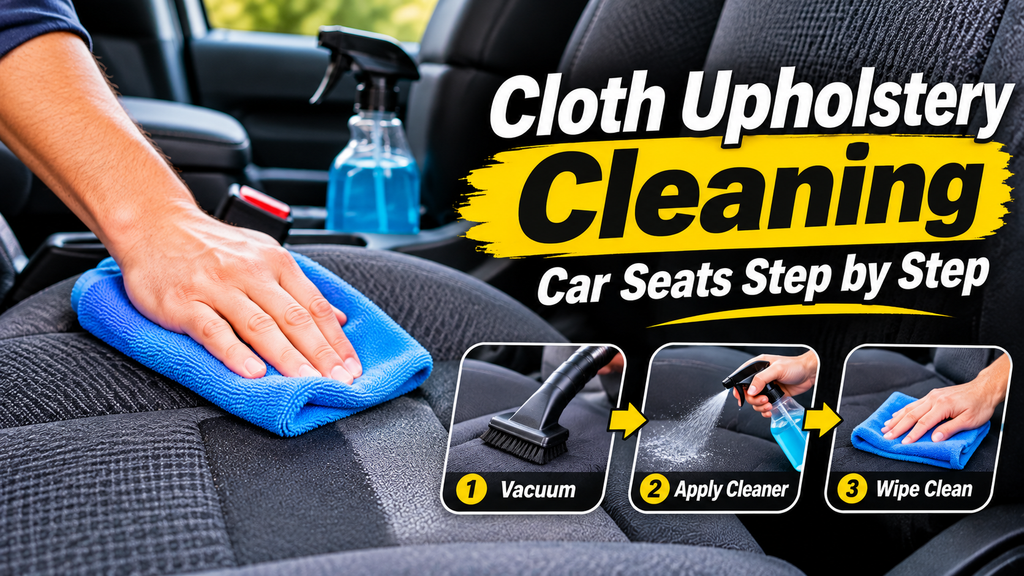
Vacuum Thoroughly
Start with the seat cushions, backrests, seams, and edges. Use a crevice attachment where crumbs collect. Avoid forceful contact with seat trim and controls.
Test Your Cleaner
Choose a product compatible with the fabric and test it in a small hidden area. Allow the test spot to dry and check for color changes or rings.
Treat Visible Stains
Blot fresh spills with a clean towel. For dried stains, follow the cleaner’s instructions. Avoid aggressive rubbing that may spread discoloration.
Clean Gently
Work with a lightly dampened microfiber cloth or an approved upholstery product. Use gentle movements rather than soaking the cushion.
Remove Residue
Use a separate clean cloth as directed by the cleaner manufacturer. If a faint cleaning ring develops, follow the vehicle manufacturer’s guidance for treating the surrounding panel.
Allow Complete Drying
Blot remaining moisture and ventilate the cabin in a safe, dry location. Do not cover damp seats or trap moisture beneath seat protectors.
Important: Do not use large amounts of water to wash installed car seats. Moisture can remain inside foam cushions and reach electrical components, heating elements, or other seat systems. Follow manufacturer instructions before using extraction machines or steam.
Can You Clean Cloth Seats With Soap and Water?
Some automakers, including Ford, describe using a soft cloth lightly dampened with a mild soap-and-water solution for appropriate fabric surfaces. However, this does not mean every household soap is safe for every vehicle.
Follow your owner’s manual first. Strong laundry detergents, dishwashing products, and heavily scented household cleaners may leave residue or contain ingredients unsuitable for automotive upholstery.
How Do You Prevent Water Rings?
Use as little moisture as practical, remove excess product, avoid soaking only the middle of a large seat panel, and dry the fabric evenly. If an existing ring remains, further cleaning may be needed, but repeated wetting can make the problem worse.
4. How to Clean Leather Car Seats Safely
Leather interiors need a different approach from fabric upholstery. The surface may have protective coatings, perforations, colored finishes, or a combination of genuine and synthetic materials.
If you are wondering how can I clean leather car seats without damaging them, begin with gentle cleaning and the vehicle manufacturer’s recommended products.
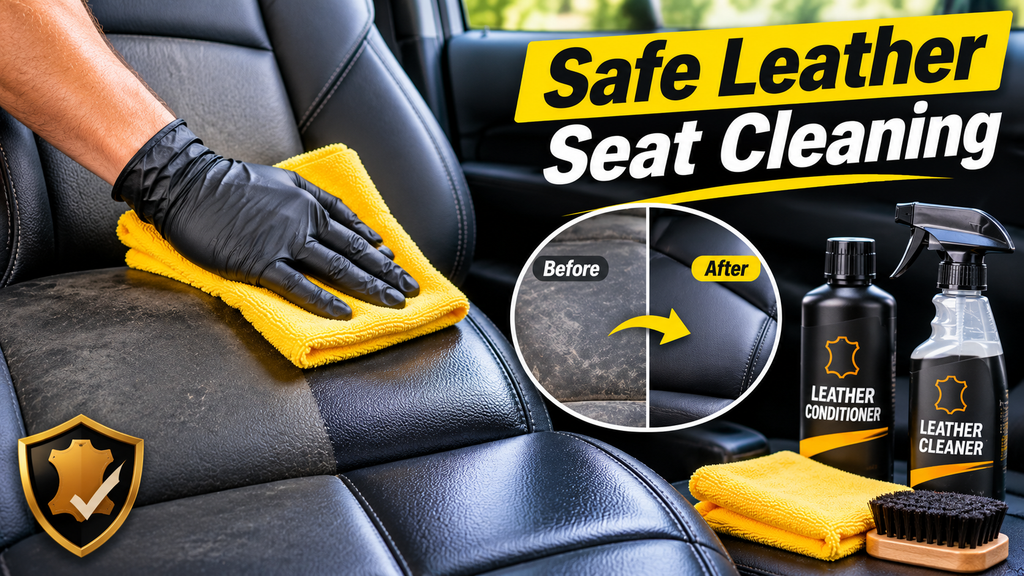
Step 1: Remove Loose Dirt
Use a vacuum with a soft attachment or a dry microfiber cloth. Pay attention to stitching, seams, and creases. Grit left on the leather can scratch its surface during wiping.
Step 2: Choose a Compatible Cleaner
Consult the manual before choosing a cleaner. For example, Honda describes a diluted neutral-soap solution for genuine leather on certain vehicles, while other manufacturers may recommend different products.
Do not assume that a method suitable for one brand or leather finish is automatically suitable for another.
Step 3: Wipe the Leather Gently
Apply the approved cleaner to a soft cloth according to product instructions. Clean a small section at a time, using light pressure. Avoid spraying or pouring cleaner into seams, controls, or perforations.
Step 4: Remove Residue and Dry
Wipe away remaining cleaning solution as recommended, then dry the surface with a separate clean cloth. Allow any remaining moisture to evaporate before regular use.
Step 5: Condition Only If Appropriate
A leather conditioner for car seats may be useful when the vehicle and product manufacturers recommend conditioning that particular leather finish. Apply a small amount according to instructions and remove any unwanted residue.
Conditioner tip: Not all leather-like seats need conditioning. Synthetic leather and some specialty finishes require different maintenance. Avoid applying oils or conditioners simply because a seat has a leather-like appearance.
Can You Wash Leather Car Seats With Water?
The phrase wash leather car seats can be misleading. Many leather seats can be cleaned with a lightly dampened cloth and a compatible solution, but that is different from washing them with large amounts of water.
Never hose down or saturate installed leather seats. Excess moisture can affect upholstery, stitching, foam padding, and seat-mounted components.
How Often Should Leather Seats Be Conditioned?
There is no universal schedule suitable for every vehicle. Cleaning frequency depends on use, dirt exposure, and manufacturer guidance. Conditioning frequency depends on the leather type, finish, and recommended care products.
If the manufacturer does not recommend a conditioner, routine gentle cleaning may be all that is needed.
5. How to Remove Common Stains From Car Seats
The correct treatment depends on both the stain and the upholstery. Start by identifying the spill, removing loose material, and checking which products are approved for the seat.
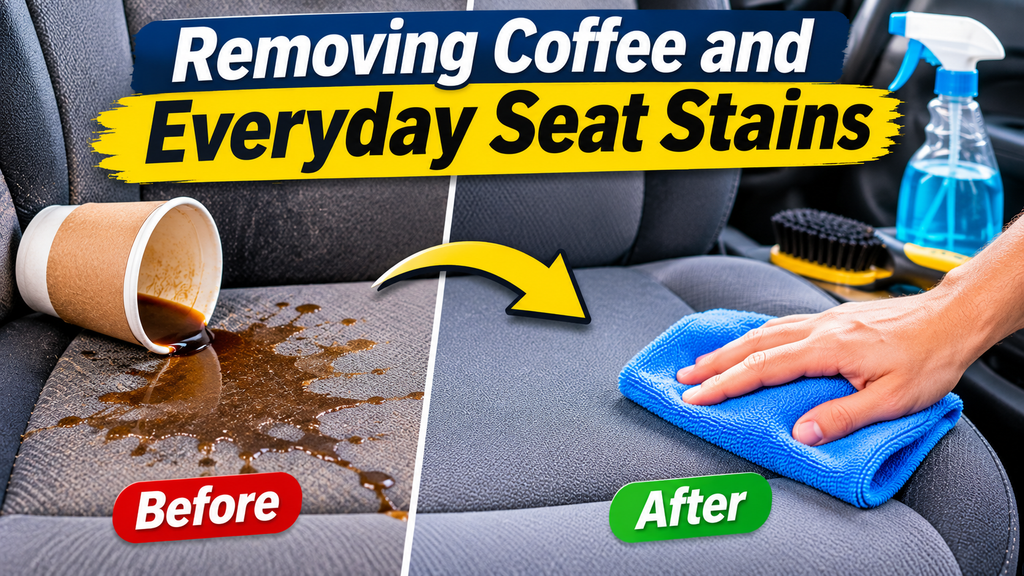
| Stain type | First action | Recommended next step |
|---|---|---|
| Coffee or soda | Blot excess liquid immediately. | Use the approved upholstery cleaner sparingly and dry thoroughly. |
| Food crumbs | Remove loose particles using a vacuum. | Spot clean any remaining discoloration with a compatible product. |
| Mud | Allow ordinary mud to dry where appropriate, then gently vacuum loose dirt. | Clean remaining marks with an approved fabric solution. |
| Grease or oil | Blot carefully without spreading the stain. | Use only a material-approved product labeled for oily stains; consider professional help. |
| Pet accidents | Blot promptly and remove contamination safely. | Use a suitable upholstery and odor-cleaning method; deep contamination may need professional treatment. |
| Ink or dye transfer | Avoid rubbing or experimenting with solvents. | Consult manufacturer guidance or a qualified upholstery specialist. |
What If a Stain Will Not Come Out?
Some substances penetrate deeply into upholstery or permanently alter its color. Repeatedly applying stronger chemicals can cause more damage than the original stain.
If a stain remains after a careful cleaning attempt, stop and consult a professional detailer or upholstery specialist. This is especially important for delicate leather, unknown chemicals, and deeply soaked cushions.
6. How to Clean Dashboard, Doors, Consoles, and Interior Surfaces
Seats are only part of a car’s interior. Dust, fingerprints, body oils, and spills also accumulate on the dashboard, door panels, center console, screens, and other touchpoints.
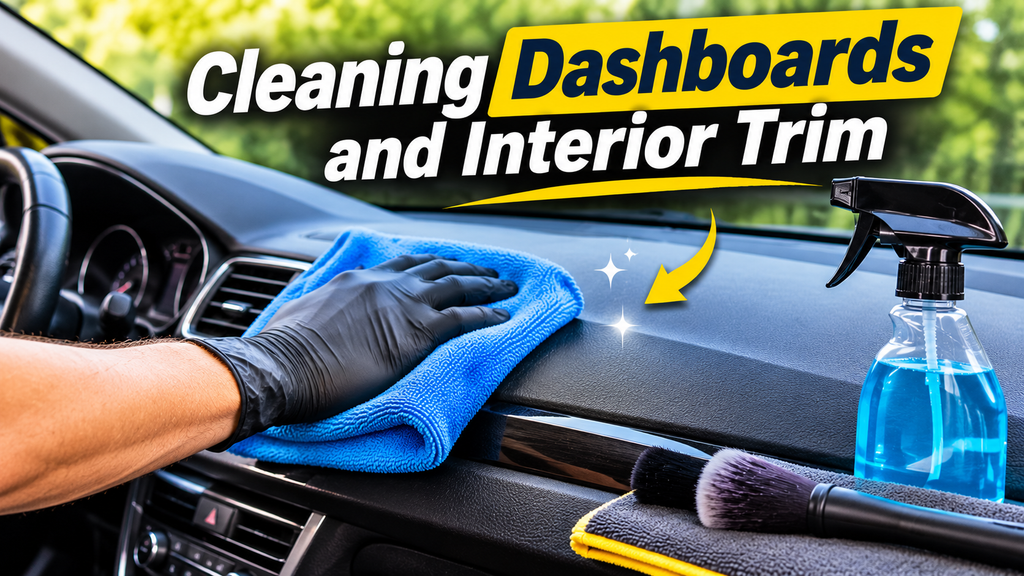
Dashboard and Plastic Trim
Dust with a soft microfiber cloth. For marks, use a cleaner approved for the specific surface and wipe off residue.
Keep products away from switches, speaker openings, and electronics.
Touchscreens and Displays
Follow the screen manufacturer’s cleaning instructions. Use a clean screen-safe cloth and avoid abrasive materials or uncontrolled liquid sprays.
Some displays have coatings that can be damaged by incompatible cleaners.
Air Vents and Small Gaps
Use a soft detailing brush or appropriate vacuum attachment to loosen dust.
Avoid pushing debris or liquids into electronic controls and ventilation components.
Door Panels and Armrests
Identify whether the surface is plastic, fabric, vinyl, or leather before cleaning.
Use a compatible cleaner and gently wipe frequently touched areas
Floor Mats and Carpets
Remove loose dirt with a vacuum. Clean removable mats according to their material and manufacturer instructions.
Reinstall floor mats securely so they cannot interfere with pedals.
Interior Glass
Use an automotive glass-cleaning method suitable for the vehicle’s window treatments.
Apply cleaner to a cloth rather than spraying heavily near dashboard electronics.
What About Seat Belts and Child Safety Seats?
These require special care. Seat-belt webbing should only be cleaned using methods approved by the vehicle manufacturer. Avoid bleach, aggressive solvents, dyes, and harsh scrubbing that could compromise the material.
If you are cleaning a child’s car safety seat, follow that restraint manufacturer’s instructions for the cover, harness, buckle, and padding. Do not immerse or machine-wash harness straps unless the manufacturer explicitly permits it.
7. Should You Use Car Seat Covers and Protectors?
Protective accessories can help reduce direct contact between upholstery and ordinary dirt or spills. However, a cover is not a substitute for regular cleaning, and compatibility matters.
When shopping for seat covers for car seats, consider the vehicle’s exact seating configuration, upholstery material, integrated safety equipment, and manufacturer recommendations.

| Accessory | Potential benefit | Important consideration |
|---|---|---|
| Removable seat cover | May reduce direct exposure to everyday dirt. | Must be approved for the vehicle’s seat and safety systems. |
| Water-resistant protector | May help with minor spills and dirt. | Check material, fitment, and restrictions for equipped seats. |
| Pet seat cover | May help collect fur and muddy paw prints. | Must not obstruct seat-belt use, restraints, or safety equipment. |
| Child-seat protector mat | May help protect upholstery from marks. | Use only if both the child-restraint and vehicle manufacturers allow it. |
Seat-mounted airbag warning: Some front seats contain side airbags that deploy through the seat upholstery. An incompatible aftermarket seat cover can obstruct their deployment. Certain manufacturers discourage aftermarket covers entirely. Follow your vehicle manufacturer’s guidance and verify compatibility before installing an accessory.
Is an Auto Seat Protector Worth Buying?
An auto seat protector for car seats may be helpful for frequent passengers, pets, or everyday wear when it is permitted and correctly installed. Choose one based on proven vehicle compatibility rather than appearance or price alone.
Remove and clean permitted accessories according to their instructions, and inspect the underlying upholstery periodically. Moisture trapped beneath covers can create additional cleaning problems.
8. Common Car Interior Cleaning Mistakes to Avoid
A few avoidable mistakes can turn a routine cleaning job into an expensive repair.
Using Excessive Water
Soaking seats can leave cushions damp and may affect seat components. Use the least moisture needed for the approved cleaning method.
Scrubbing Aggressively
Hard brushes and abrasive pads may damage fibers, remove finishes, or change the appearance of leather.
Using Household Chemicals
Bleach, strong solvents, and unapproved detergents may stain upholstery or damage materials and safety-related components.
Skipping the Patch Test
Cleaner compatibility can vary. Always test where any discoloration or finish change will be less noticeable.
Skipping the Patch Test
Cleaner compatibility can vary. Always test where any discoloration or finish change will be less noticeable.
Ignoring Safety Components
Avoid spraying chemicals into controls, electrical connections, seat-mounted airbags, belt assemblies, and other safety-related areas.
Practical rule: If you do not know whether a product or technique is safe for your specific vehicle, check the owner’s manual or ask a qualified professional before using it.
9. How Often Should You Clean Your Car Seats?
There is no fixed cleaning schedule that suits every vehicle. Driving conditions, passengers, pets, weather, and upholstery materials all affect how quickly dirt accumulates.
Use the following routine as a practical planning example rather than a manufacturer-required maintenance interval.
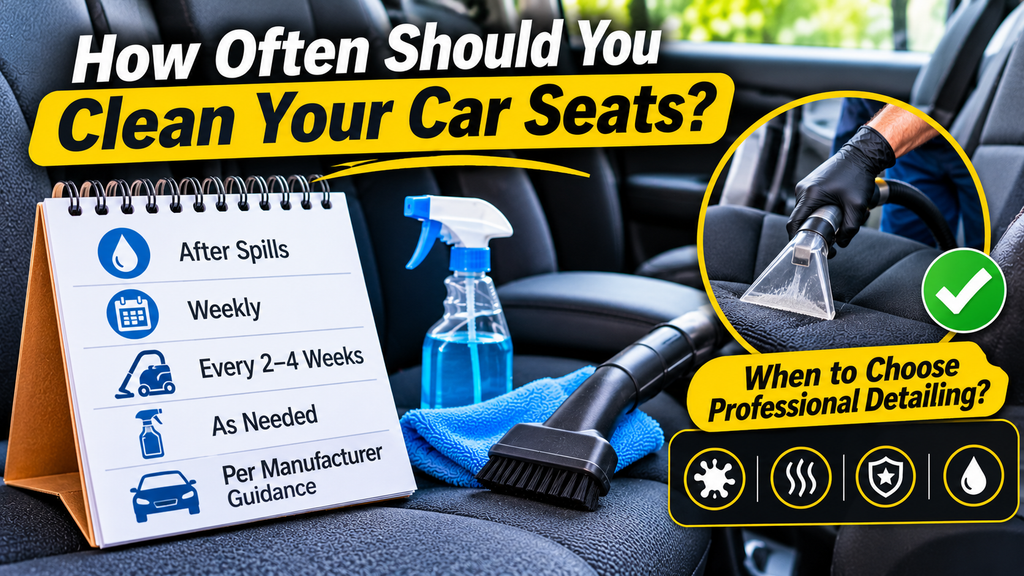
| Frequency | Suggested maintenance |
|---|---|
| After spills | Blot and address the spill promptly using the correct material-safe method. |
| Weekly | Remove trash and visible debris; wipe frequently touched surfaces when needed. |
| Every 2–4 weeks | Vacuum seat surfaces, seams, and carpets according to vehicle use. |
| As needed | Perform upholstery spot cleaning and deeper interior cleaning when visibly dirty. |
| Per manufacturer guidance | Carry out specialized leather care or conditioning only where recommended. |
When Is Professional Detailing a Better Choice?
Home cleaning is practical for routine dust, light stains, and general maintenance. Professional assistance may be more appropriate when:
- Liquid has penetrated deeply into the seat cushions.
- The upholstery has persistent odors or suspected mold.
- Seats contain delicate or unfamiliar specialty materials.
- Cleaning chemicals have caused discoloration or damage.
- Severe staining remains after a safe first cleaning attempt.
- A spill may have reached seat wiring or electronic components.
For significant water intrusion or suspected electrical damage, have the affected components assessed by a qualified repair professional, not only a cosmetic detailer.
Car Seat Cleaning Checklist
Before calling the job complete, check the following:
- The upholstery material has been identified correctly.
- The cleaning products match manufacturer guidance.
- The cleaner has been patch-tested.
- Loose dirt and crumbs have been vacuumed.
- Stains have been treated without aggressive scrubbing.
- Remaining cleaner and excess moisture have been removed.
- Seats are completely dry before normal use.
- Seat belts, controls, and safety systems remain unobstructed.
- Any fitted seat covers or protectors are approved for the vehicle.
Most Frequently Asked Questions About Cleaning Car Seats and Interior Surfaces
1. What is the best way to clean car seats at home?
The best way to clean car seats is to vacuum loose dirt, identify the upholstery material, and use a suitable cleaning product. For cloth seats, apply a fabric-safe upholstery cleaner and gently blot stains. For leather seats, use a soft microfiber cloth and a manufacturer-approved leather cleaner. Avoid excessive water and allow the seats to dry completely.
2. How do you clean cloth car seats without leaving water stains?
To clean cloth car seats without water stains, vacuum thoroughly and use a small amount of upholstery cleaner. Gently blot the fabric rather than soaking it. Remove leftover cleaning solution with a clean microfiber cloth and ensure the seat dries evenly. Good ventilation helps prevent moisture from remaining inside the cushions.
3. How can I clean leather car seats without damaging them?
Start by removing dust and debris with a soft cloth or vacuum attachment. Apply a leather-safe cleaner according to the manufacturer’s instructions and wipe gently with a microfiber cloth. Remove any residue and dry the surface. Avoid bleach, harsh detergents, abrasive brushes, and excessive moisture.
4. Can I use dish soap and water to clean car seats?
Dish soap is not universally recommended for automotive upholstery because some formulas may leave residue or affect protective finishes. Certain manufacturers permit diluted mild or neutral soap solutions for specific materials. Always check your owner’s manual and test the approved cleaning method on a hidden area first.
5. How do you remove stubborn stains from car seats?
First, identify the stain and upholstery material. Blot liquid spills immediately, vacuum loose debris, and apply a compatible upholstery stain remover according to its instructions. Avoid scrubbing aggressively because this can spread stains or damage the surface. Deep-set stains, ink, or grease may require professional detailing.
6. What is the best leather conditioner for car seats?
The best leather conditioner is one specifically compatible with your vehicle’s leather type and finish. Some coated leather surfaces require little or no conditioning, while others may benefit from manufacturer-approved products. Avoid petroleum-based oils, greasy treatments, and products that leave slippery residue. Always follow the vehicle manufacturer’s recommendations.
7. Can I steam clean cloth and leather car seats?
Steam cleaning may be suitable for certain cloth upholstery, but it is not appropriate for every vehicle or seat material. Excessive heat and moisture can damage leather finishes, adhesives, foam, or electrical components. Check the manufacturer’s instructions before using a steam cleaner, particularly on heated, ventilated, or perforated seats.
8. How long does it take car seats to dry after cleaning?
Drying time depends on the upholstery material, amount of water used, temperature, humidity, and ventilation. Lightly dampened surfaces may dry relatively quickly, while heavily saturated cushions can take much longer. Leave the interior ventilated in a safe location and avoid sitting on or covering seats until they are completely dry.
9. How often should you clean your car seats?
Vacuuming every two to four weeks is a reasonable starting point for many daily-driven vehicles, although heavily used cars may need more frequent attention. Clean spills promptly and perform deeper upholstery cleaning when needed. Leather care and conditioning should follow the recommendations for the specific vehicle rather than a universal schedule.
10. Are seat covers and car seat protectors worth buying?
Seat covers and protectors can help reduce everyday dirt, pet hair, and surface wear. However, they must be compatible with the vehicle’s safety systems. Some aftermarket covers can interfere with seat-mounted side airbags, occupancy sensors, or seat functions. Always verify manufacturer approval and avoid accessories that obstruct seat belts or airbag deployment.
11. Can baking soda and vinegar be used to clean car seats?
Baking soda and vinegar are common household cleaning ingredients, but they are not suitable for every automotive upholstery material. Vinegar may affect certain finishes, while baking soda can leave difficult-to-remove residue. Instead of experimenting with homemade mixtures, use a cleaner approved for your particular cloth, leather, or synthetic upholstery.
12. How do you clean car dashboard and interior plastic surfaces?
Start by removing dust with a clean, soft microfiber cloth. For stubborn marks, use a cleaner approved for automotive interior plastics and apply it to the cloth rather than spraying directly onto electronics. Clean buttons, vents, and trim carefully. Touchscreens may require separate cleaning instructions to protect their coatings.