
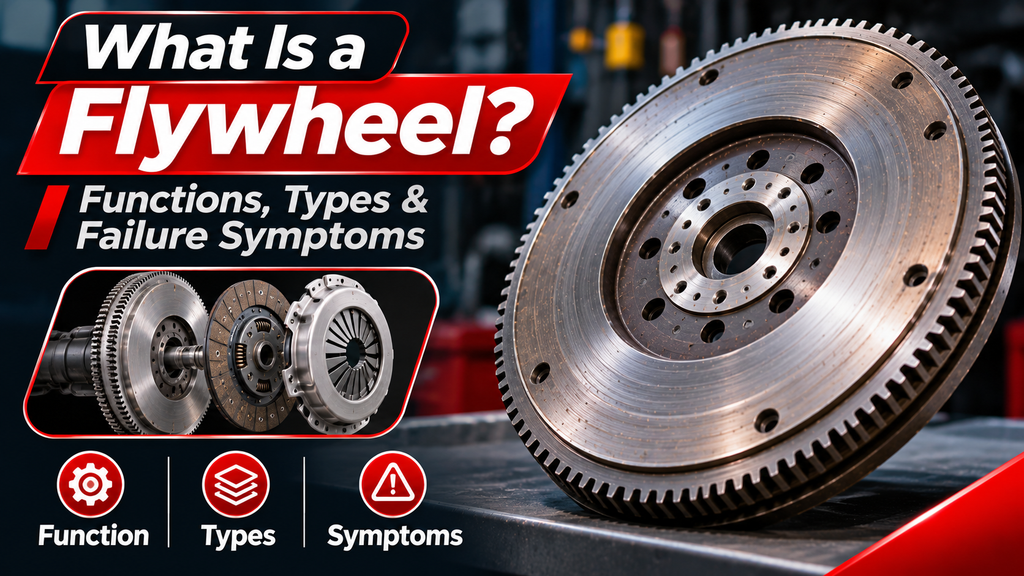
If you’ve ever driven a manual-transmission car or visited a mechanic for clutch repairs, you may have heard the term flywheel. But what does this component actually do, and why is it important for engine performance?
A flywheel is a rotating mechanical component attached to an engine’s crankshaft. It stores rotational kinetic energy and helps maintain smoother engine rotation between combustion strokes. In many manual-transmission cars, it also provides the friction surface used by the clutch.
Although the flywheel usually remains hidden between the engine and transmission, its condition can affect clutch engagement, noise, vibration, and drivability. Different designs, including single-mass and dual-mass flywheels, manage these functions in different ways.
This guide explains what a flywheel is, how it works, where it’s located, the main types used in vehicles, and the symptoms that may indicate a problem.
QUICK ANSWER: WHAT IS A FLYWHEEL?
A flywheel is a rotating component that stores kinetic energy and helps reduce fluctuations in engine speed. In most conventional manual-transmission cars, it connects to the crankshaft and provides a surface for the clutch. A dual-mass flywheel also helps isolate engine vibrations from the transmission
What Is a Flywheel? Definition and Meaning
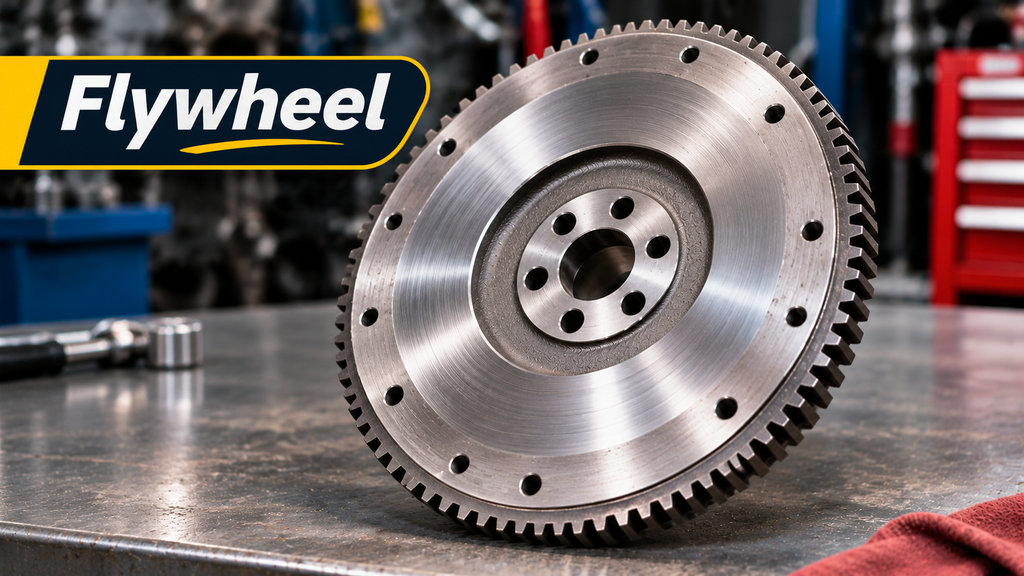
A flywheel is a mechanical device that stores energy in the form of rotational motion. Once spinning, its rotational inertia helps it resist changes in speed.
In an internal combustion engine, the flywheel is typically mounted directly to the crankshaft. As the crankshaft rotates, the flywheel rotates with it.
A gasoline or diesel engine does not produce perfectly constant torque throughout its operating cycle. Combustion events create pulses of force, and the flywheel helps reduce the resulting fluctuations in crankshaft speed.
The term flywheel means an energy-storing rotating component in mechanical engineering. In a car, its main purpose is to support smoother rotation and, depending on the transmission, assist with clutch operation.
Simple example: Imagine spinning a heavy metal wheel. Even after you stop pushing it, the wheel continues rotating for a while because of its inertia. An engine flywheel uses this principle to help maintain more consistent crankshaft rotation.
This doesn’t mean a flywheel creates extra power. Instead, it temporarily stores and releases energy already present in the rotating engine assembly.
Where Is the Flywheel Located in a Car?
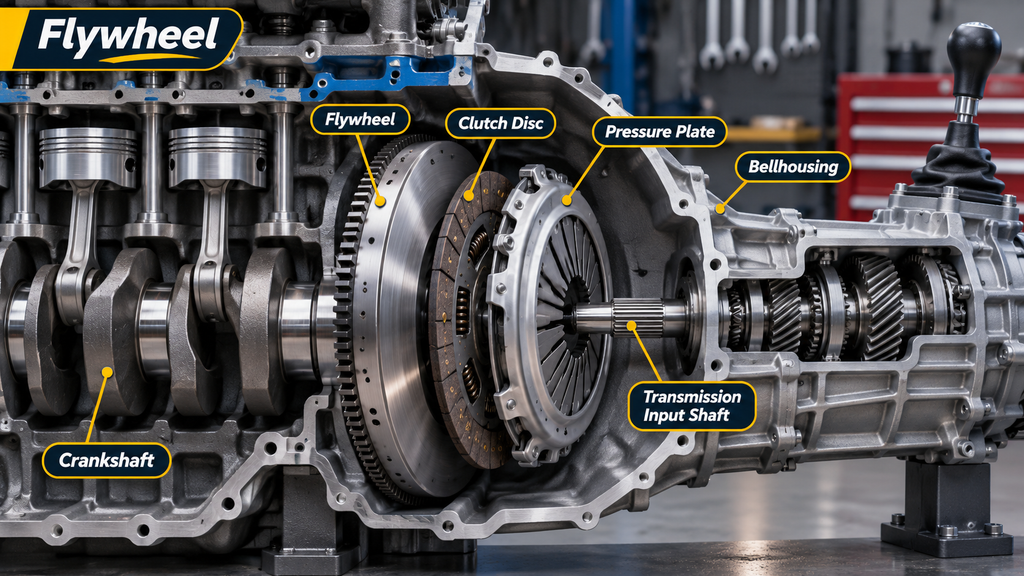
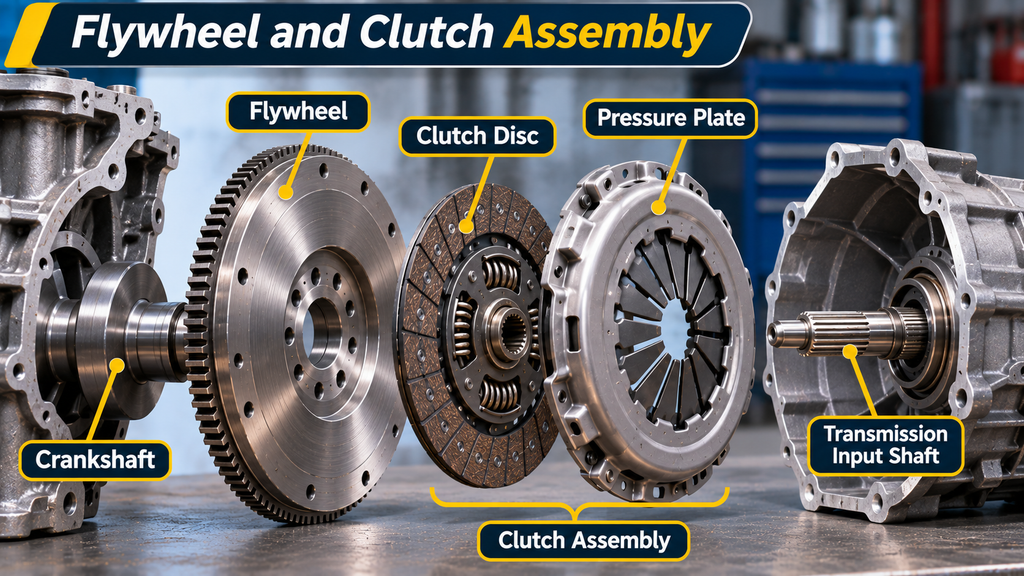
In a typical manual-transmission vehicle, the flywheel is located at the rear of the engine, where the crankshaft meets the transmission. It is enclosed within the bellhousing area.
The flywheel bolts to the crankshaft, while the clutch assembly attaches to its transmission side. This arrangement allows engine torque to pass through the clutch to the gearbox.
Because the flywheel is enclosed within the drivetrain assembly, you usually cannot see it simply by opening the hood.
Is the Flywheel Part of the Engine or Transmission?
The flywheel is attached to the engine’s crankshaft, but it also performs important functions in the drivetrain. In a conventional manual vehicle, it forms part of the interface between the engine and clutch assembly.
What Does a Flywheel Do in a Car Engine?
A flywheel performs several related functions. Its exact role depends on the engine and transmission design.
1. Stores Rotational Energy
The flywheel stores kinetic energy while rotating and releases it as engine speed tends to decrease.
2. Smooths Engine Rotation
Its inertia helps reduce speed fluctuations between combustion events, especially at lower engine speeds.
3. Supports Clutch Engagement
In many manual cars, the flywheel provides a friction surface for the clutch disc.
4. Supports Engine Starting
On common designs, the starter motor engages a toothed ring gear to rotate the engine during starting.
Dual-mass flywheels perform an additional function: they help isolate torsional vibration before it reaches the transmission.
How Does a Flywheel Work?
Understanding flywheel operation begins with how an internal combustion engine produces power.
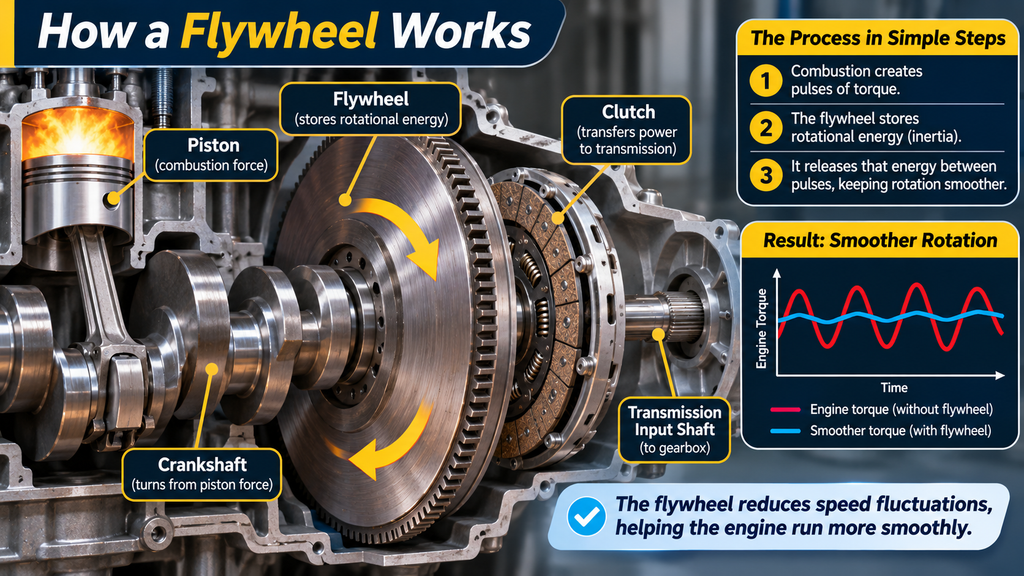
In a four-stroke engine, the piston moves through intake, compression, power, and exhaust strokes. The connecting rod transfers piston force to the crankshaft, creating rotating motion.
However, the crankshaft receives uneven torque throughout these strokes. The flywheel helps smooth the resulting changes in rotational speed.
- Combustion produces torque. The engine delivers a pulse of force to the crankshaft during a power-producing event.
- The rotating assembly stores energy. When torque exceeds the immediate demand, some energy increases the rotational energy of the crankshaft and flywheel.
- The flywheel resists slowing down. Its inertia helps maintain rotation as engine torque decreases between power events.
- Crankshaft rotation becomes smoother. The flywheel reduces the magnitude of speed fluctuations, helping the engine run more consistently.
Why Is Flywheel Weight Important?
A flywheel’s rotational inertia depends on both its mass and how that mass is distributed around the rotation axis.
A flywheel with greater rotational inertia generally resists changes in speed more strongly. A lighter, lower-inertia design can allow the engine to gain or lose rpm more quickly.
Neither design is universally better. The appropriate amount of inertia depends on the engine, intended driving characteristics, and complete drivetrain system.
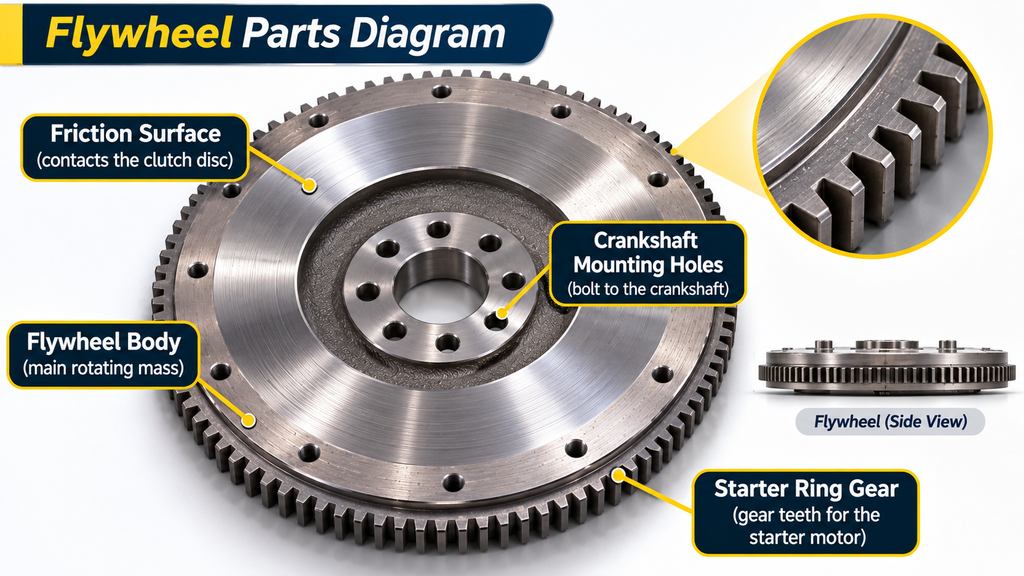
Main Parts of an Automotive Flywheel
A conventional single-mass automotive flywheel usually includes several important features.
Flywheel Body
The main rotating mass provides the flywheel’s rotational inertia. Its material, thickness, and geometry vary depending on the application.
Friction Surface
In many manual-transmission cars, the flywheel has a machined surface that contacts the clutch disc. Heat damage or uneven wear on this surface may affect clutch engagement.
Starter Ring Gear
A toothed ring around the outer edge allows the starter motor to turn the crankshaft during engine starting on applicable designs.
Mounting Holes
The flywheel includes holes for securing it to the crankshaft. The correct fasteners, tightening sequence, and installation procedures depend on the engine design.
Different Types of Flywheels
Automotive flywheels are designed for different levels of rotational inertia, noise control, vibration damping, and performance.
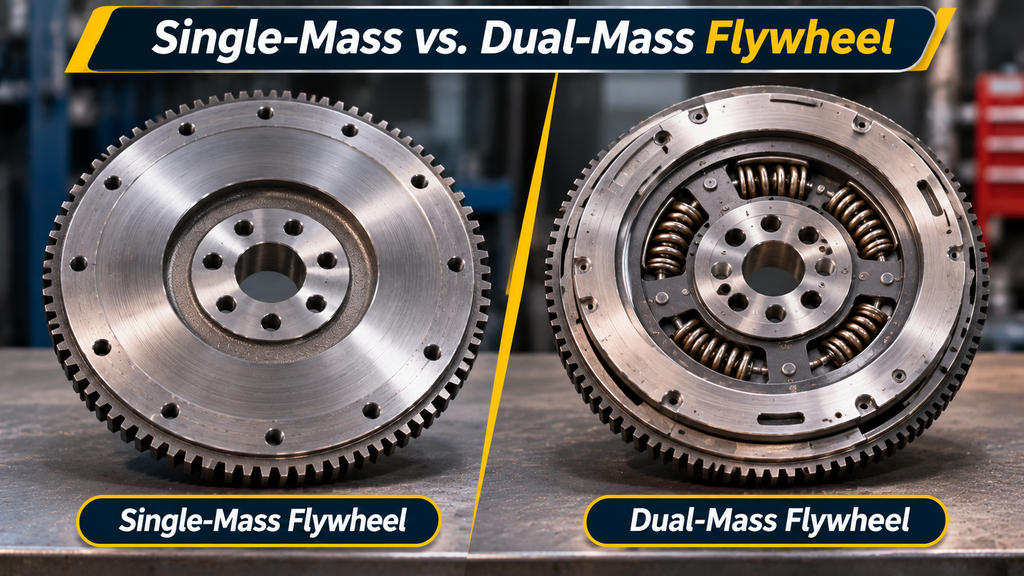
The most important distinction in passenger vehicles is between single-mass and dual-mass flywheels.
1. Single-Mass Flywheel
A single-mass flywheel (SMF) has a rigid construction and rotates as one assembly with the crankshaft.
It stores rotational energy and can provide a friction surface for the manual-transmission clutch.
Because it lacks the internal two-mass damping mechanism of a DMF, it generally has a simpler construction. However, driveline noise and vibration depend on the entire clutch and transmission system, not just the flywheel.
2. Dual-Mass Flywheel
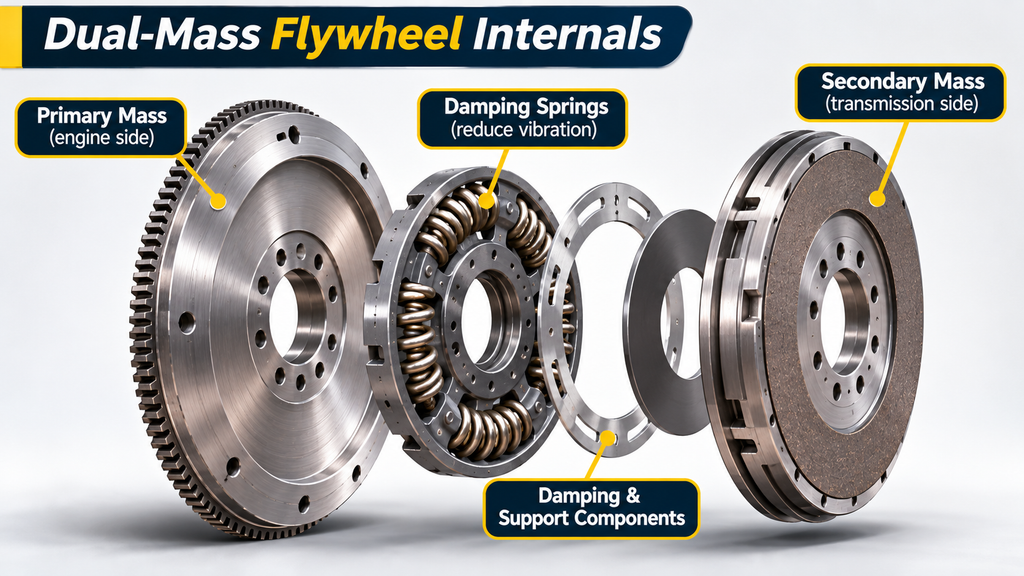
A dual-mass flywheel (DMF) contains two rotating masses connected through a spring-and-damping arrangement.
The primary mass connects to the engine side, while the secondary mass is associated with the transmission-side assembly.
The damping mechanism permits controlled relative movement between the masses, helping reduce torsional vibrations transmitted to the gearbox.
This can improve driving refinement and reduce certain types of transmission rattle, particularly under operating conditions where engine torque fluctuations are pronounced.
3. Lightweight Performance Flywheel
A lightweight performance flywheel is designed to reduce rotational inertia. This can allow the engine to change rpm more readily during acceleration and deceleration.
However, lower inertia may also make starting from a stop less forgiving and increase certain noise or vibration characteristics.
Lightweight flywheels should be selected based on the specific engine and clutch system rather than appearance or weight alone.
How Do Dual-Mass Flywheel Springs Work?
A dual-mass flywheel uses internal springs and damping components to manage torsional movement between its two rotating masses.
As engine torque changes, these components help isolate sudden rotational fluctuations before they reach the transmission.
Single-Mass vs. Dual-Mass Flywheel: Key Differences
| Feature | Single-Mass | Dual-Mass |
|---|---|---|
| Construction | Rigid assembly | Two masses with damping elements |
| Complexity | Generally simpler | More internal parts |
| Vibration damping | Depends on the wider clutch system | Additional torsional isolation |
| Noise refinement | System-dependent | Designed to reduce certain driveline noises |
| Service | Inspection; resurfacing may be allowed on some designs | Specialized inspection; normally replaced as an assembly |
| Best application | Vehicles designed for that system | Vehicles designed for that system |
Neither flywheel design is automatically the best choice for every car. A factory dual-mass flywheel is matched to a particular drivetrain’s vibration and operating characteristics.
Converting to a single-mass flywheel can change noise, vibration, clutch behavior, and transmission loading. Any conversion should use a manufacturer-approved or properly engineered application-specific system.
Flywheel vs. Flexplate: What Is the Difference?
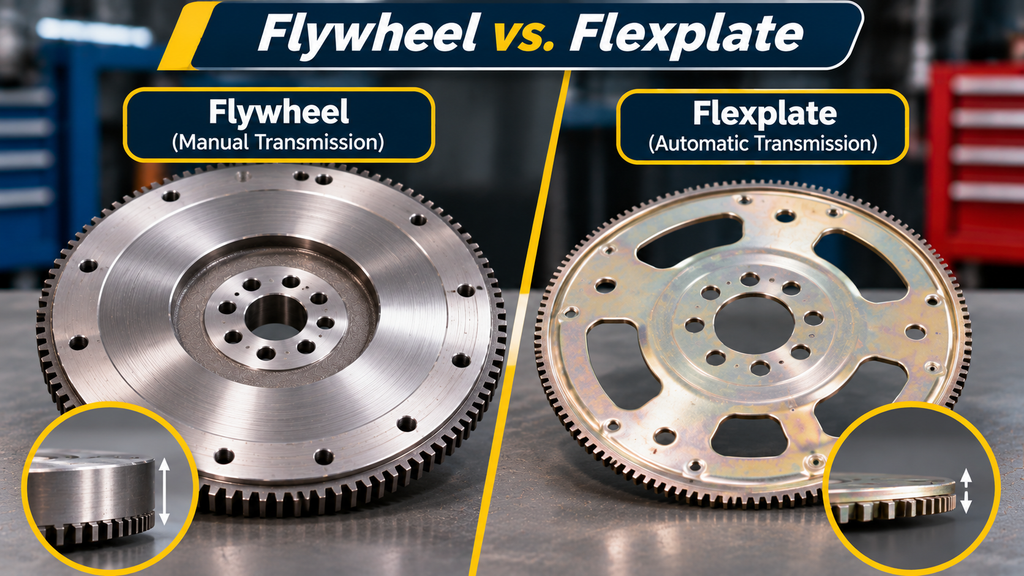
Many conventional automatic-transmission vehicles use a flexplate instead of the heavy clutch-type flywheel found in manual-transmission cars.
A flexplate is typically a thinner metal component mounted to the crankshaft. It connects the engine to the torque converter and commonly carries the starter ring gear.
Unlike a conventional manual flywheel, a flexplate does not normally provide the friction surface used by a manual clutch disc.
Not every automatic transmission follows the same arrangement. Some dual-clutch and other transmission systems use different flywheel or drive configurations.
Flywheel vs. Clutch: Are They the Same?
The flywheel and clutch are different components, even though they work closely together in many manual cars.
The flywheel attaches to the crankshaft and helps smooth engine rotation. The clutch controls whether engine torque passes into the transmission.
When the clutch engages, its friction disc is clamped between the flywheel and pressure plate. This allows torque to pass from the engine into the gearbox.
When the driver disengages the clutch, the transmission input shaft can rotate independently of the engine, allowing gear changes.
Symptoms of a Bad or Failing Flywheel
A flywheel that is worn or damaged may affect how the engine and transmission operate together. Problems involving dual-mass flywheels can be particularly noticeable when internal damping components become worn.
However, none of these symptoms alone proves that the flywheel has failed. Several other mechanical problems can produce similar behavior.
| Symptom | Possible Flywheel Issue | Other Possible Causes |
|---|---|---|
| Rattling at idle | DMF damping wear | Transmission or engine-related noise |
| Judder when moving off | Uneven friction surface or DMF problem | Clutch wear or contamination |
| Vibration at low rpm | Reduced torsional isolation | Engine mounts or misfires |
| Clunk when stopping engine | Possible DMF damping fault | Engine or driveline faults |
| Grinding during starting | Damaged ring-gear teeth | Starter motor malfunction |
| Difficulty shifting | Possible associated clutch issue | Clutch hydraulics or transmission fault |
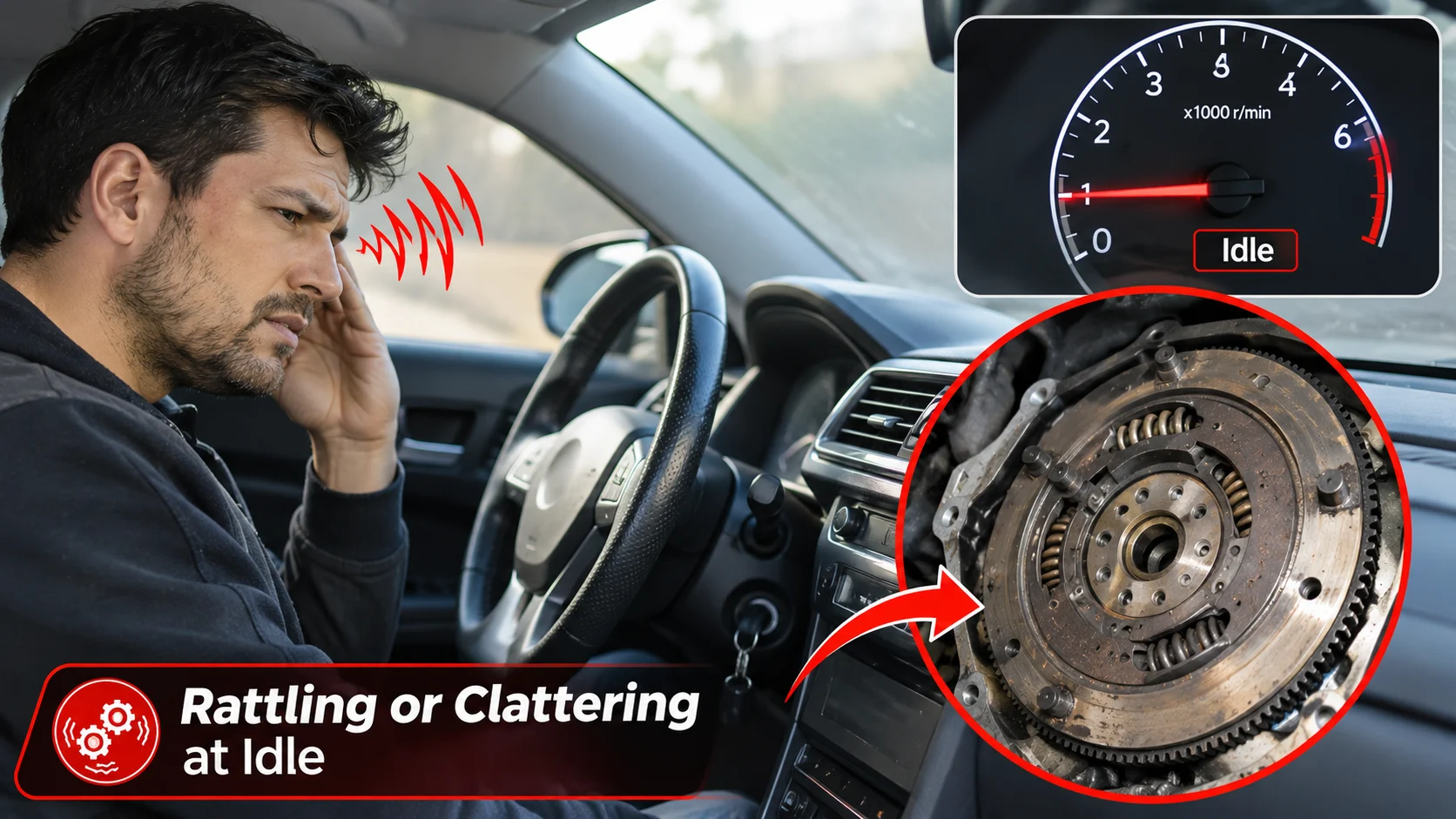
1. Rattling or Clattering at Idle
A worn dual-mass flywheel may produce rattling or clattering, particularly at idle or lower engine speeds.
The sound may change as the clutch pedal is operated. However, transmission noise, engine irregularities, and other components must be checked before blaming the DMF.
2. Vibration During Acceleration
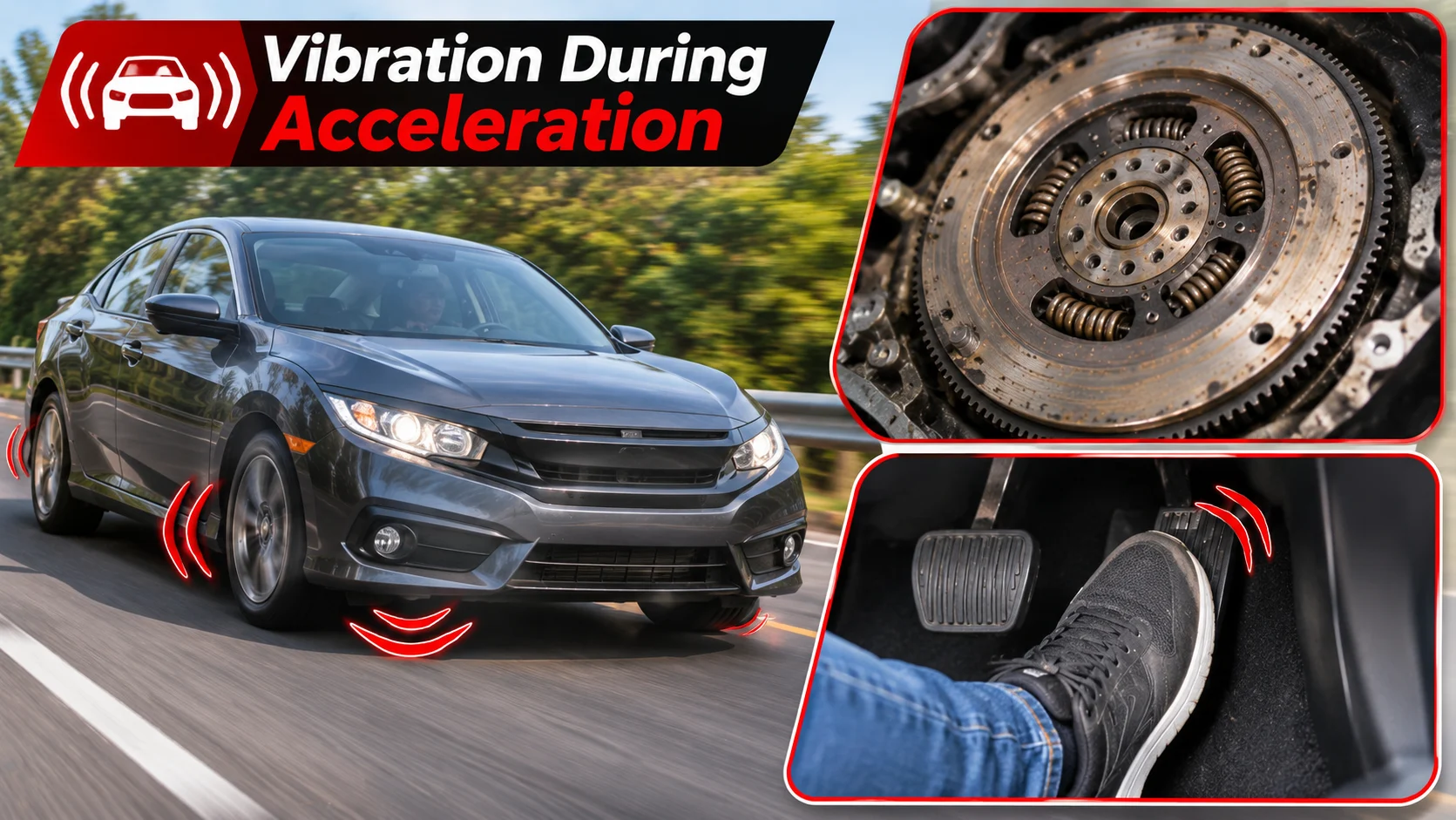
If a dual-mass flywheel no longer isolates torsional vibration as intended, the driver may notice additional vibration when accelerating, especially at low rpm.
Engine misfires, worn mounts, and other drivetrain problems can produce similar symptoms.
3. Clutch Judder
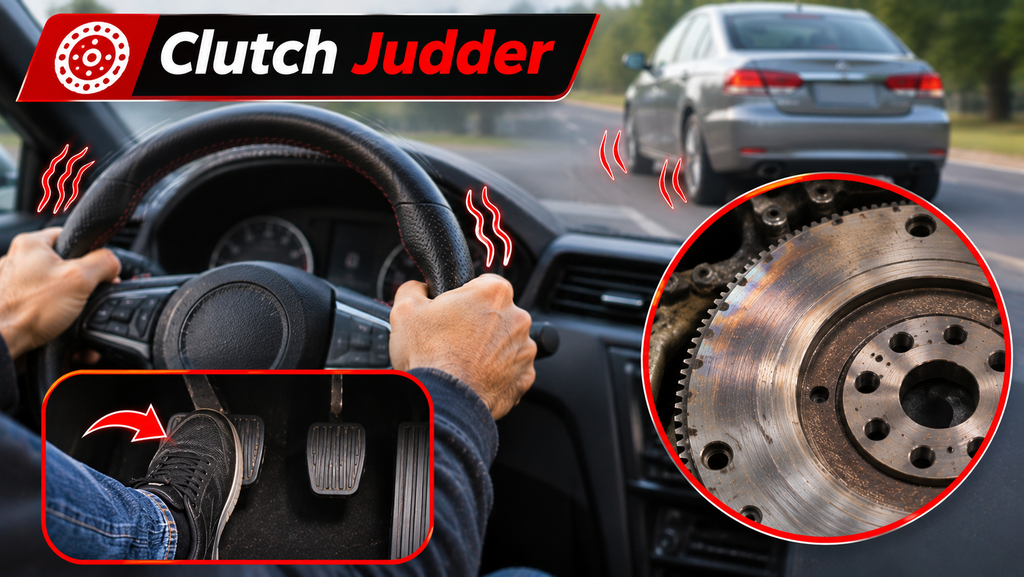
Clutch judder is a shaking or shuddering sensation that occurs as the vehicle begins to move.
Heat damage or uneven wear on the flywheel friction surface may contribute, but clutch contamination and other faults are also common possibilities.
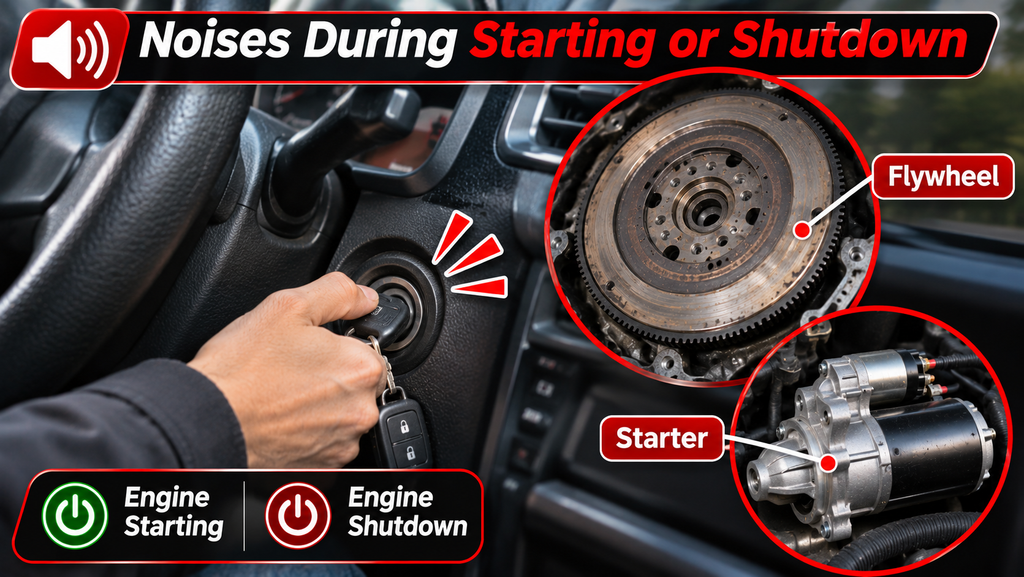
4. Noises During Starting or Shutdown
Some flywheel or starter-related problems may become noticeable during engine starting or shutdown.
The sound alone cannot identify the failed component. A mechanic should investigate the starter, engine operation, mounts, and transmission system.
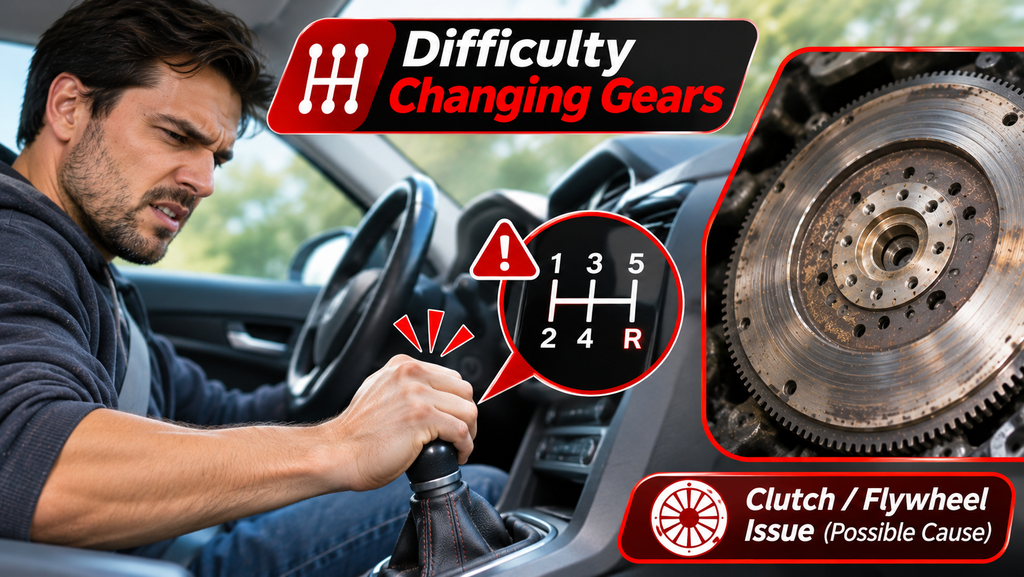
5. Difficulty Changing Gears
Problems involving clutch engagement may cause difficult gear changes. A flywheel defect can sometimes contribute, but clutch release systems and gearbox faults must also be considered.
What Causes Flywheel Damage?
Flywheels are engineered to withstand repeated rotational forces, but certain operating conditions can accelerate wear or damage.
- Excessive clutch slipping: Prolonged slipping can create heat that affects the flywheel’s friction surface.
- Clutch overheating: High temperatures may cause surface discoloration, cracking, or other damage.
- Worn DMF components: Internal springs, damping elements, or support components can wear.
- Abnormal engine vibration: Misfires or unusual torsional loads may place additional stress on the assembly.
- Starter problems: Incorrect starter engagement may damage ring-gear teeth.
- Incorrect installation: Improper fasteners, torque settings, or handling can damage the flywheel.
The precise cause of failure depends on the vehicle, service history, and flywheel design.
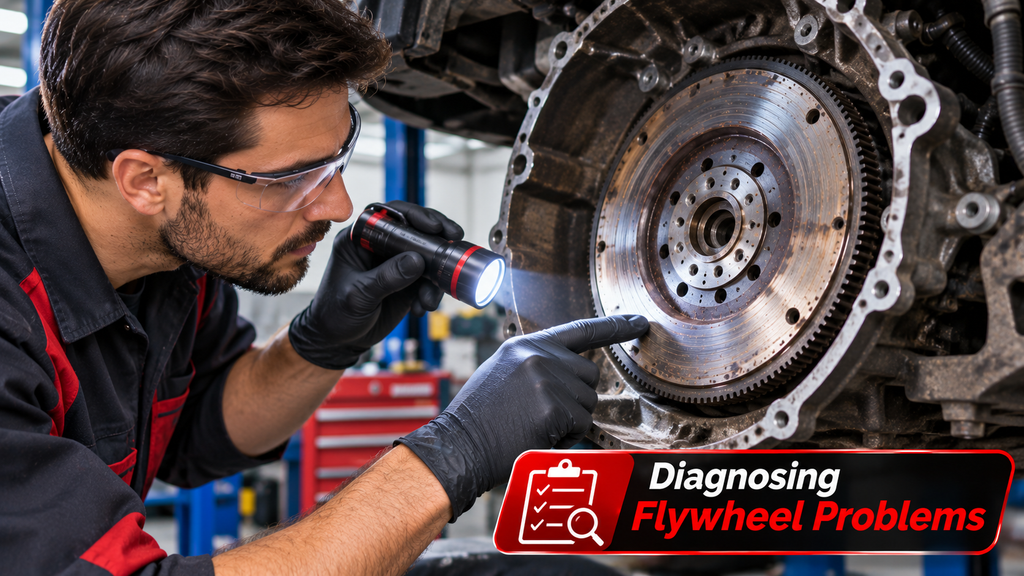
How Do Mechanics Diagnose Flywheel Problems?
Correct diagnosis is important because flywheel replacement often requires substantial disassembly and labor.
Before recommending replacement, a qualified technician should investigate other possible sources of vibration or noise.
Typical Diagnostic Checks
- Evaluate engine operation and fault codes.
- Check engine and transmission mounts.
- Inspect clutch engagement and release behavior.
- Investigate starter motor and ring-gear noises.
- Check for unusual vibration or mechanical sounds.
- Inspect flywheel surfaces when accessible.
- Evaluate DMF movement using manufacturer-approved procedures
If the transmission is removed, a technician may inspect the flywheel’s friction surface for cracks, heat damage, or other abnormal wear.
For dual-mass flywheels, specific checks may include rotational free play and tilting clearance, compared against the manufacturer’s limits.
Important: Rattling, vibration, and clutch judder can have several causes. Replacing a flywheel without confirming the fault may not resolve the problem. Always follow vehicle manufacturer diagnostic procedures.
Flywheel Repair and Replacement
Whether a flywheel can be serviced or must be replaced depends on its design, damage, and manufacturer requirements.
Can a Flywheel Be Resurfaced?
Some conventional single-mass flywheels can be resurfaced if the manufacturer permits it and the component remains within specified service limits.
A damaged dual-mass flywheel normally requires replacement. Resurfacing a DMF friction surface is not an appropriate general repair method.
Does the Flywheel Need Replacing With the Clutch?
Not necessarily. However, the flywheel should be inspected when the clutch is being replaced because access to both components often requires similar labor.
The replacement decision should consider flywheel condition, clutch wear, component compatibility, and manufacturer service instructions.
How Much Does Flywheel Replacement Cost?
Flywheel replacement costs vary widely in the United States. The final repair estimate depends on vehicle make and model, transmission type, flywheel design, parts pricing, and local labor rates.
Dual-mass flywheels can be more complex and expensive than conventional single-mass designs, but prices should always be checked for the exact vehicle.
Ask the repair shop for a written estimate identifying parts, labor, and any additional clutch-related work.
Can You Drive With a Bad Flywheel?
Continuing to drive with a damaged flywheel may contribute to further clutch or drivetrain damage, depending on the failure.
If the vehicle develops loud mechanical noises, severe vibration, unpredictable clutch engagement, or difficulty transmitting power, stop driving when safe and arrange a professional inspection.
Frequently Asked Questions About Flywheels
1. What is a flywheel in simple words?
A flywheel is a rotating mechanical component that stores energy and helps an engine maintain smoother rotational speed. In many manual-transmission vehicles, it also provides a friction surface for the clutch.
2. What does a flywheel do in an engine?
It stores rotational kinetic energy, reduces crankshaft speed fluctuations, and may support clutch engagement and starter operation, depending on the vehicle.
3. Where is the flywheel located?
In a conventional manual-transmission car, the flywheel is mounted to the rear of the engine crankshaft inside the bellhousing, between the engine and transmission.
4. Is a flywheel the same as a clutch?
No. The flywheel helps smooth crankshaft rotation and can provide a clutch-contact surface. The clutch engages or disconnects the engine from the manual transmission.
5. What is the difference between single-mass and dual-mass flywheels?
A single-mass flywheel has a relatively rigid design. A dual-mass flywheel contains two rotating masses with internal damping components that help reduce torsional vibration reaching the transmission.
6. Do automatic cars have flywheels?
Many conventional torque-converter automatic vehicles use a flexplate instead of a heavy manual-transmission flywheel. Other automatic transmission types may use different flywheel arrangements.
7. What are the symptoms of a bad flywheel?
Possible symptoms include rattling, vibration, clutch judder, unusual noises during starting or shutdown, and difficulty with clutch-related operation. These signs may also indicate other mechanical faults.
8. Can a damaged flywheel cause vibration?
Yes. A worn dual-mass flywheel may lose some of its ability to isolate engine torsional vibration. However, engine misfires, worn mounts, and drivetrain faults can cause similar symptoms.
9. Can you drive with a bad flywheel?
Driving with a damaged flywheel may risk additional mechanical problems. If severe vibration, loud noises, or unsafe clutch behavior occurs, stop when safe and have the vehicle professionally inspected.
10. Does the flywheel need to be replaced with the clutch?
Not always. The flywheel should be inspected during clutch replacement. Whether it must also be replaced depends on its condition, design, and the vehicle manufacturer’s service requirements.
Final Thoughts: Why the Flywheel Matters
The flywheel is an important component in many internal combustion engine and transmission systems. It stores rotational energy, helps reduce crankshaft speed fluctuations, and supports smoother engine operation.
In many manual-transmission cars, it also provides the friction surface used by the clutch. Dual-mass flywheels add a damping mechanism that helps isolate engine vibration from the gearbox.
Understanding its function can help you recognize potential problems and communicate more confidently with a mechanic. Just remember that unusual vibration or noise does not automatically mean the flywheel has failed.
Key Takeaway: A flywheel stores rotational energy to help smooth engine rotation. Single-mass and dual-mass flywheels use different designs, and suspected flywheel problems should be professionally diagnosed before replacement.