
What Is a Torque Wrench? Types, Torque Range & How to Use It
A torque wrench is one of the most important tools for tightening automotive fasteners accurately. Whether you are installing wheels, replacing brake components, working on engine parts, or performing routine repairs, the correct tightening torque matters.
Using too little torque can allow a fastener to loosen. Too much torque may damage threads, stretch bolts, or deform components.
This guide covers torque wrench types, working principles, torque ranges, drive sizes, calibration, common mistakes, and buying considerations.
What Is a Torque Wrench?
A torque wrench is a hand tool that allows a mechanic to apply a controlled amount of turning force to a threaded fastener.
Unlike an ordinary ratchet, a torque wrench provides a method of measuring or limiting the torque applied during tightening.
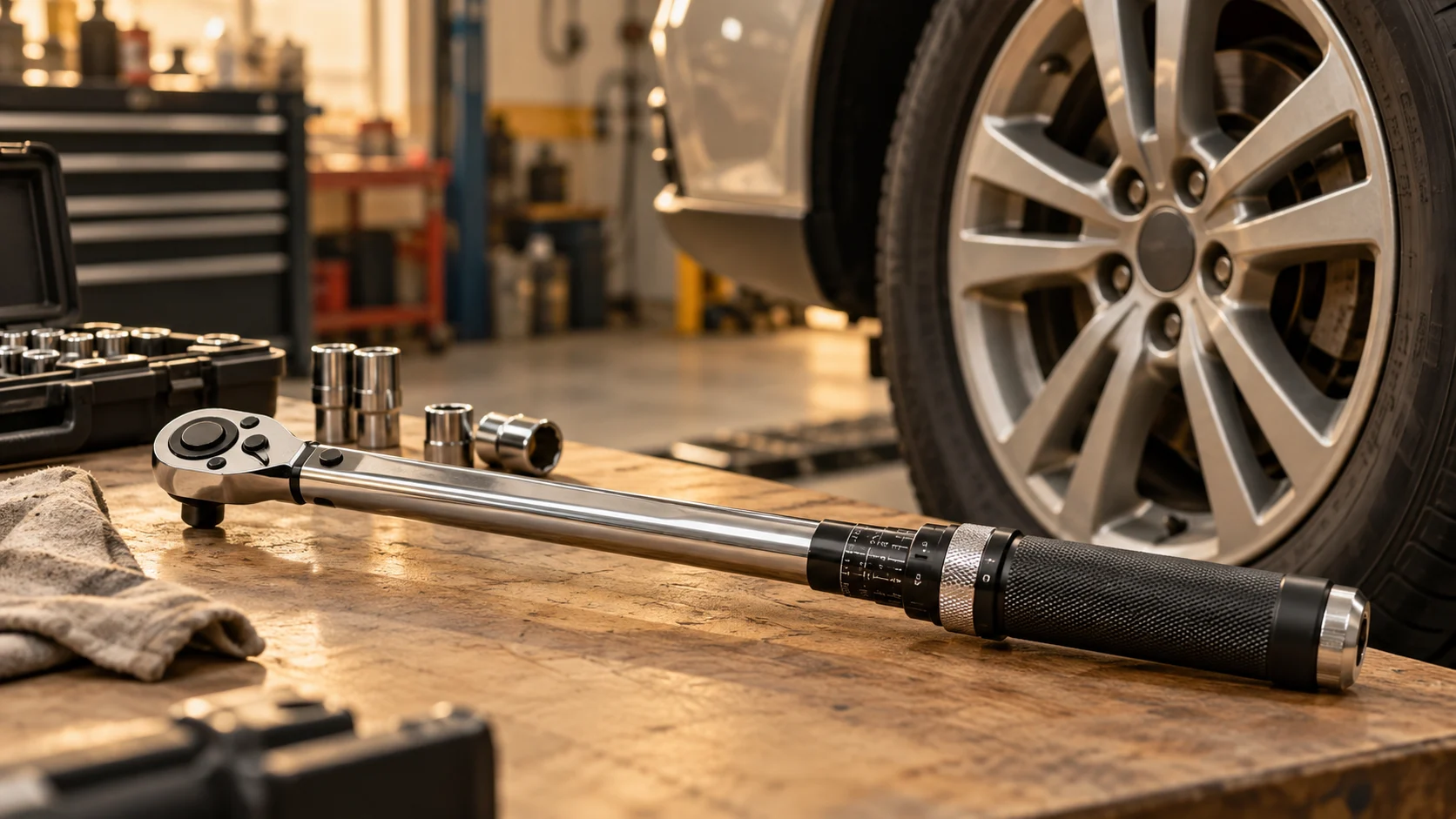
Why Is a Torque Wrench Important?
Prevents Under-Tightening
Helps prevent fasteners from being left insufficiently tightened, reducing the risk of unwanted movement or loosening.
Prevents Over-Tightening
Helps avoid excessive force that may damage threads, distort components, or overstress fasteners.
Improves Repair Consistency
Allows multiple fasteners to be tightened using a repeatable specified torque value.
Supports Proper Assembly
Helps follow the vehicle manufacturer’s assembly procedures and tightening specifications.
Understanding Torque Range
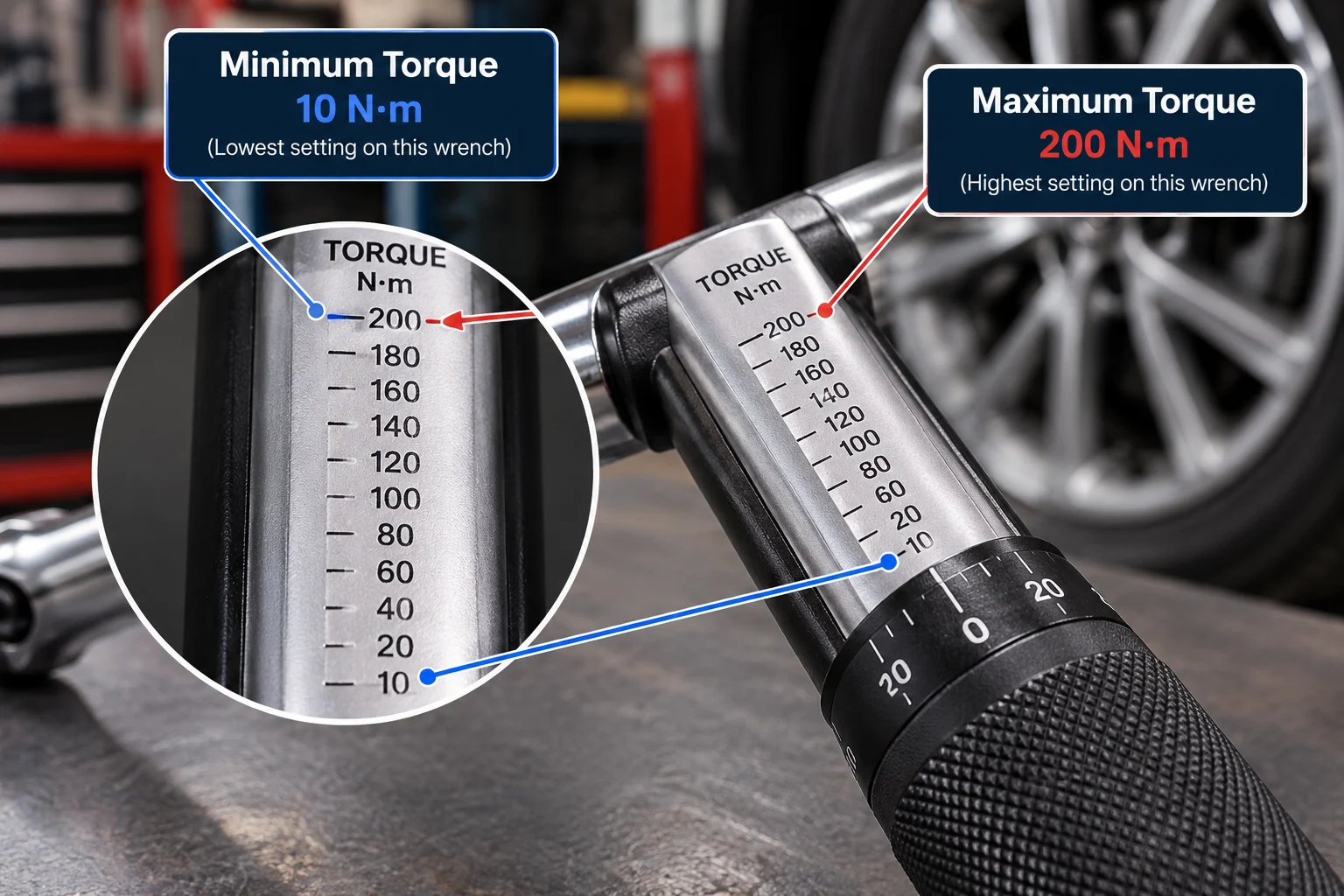
The torque range is the span between the lowest and highest torque values for which a particular torque wrench is specified.
For example, a wrench rated from 20 to 200 N·m is designed to operate within that range. A different wrench may cover only 5 to 25 N·m for smaller fasteners.
Common Torque Units
| Unit | Meaning | Common Use |
|---|---|---|
| N·m | Newton-meter | Metric automotive specifications |
| lb-ft | Pound-foot | US automotive torque specifications |
| lb-in | Pound-inch | Smaller fasteners and low-torque work |
Why the Operating Range Matters
Not every torque wrench is suitable for every fastening task. A wrench designed for high-torque wheel nuts may be inappropriate for a delicate engine fastener requiring very little torque.
For reliable results, select a tool with a calibrated range that includes your required torque value, preferably away from the extremes when practical.
How a Torque Wrench Works
A torque wrench measures or controls torque applied through its handle. Torque is the turning effect of a force applied at a distance from the axis of rotation.
Different wrench designs measure torque differently. Click-type models use an adjustable internal mechanism, while beam, dial, and digital tools indicate applied torque through their respective measurement systems.
The Basic Principle of Torque
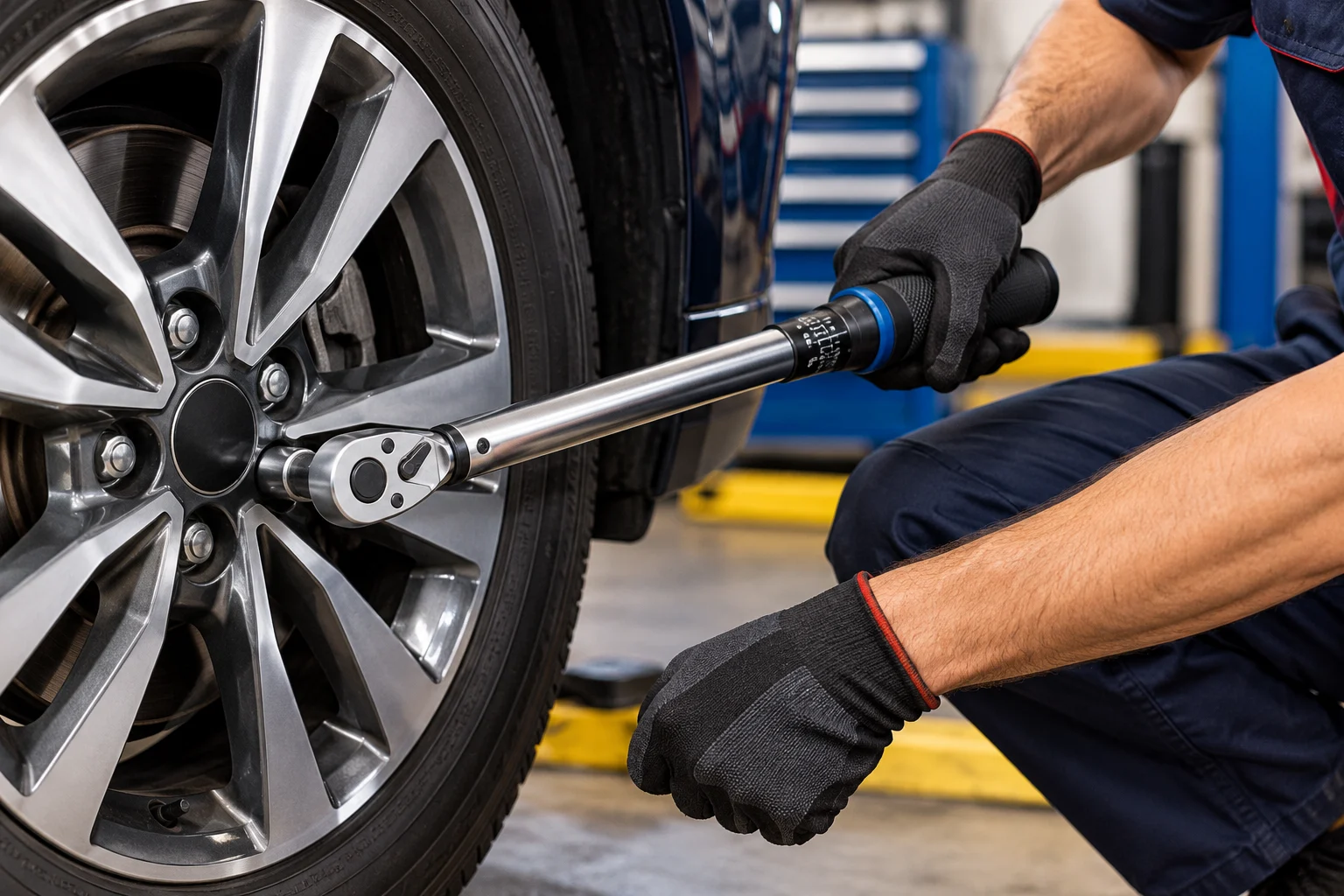
When force is applied perpendicular to the wrench handle, the turning torque is calculated by multiplying the force by its distance from the fastener’s rotational axis.
What Happens When a Click-Type Wrench Clicks?
When the preset torque is reached, a click-type torque wrench produces a distinct click and a small mechanical release in its handle mechanism.
The operator should stop applying force at the first clear click, following the wrench manufacturer’s instructions.
Types of Torque Wrenches
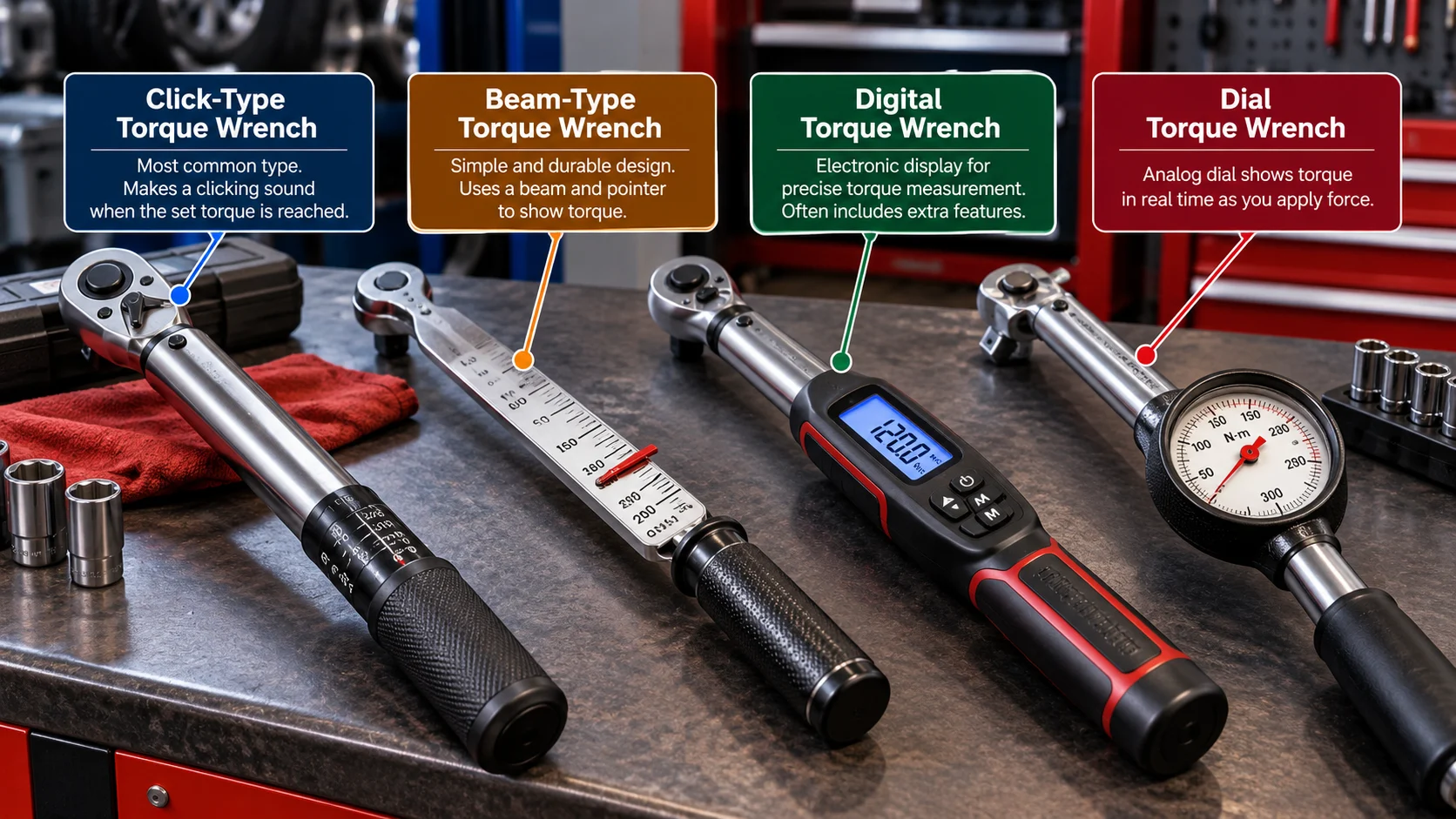
Several torque wrench designs are commonly used in automotive workshops. Each type provides a different combination of price, precision, convenience, and functionality.
1. Click-Type Torque Wrench
Uses an adjustable mechanical mechanism that produces a click when the selected torque is reached.
Best for: Routine automotive maintenance and general workshop repairs.
2. Beam-Type Torque Wrench
Uses a flexible beam and pointer arrangement to display the applied torque on a scale.
Best for: Basic mechanical work and users who prefer a simple design.
3. Digital Torque Wrench
Uses electronic sensors and a display to indicate torque, often with audible or visual target alerts.
Best for: Precision work and applications requiring advanced features.
4. Dial Torque Wrench
Displays applied torque through an analog dial gauge.
Best for: Inspection, testing, and measurement-oriented work.
| Type | Main Advantage | Limitation |
|---|---|---|
| Click | Easy preset tightening | Must stop at the click |
| Beam | Simple mechanical design | Scale must remain visible |
| Digital | Electronic readout and alerts | More expensive; may require batteries |
| Dial | Easy torque indication | Often bulkier and more specialized |
Torque Wrench Drive Sizes Explained
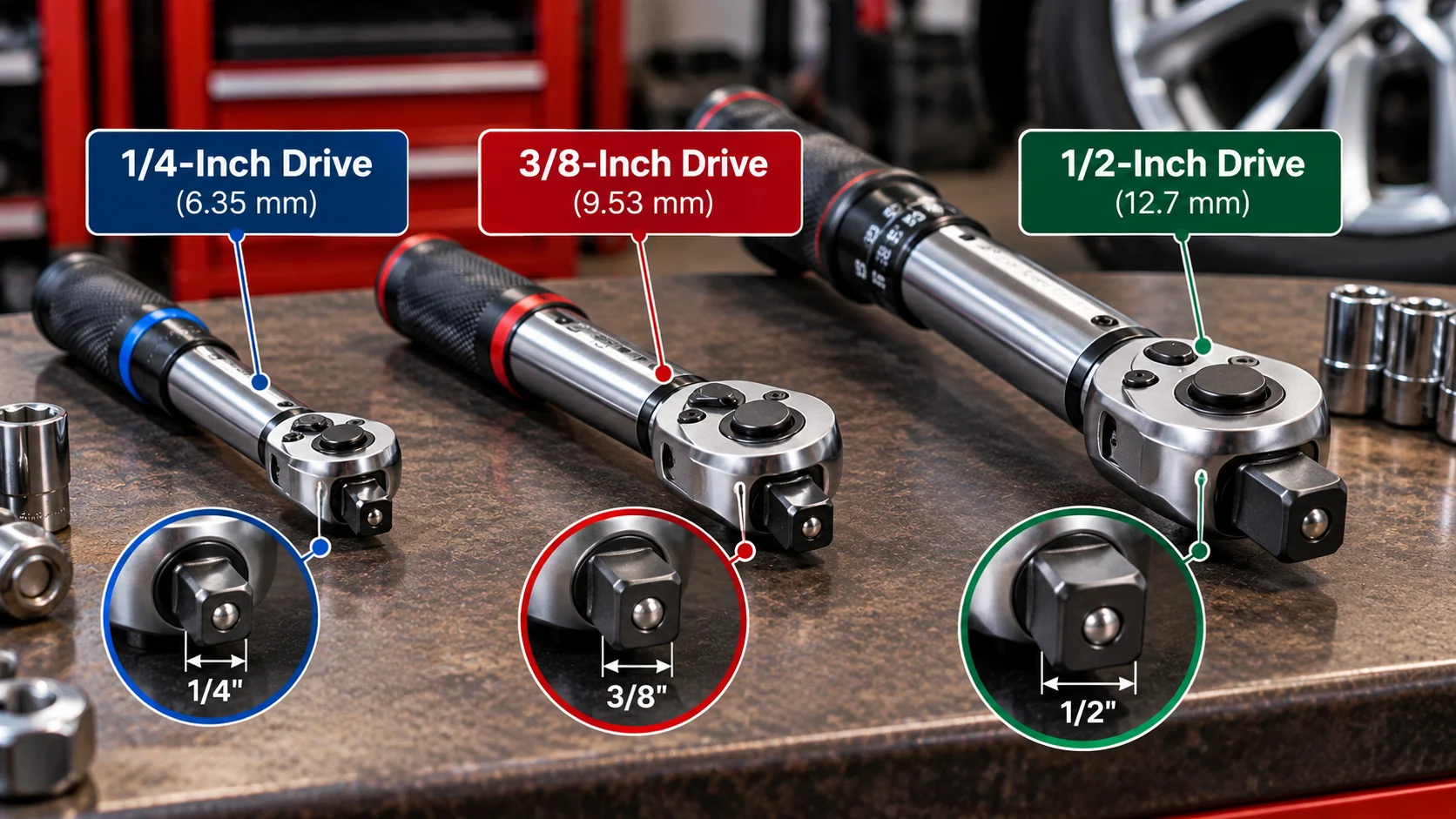
A torque wrench’s drive size describes the dimensions of the square fitting used to connect sockets and compatible attachments.
The most familiar automotive drive sizes are 1/4-inch, 3/8-inch, and 1/2-inch.
| Drive Size | Typical Applications | Considerations |
|---|---|---|
| 1/4-inch | Small engine fasteners, light assemblies, and low-torque components | Often paired with lower torque ranges |
| 3/8-inch | General engine and moderate-torque repair tasks | Versatile for many automotive applications |
| 1/2-inch | Wheel lug nuts, suspension components, and higher-torque fasteners | Commonly available in higher torque ranges |
How to Choose the Correct Torque Range
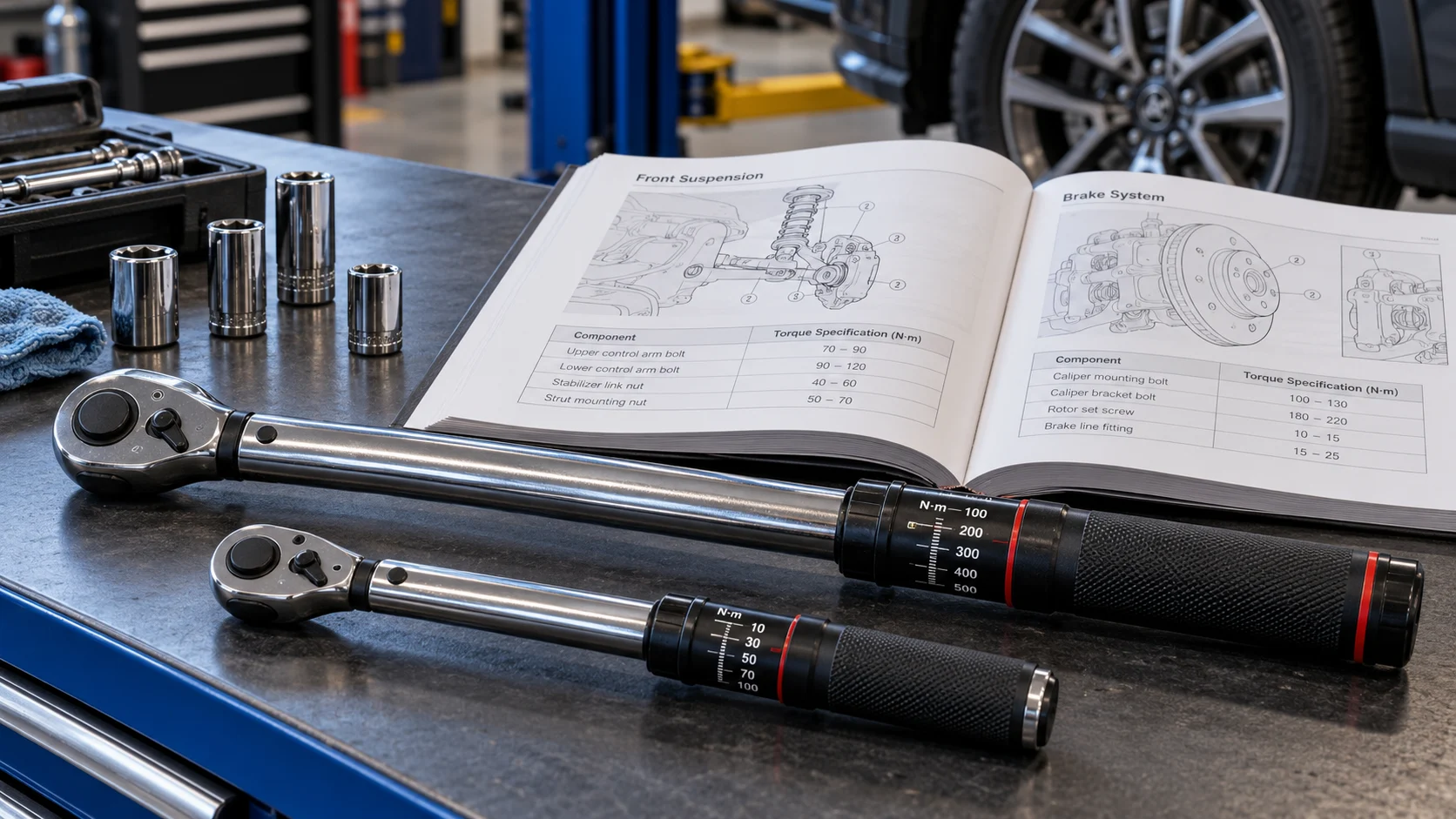
The correct torque wrench should cover the torque specification required for the particular component.
Begin by checking the service manual for the exact vehicle, model year, engine configuration, fastener, and tightening procedure.
Torque Range Suitability Checker
Enter your required torque and the minimum and maximum torque ratings printed on your wrench to check whether the setting falls within its stated operating range.
This checker compares numerical ranges only. It does not verify calibration, rated accuracy, appropriate attachments, torque-angle procedures, or vehicle manufacturer requirements.
Example Torque Range Comparison
| Example Tool Range | Required Torque | Range Check |
|---|---|---|
| 5–25 N·m | 15 N·m | Within range |
| 20–100 N·m | 70 N·m | Within range |
| 40–200 N·m | 120 N·m | Within range |
| 40–200 N·m | 15 N·m | Outside range |
How to Use a Torque Wrench Correctly
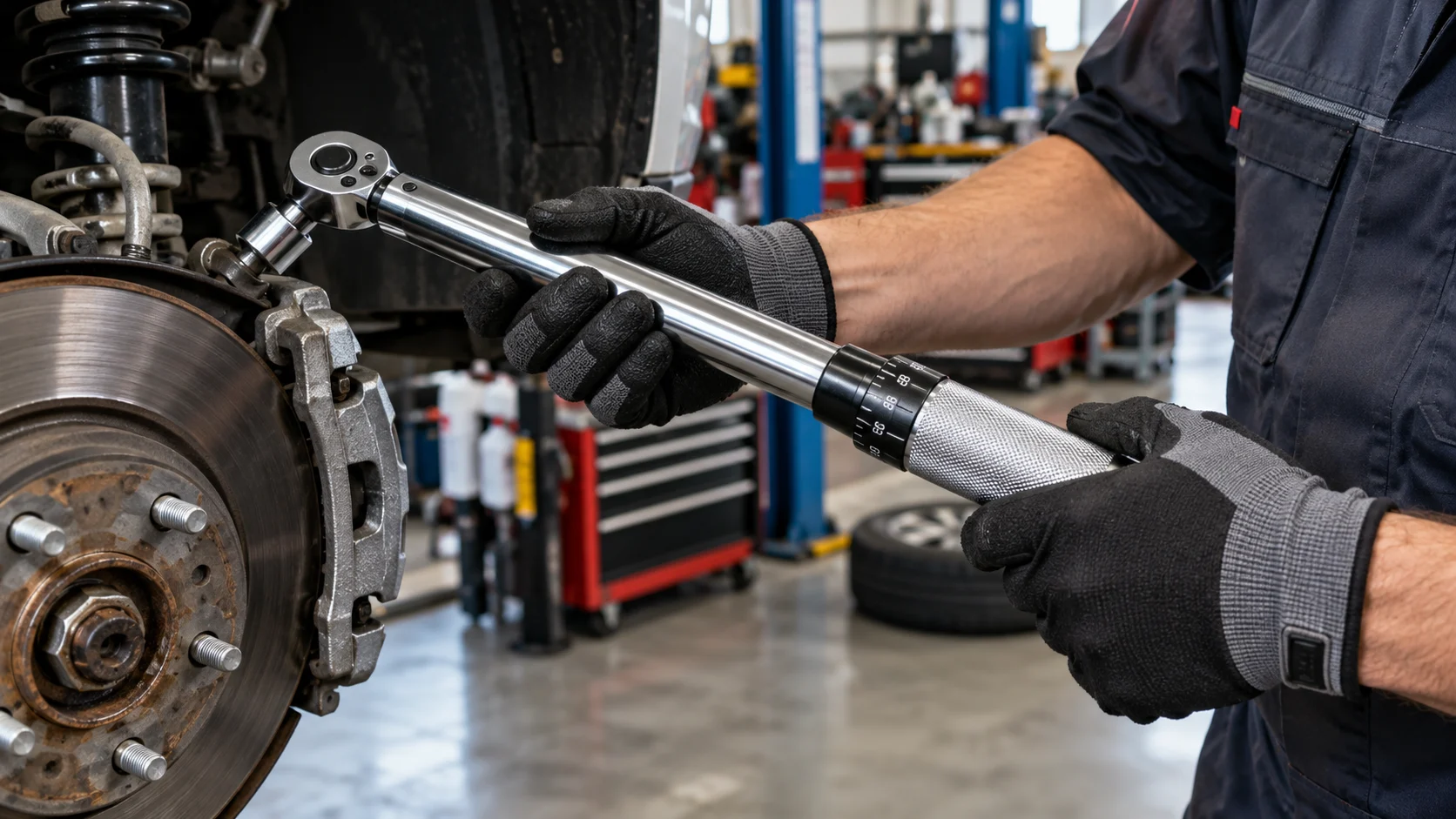
Using a torque wrench correctly involves more than simply selecting a number on the handle. The entire tightening procedure matters.
Check the Specification
Find the correct torque value in the manufacturer-approved repair procedure.
Choose the Correct Tool
Select a torque wrench and socket suitable for the required torque and fastener.
Inspect the Fastener
Check for damaged threads and follow any lubrication, replacement, or cleaning requirements.
Set the Torque Value
Adjust the torque wrench to the specified value and lock its setting if the model provides a lock.
Apply Smooth Force
Hold the intended grip position and pull steadily without jerking or applying sudden shocks.
Stop at the Indication
For a click-type wrench, stop at the first distinct click. Follow the appropriate procedure for other wrench types.
Use the Correct Tightening Sequence
Some components require fasteners to be tightened in stages or in a specific pattern. Wheel lug nuts, cylinder heads, and certain suspension parts may have particular sequences.
Follow those procedures exactly. A correct final torque value alone does not guarantee correct assembly.
Automotive Torque Wrench Applications
Torque wrenches are used throughout automotive repair wherever controlled fastener tightening is required.
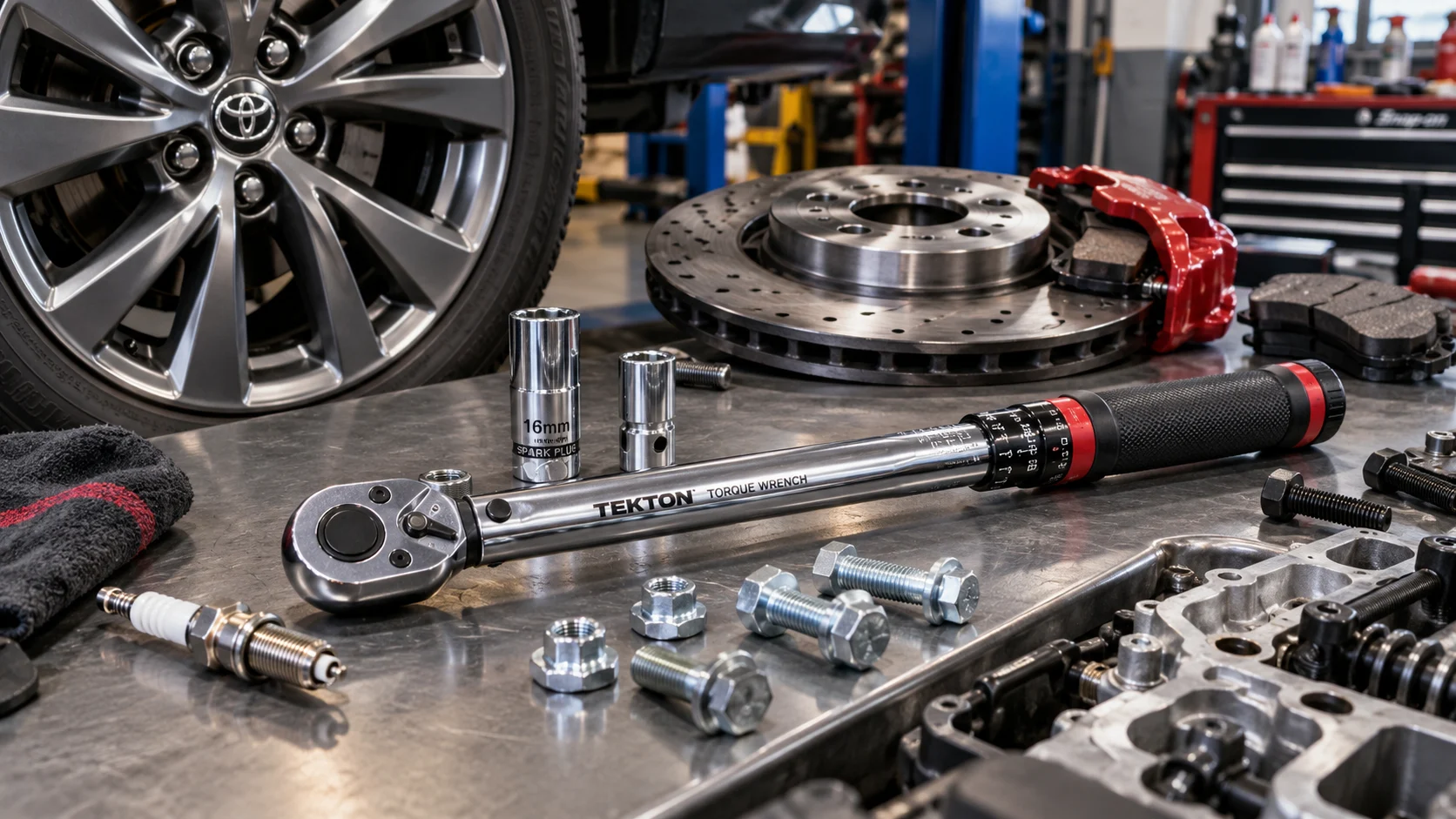
Wheel Lug Nuts
Correct torque helps ensure the wheel is secured using the vehicle manufacturer’s required tightening procedure.
Brake Components
Caliper brackets, guide pins, and related fasteners may have distinct torque specifications.
Spark Plugs
Correct tightening helps avoid damaged cylinder head threads, incorrect seating, and other installation problems.
Engine Fasteners
Some engine components require carefully controlled torque values, multiple stages, or angle-tightening procedures.
Suspension Components
Control arms, struts, and related assemblies may require precise torque and specified vehicle loading conditions.
Transmission Components
Transmission housings, mounting brackets, and serviceable assemblies may require specified fastener torque.
Torque Wrench Calibration and Maintenance
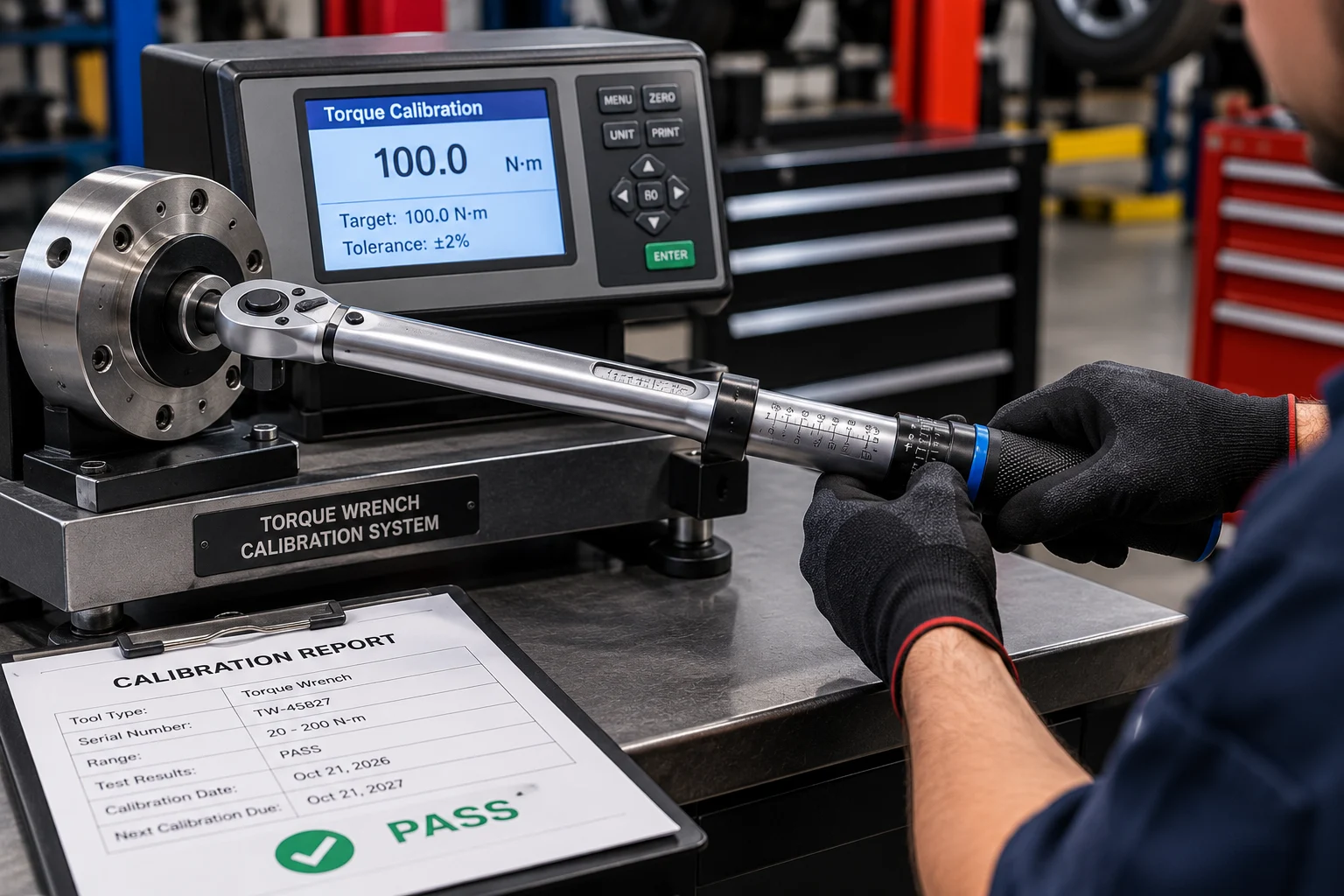
Calibration checks whether a torque wrench’s measurement or output corresponds to a known torque standard within the applicable tolerance.
Regular calibration is particularly important for professional workshops and work where fastener tightening accuracy is critical.
When Should a Torque Wrench Be Calibrated?
Calibration intervals depend on the manufacturer’s instructions, usage frequency, required accuracy, and working environment.
Many professional maintenance programs use annual or usage-based schedules, but no single interval is correct for every wrench.
Signs a Torque Wrench Needs Inspection
- The wrench has been dropped or subjected to a significant impact.
- It produces inconsistent readings or mechanical indications.
- The adjustment mechanism feels unusually rough, loose, or damaged.
- The tool has exceeded its scheduled calibration interval.
- There is visible damage, corrosion, or unusual wear.
Proper Storage and Care
- Keep the wrench clean and dry.
- Store it in a protective case.
- Avoid impacts and excessive loading.
- Follow the manufacturer’s storage setting instructions for adjustable models.
- Keep records of calibration where necessary.
Common Torque Wrench Mistakes to Avoid
Even an accurate torque wrench can produce incorrect results when it is used improperly. The following mistakes are especially important to avoid.
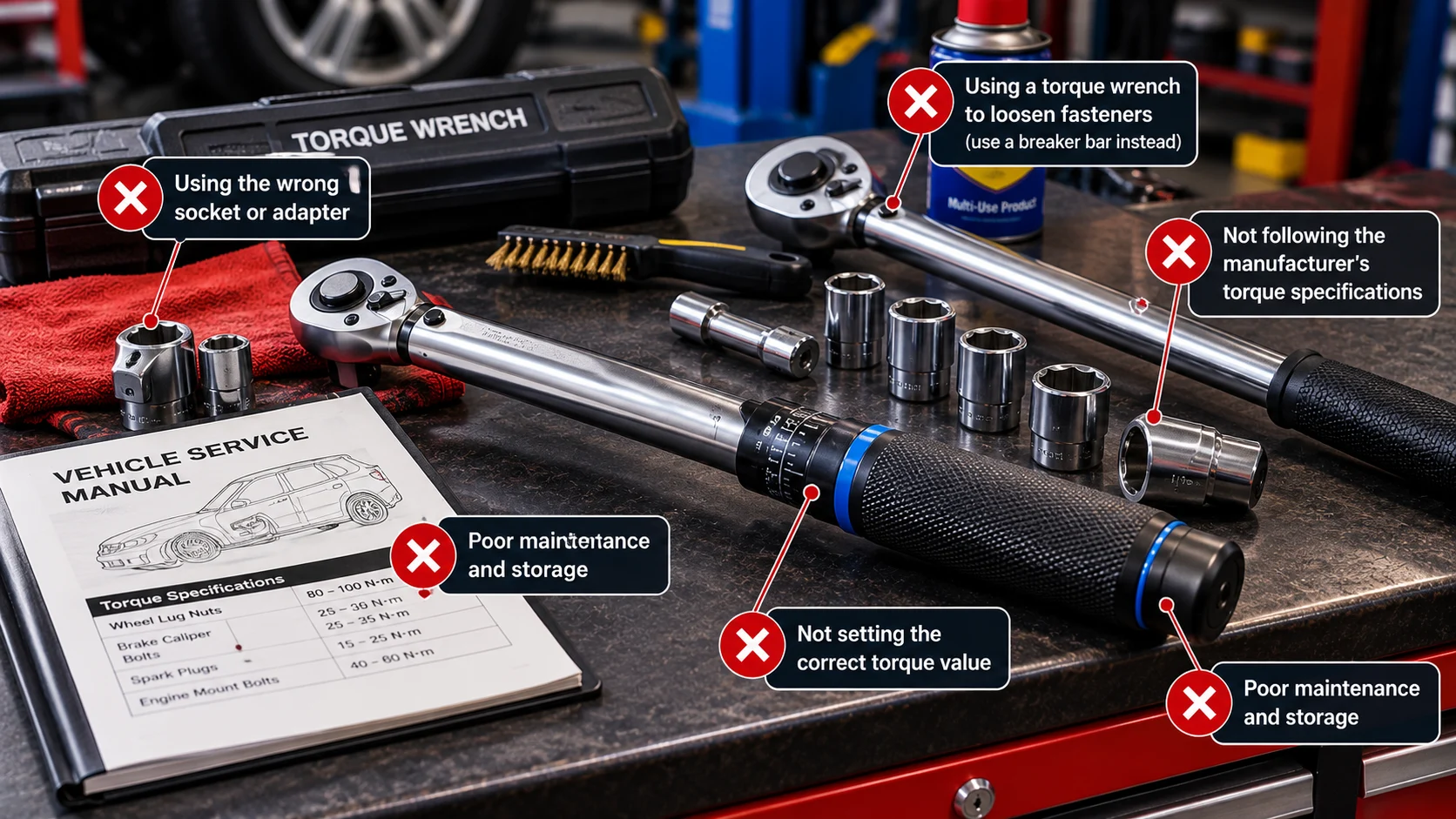
| Mistake | Why It Matters | Better Practice |
|---|---|---|
| Using the wrong torque setting | Can under-tighten or over-tighten fasteners | Verify the specification and unit first |
| Using a wrench outside its range | May produce unreliable results or damage the tool | Choose a suitable calibrated range |
| Using a torque wrench as a breaker bar | Can overload or damage the precision mechanism | Use an appropriate loosening tool |
| Continuing after the click | May apply additional torque | Stop at the first clear click |
| Using inappropriate adapters | Can create poor fitment or change effective lever length | Use approved attachments and account for length changes |
| Ignoring calibration | May leave measurement errors undetected | Follow the calibration schedule |
| Ignoring the tightening sequence | Can cause uneven clamping or component distortion | Follow the prescribed sequence and stages |
Torque Wrench Buying Checklist
Choosing a torque wrench requires more than checking its price. The correct tool should match the tasks you intend to perform and provide reliable torque control.
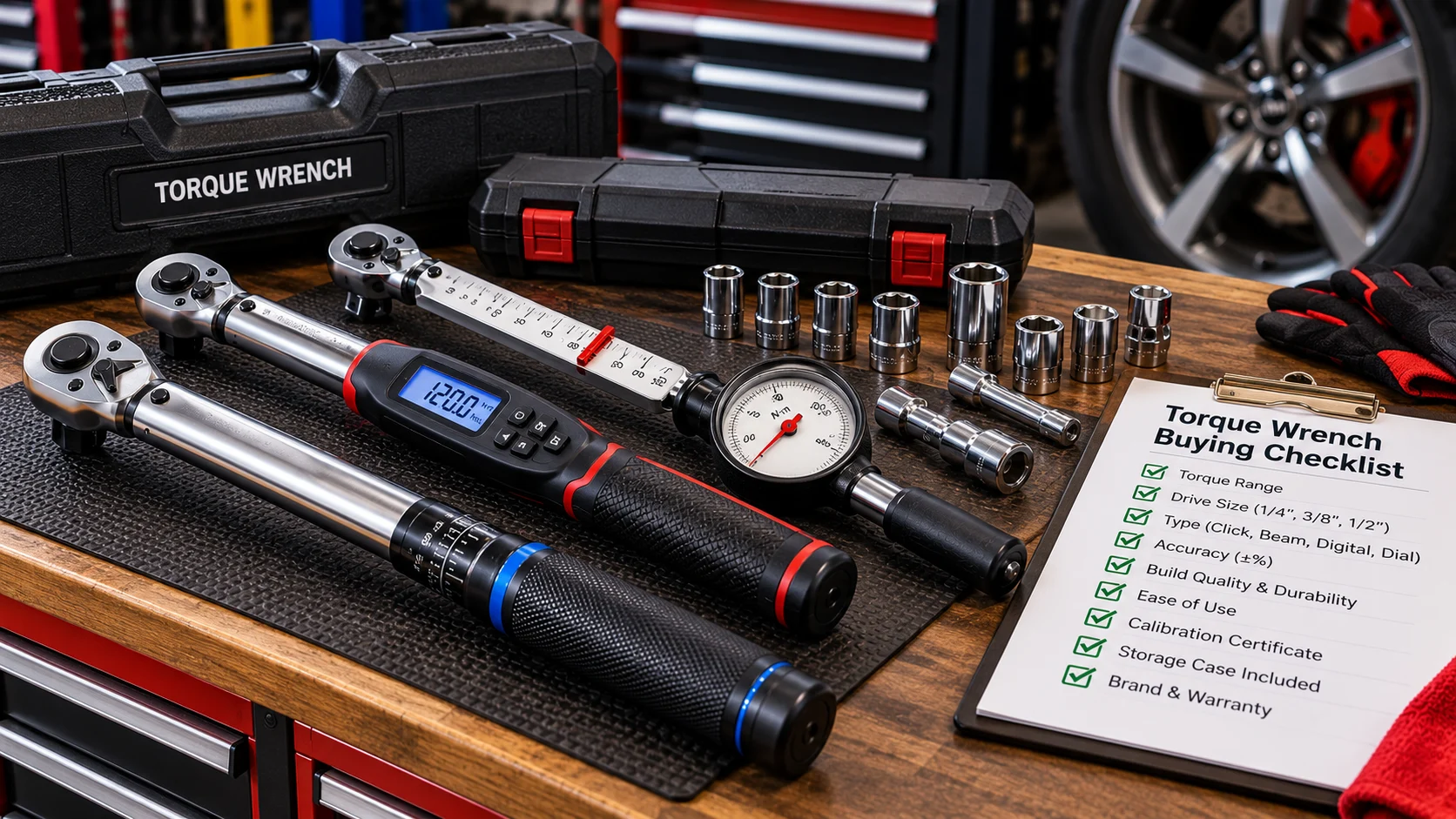
- Torque range: Does the calibrated operating range cover your intended fastener specifications?
- Drive size: Does the square drive match your sockets and typical applications?
- Wrench type: Would a click, beam, digital, or dial model suit your working style?
- Accuracy: Is the stated accuracy appropriate for your intended use?
- Calibration: Is calibration information or certification provided where needed?
- Build quality: Is the tool comfortable to operate, durable, and easy to read?
- Storage: Does the wrench include a protective case?
- Support: Are warranty coverage, instructions, and calibration services available?
Which Torque Wrench Should You Buy?
Occasional DIY Car Maintenance
A quality click-type torque wrench with an appropriate range is often a practical choice.
Regular Professional Workshop Use
Prioritize repeatable performance, calibration support, durable construction, and comfortable operation.
Low-Torque Engine Components
Look for a torque wrench designed specifically for low-torque work.
Precision and Documentation
A digital model with measurement recording features may be appropriate for specialized workflows.
Frequently Asked Questions
What is the torque range of a torque wrench?
It is the minimum-to-maximum torque span for which the particular wrench is rated. Always check the specifications printed on the tool or listed by its manufacturer.
Can a torque wrench be used to loosen bolts?
Generally, use a suitable ratchet or breaker bar for loosening. Some torque tools are designed for bidirectional torque measurement, but you should follow their manufacturer instructions rather than using a precision wrench as a general breaker bar.
What happens if I use too much torque?
Excessive torque may damage threads, stretch fasteners, deform components, or lead to incorrect assembly preload.
Is a digital torque wrench better than a click-type wrench?
Not necessarily. Digital tools may offer useful displays, alerts, and data functions, while click-type wrenches are often simpler and more affordable. Accuracy and suitability depend on the particular model.
Can I use a 1/2-inch torque wrench for small bolts?
Only when the required torque falls within its calibrated operating range and the tool and attachments are appropriate. Many smaller fasteners are better served by a lower-range torque wrench.
How often should a torque wrench be calibrated?
Follow the manufacturer and any applicable workshop quality procedures. Calibration frequency depends on use, exposure, accuracy requirements, and tool condition.
Do torque wrenches need special storage?
Store them clean, dry, and protected from damage. Follow the manufacturer instructions regarding the storage setting for adjustable models.
What torque wrench range is best for wheel lug nuts?
Choose a wrench whose calibrated range comfortably includes the exact wheel lug torque required by your vehicle’s service specifications. There is no single correct torque for every vehicle.
Final Thoughts: Choosing and Using a Torque Wrench
A torque wrench is an essential tool for maintaining correct fastener tightening during automotive repairs.
Understanding the torque range, selecting the appropriate drive size, checking manufacturer specifications, and following correct tightening procedures can improve repair consistency and help prevent damage.
For most automotive owners, a reliable click-type torque wrench is a sensible starting point. However, the best tool ultimately depends on the required torque range, frequency of use, and nature of the work.
Editorial note: This guide provides general automotive tool information. Vehicle-specific service data and torque wrench manufacturer instructions take precedence.