
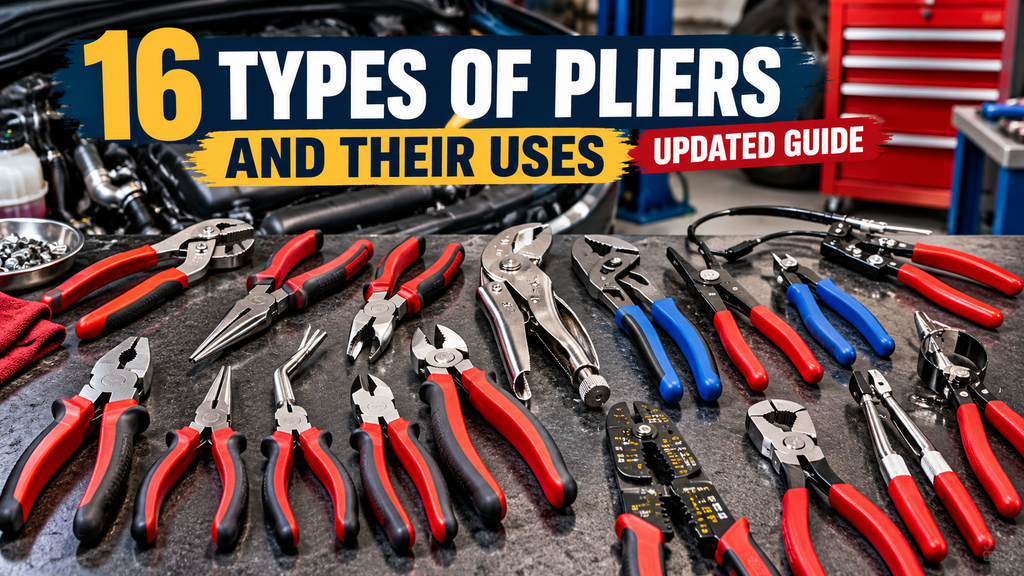
Pliers are among the most useful hand tools in a garage, but choosing the wrong pair can make a simple repair frustrating. Different types of pliers have different jaws, cutting edges, and gripping mechanisms, each designed for particular jobs.
Whether you’re replacing a radiator hose clamp, working on electrical connectors, removing a retaining ring, or gripping small metal components, understanding the different kinds of pliers helps you work more efficiently.
In this updated guide, we’ll explain 16 common and specialized pliers types, how to identify them, what each is used for, and which ones are most valuable for automotive repairs.
What Are Pliers and What Are They Used For?
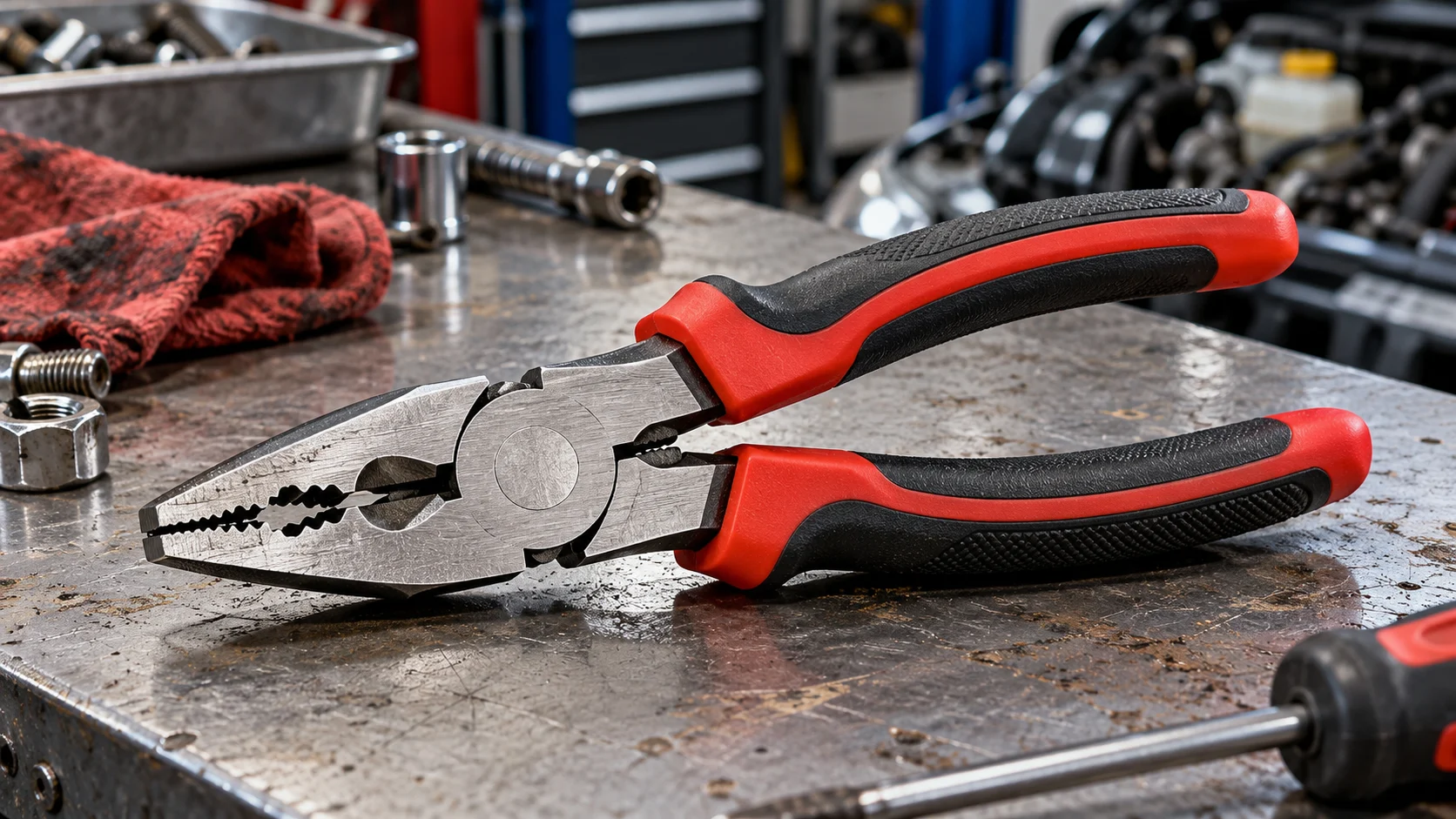
Pliers are manually operated tools that typically feature two handles connected at a pivot, with jaws or cutting edges at the opposite end. Squeezing the handles moves the jaws together to grip or manipulate a workpiece.
Their usefulness comes from leverage and jaw design. Long, narrow jaws can reach confined spaces, serrated jaws grip suitable objects, and dedicated cutting edges separate appropriate materials.
Main Parts of Pliers
Jaws
The working ends that grip, hold, compress, or manipulate suitable materials.
Pivot Joint
Connects the handles and transfers force to the jaws.
Handles
Provide leverage, control, and a comfortable gripping surface.
Cutting Edges
Present on certain models for cutting suitable wires or other approved materials.
What Jobs Can Pliers Perform?
- Grip or hold small metal parts.
- Bend suitable wire and light-gauge materials.
- Cut wire, cable ties, or specified materials.
- Operate compatible hose clamps.
- Remove and install retaining rings.
- Crimp compatible electrical terminals.
- Hold parts temporarily during assembly.
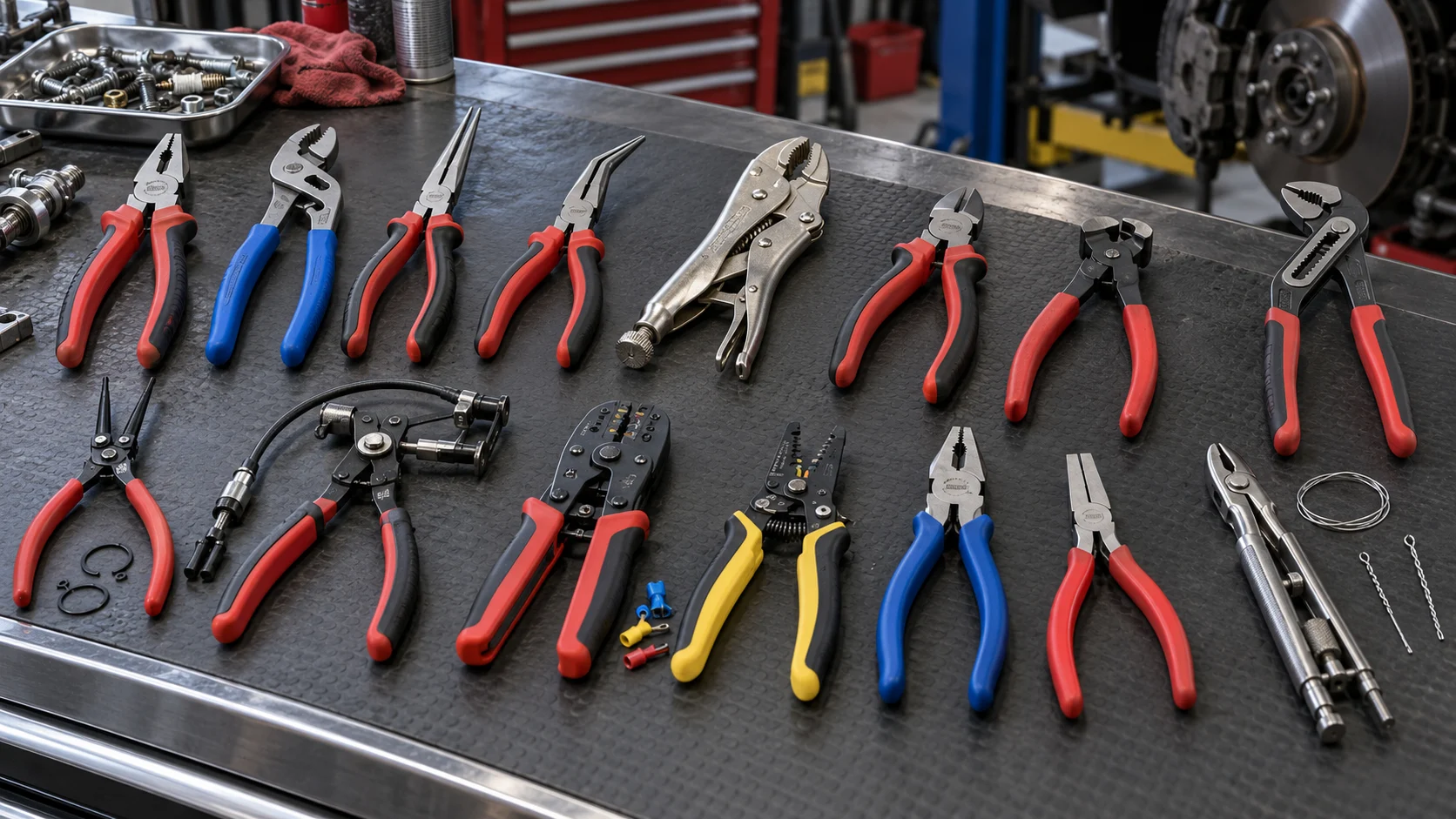
16 Different Types of Pliers at a Glance
The easiest way to understand different kinds of pliers is to compare their jaw shapes and intended applications.
| Pliers Type | Main Function | Typical Automotive Use |
|---|---|---|
| 1. Combination | General gripping and bending | Handling suitable small parts |
| 2. Slip-Joint | Adjustable gripping | General garage tasks |
| 3. Needle-Nose | Precision gripping | Small clips and confined spaces |
| 4. Bent-Nose | Angled access | Reaching around obstructions |
| 5. Locking | Clamping and holding | Temporary workpiece holding |
| 6. Diagonal Cutters | Wire and tie cutting | Electrical and cable-tie work |
| 7. End Cutters | Cutting near surfaces | Suitable cutting tasks |
| 8. Tongue-and-Groove | Wide adjustable grip | Suitable larger metal fittings |
| 9. Snap-Ring | Retaining-ring installation/removal | Bearings and mechanical assemblies |
| 10. Hose-Clamp | Compressing compatible clamps | Cooling-system service |
| 11. Hose-Grip | Holding or assisting hose removal | Suitable hose connections |
| 12. Crimping | Terminal compression | Electrical connector repairs |
| 13. Wire-Stripping | Removing insulation | Wire preparation |
| 14. Lineman’s | Strong gripping and cutting | Suitable electrical workshop work |
| 15. Flat-Nose | Flat-surface gripping/bending | Small metal fabrication |
| 16. Lock-Wire | Safety-wire twisting | Specialized mechanical applications |
Some manufacturers offer additional designs and variations, so there is no single universal total number of pliers types.
Combination Pliers vs Slip-Joint Pliers
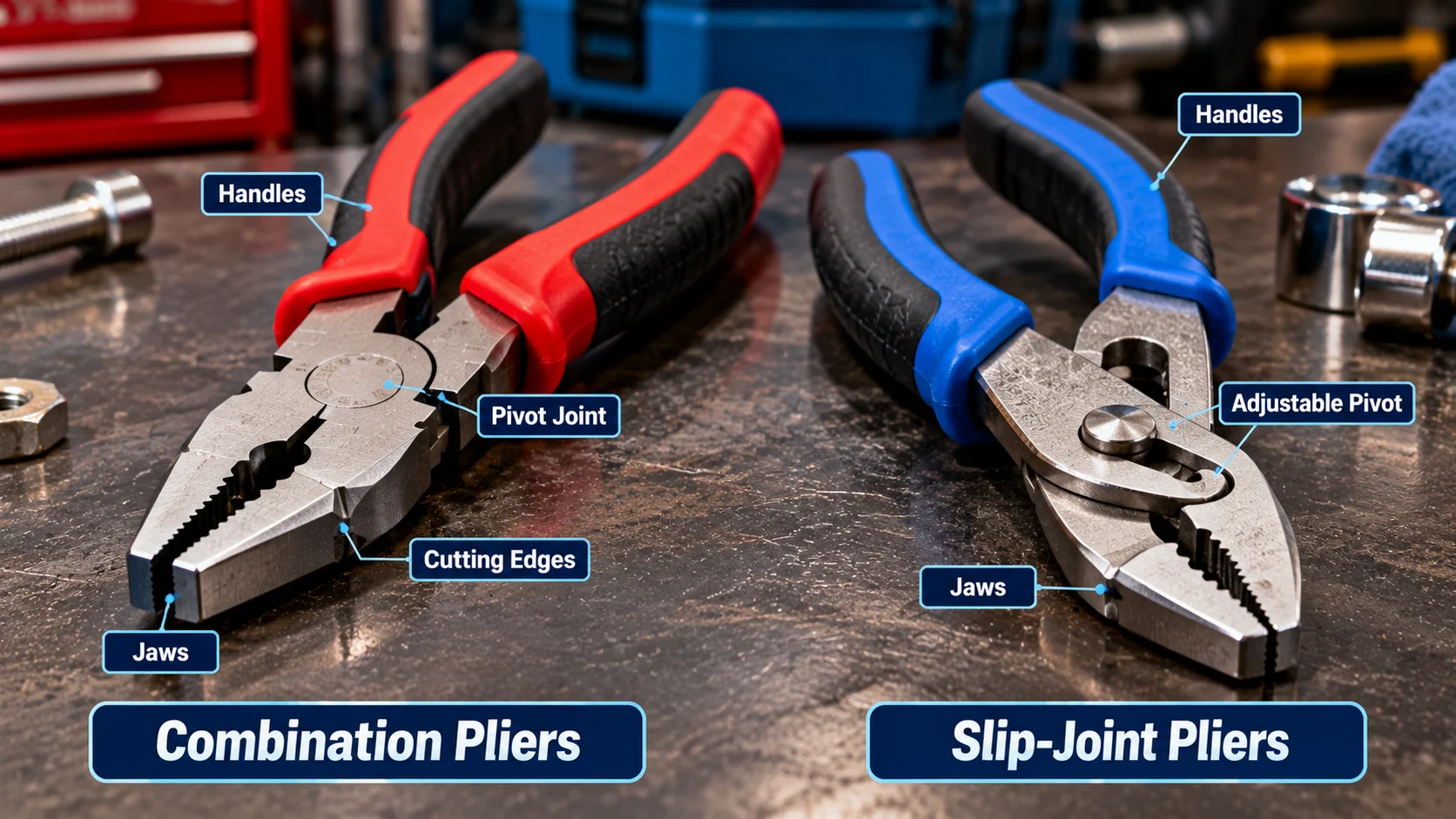
Combination and slip-joint pliers are common general-purpose tools, but their jaw mechanisms differ.
1. Combination Pliers
Combination pliers, sometimes called universal pliers, generally have fixed-pivot jaws with gripping surfaces and integrated cutters on applicable designs.
They are useful for gripping appropriate small parts, bending wire, and performing general workshop tasks.
2. Slip-Joint Pliers
Slip-joint pliers have a pivot that can be adjusted between positions to change the jaw opening.
This makes them useful for handling a wider range of suitable workpiece sizes.
| Feature | Combination | Slip-Joint |
|---|---|---|
| Pivot | Usually fixed | Adjustable |
| Main Strength | Versatility and control | Adjustable jaw opening |
| Cutting Edge | Common on many models | Varies by design |
| Typical Use | Gripping and bending | General gripping |
Needle-Nose and Bent-Nose Pliers
Needle-nose and bent-nose pliers are especially helpful when working with small components or accessing restricted areas.
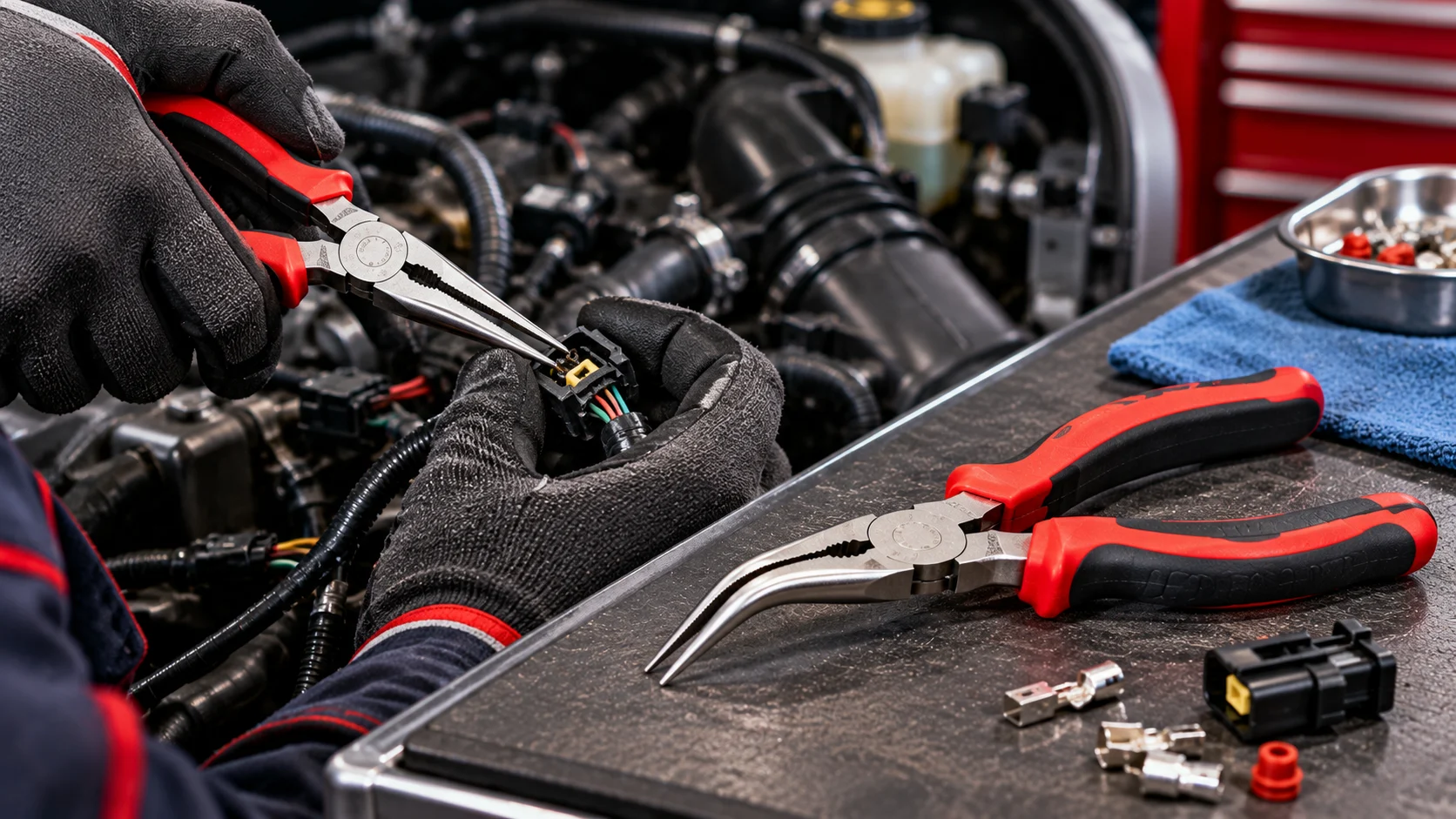
3. Needle-Nose Pliers
Needle-nose pliers have long, narrow jaws that offer greater reach and precision than typical general-purpose pliers.
They are useful for handling small clips, positioning suitable wires, and retrieving loose components in confined areas.
4. Bent-Nose Pliers
Bent-nose pliers have angled jaws that may provide improved access around obstructions.
They are useful when straight pliers cannot approach a component at the required angle.
Locking Pliers and Their Uses
Locking pliers have an adjustable mechanism that allows their jaws to clamp firmly onto a suitable workpiece and remain locked until released.
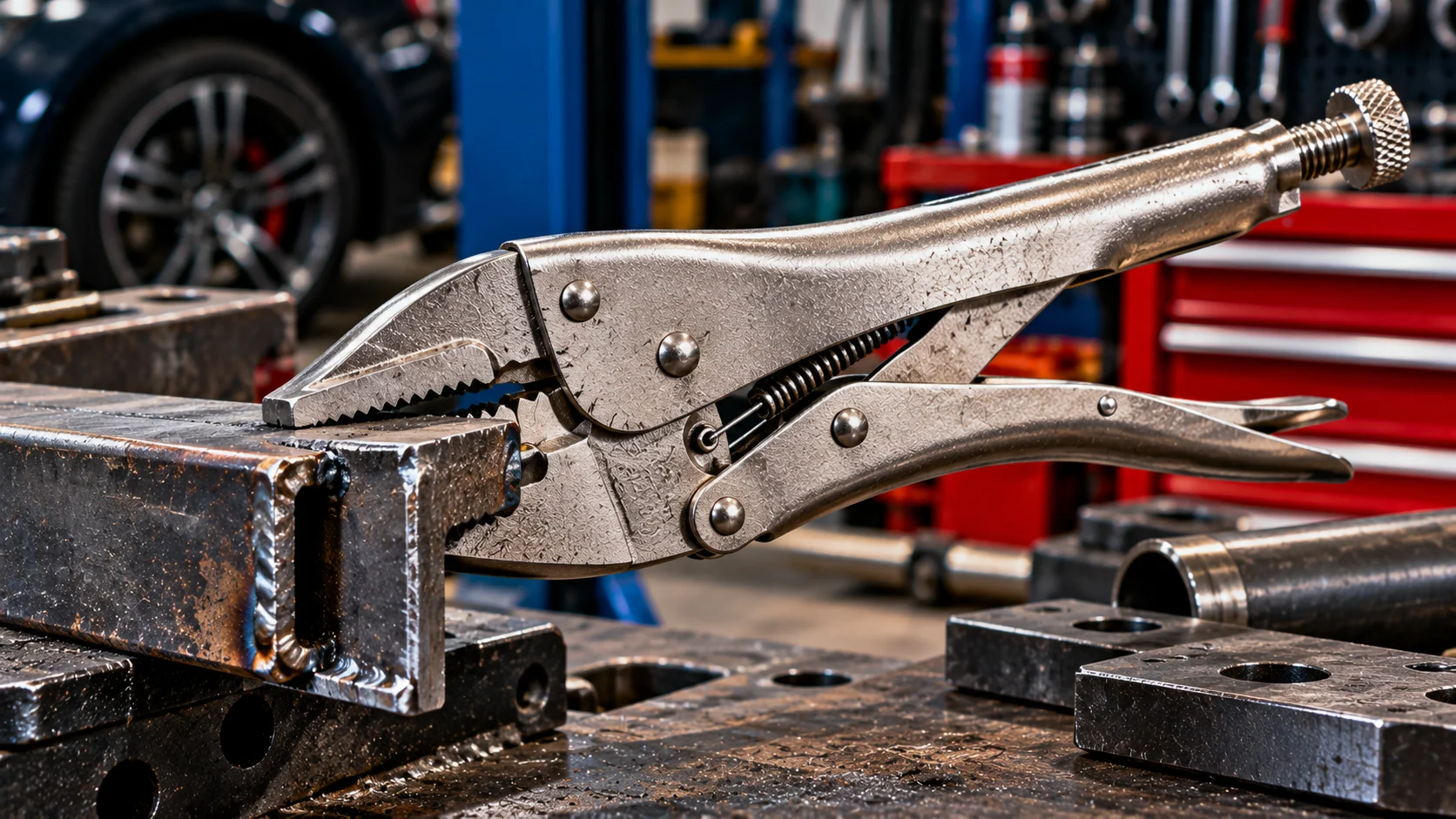
5. Locking Pliers
These pliers are useful when a part needs temporary holding during fitting, assembly, or noncritical fabrication work.
Common Applications
- Holding suitable steel tabs during assembly.
- Temporarily clamping metal workpieces.
- Gripping appropriate damaged or irregular objects.
- Supporting selected general workshop operations.
Diagonal Cutting and End-Cutting Pliers
Cutting pliers are designed primarily to separate suitable materials rather than grip them. The position of their cutting edges determines their most useful applications.
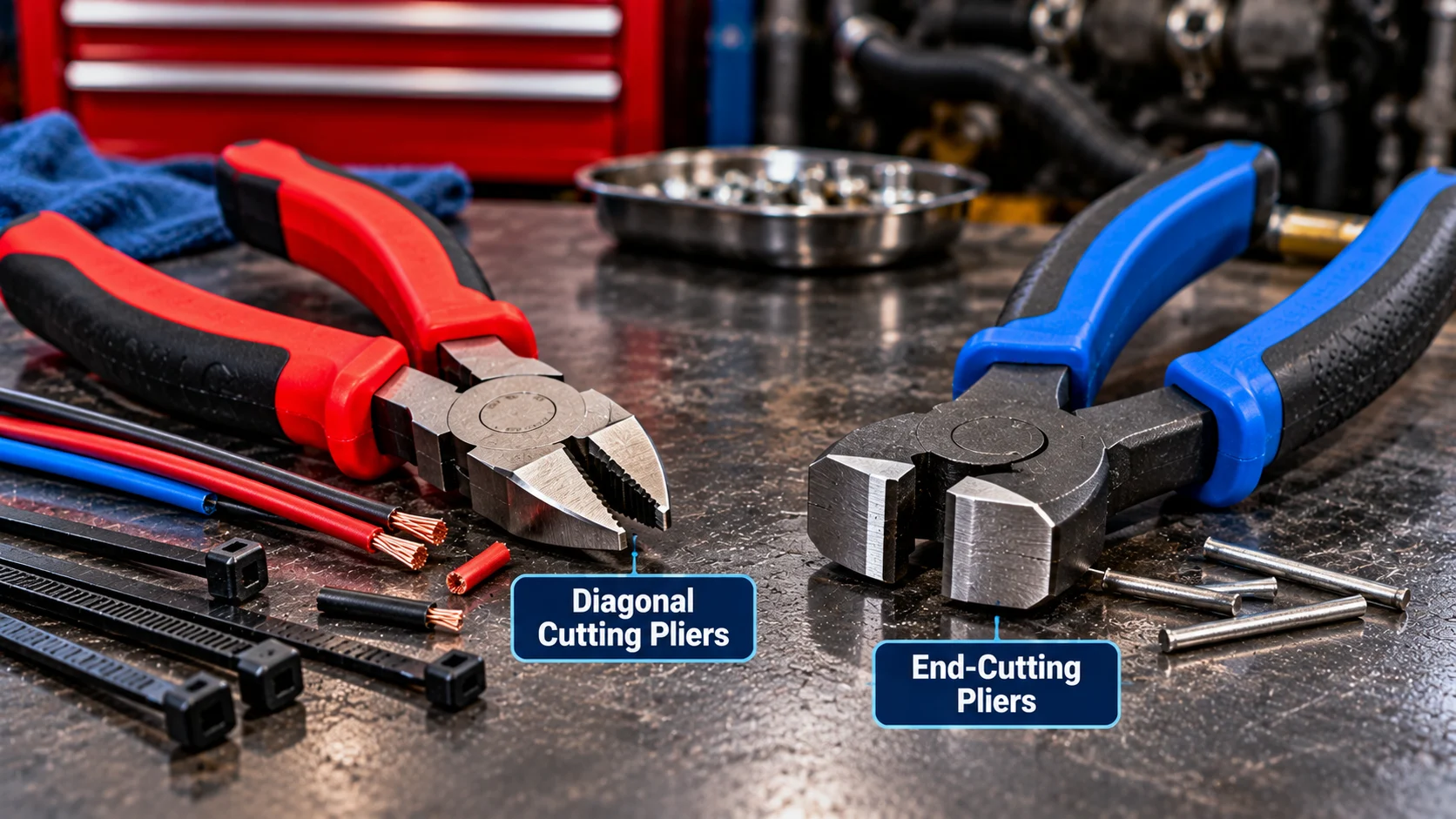
6. Diagonal Cutting Pliers
Diagonal cutters, often called side cutters, have angled cutting edges.
They are useful for cutting compatible electrical wire, cable ties, and other specified small materials.
7. End-Cutting Pliers
End cutters have cutting edges at the front of the tool, often allowing access close to a workpiece surface.
Different end-cutting designs are available for tasks such as trimming suitable wire or removing particular fasteners.
| Tool | Edge Position | Main Advantage |
|---|---|---|
| Diagonal Cutters | Angled toward the side | Convenient wire and tie cutting |
| End Cutters | Front of jaws | Access to materials near surfaces |
Tongue-and-Groove Pliers
Tongue-and-groove pliers have adjustable jaws with several possible opening positions.
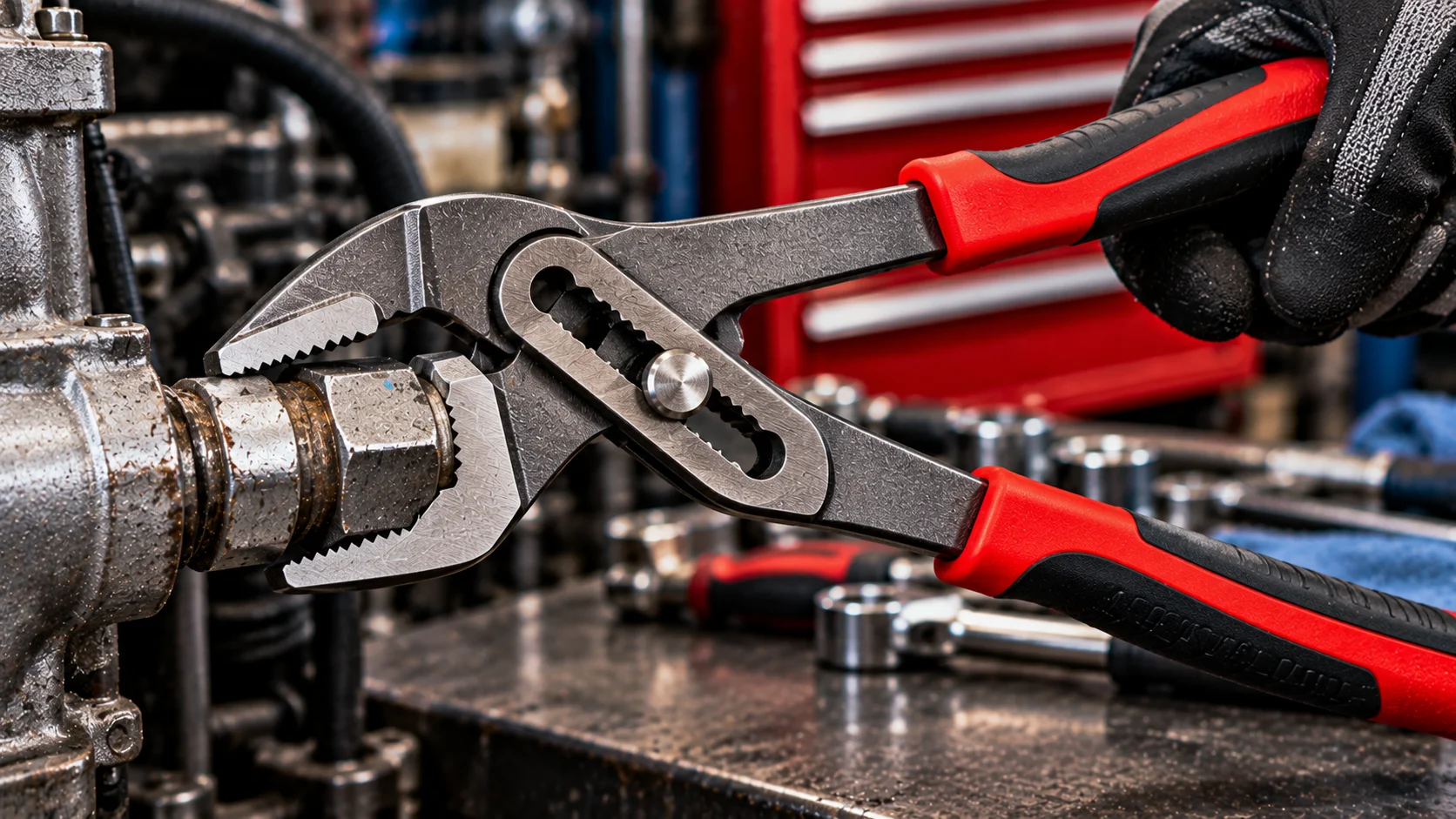
8. Tongue-and-Groove Pliers
These pliers are useful for gripping larger or irregularly shaped workpieces.
Their adjustable joint allows the tool to accommodate different jaw openings, while the handle length provides leverage.
Where Are They Useful?
- General workshop gripping tasks.
- Handling suitable irregular metal objects.
- Working with fittings that can tolerate serrated jaws.
- Holding appropriately shaped parts during disassembly.
Snap-Ring or Circlip Pliers
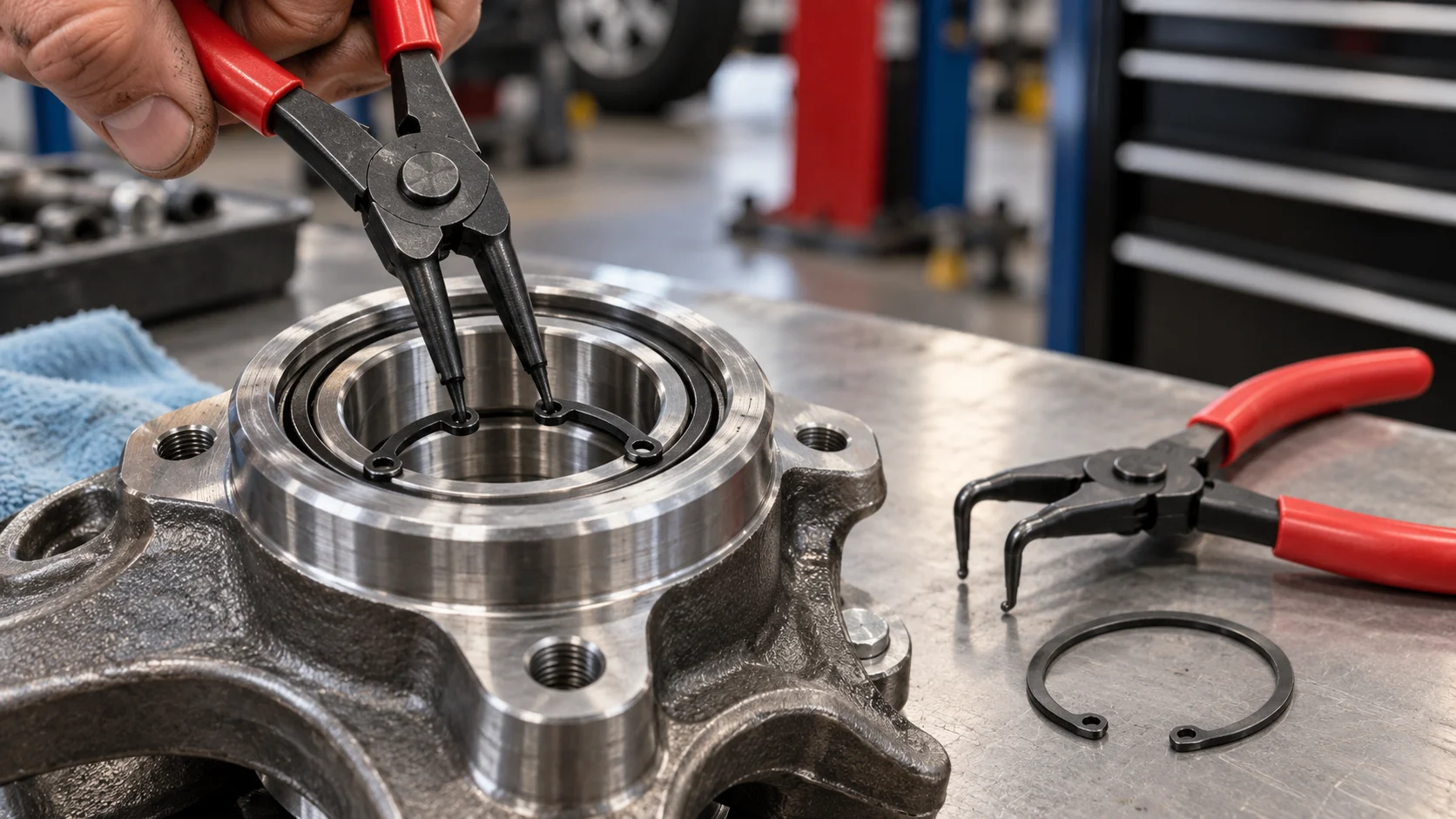
Snap-ring pliers, also known as circlip or retaining-ring pliers, are designed to install or remove compatible retaining rings.
9. Snap-Ring Pliers
Many retaining rings have small holes near their ends. Appropriate snap-ring pliers use specialized tips to engage those holes.
Internal vs External Snap-Ring Pliers
| Type | Ring Action | Common Location |
|---|---|---|
| Internal | Usually compresses a ring | Inside a bore or housing |
| External | Usually expands a ring | On a shaft or external groove |
Straight and angled tips are available depending on working clearance.
Hose-Clamp and Hose-Grip Pliers
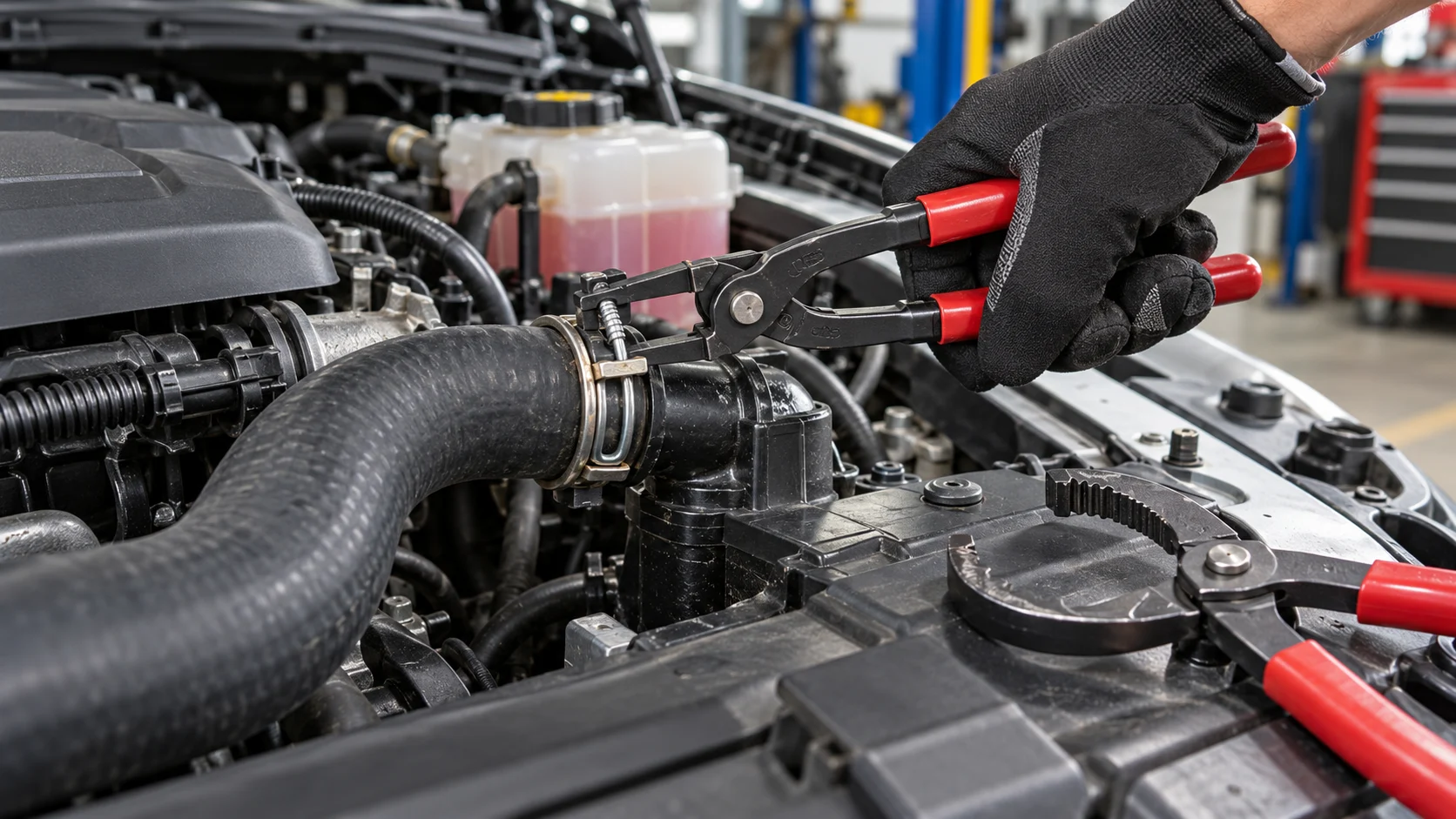
Automotive cooling systems often contain hoses and clamps that require dedicated tools for convenient service.
10. Hose-Clamp Pliers
Hose-clamp pliers are designed to operate certain styles of hose clamps, particularly spring-type clamps.
Some versions use flexible cables or locking mechanisms to improve access.
11. Hose-Grip Pliers
Hose-grip pliers are designed to hold suitable hoses or help loosen hose connections.
Their jaw shapes differ from ordinary general-purpose pliers to suit particular hose diameters and tasks.
Crimping and Wire-Stripping Pliers
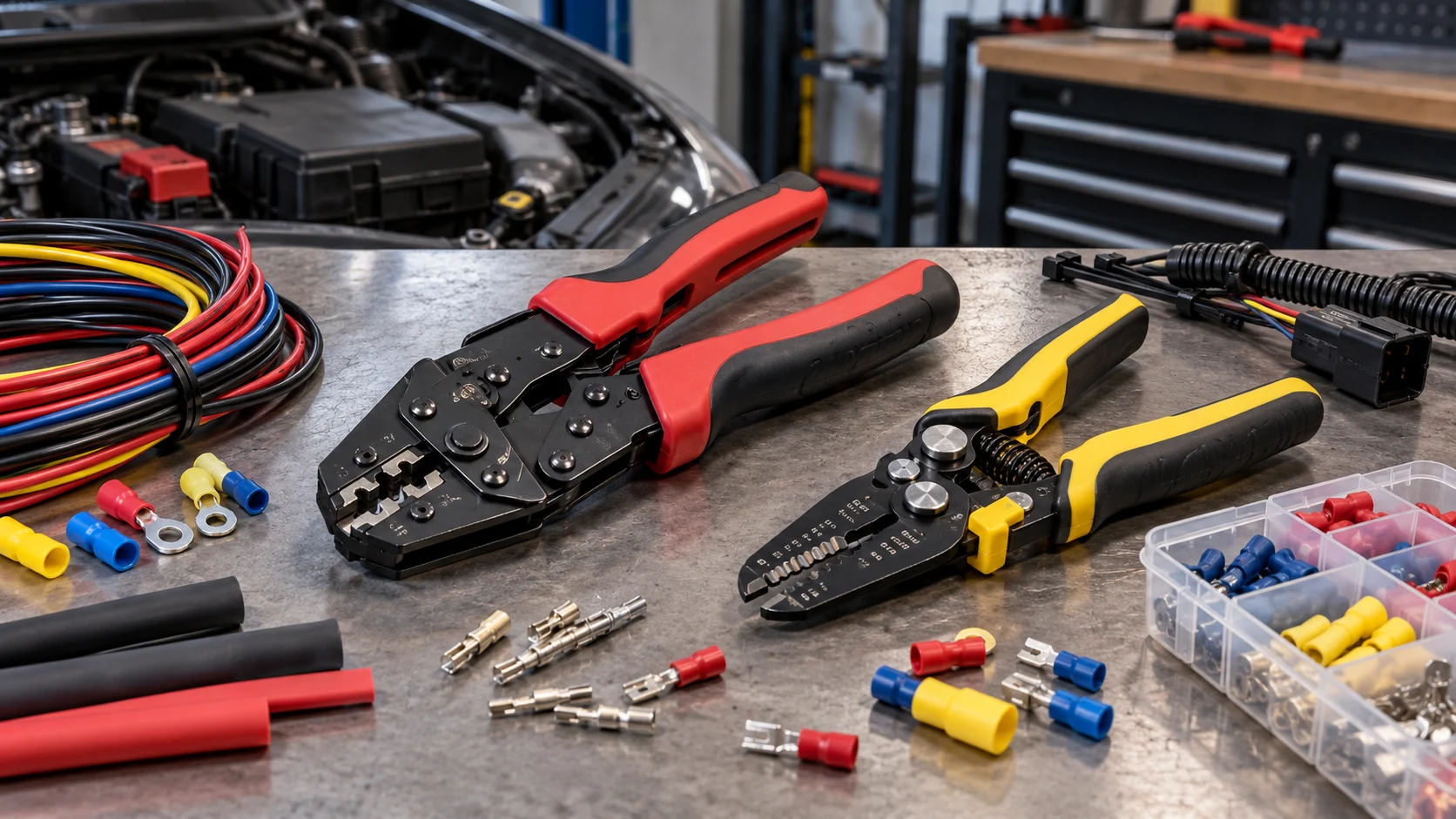
Electrical repair work requires tools that can create secure connections without damaging conductors or terminals.
12. Crimping Pliers
Crimping pliers use matching dies or jaws to compress compatible terminals onto electrical conductors.
Different connectors require different crimp profiles, wire sizes, and tooling.
13. Wire-Stripping Pliers
Wire-stripping pliers remove insulation from suitable electrical wire while minimizing damage to the conductor underneath.
Some tools offer multiple stripping sizes, while others use automatic mechanisms.
Electrical Tool Selection Checklist
- Match the tool to the wire size.
- Verify terminal and die compatibility.
- Avoid damaging conductor strands.
- Use the correct insulation-strip length.
- Follow connector manufacturer requirements.
Lineman’s and Flat-Nose Pliers
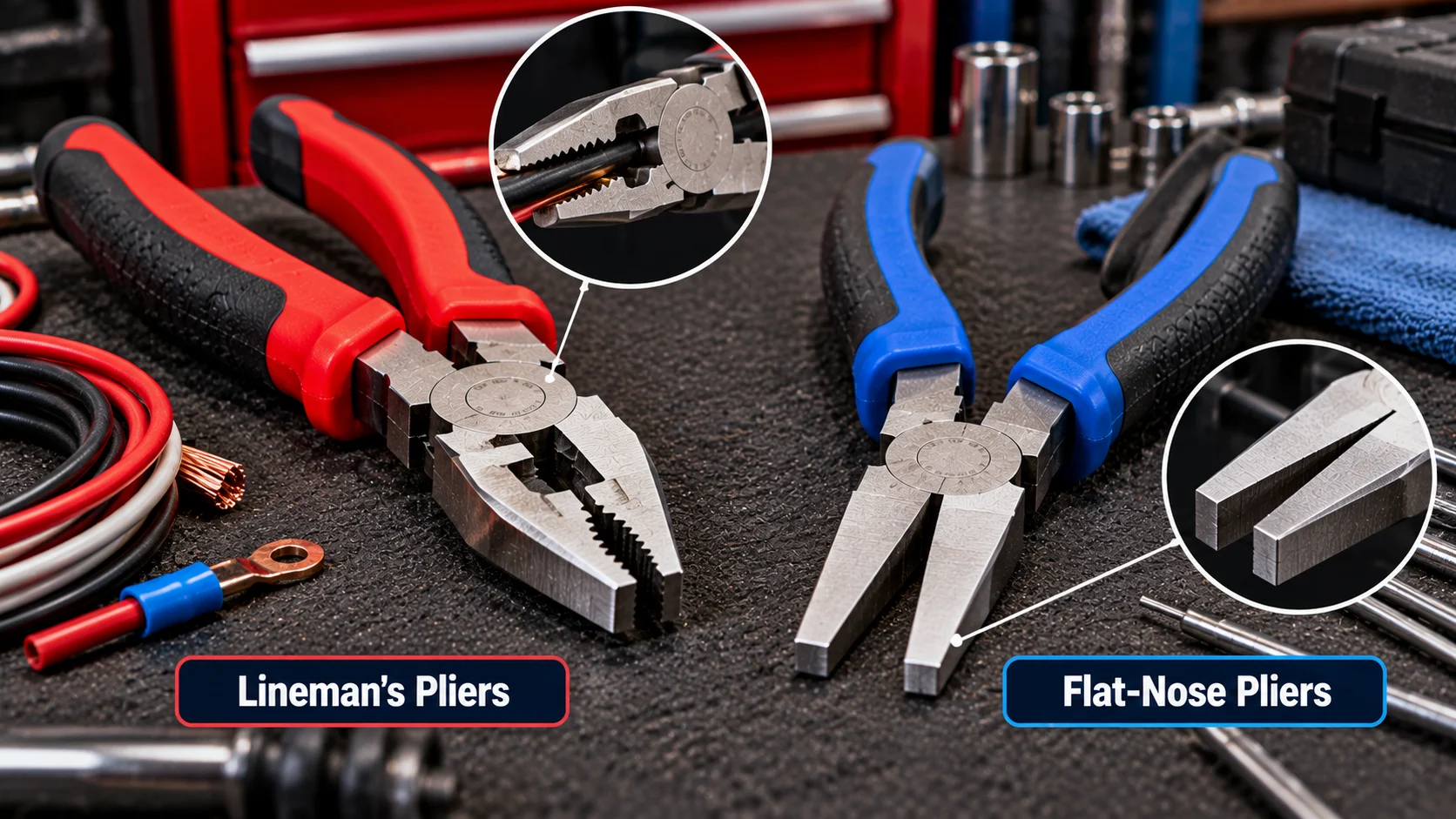
Lineman’s and flat-nose pliers both offer gripping surfaces, but they are intended for different kinds of work.
14. Lineman’s Pliers
Lineman’s pliers commonly feature strong gripping jaws and integrated cutting edges for suitable wire work.
They are often associated with electrical installation and general workshop tasks.
15. Flat-Nose Pliers
Flat-nose pliers have relatively broad, flat gripping surfaces that are useful for bending or holding suitable small parts.
They can be useful in light fabrication, electronics, and precision assembly.
Lock-Wire Pliers and Specialty Tools
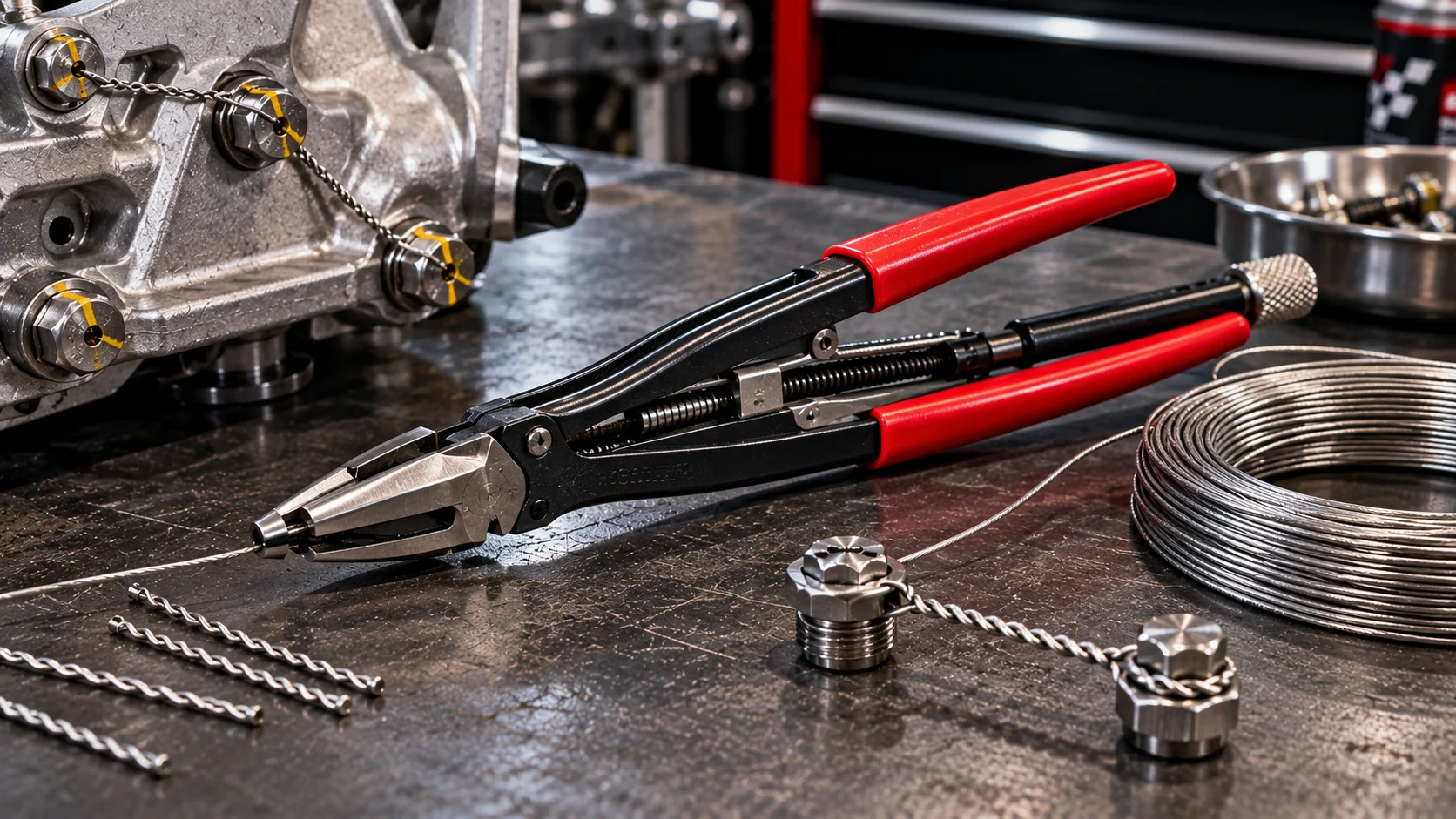
Some specialized mechanical assemblies require fasteners to be secured with safety wire. Dedicated lock-wire pliers help form controlled twists.
16. Lock-Wire Pliers
Lock-wire pliers typically combine gripping jaws with a twisting mechanism that helps produce repeatable wire twists.
They are used in specialized mechanical and motorsport applications where a specified safety-wiring procedure is required.
Why Use a Specialized Tool?
Correct safety-wire installation depends on wire material, routing, tension, direction, and the manufacturer’s approved procedure.
Which Types of Pliers Do Mechanics Use Most?
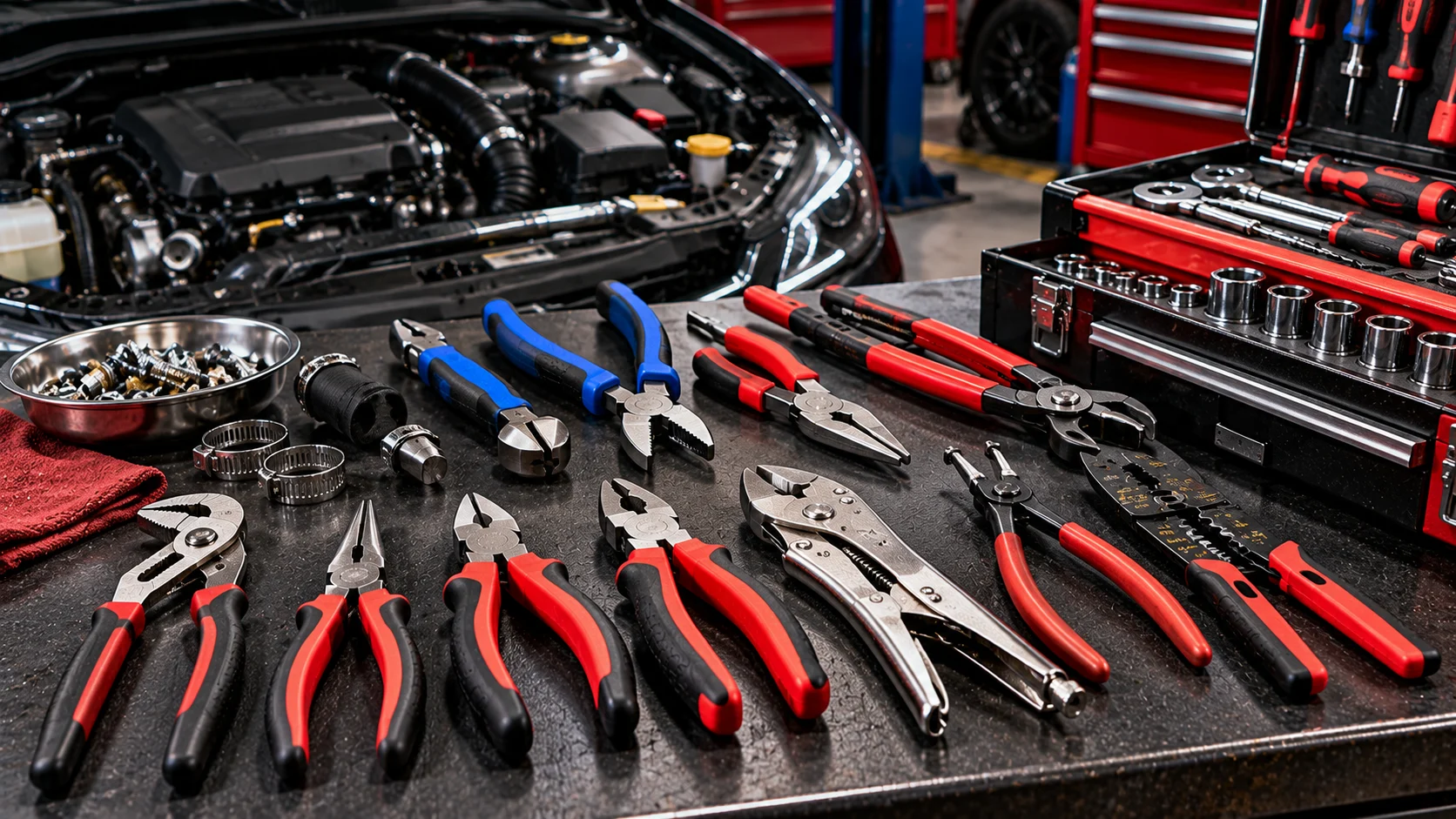
Automotive mechanics use several different kinds of pliers depending on the repair and component.
Automotive Repair Tool Selection Guide
| Automotive Task | Suitable Pliers | What to Avoid |
|---|---|---|
| Handling small clips | Needle-nose or bent-nose | Excessive force on fragile parts |
| Removing spring hose clamps | Compatible hose-clamp pliers | Incorrect clamp engagement |
| Removing retaining rings | Correct internal/external snap-ring pliers | Improvised sharp tools |
| Cutting cable ties | Suitable diagonal cutters | Accidentally cutting nearby wires |
| Electrical terminal repair | Matched crimping pliers | Using ordinary gripping pliers for crimping |
| Temporary metal holding | Locking pliers | Crushing or marking delicate components |
| General workshop gripping | Combination or slip-joint | Using them as substitutes for precision tools |
Are Specialized Automotive Pliers Worth Buying?
Specialized pliers become valuable when a repair regularly requires their specific mechanism or jaw design.
For occasional DIY repairs, start with versatile pliers and purchase specialized tools as the work demands.
How to Choose the Right Pliers
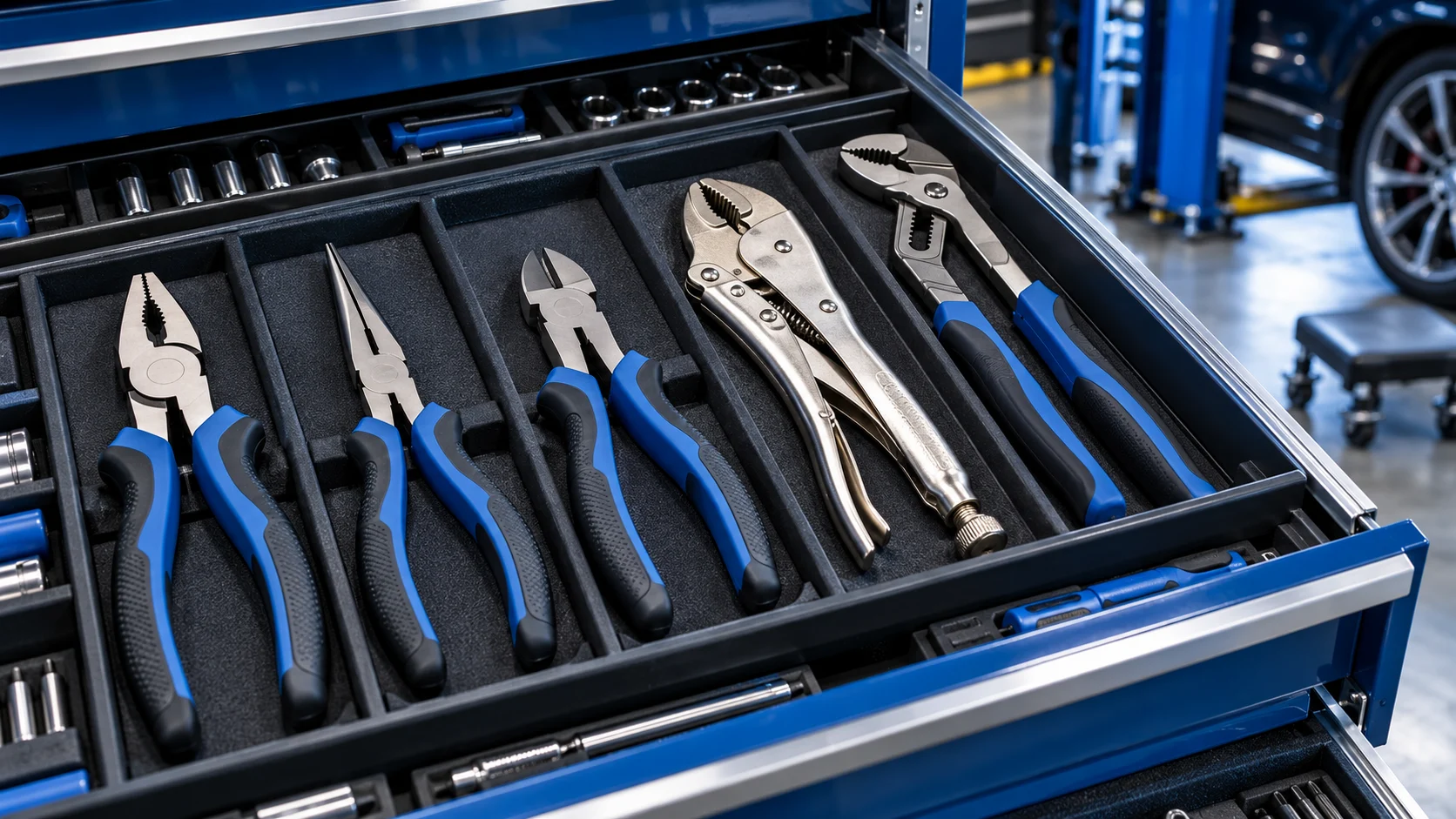
Choosing suitable pliers involves more than selecting the largest or most expensive model.
Consider jaw geometry, overall length, material, pivot quality, grip comfort, and the intended work.
Important Buying Factors
Jaw Design
Choose jaws suited to the shape and material being handled.
Tool Length
Shorter tools may improve access while longer handles can offer leverage.
Pivot Quality
Look for appropriate alignment and smooth, controlled operation.
Grip Comfort
Select handles that are comfortable and appropriate for the working conditions.
Material and Finish
Check manufacturer specifications, corrosion resistance, and suitability.
Cutting Capacity
Verify that cutters are rated for the intended wire material.
Interactive Pliers Buying Checklist
Use this checklist to evaluate a pair of pliers before purchase.
Common Pliers Mistakes, Safety and Maintenance
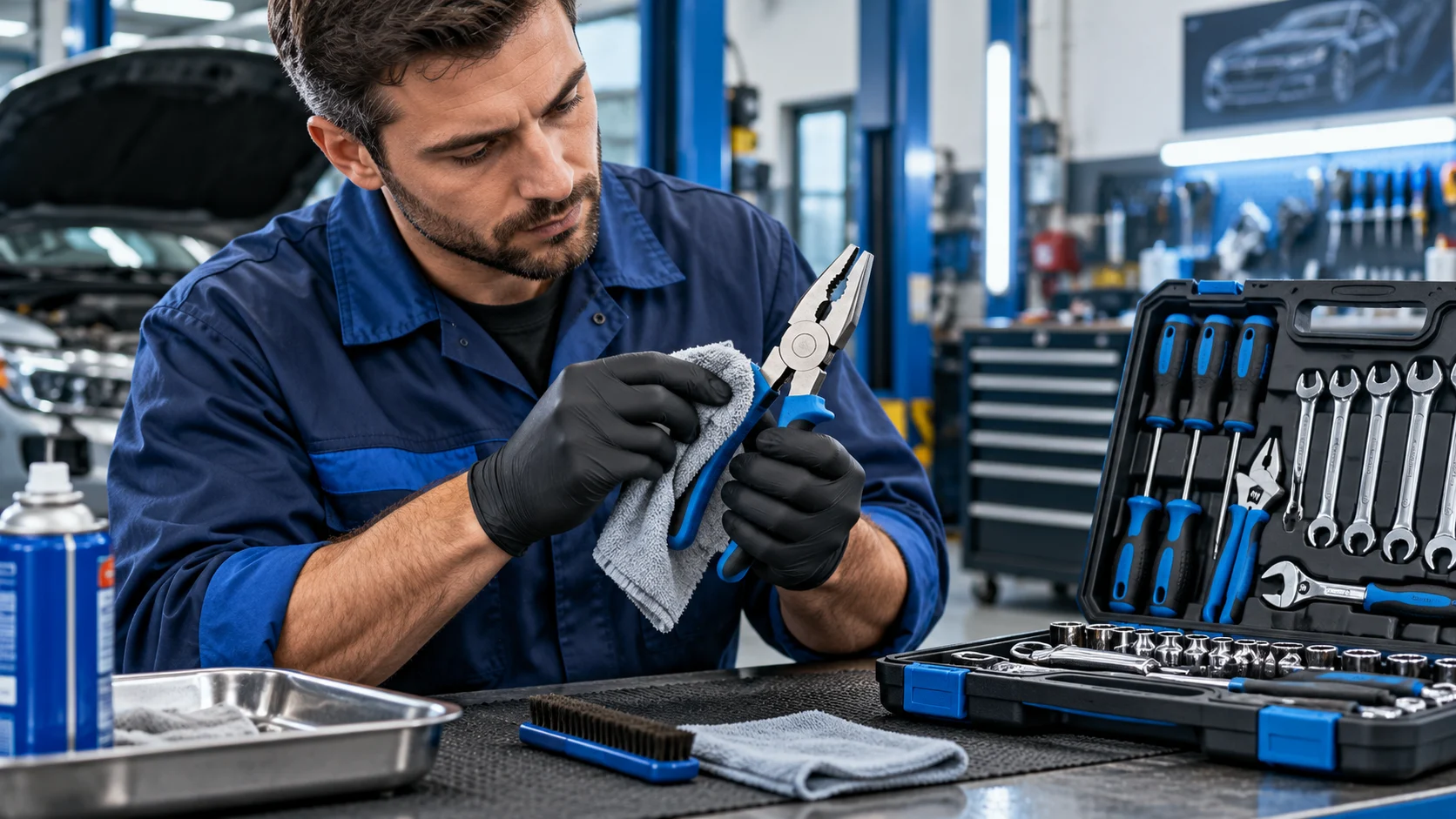
Even quality pliers can be damaged by incorrect use. Safe handling and basic maintenance help extend their working life.
Common Mistakes to Avoid
| Mistake | Risk | Better Approach |
|---|---|---|
| Using pliers instead of the proper wrench | Rounded fasteners or damaged surfaces | Use correctly fitting service tools |
| Cutting hardened wire with ordinary cutters | Chipped or damaged cutting edges | Use cutters rated for the material |
| Applying excessive side force | Bent jaws or damaged pivots | Choose suitable gripping equipment |
| Using ordinary pliers on energized circuits | Electric shock or injury | De-energize and use qualified safe procedures |
| Using damaged pliers | Slipping or tool failure | Inspect and replace damaged tools |
| Storing tools wet or dirty | Corrosion and reduced performance | Clean, dry and store appropriately |
How to Maintain Pliers
- Remove dirt and debris after use.
- Dry the tool before storage.
- Inspect the jaws, cutters, and pivot.
- Lubricate the pivot when recommended by the manufacturer.
- Protect against excessive moisture and corrosion.
- Replace tools with damaged cutting edges, cracked handles, or unsafe pivots.
Essential Pliers Checklist for a Home Garage
A well-planned pliers kit does not need every specialty tool immediately.
Start with common tools and expand your collection as your automotive maintenance skills and repair needs grow.
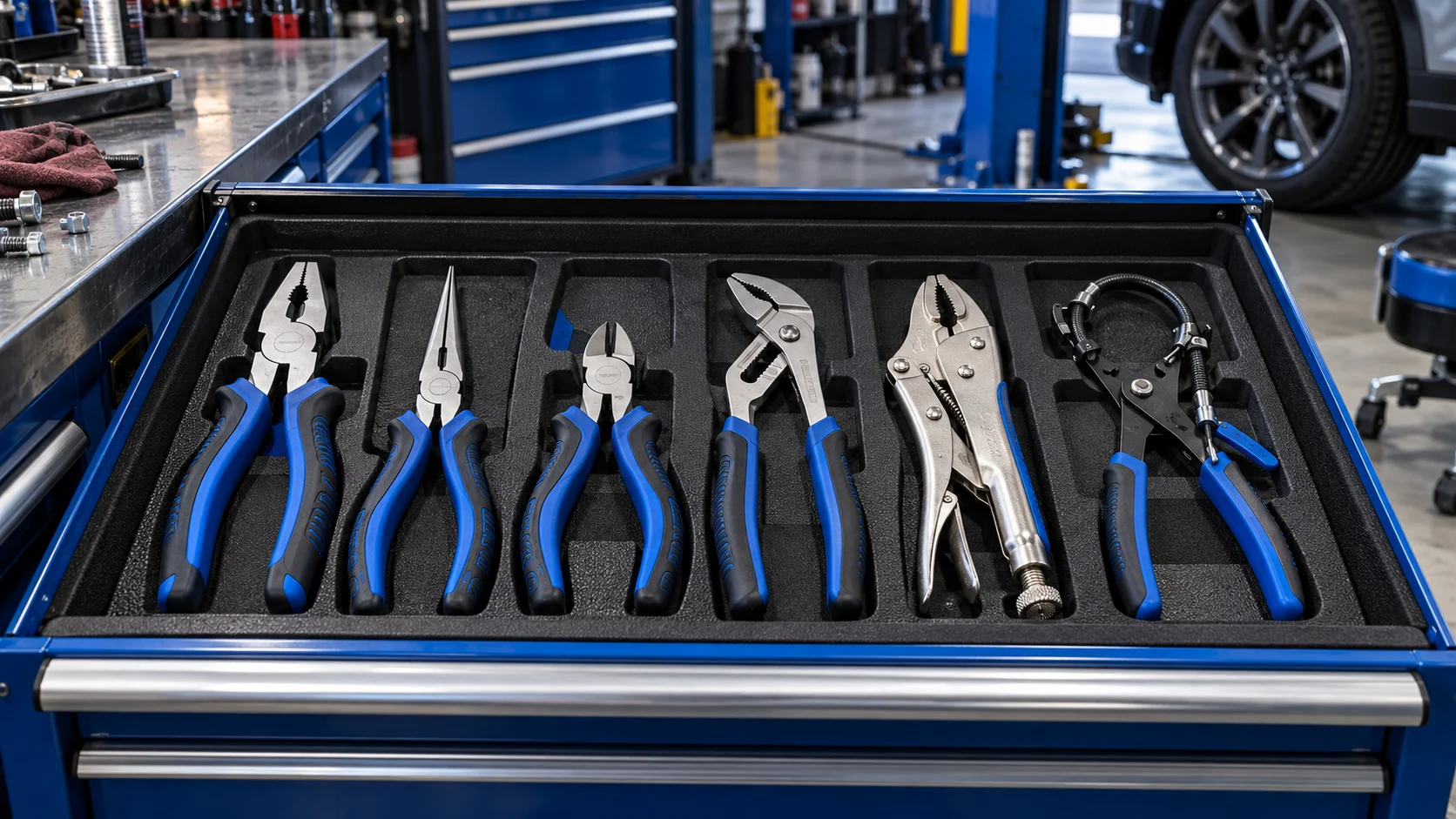
Recommended Starter Pliers
| Pliers Type | Priority | Why Buy? |
|---|---|---|
| Combination | Essential | General gripping and bending |
| Needle-Nose | Essential | Small parts and tight spaces |
| Diagonal Cutters | Essential | Suitable wire and cable-tie cutting |
| Slip-Joint | Useful | Adjustable general-purpose grip |
| Locking | Useful | Temporary holding of suitable parts |
| Tongue-and-Groove | Task-dependent | Larger adjustable gripping tasks |
| Hose-Clamp | Task-dependent | Spring-clamp service |
| Snap-Ring | Task-dependent | Retaining-ring service |
| Crimping | Task-dependent | Compatible automotive electrical terminals |
Interactive Garage Pliers Checklist
Tick the pliers you already have in your garage.
Frequently Asked Questions About Types of Pliers
How many types of pliers are there?
There is no universal fixed number. Manufacturers offer many general-purpose and specialized designs. This guide covers 16 useful categories for automotive and workshop applications.
What are the most commonly used pliers?
Combination pliers, needle-nose pliers, slip-joint pliers, locking pliers, diagonal cutters, and tongue-and-groove pliers are common choices.
What is the difference between needle-nose and combination pliers?
Needle-nose pliers have long, narrow jaws for precision and access. Combination pliers have broader jaws designed for general gripping and other suitable tasks.
What are locking pliers used for?
Locking pliers clamp onto suitable workpieces and remain engaged until released. They are useful for temporary holding during appropriate assembly and fabrication.
Which pliers are best for automotive repairs?
A basic automotive kit can include combination pliers, needle-nose pliers, diagonal cutters, slip-joint pliers, and locking pliers. Specialized repairs may require hose-clamp or snap-ring pliers.
What are snap-ring pliers used for?
Snap-ring pliers install and remove suitable internal or external retaining rings used in mechanical assemblies.
Can pliers be used instead of a wrench?
A correctly sized wrench or approved service tool is generally better for nuts and bolts because ordinary pliers can damage fastener surfaces.
Which pliers are suitable for electrical work?
Crimping, wire-stripping, needle-nose, and lineman’s pliers are useful for different electrical tasks. For energized work, only properly rated tools and qualified procedures should be used.
What are the best pliers for beginners?
Start with combination pliers, needle-nose pliers, and suitable diagonal cutters. Add adjustable or specialized pliers as the tasks require.
How should pliers be cleaned and stored?
Remove debris, dry the tools, inspect for damage, and store them away from excessive moisture. Follow the manufacturer’s maintenance recommendations.
What is the difference between slip-joint and tongue-and-groove pliers?
Both have adjustable jaws, but traditional slip-joint pliers typically have fewer pivot positions. Tongue-and-groove pliers often offer multiple adjustment positions and a wider gripping range.
Are expensive pliers always better?
Not necessarily. Suitability, build quality, jaw design, proper fit, manufacturer ratings, and service requirements matter more than price alone.
Final Thoughts: Which Types of Pliers Do You Need?
Understanding the different types of pliers makes it easier to select the right tool for a specific repair.
Combination and slip-joint pliers are useful for general gripping tasks. Needle-nose pliers help reach tight spaces, while diagonal cutters handle suitable wire and cable-tie cutting.
Automotive repair can also require specialty tools such as snap-ring, hose-clamp, and crimping pliers. These tools serve specific purposes that general-purpose pliers cannot always perform safely.
Instead of purchasing every available tool, start with a reliable basic set and expand your collection when a repair calls for a specialized design.
Editorial note: This article provides general educational guidance. Follow tool manufacturer instructions and vehicle-specific service procedures before performing repairs.