
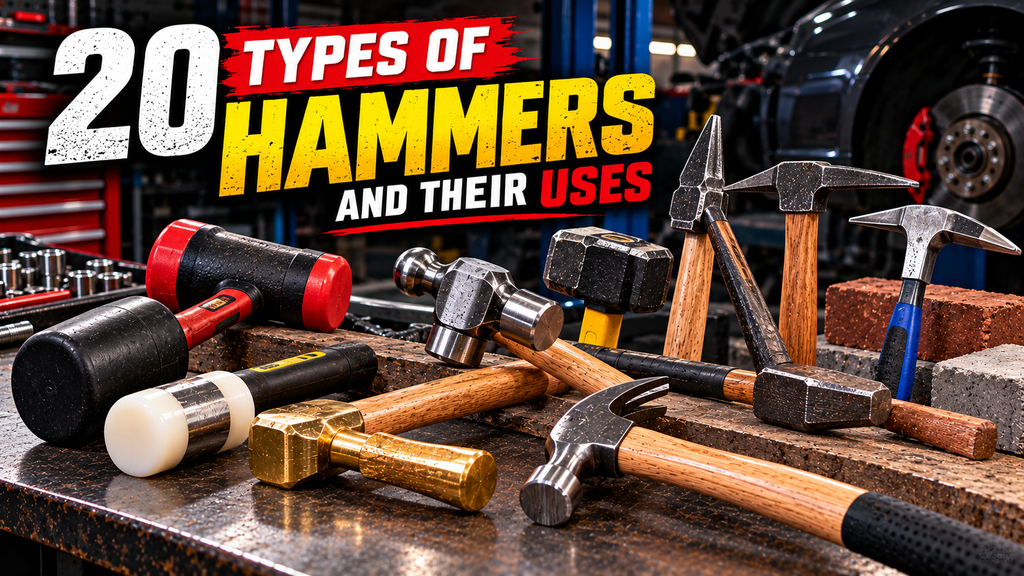
Walk into a professional automotive workshop and you will probably see more than one kind of hammer. A ball-peen hammer may sit beside a rubber mallet, while a dead-blow hammer and specialized bodywork tools occupy another drawer.
Although these tools may look similar, different types of hammers are designed for different jobs. Some deliver concentrated impact, others help position components, and certain designs reduce the risk of leaving marks on a surface.
This updated guide explains 20 types of hammers and their uses, the main parts of a hammer, automotive applications, hammer materials, safety precautions, and how to choose the right hammer for your garage.
What Is a Hammer and What Is It Used For?
A hammer is an impact tool consisting of a striking head and usually a handle. When a person swings the tool, the head transfers impact energy to the object being struck.
Hammer designs differ because workshop tasks require different amounts of force, striking surfaces, and levels of control.
What Are Hammers Commonly Used For?
- Driving nails or suitable fasteners.
- Striking compatible punches and chisels.
- Shaping and forming metal.
- Positioning components during assembly.
- Removing certain components with approved tools.
- Breaking or demolishing suitable materials.
- Performing specialized bodywork and fabrication.
Parts of a Hammer: Anatomy Explained
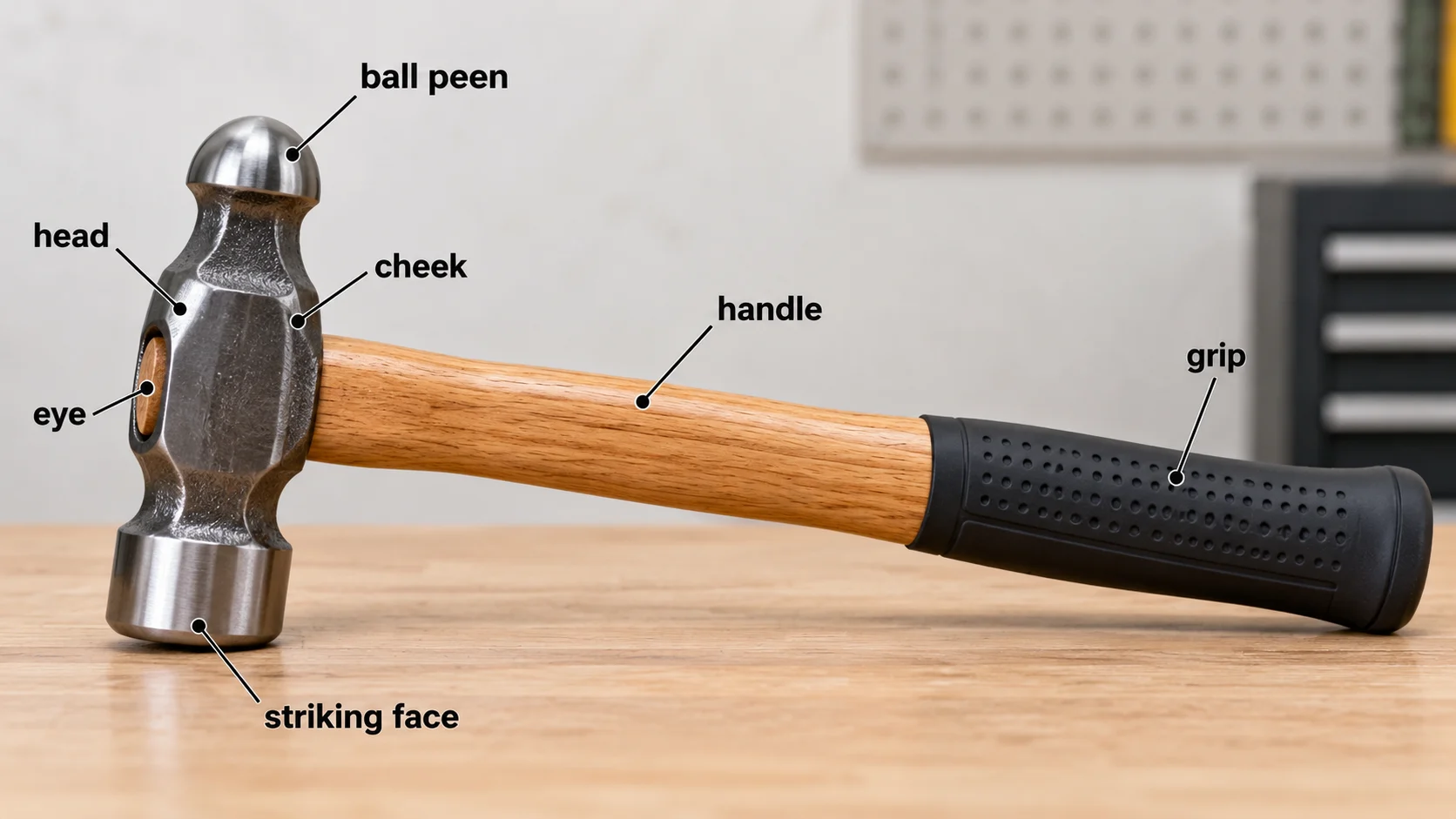
Understanding the parts of a hammer helps you recognize its construction and determine its intended applications. Most traditional hammers have a head and handle, although their exact design varies by type.
| Hammer Part | Function |
|---|---|
| Face | Primary striking surface. |
| Head | Provides striking mass and working geometry. |
| Cheek | Side portion of the hammer head. |
| Peen | Opposite working end on certain metalworking hammers. |
| Claw | Forked nail-removing feature on claw hammers. |
| Eye | Opening in certain heads used to secure the handle. |
| Neck | Portion adjoining the striking face, where present. |
| Handle | Provides leverage and control. |
| Grip | Helps the user maintain a secure hold. |
Why Does Hammer Head Shape Matter?
A flat steel face concentrates force differently from a deformable rubber or plastic face. Rounded peens, claws, and chisel-shaped ends serve different purposes.
Recognizing these differences helps users avoid choosing a hammer simply by its size.
20 Different Types of Hammers and Their Uses
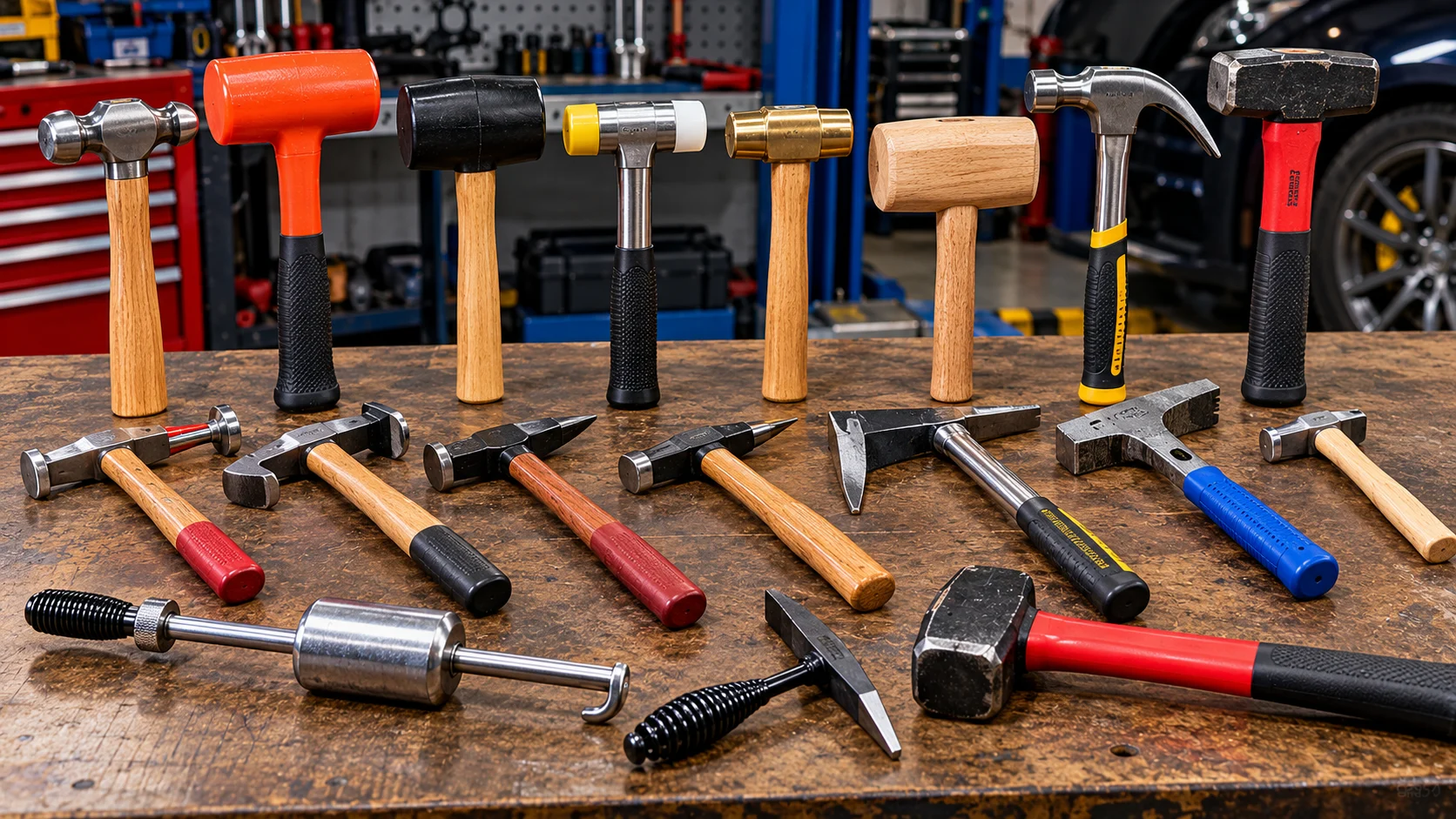
The following hammer identification chart introduces 20 common and specialized hammer designs.
| Hammer Type | Main Use | Automotive Relevance |
|---|---|---|
| 1. Ball-Peen | Metalworking and compatible punch work | High |
| 2. Dead-Blow | Controlled impact with reduced rebound | High |
| 3. Rubber Mallet | Gentle positioning and assembly | High |
| 4. Soft-Face Hammer | Reduced surface marking | High |
| 5. Plastic Mallet | Light assembly | Medium |
| 6. Wooden Mallet | Woodworking and assembly | Low |
| 7. Brass Hammer | Softer-metal striking | High |
| 8. Bodywork Hammer | Sheet-metal shaping | High |
| 9. Shrinking Hammer | Specialized sheet-metal correction | Medium |
| 10. Slide Hammer | Pulling with compatible attachments | High |
| 11. Club Hammer | Short-handle heavy striking | Medium |
| 12. Sledgehammer | Heavy-duty impact work | Low |
| 13. Cross-Peen | Directional metal shaping | Medium |
| 14. Straight-Peen | Directional forging and shaping | Medium |
| 15. Blacksmith Hammer | Forging metal | Medium |
| 16. Claw Hammer | Driving and removing nails | Low |
| 17. Framing Hammer | Construction framing | Low |
| 18. Tack Hammer | Small tack installation | Low |
| 19. Brick Hammer | Masonry work | Low |
| 20. Welding Chipping Hammer | Removing slag from applicable welds | Medium |
These are representative categories, not every hammer design manufactured. The best choice depends on the workpiece and intended operation.
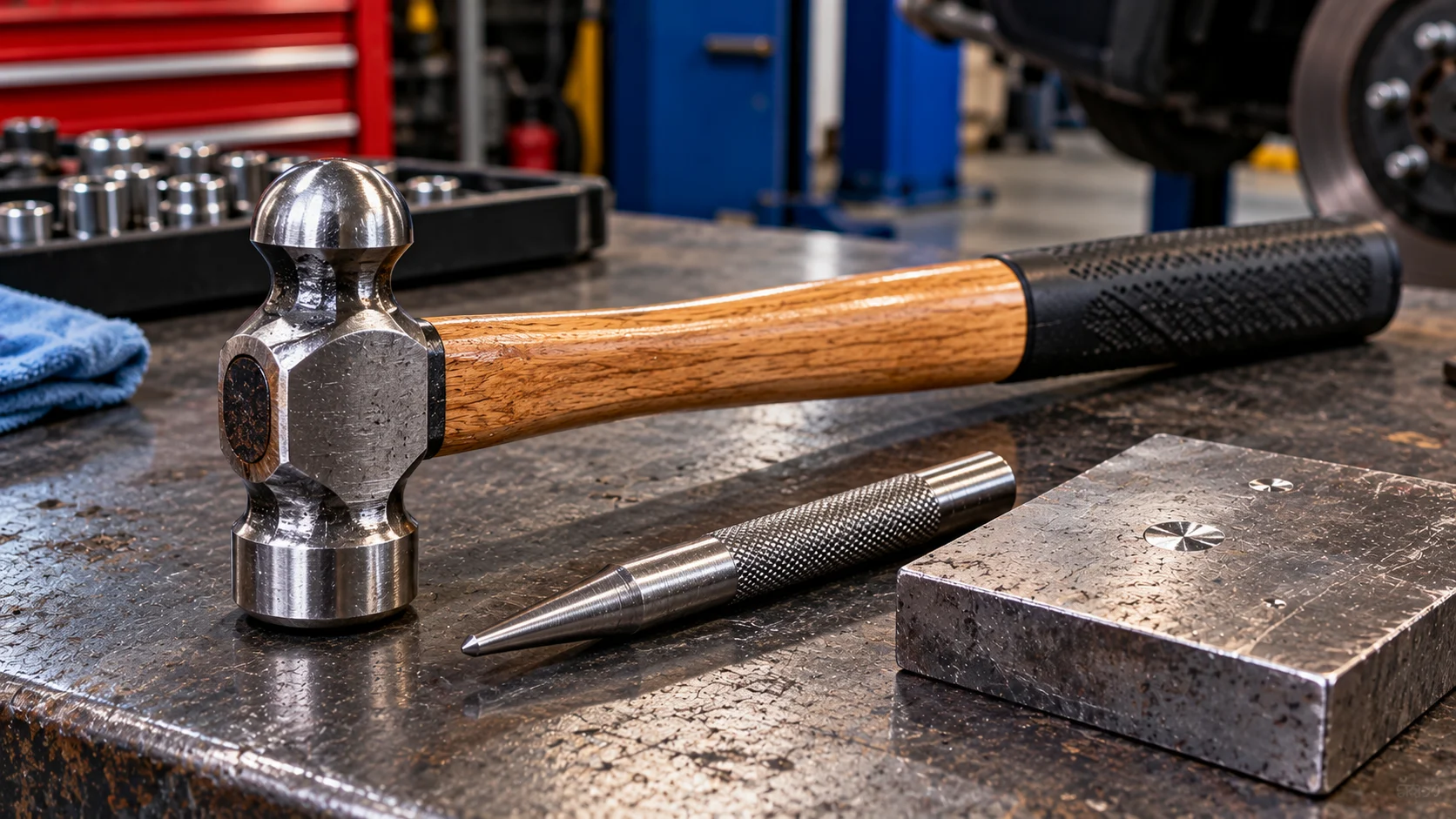
1. Ball-Peen Hammer
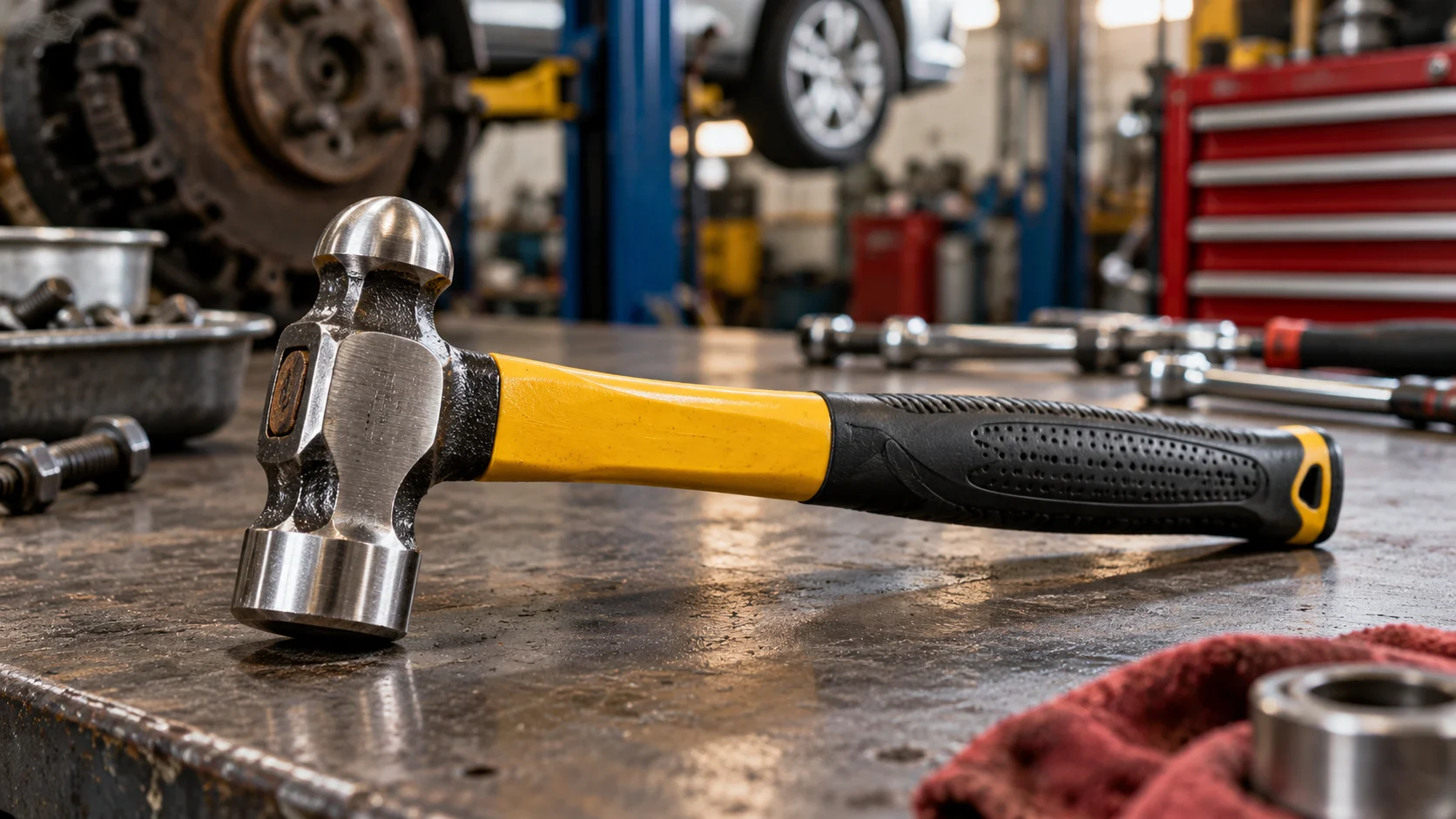
A ball-peen hammer is a recognizable metalworking hammer. It has a flat striking face on one end and a rounded peen on the opposite end.
What Is a Ball-Peen Hammer Used For?
- Striking punches designed for hammer use.
- Selected metal-forming operations.
- Peening and shaping metal.
- General metalworking with approved techniques.
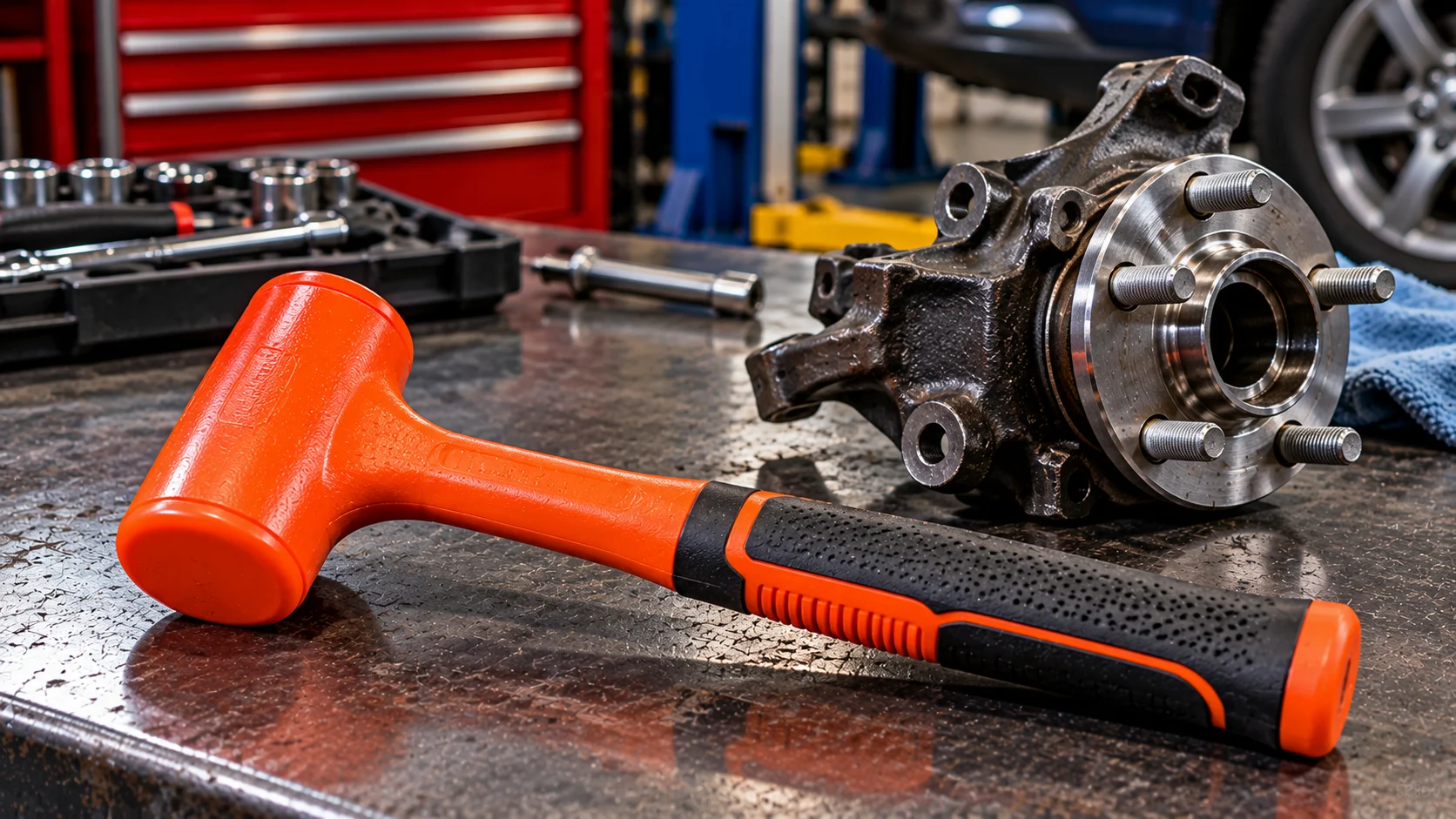
2. Dead-Blow Hammer
A dead-blow hammer is designed to reduce rebound after impact. Many models contain an internal moving mass, such as shot, that shifts during striking.
Why Use a Dead-Blow Hammer?
Reduced rebound can improve control during certain positioning or assembly tasks. Dead-blow hammers are available in different weights and with different striking-face materials.
Common Applications
- Positioning suitable metal components.
- Controlled striking during approved assembly.
- Aligning appropriate fabricated parts.
- Workshop operations where rebound reduction helps.
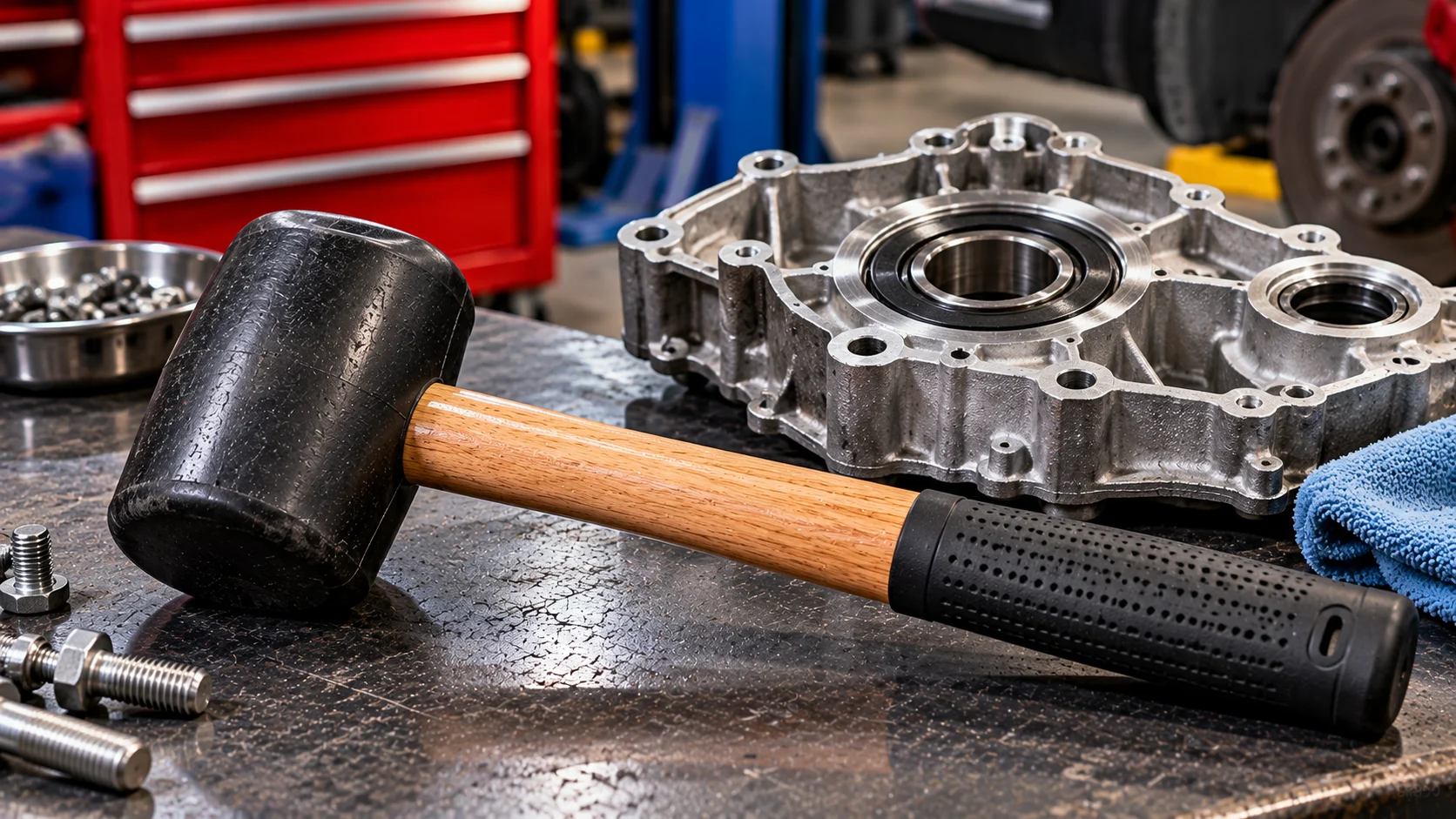
3. Rubber Mallet
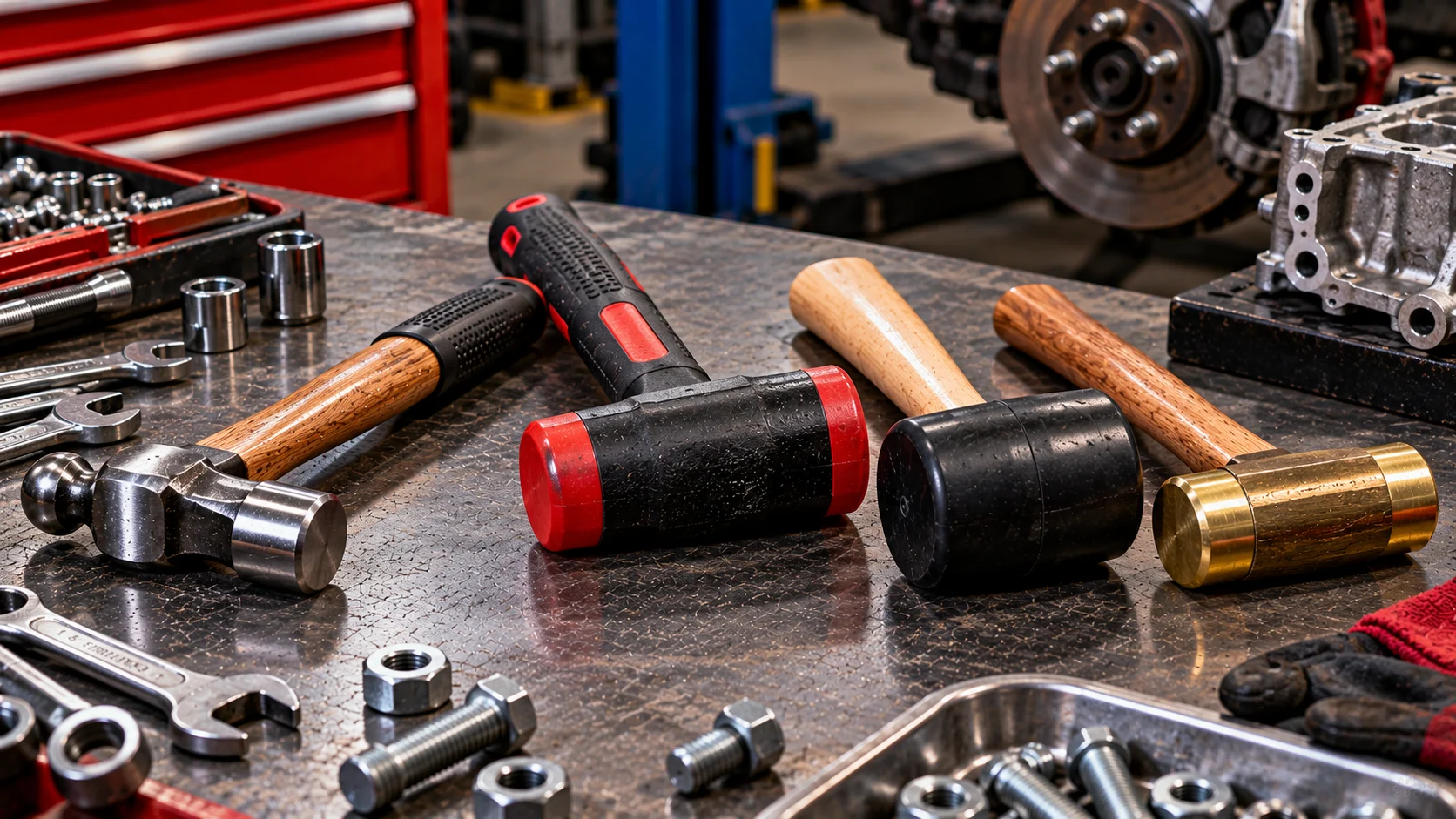
A rubber mallet has a deformable rubber striking head. It can provide gentler contact than a hardened steel hammer, making it useful in suitable assembly and positioning operations.
What Is a Rubber Mallet Used For?
- Positioning compatible assembled parts.
- Light fitting operations.
- Woodworking and furniture assembly.
- Tasks where softer contact is preferred.
Rubber Mallet vs Steel Hammer
| Feature | Rubber Mallet | Steel Hammer |
|---|---|---|
| Face | Deformable rubber | Harder metal |
| Contact | Generally softer | More concentrated |
| Typical Use | Fitting and assembly | Metalworking and compatible striking tools |
| Marking | Can reduce marking but may leave rubber marks | Can dent softer surfaces |
A rubber mallet can still damage delicate surfaces. Its use should always match the workpiece and specified procedure.
4–6. Soft-Face, Plastic, and Wooden Mallets
Several hammer types use contact materials softer than hardened steel. They are useful where surface protection or controlled assembly is important.
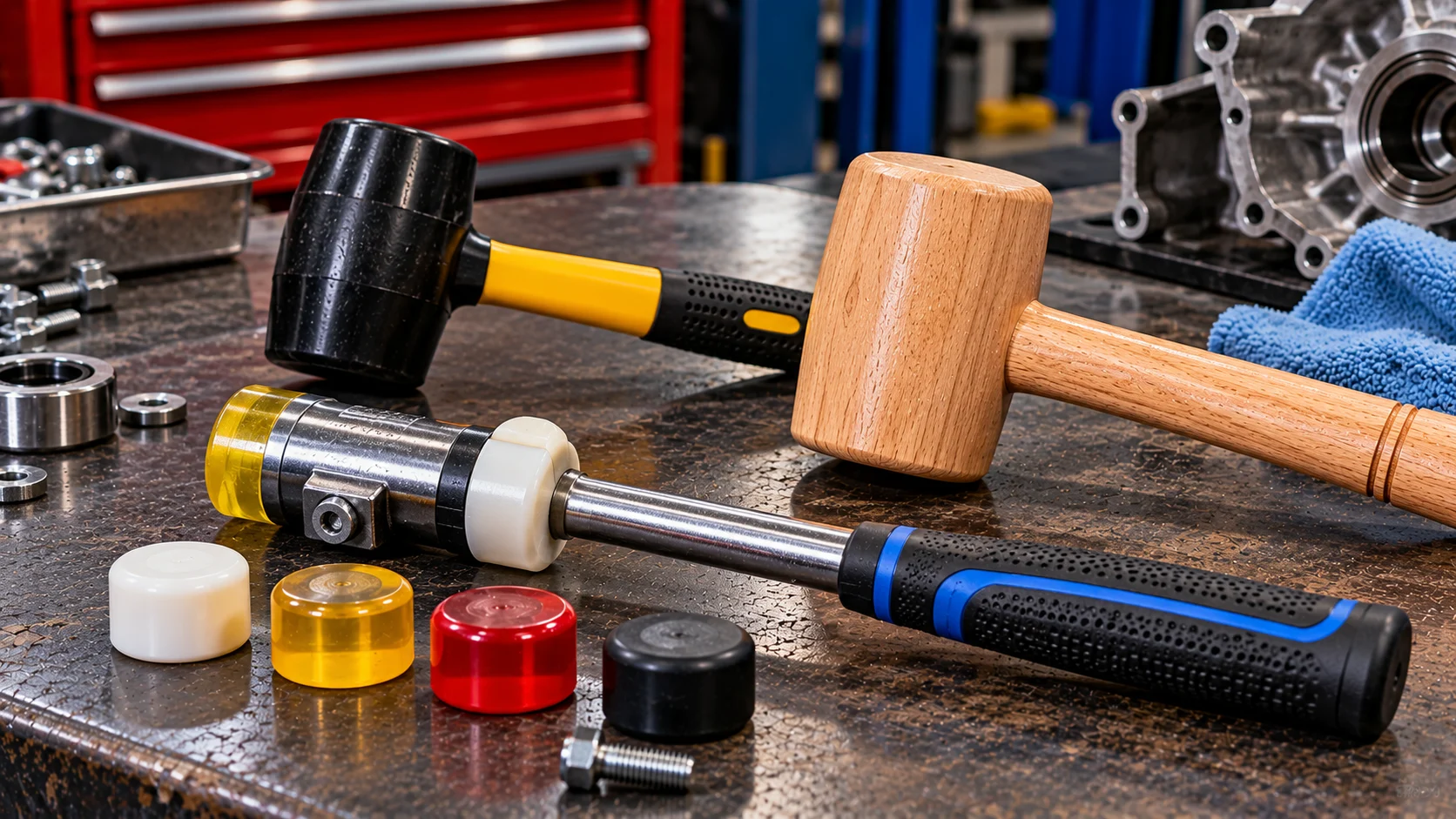
4. Soft-Face Hammer
Soft-face hammers often feature replaceable tips made from nylon, polyurethane, rubber, or other materials. The striking face should be selected according to the workpiece.
5. Plastic Mallet
Plastic mallets can be useful for light-duty fitting and assembly. Their hardness and striking behavior depend on the material and head design.
6. Wooden Mallet
Wooden mallets are common in woodworking and joinery. They are typically used with compatible woodworking tools and assemblies.
| Face Material | Typical Use | Consideration |
|---|---|---|
| Rubber | Gentle fitting | May rebound or leave marks |
| Nylon | Selected precision assembly | Match hardness to workpiece |
| Polyurethane | Controlled assembly | Properties vary by formulation |
| Wood | Woodworking | Can wear or split |
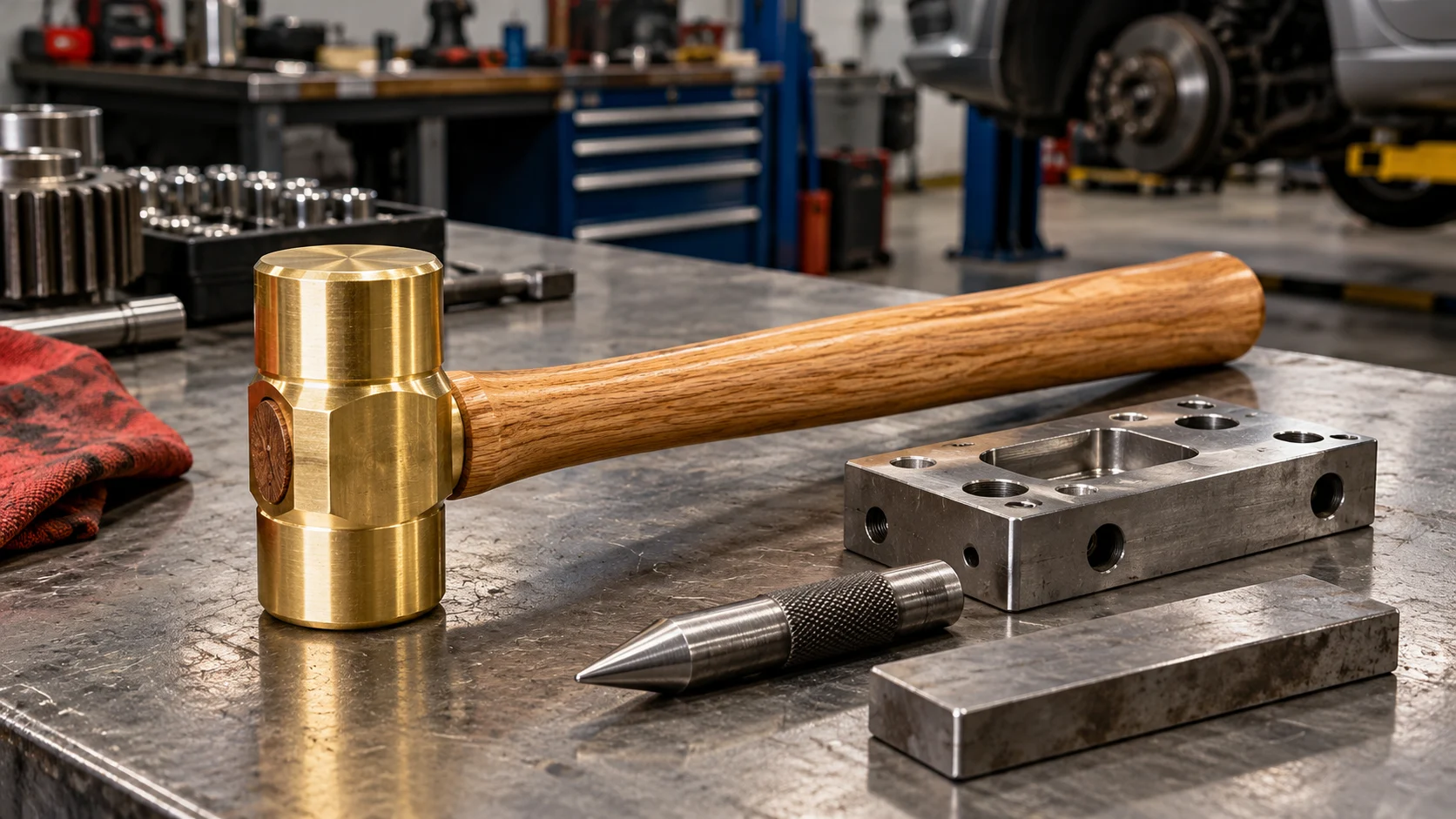
7. Brass Hammer
A brass hammer uses a brass head or striking face. Brass is generally softer than hardened tool steel, making it useful in selected metalworking operations.
Why Choose a Brass Hammer?
A brass striking face may reduce some types of workpiece damage during suitable procedures. However, brass can deform, transfer material, and leave marks.
8–9. Automotive Bodywork and Shrinking Hammers
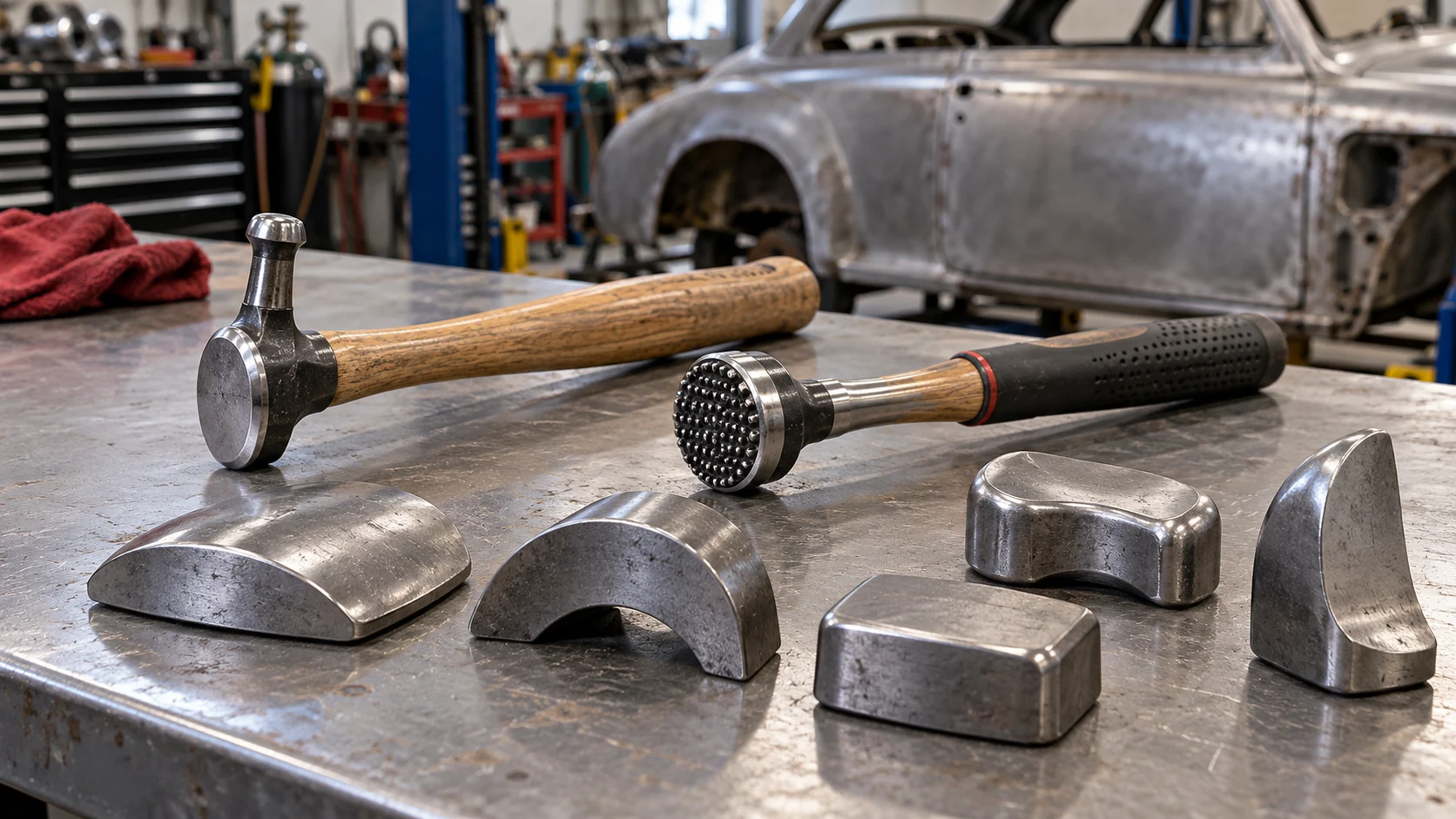
Automotive bodywork hammers are designed for shaping and finishing sheet metal. They are commonly paired with bodywork dollies and other metal-forming tools.
8. Bodywork Hammer
Bodywork hammers are used to shape, planish, and finish suitable sheet-metal panels during vehicle restoration or fabrication. Different head shapes are intended for different operations.
9. Shrinking Hammer
Shrinking hammers are associated with techniques intended to correct certain stretched sheet-metal areas. Effective shrinking depends on the method, material, and technician’s skill.
10. Slide Hammer
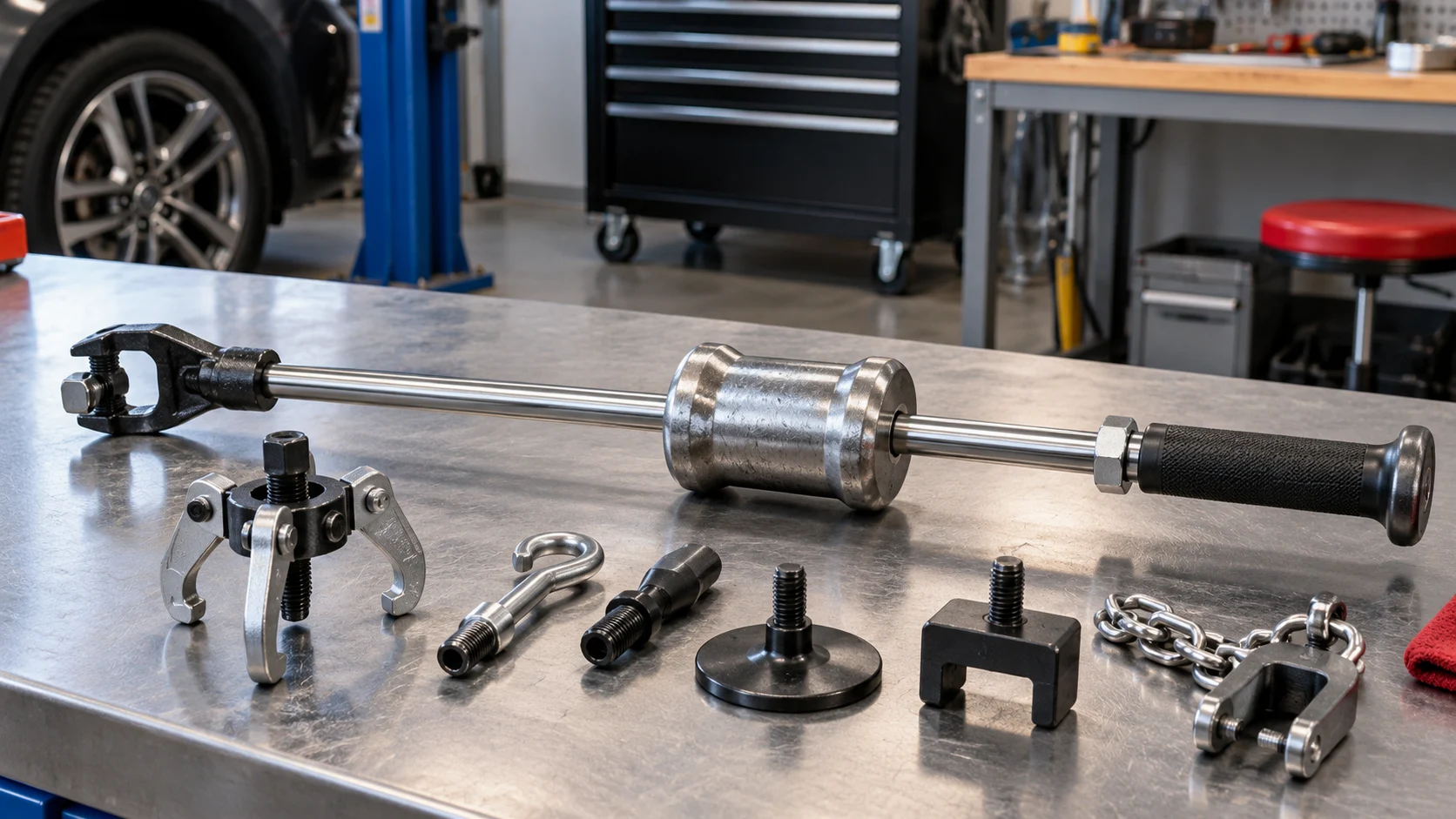
A slide hammer differs from a conventional striking hammer. It uses a sliding weight on a shaft to deliver a pulling force through a suitable attachment.
How Does a Slide Hammer Work?
The operator moves the weighted mass along the shaft until it contacts a stop. This transfers force through the shaft and attached pulling equipment.
Common Automotive Applications
- Selected bearing or seal removal procedures.
- Compatible puller operations.
- Specialized body-panel pulling systems.
- Component removal using approved attachments.
11–12. Club Hammer vs Sledgehammer
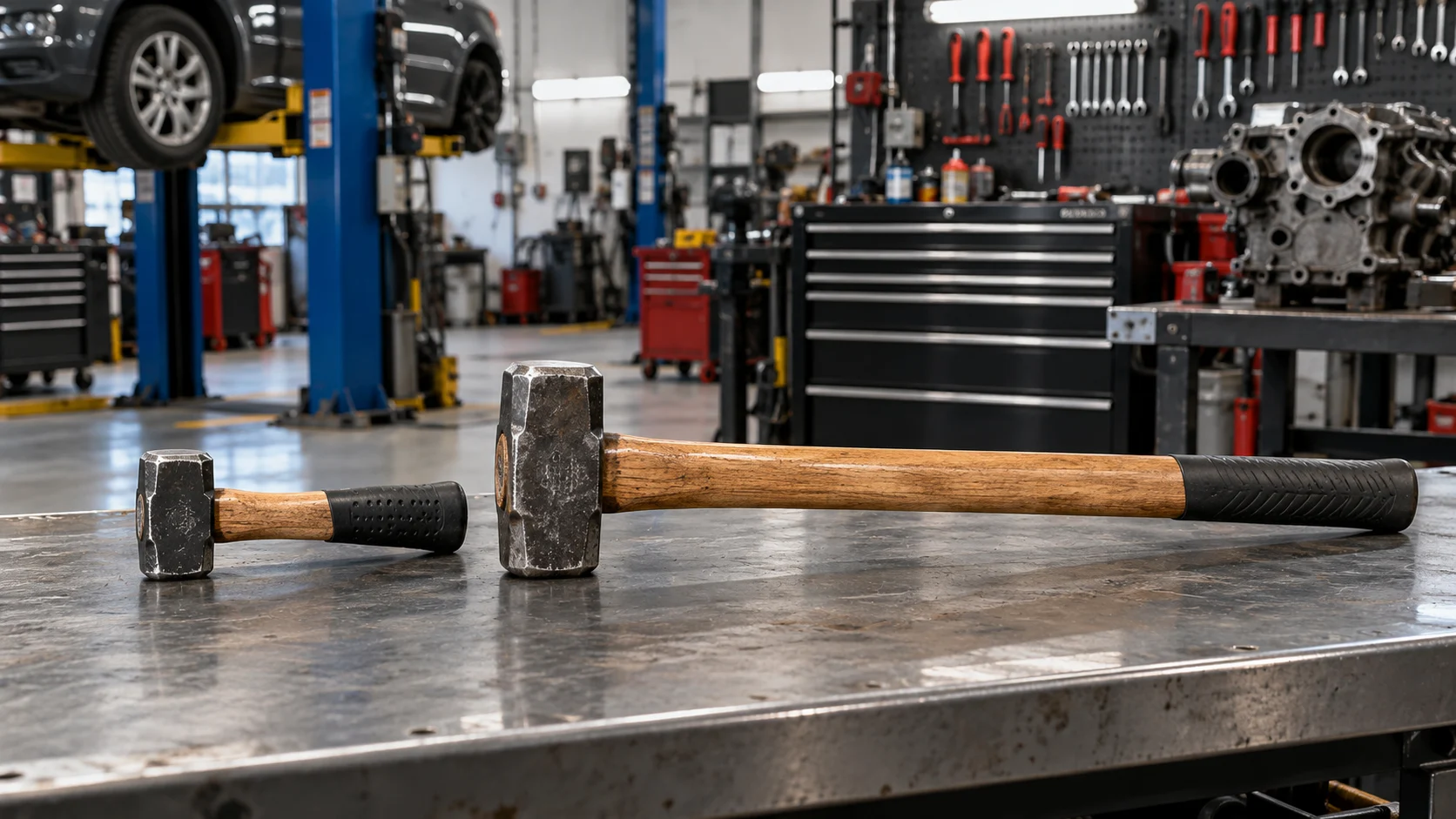
Club hammers and sledgehammers are used for heavy striking tasks. Their head mass, handle length, and typical applications differ.
11. Club Hammer
A club hammer, sometimes called a lump hammer, usually has a compact heavy head and a short handle. It suits certain heavy-duty tasks where shorter handling is practical.
12. Sledgehammer
Sledgehammers normally have heavier heads and longer handles. They are associated with construction, demolition, and other high-impact work.
| Feature | Club Hammer | Sledgehammer |
|---|---|---|
| Handle | Short | Usually long |
| Control | Suitable for certain confined tasks | Needs larger swing clearance |
| Work | Heavy workshop or masonry tasks | Demolition and high-impact jobs |
| Automotive Use | Limited | Rare for precision repairs |
13–15. Cross-Peen, Straight-Peen and Blacksmith Hammers
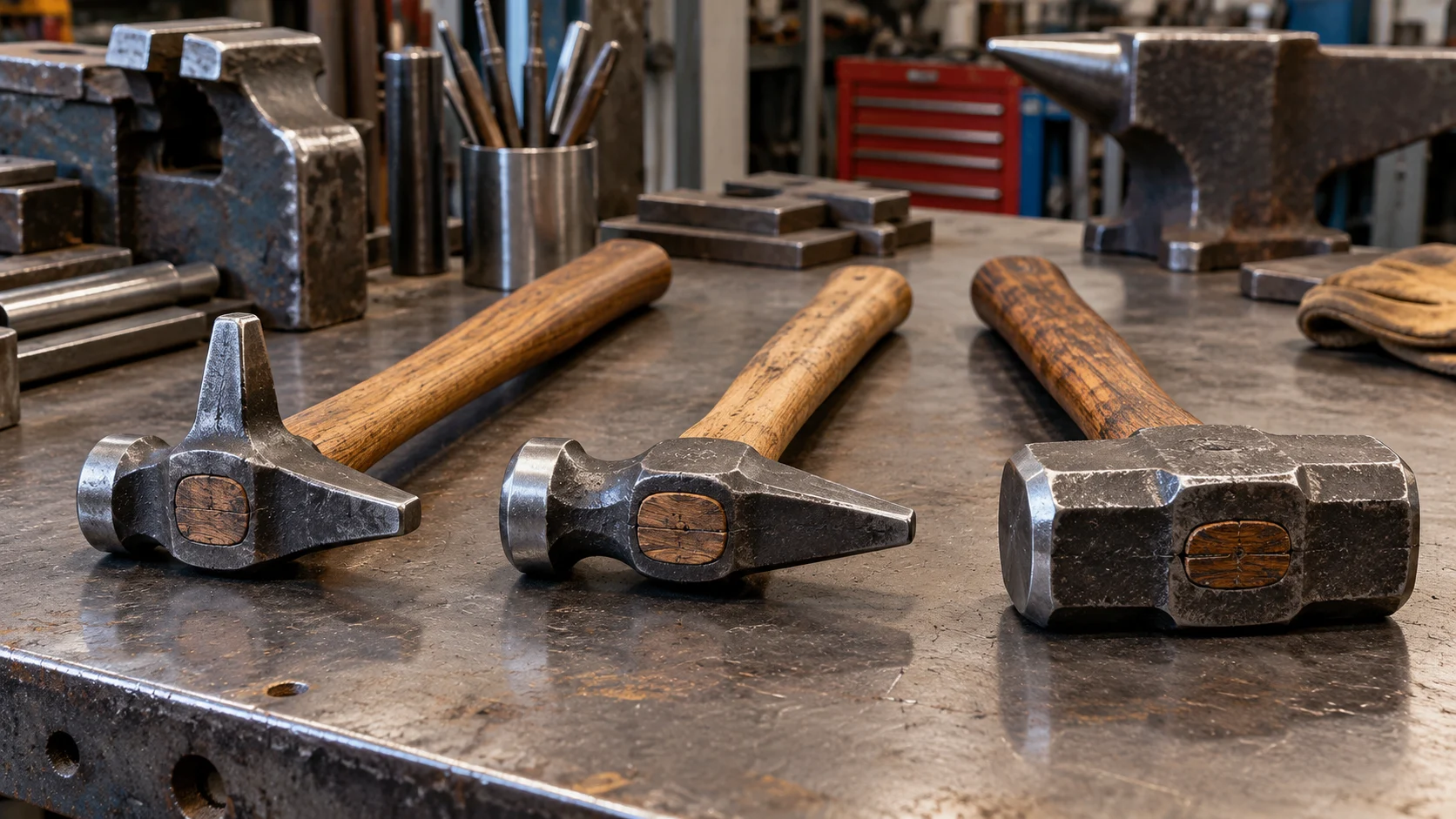
Peen hammers are important metalworking tools because their working-end shape affects how impact is applied to the material.
13. Cross-Peen Hammer
A cross-peen hammer has a narrow peen oriented across the handle axis. It is used in selected metal-shaping and forging techniques.
14. Straight-Peen Hammer
A straight-peen hammer has a narrow peen oriented parallel to the handle axis. Its geometry supports different directional forming operations.
15. Blacksmith Hammer
Blacksmith hammers are designed for forging metal using techniques appropriate to the workpiece. Their head shapes and weights vary by forging application.
16–19. Claw, Framing, Tack and Brick Hammers
Some of the most familiar hammer types are used mainly in construction, woodworking, and masonry rather than precision automotive repair.
16. Claw Hammer
A claw hammer has a striking face for driving appropriate nails and a forked claw for removing them.
17. Framing Hammer
Framing hammers are made for demanding wood-framing tasks. Many feature longer handles and specialized claw or striking-face designs.
18. Tack Hammer
A tack hammer is a small lightweight tool used to drive small tacks, particularly in upholstery or finishing work.
19. Brick Hammer
A brick hammer typically has a striking face and a chisel-like end for suitable masonry tasks.
20. Welding Chipping Hammer
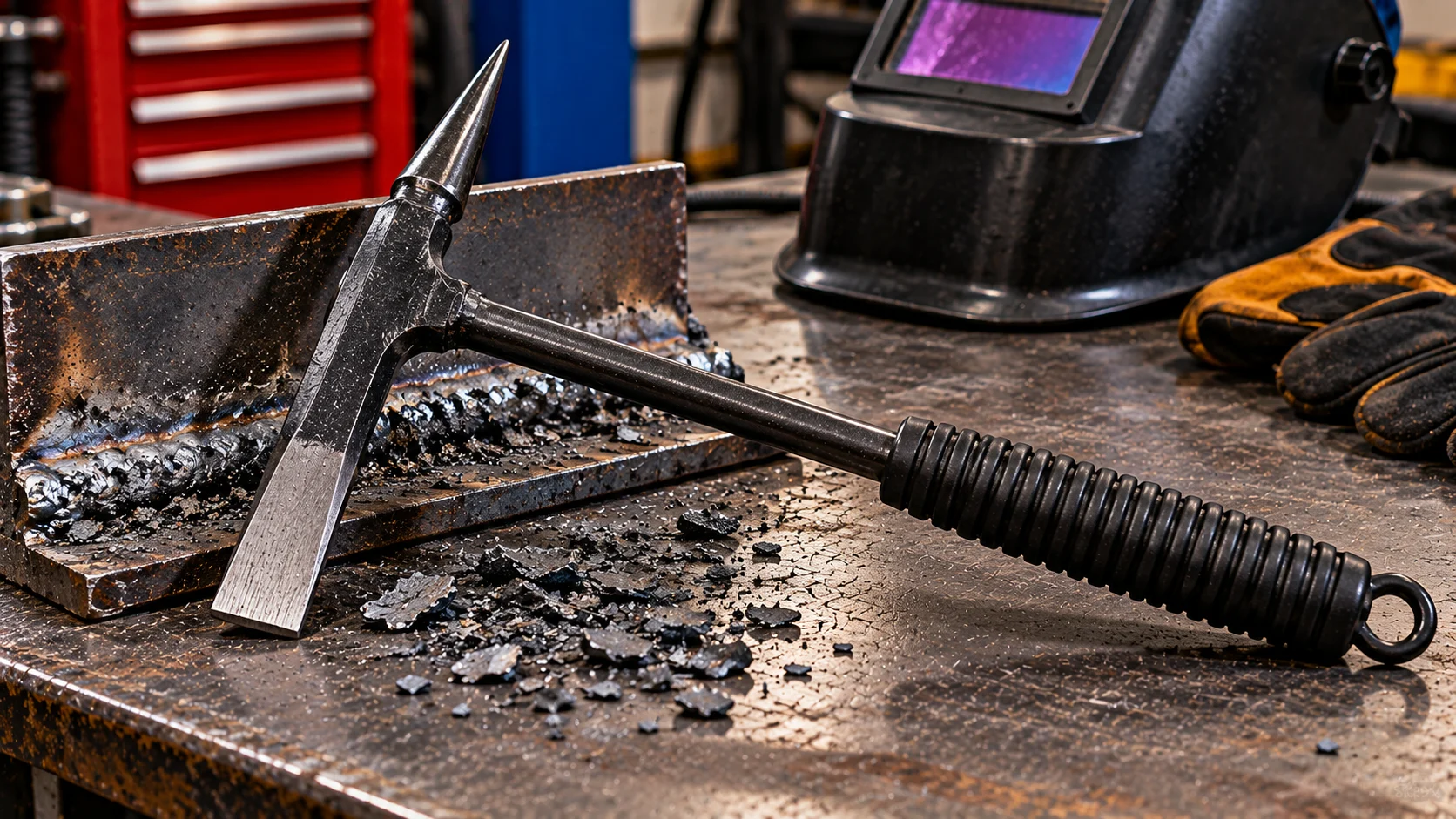
A welding chipping hammer is designed to remove slag formed during certain welding processes.
Where Are Chipping Hammers Used?
Certain shielded metal arc welding and flux-cored welding procedures produce a slag layer that must be removed according to the applicable procedure.
A chipping hammer can break away solidified slag before cleaning and inspection.
Is a Chipping Hammer Used for TIG Welding?
Conventional TIG welding does not usually produce the same slag layer as flux-producing welding processes. A chipping hammer is therefore generally unnecessary for ordinary TIG welds.
Which Types of Hammers Do Automotive Mechanics Use?
Automotive technicians use different hammer types according to the component and manufacturer’s service procedure.
Automotive Hammer Selection Table
| Workshop Task | Potential Hammer | Important Consideration |
|---|---|---|
| Striking a suitable punch | Ball-peen | Check compatibility |
| Controlled positioning | Dead-blow | Follow approved procedure |
| Gentle assembly | Rubber or soft-face | Check material compatibility |
| Selected metalworking | Brass | May still leave marks |
| Sheet-metal shaping | Bodywork hammer and dolly | Requires suitable skill |
| Component pulling | Slide hammer | Match puller attachment |
| Weld slag removal | Chipping hammer | Only on applicable welds |
Should You Hammer a Wheel Bearing?
Bearings and bearing-related assemblies often require a press, puller, or specific installation equipment. Direct hammering can damage races, rolling elements, seals, or surrounding parts.
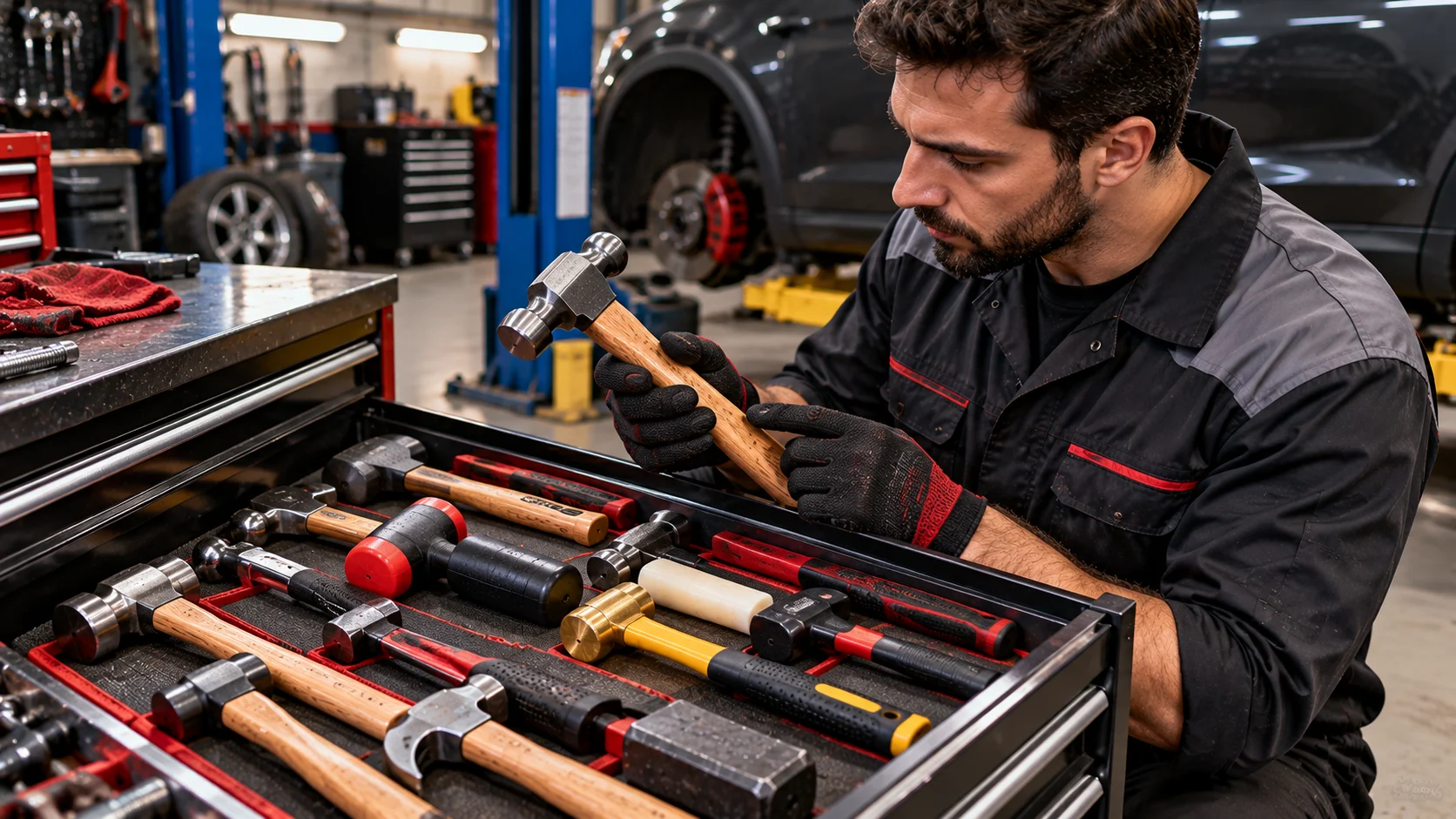
Hammer Head and Handle Materials Explained
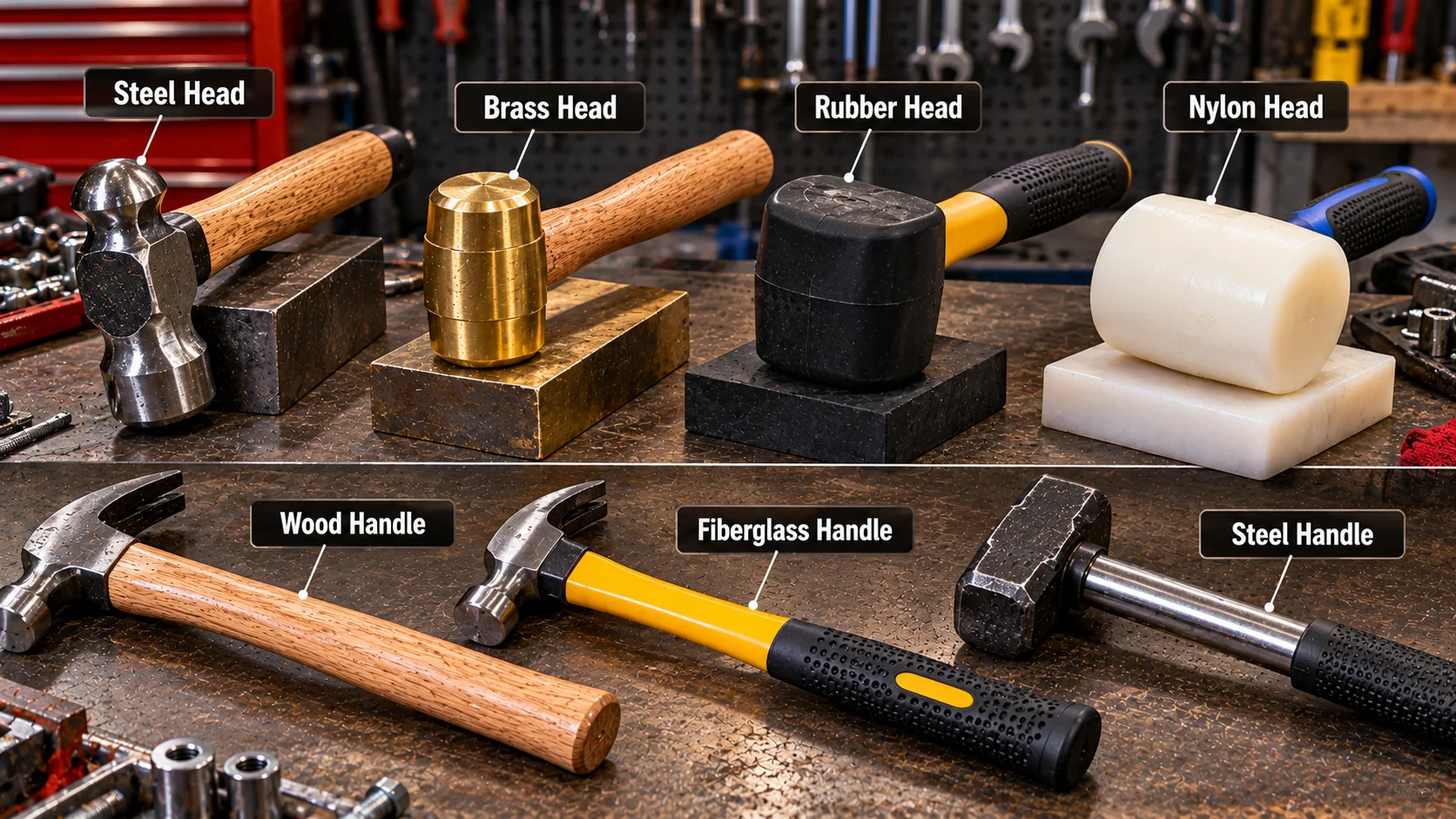
Hammer performance depends on head shape, head material, handle construction, balance, and overall tool quality.
Hammer Head Materials
| Material | Characteristics | Common Application |
|---|---|---|
| Steel | Hard and durable when manufactured properly | General striking and metalworking |
| Brass | Softer than many tool steels | Selected metalworking |
| Rubber | Deformable contact surface | Gentle positioning |
| Nylon | Engineered polymer contact | Suitable assembly |
| Wood | Traditional mallet material | Woodworking and joinery |
Wood vs Fiberglass vs Steel Handles
| Handle | Advantages | Considerations |
|---|---|---|
| Wood | Traditional feel and replaceability on some models | May split or loosen |
| Fiberglass | Durable construction and comfortable grip options | Inspect composites for damage |
| Steel | Strong shaft construction | Weight and vibration vary by design |
Does Hammer Weight Matter?
Yes. Head mass and swing speed affect delivered impact. A heavier hammer is not automatically better. Choose a suitable weight for the task and the control required.
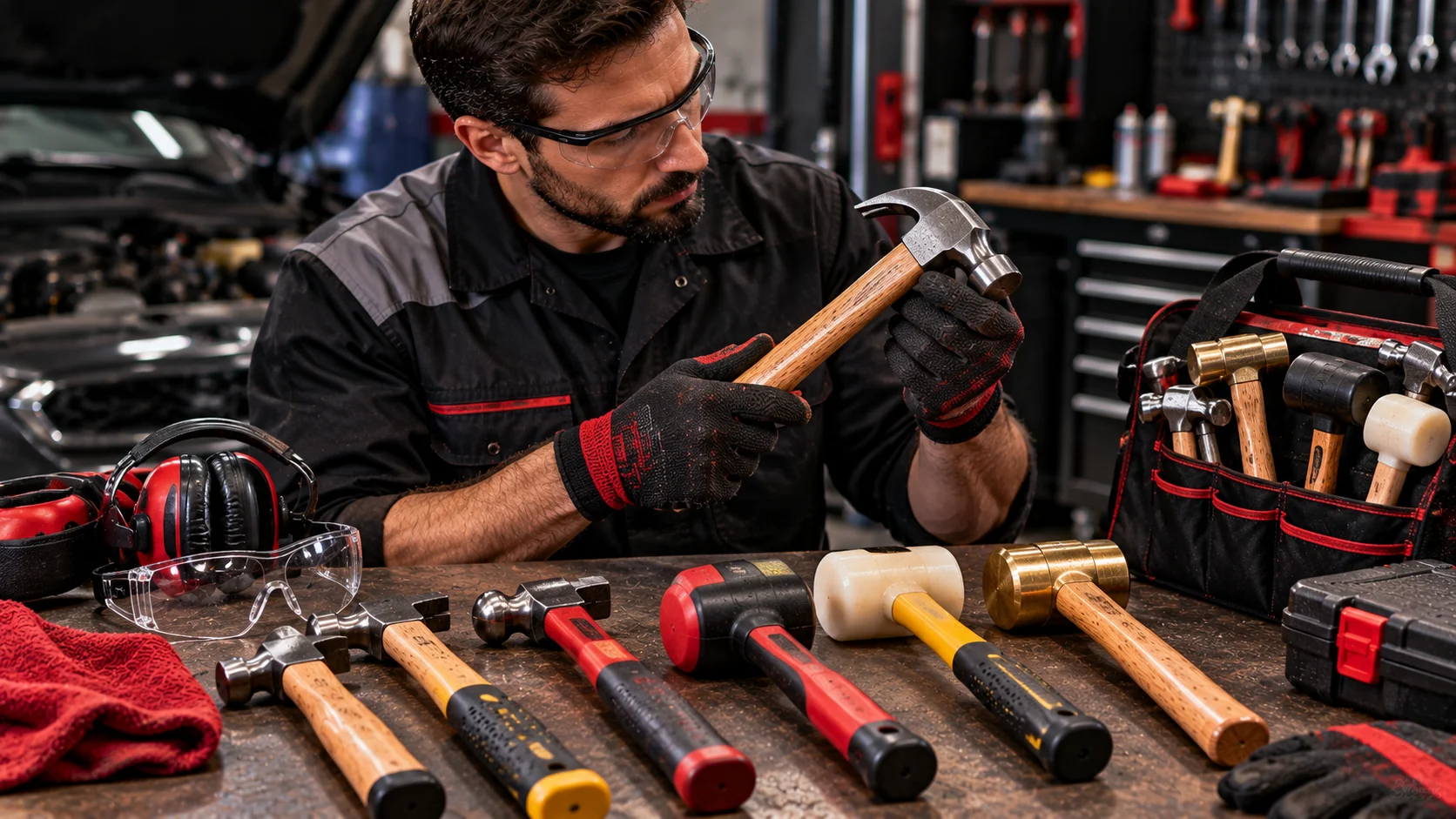
How to Choose the Right Hammer
Selecting the correct hammer requires matching the tool to the workpiece rather than relying on size or price alone.
Important Buying Factors
Striking-Face Material
Choose steel, rubber, plastic, brass, or another appropriate contact material.
Head Weight
Select sufficient impact capacity without losing safe control.
Handle Design
Evaluate handle length, comfort, balance, and build quality.
Head Attachment
Check that the head is securely fixed and free from defects.
Application
Match the hammer to the service or fabrication procedure.
Durability
Consider quality of construction and availability of approved replacement parts.
Interactive Hammer Buying Checklist
Review these points before selecting a hammer.
Hammer Safety, Common Mistakes and Essential Garage Kit
Even simple hand tools can cause injuries when used incorrectly. Safe hammer use begins with choosing the right tool, inspecting its condition, and preparing the work area.
Common Hammer Mistakes
| Mistake | Risk | Safer Approach |
|---|---|---|
| Using a loose hammer head | Head may detach | Remove unsafe tools from service |
| Striking with a damaged face | Flying metal fragments | Replace unsafe tools |
| Using an oversized hammer | Poor control and component damage | Select appropriate weight |
| Striking unsuitable hardened surfaces | Chipping and fragmentation | Use specified tools |
| No eye protection | Eye injury | Wear suitable safety eyewear |
| Substituting a hammer for a press or puller | Damage to precision components | Follow service procedure |
How to Maintain a Hammer
- Inspect the head and handle before use.
- Look for cracks, chips, deformation, or looseness.
- Remove dirt and moisture after use.
- Keep handles free from excessive oil.
- Store tools where their heads and handles are protected.
- Replace damaged tools or components according to manufacturer instructions.
Essential Hammer Kit for a Home Garage
A beginner does not need every specialty hammer. A small collection selected around actual repair tasks is usually more useful.
| Hammer | Priority | Reason |
|---|---|---|
| Ball-Peen | Useful | Suitable metalworking and punch work |
| Rubber Mallet | Useful | Gentler positioning |
| Dead-Blow | Useful | Reduced rebound |
| Soft-Face | Task-dependent | Specialized contact materials |
| Brass | Task-dependent | Selected metalworking |
| Slide Hammer | Specialized | Compatible pulling operations |
| Bodywork Hammer | Specialized | Sheet-metal fabrication |
Interactive Garage Hammer Checklist
Select the tools already available in your garage.
Frequently Asked Questions About Types of Hammers
What are the most common types of hammers?
Common types include claw, ball-peen, dead-blow, rubber mallet, soft-face, brass, and sledgehammers.
What are the main parts of a hammer?
Common parts include the head, striking face, cheek, eye, handle, and grip. Certain designs also include a peen or claw.
What is a ball-peen hammer used for?
A ball-peen hammer is used for suitable metalworking operations, peening, and striking compatible punches.
What is the difference between a dead-blow hammer and a rubber mallet?
Dead-blow hammers reduce rebound, often using an internal moving mass. Rubber mallets use a deformable rubber striking head.
Which hammer is best for automotive repairs?
No single hammer suits every repair. Ball-peen, dead-blow, rubber, brass, and specialized automotive striking tools serve different purposes.
What is a soft-face hammer?
A soft-face hammer uses contact materials such as nylon, rubber, or polyurethane. Some models have replaceable tips.
What is a brass hammer used for?
Brass hammers are used in selected metalworking operations where a softer-metal contact surface is preferred.
What is a slide hammer used for?
A slide hammer delivers pulling force through a sliding mass and compatible attachments. It is used in selected automotive service procedures.
Which hammer should beginners buy first?
Consider a ball-peen hammer, rubber mallet, or dead-blow hammer according to your most common repair tasks.
How do you choose the correct hammer weight?
Match the hammer’s weight to the workpiece, required impact, service procedure, and level of control.
Why should you never use a damaged hammer?
Cracked handles, loose heads, and damaged striking faces can cause tool failure and flying fragments.
How should hammers be maintained?
Inspect the head and handle, remove debris, keep tools dry, and store them properly. Replace unsafe tools.
Can a rubber mallet damage a car part?
Yes. Even a rubber mallet can damage delicate surfaces, seals, or precision assemblies when used improperly.
Are dead-blow hammers non-marring?
Not necessarily. Some designs have softer faces, but impact may still damage certain workpieces.
Final Thoughts: Which Type of Hammer Should You Choose?
Understanding different types of hammers makes it easier to choose the correct striking tool for a workshop task.
Ball-peen hammers are associated with metalworking, while rubber and soft-face mallets are helpful for selected assembly operations. Dead-blow hammers reduce rebound, and slide hammers provide a specialized pulling action.
For automotive enthusiasts, the most important factor is matching the hammer to the component and manufacturer’s service procedure.
Consider your common repair tasks, striking-face material, head weight, and safe handling requirements before purchasing specialized tools.
Editorial note: This guide provides general educational information. Follow tool manufacturer instructions and vehicle-specific service procedures before performing repairs.