
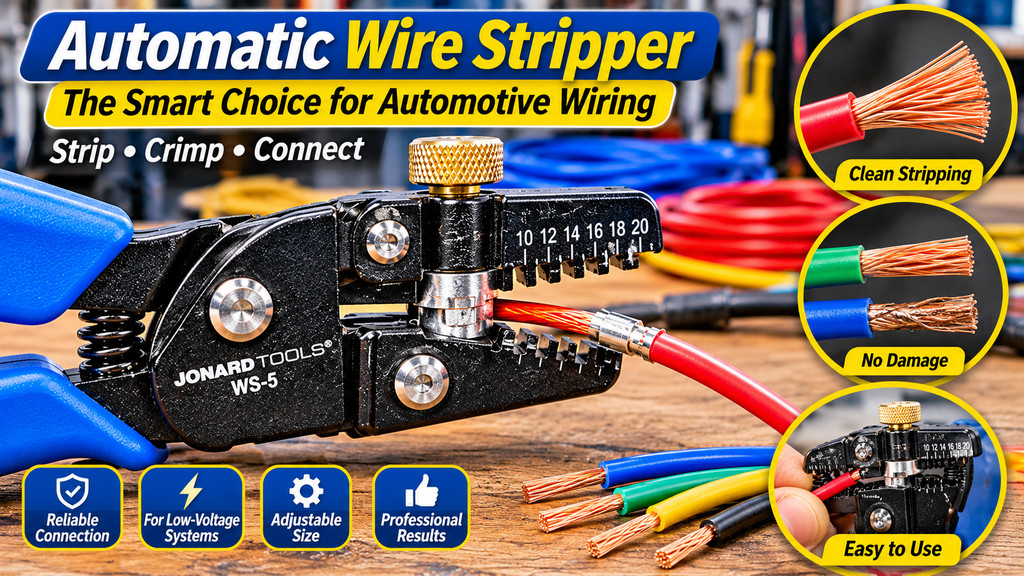
Whether you are repairing a damaged wiring harness, installing a dash cam, or replacing a corroded electrical connector, choosing the right wire stripper for automotive wiring is important. A poor stripping technique can nick copper strands, damage insulation, and create a connection that may fail later.
The best wire strippers for automotive work are not necessarily the most expensive or complicated. The right tool should match the wire’s gauge, conductor construction, insulation material, and the space available around the vehicle.
In this guide, we compare six wire strippers from Klein Tools, KNIPEX, IRWIN, Jonard Tools, and Wiha. We examine their published specifications, discuss their strengths and limitations, and explain which designs may be appropriate for different automotive electrical projects.
You will also learn how to select a stripper for stranded copper wire, avoid damaging conductors, and recognize situations that require manufacturer-approved repair procedures.
Quick Answer: WHICH AUTOMOTIVE WIRE STRIPPER SHOULD YOU CHOOSE?
For occasional repairs involving supported wire sizes, the Klein Tools 11055 is a simple manual option. The KNIPEX 12 62 180 and IRWIN VISE-GRIP 2078300 provide self-adjusting mechanisms for repeated stripping. The Klein Tools 11063W Katapult offers compound-action stripping, the Jonard WS-5 provides manual adjustment for fine wires, and the Wiha 42062 covers a broad manufacturer-rated conductor range. Always confirm compatibility with the exact automotive wire before use.
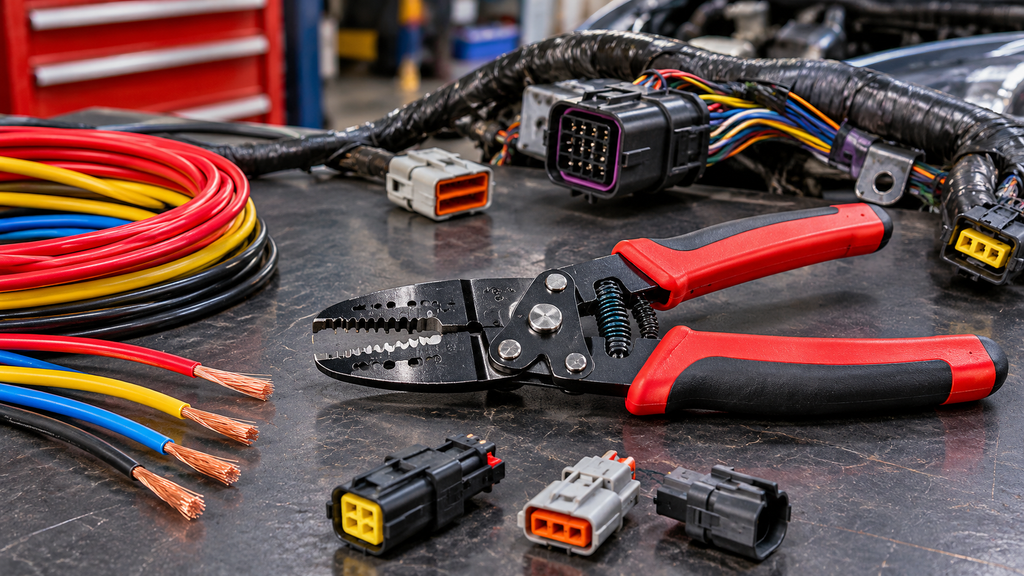
Best Wire Strippers for Automotive Wiring Compared
Not all wire strippers are designed for the same conductor sizes or materials. Some use fixed openings, while others have adjustable or automatic stripping mechanisms.
The following comparison highlights six identifiable models and their published capabilities.
| Wire Stripper | Type | Published Stripping Range | Potential Automotive Use |
|---|---|---|---|
| Klein Tools 11055 | Manual | 10–18 AWG solid; 12–20 AWG stranded | Occasional repairs on compatible wires |
| KNIPEX 12 62 180 | Self-adjusting | 0.2–6 mm² (24–10 AWG) | Repeated wire preparation |
| Klein Tools 11063W Katapult | Compound-action | 8–20 AWG solid; 10–22 AWG stranded | Repetitive stripping of compatible conductors |
| IRWIN VISE-GRIP 2078300 | Self-adjusting | 10–24 AWG | Stripping with additional cutting and crimping features |
| Jonard Tools WS-5 | Adjustable manual | 10–30 AWG solid and stranded | Fine-wire work requiring manual adjustment |
| Wiha 42062 | Automatic | 0.03–16 mm² (approximately 32–5 AWG) | Technicians working across varied conductor sizes |
Important: These are manufacturer-published conductor ranges, not verified results for every automotive insulation material. Actual compatibility depends on the wire, insulation, and tool instructions.
What Is a Wire Stripper?
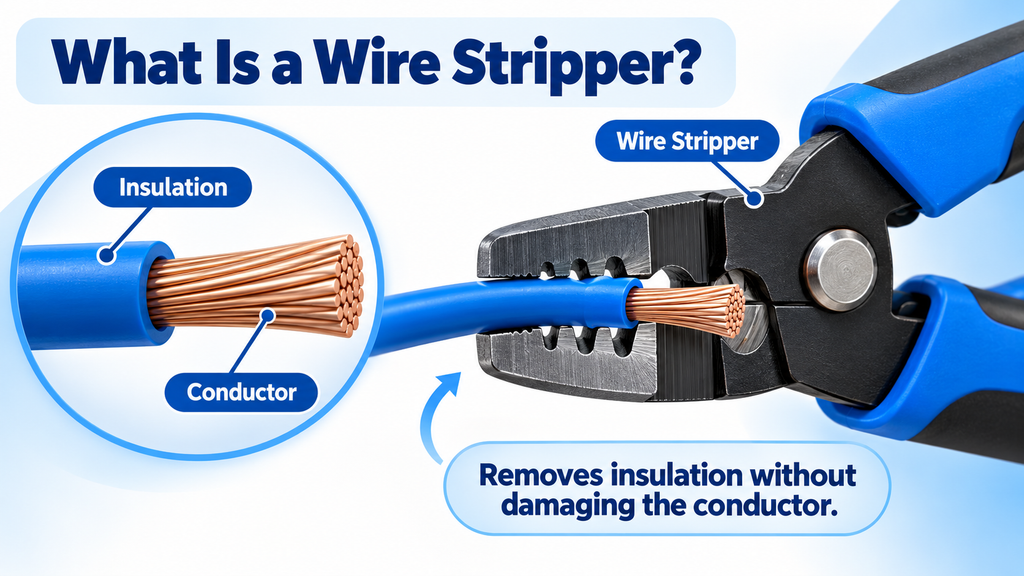
A wire stripper is a tool that removes the protective covering from an electrical wire. This covering is called insulation. It helps keep electricity inside the intended path and prevents accidental contact between conductors.
Under the insulation is a metal conductor, usually copper or aluminum. When you need to connect that wire to a suitable terminal, you may need to remove a small length of the covering.
That is the job of a wire stripper: remove the covering while keeping the metal underneath in good condition.
Think of It Like This
Imagine a copper wire wearing a plastic jacket. You want to remove part of the jacket without scratching the wire underneath. A properly selected wire stripper helps you do exactly that.
Why Wire Stripping Matters in Automotive Electrical Repairs
Modern vehicles rely on interconnected electrical circuits for lighting, engine management, sensors, comfort features, and communication between electronic modules.
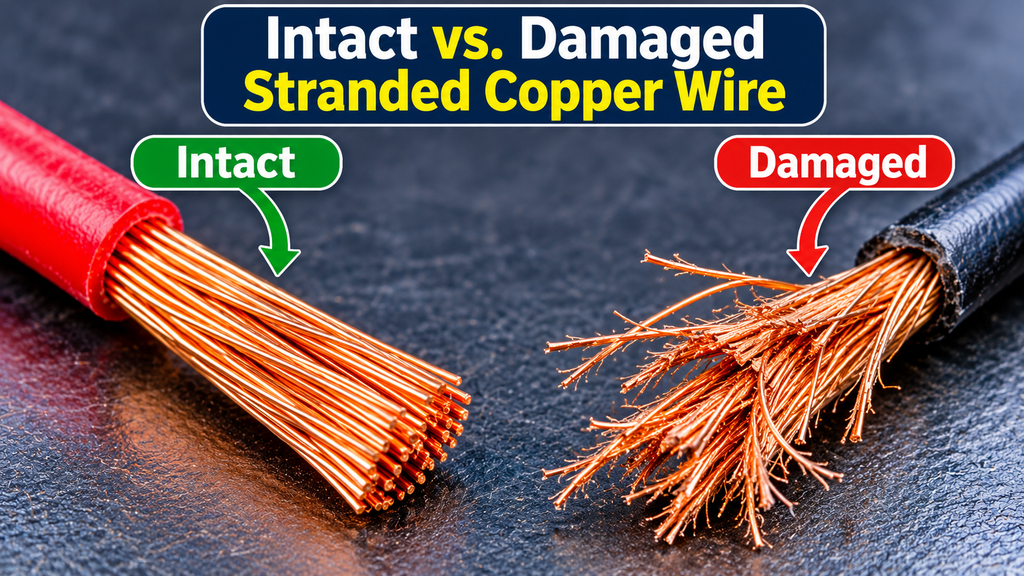
Many automotive circuits use flexible, stranded copper conductors. These conductors are made from multiple thin strands rather than a single solid piece of metal.
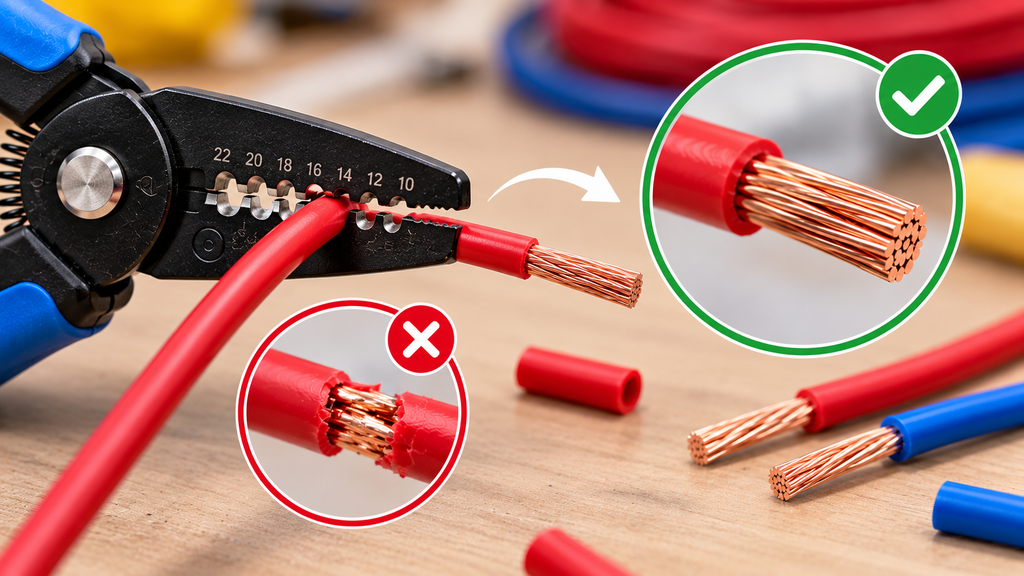
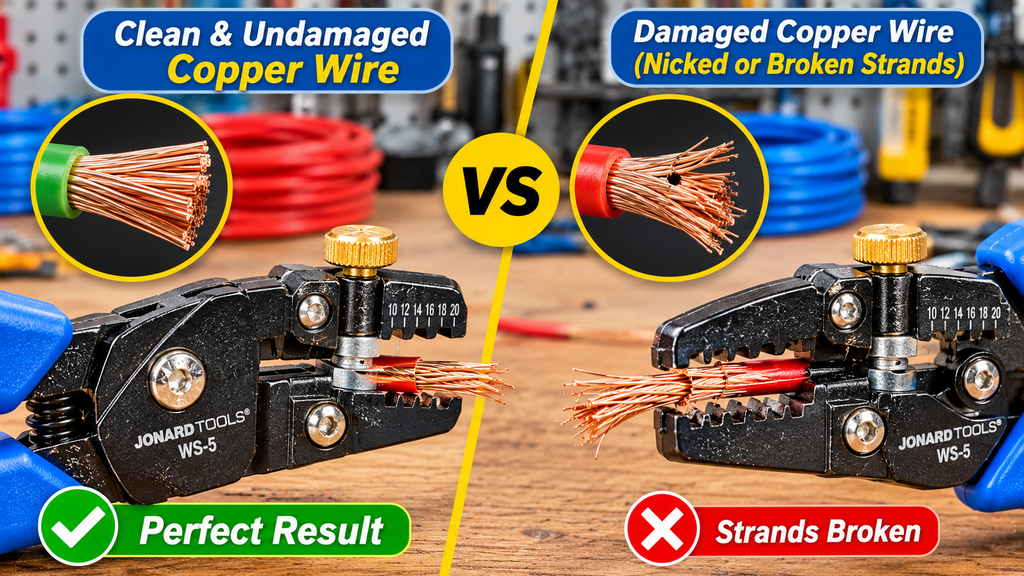
Flexibility helps wiring tolerate normal vehicle movement and vibration. However, those thin strands can be damaged if an unsuitable stripping tool cuts too deeply into the insulation.
What Happens When Copper Strands Are Damaged?
Broken or nicked strands can reduce the amount of intact conductor available at a connection. Depending on the circuit and severity, this can affect electrical or mechanical integrity.
Possible consequences include a weak crimp, increased electrical resistance, intermittent operation, or premature connection failure.
These problems cannot always be identified from external appearance after a connector has been assembled.
Why Insulation Type Matters
Automotive wires may use different insulation materials depending on their location, operating temperature, and application.
Some thin-wall insulation materials behave differently from ordinary building wire. A tool that strips one wire cleanly may require adjustment or may be unsuitable for another.
Therefore, selecting a stripper by AWG alone is not enough. The manufacturer’s compatibility instructions and applicable vehicle repair procedure also matter.
How We Compared These Wire Strippers
A good buying guide should explain why a product is worth considering. Brand names alone are not enough. We compared these tools using their published specifications, design features, and intended applications.
The following factors matter most when choosing a wire stripper:
01 / ACCURACY
Clean Insulation Removal
The stripper should be designed to remove insulation without cutting the metal conductor when used correctly.
02 / COMPATIBILITY
Supported Wire Sizes
A tool must be suitable for the thickness and construction of the wire you are preparing.
03 / HANDLING
Ease of Use
Handle comfort, weight, adjustment steps, and stripping action can affect everyday use.
04 / ERGONOMICS
Comfort and Handling
Handle design, tool weight, spring-assisted operation, and suitability for confined workspaces.
05 / MAINTENANCE
Build and Serviceability
Blade design, replacement-part availability, construction materials, and maintenance requirements
06 / VALUE
Practical Tool Value
Whether the available features are appropriate for the intended workload and justify the cost for that user.
What real testing should document:
A repeatable hands-on comparison should record the wire gauge, solid or stranded construction, insulation material, number of attempts, successful strips, visible copper damage, and strip-length consistency. Results should include original photographs and disclose any models that were not tested.
Six Wire Strippers for Automotive Wiring: Detailed Comparisons
Each tool below offers a different combination of wire-size capacity, mechanical design, and adjustment features. The most appropriate choice depends on the exact automotive task.
1. Klein Tools 11055 — Best for Simple Manual Stripping
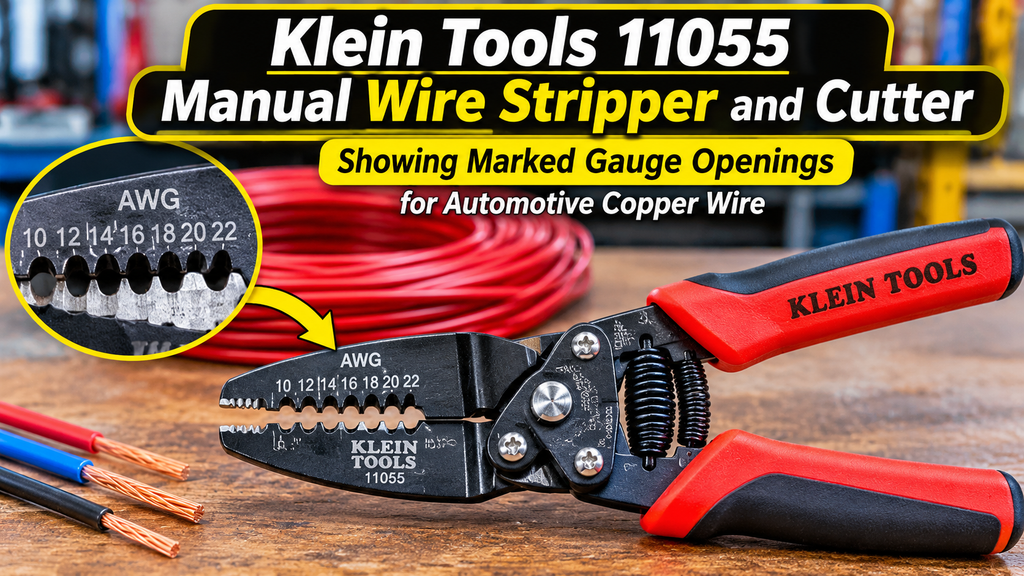
The Klein Tools 11055 is a traditional wire stripper and cutter with marked openings for specific conductor sizes.
The manufacturer specifies a capacity of 10–18 AWG solid copper and 12–20 AWG stranded copper. It also includes cutting blades, a serrated gripping nose, spring-assisted handles, and a closure lock.
Its straightforward design may appeal to car owners who occasionally prepare wires of known sizes for compatible low-voltage accessory repairs.
Since the user must select the correct stripping opening, gauge identification is especially important. Using an opening intended for a smaller conductor can damage strands.
Best fit: Occasional low-voltage automotive repairs involving compatible medium-gauge stranded wire.
Strengths
- Easy-to-read wire size markings
- Simple mechanical design
- Includes a wire cutter
- Spring-assisted handles
Limitations
- Requires the correct hole selection
- Limited to its supported sizes
- No automatic stripping action
2. KNIPEX 12 62 180 — For Repeated Wire Preparation
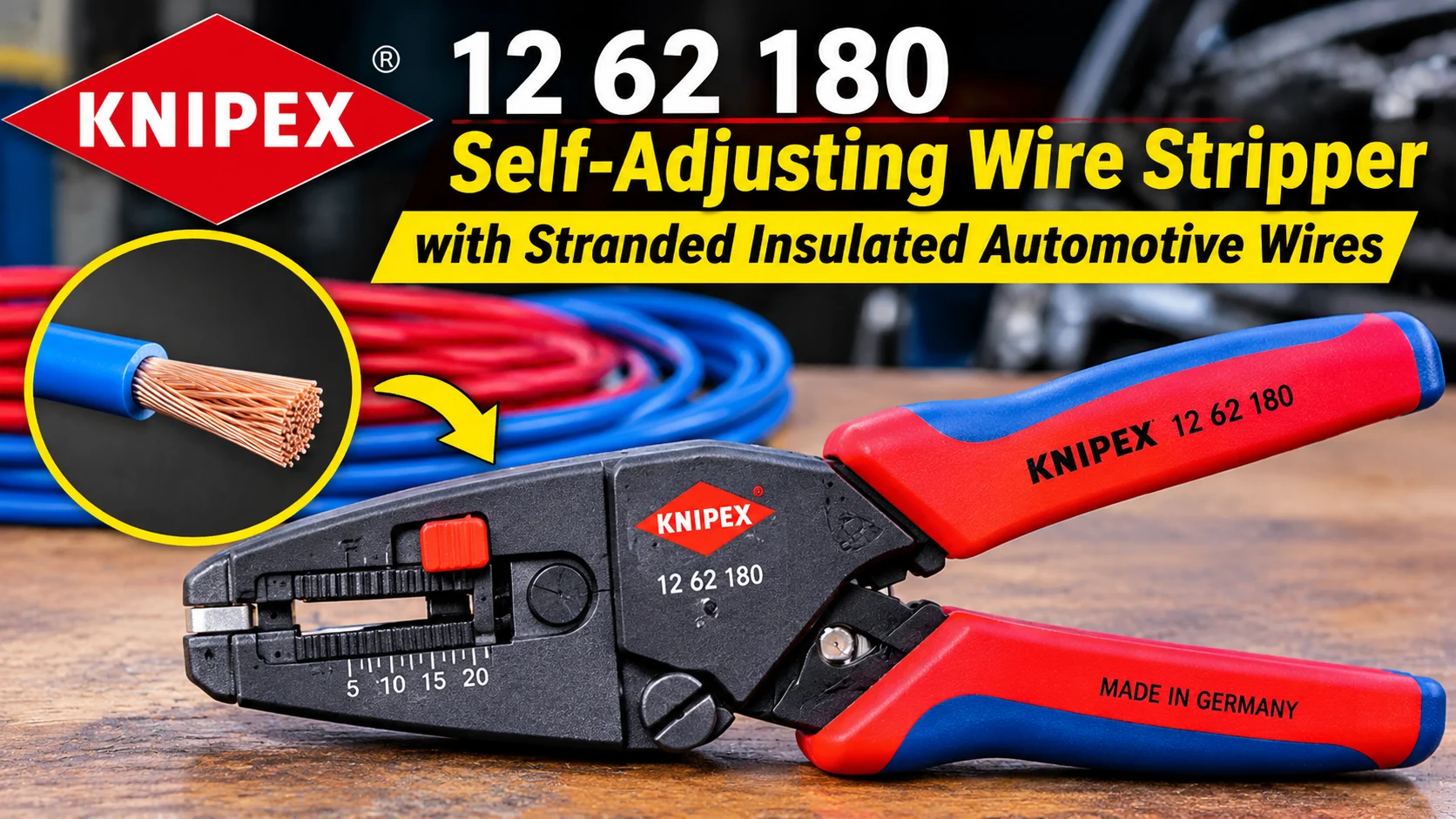
The KNIPEX 12 62 180 is a self-adjusting insulation stripper designed to accommodate compatible conductors without manually selecting a fixed stripping hole each time.
KNIPEX lists a stripping capacity of 0.2–6 mm², equivalent to 24–10 AWG. It is intended for solid, multi-stranded, and finely stranded conductors with compatible standard insulation.
One useful feature is its adjustable stripping-length stop, which covers approximately 6–18 mm. This can help produce consistent exposed lengths when preparing multiple connections.
The tool also includes a narrow head, replaceable blades, and a lightweight reinforced body.
However, KNIPEX notes that some insulation materials and specialized cable constructions require different tooling. Automatic adjustment does not guarantee universal compatibility.
Strengths
- Automatic adjustment for compatible wires
- 6–18 mm adjustable strip-length stop
- Slim head for restricted work areas
- Replaceable stripping blades
Limitations
- Requires the correct insulation type
- Not intended for every multilayer cable
- More complex than basic manual pliers
Best fit: Repeated preparation of compatible automotive accessory wires and harness conductors.
3. Klein Tools 11063W Katapult — For One-Squeeze Stripping
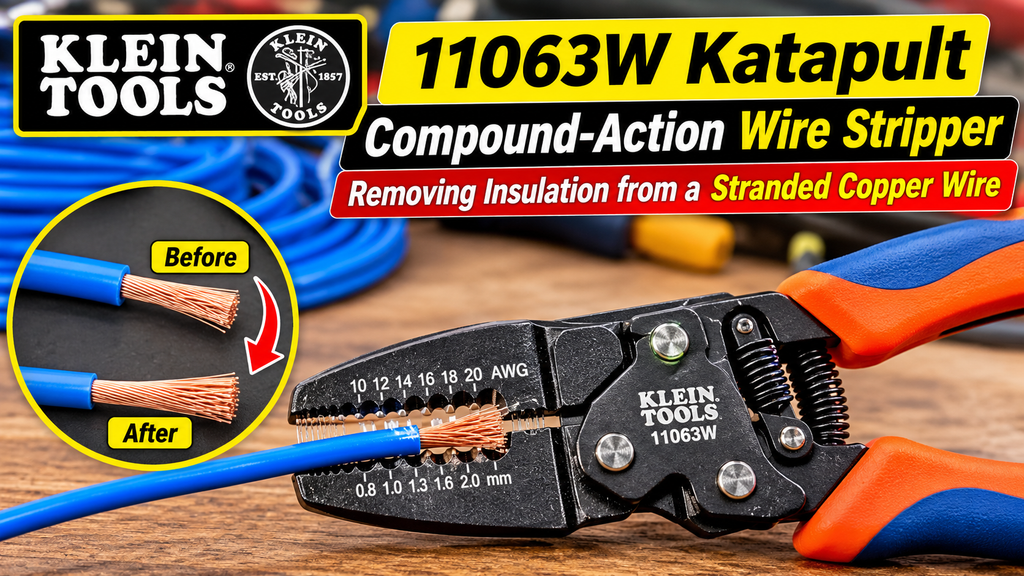
The Klein Tools 11063W Katapult uses a compound-action mechanism to grip the wire and remove insulation in one squeezing motion.
Its published stripping capacity is 8–20 AWG solid and 10–22 AWG stranded. The tool includes an integrated cutter and a cast-alloy chassis.
Compared with a simple manual stripper, the mechanism may make repeated insulation removal more convenient.
Klein states that the tool can remove up to one inch of insulation in a single operation. That does not mean every automotive terminal requires that much exposed conductor. Always use the strip length specified for the connection.
The mechanism is also larger than that of many basic manual strippers, which may limit access in crowded vehicle wiring areas.
Strengths
Advantages
- Single-squeeze stripping mechanism
- Supports both listed solid and stranded gauges
- Integrated wire-cutting function
- Ergonomic dual-material grips
Limitations
- Bulkier mechanism than simple manual strippers
- Not appropriate for every insulation design
- Not electrically insulated for live work
Best fit: Repetitive automotive wire preparation when the conductor and insulation match the tool’s specifications.
4. IRWIN VISE-GRIP 2078300 — For Versatile Wire Preparation
The IRWIN VISE-GRIP 2078300 combines self-adjusting wire stripping with cutting and crimping features.
IRWIN specifies a stripping range of 10–24 AWG. The tool has an adjustable stop for controlling strip length and a micro-adjustment knob for finer gauges below 20 AWG.
Its integrated cutter and selected crimping capabilities may make it convenient for general electrical preparation.
For automotive work, however, the presence of a built-in crimper does not automatically mean it is appropriate for every connector or terminal. Some vehicle terminals require dedicated crimp dies and validated service procedures.
Why consider it?
The IRWIN 2078300 is a practical candidate for users who prefer a combination of automatic stripping, wire cutting, and compatible terminal crimping rather than carrying a separate basic tool for each operation.
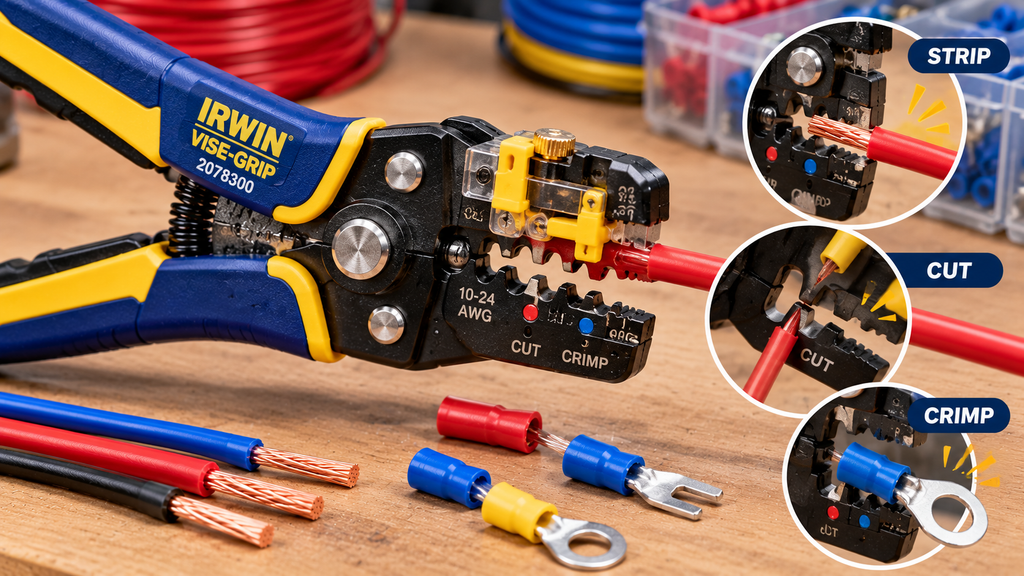
Best fit: General low-voltage wire preparation where the supported stripping and cutting features match the work.
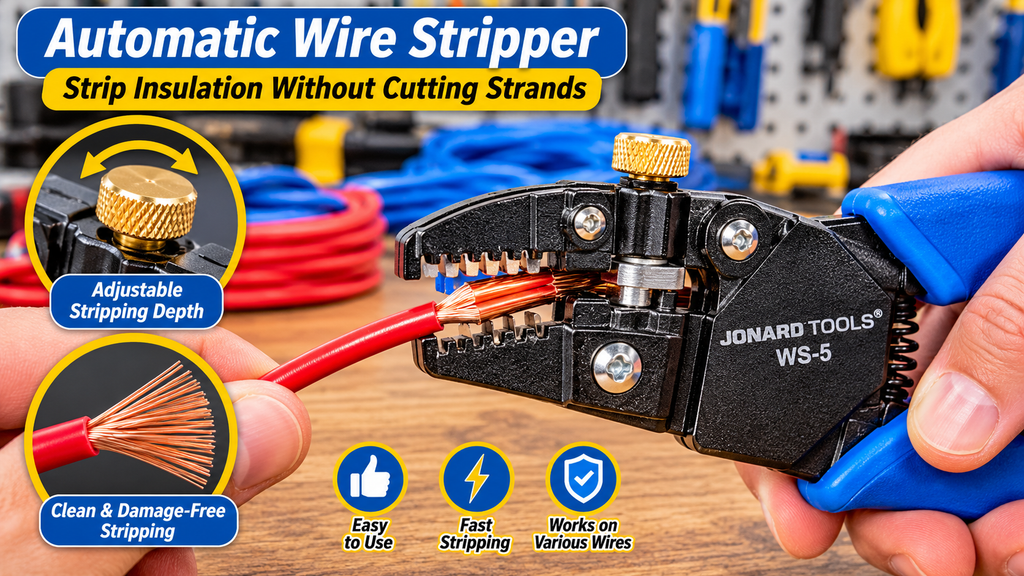
5. Jonard Tools WS-5 — For Adjustable Fine-Wire Stripping
The Jonard Tools WS-5 is an adjustable manual wire stripper and cutter featuring a precision-ground V-notch blade.
According to Jonard, it supports 10–30 AWG solid and stranded conductors.
Unlike fixed-opening tools, the WS-5 uses an adjustment screw to control the blade opening. This may be helpful for users who need to fine-tune stripping on compatible wire sizes.
The small-wire range makes it worth comparing for low-voltage signal and accessory wiring, where finer conductors may be encountered.
Manual adjustment requires attention. A blade setting that is too tight may damage copper, while one that is too loose may leave insulation attached.
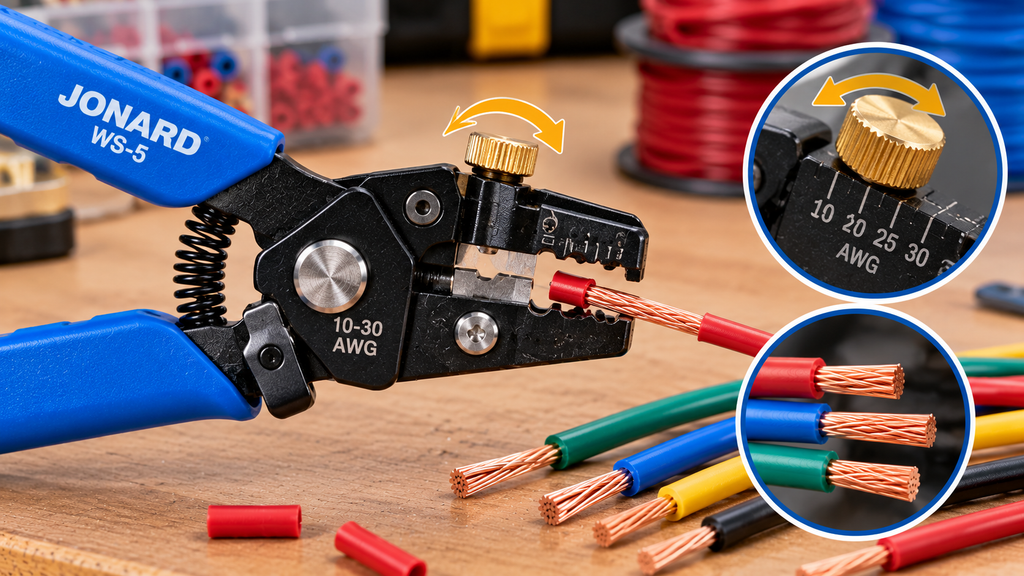
Best suited to: Electricians and technicians who frequently prepare compatible wire sizes.
6. Wiha 42062 — For a Broad Range of Conductor Sizes
The Wiha 42062 is an automatic stripping tool designed for a wide range of conductor cross-sections.
Wiha lists a stripping capacity of 0.03–16 mm², approximately 32–5 AWG.
The tool includes an adjustable stripping-length stop, replaceable blades, and a damper intended to reduce recoil when working with larger conductors.
Its broad specified range may appeal to technicians who work with several compatible conductor sizes rather than a limited set of accessory wires.
Still, the published capacity does not mean every cable material or specialized automotive conductor can be stripped safely. Specific insulation compatibility should be confirmed.
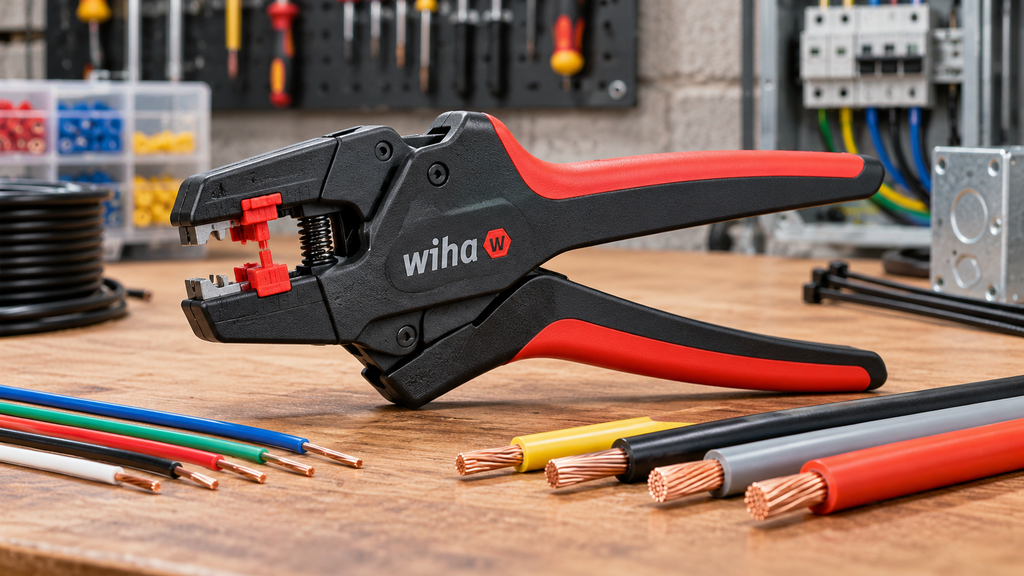
Best fit: Technicians needing an automatic tool across several compatible wire sizes.
Manual vs. Automatic Wire Strippers: Which Is Better for Cars?
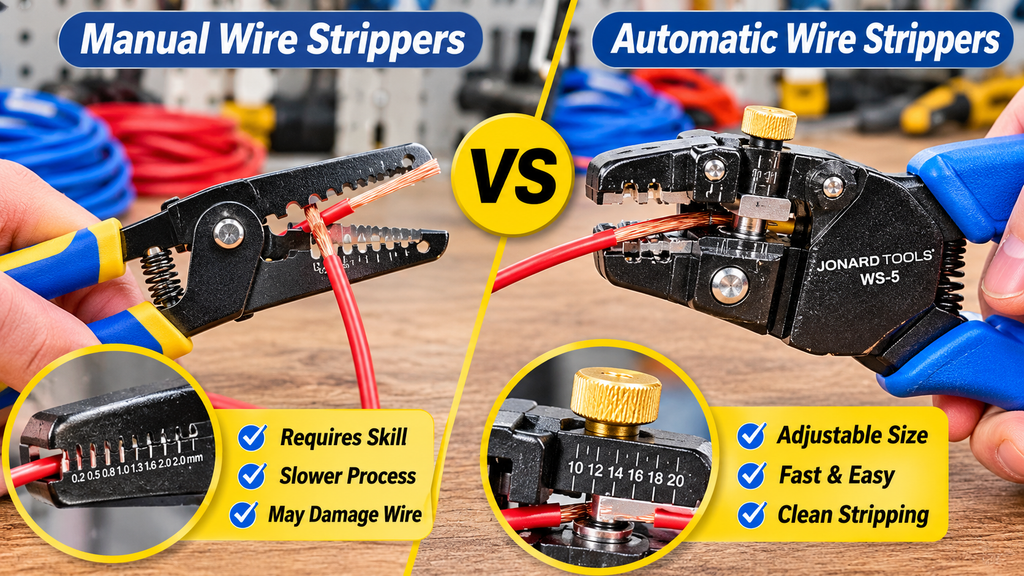
Manual and automatic wire strippers can both be suitable for automotive electrical work. The difference is how they remove insulation and how much adjustment the user must perform.
Manual Wire Strippers
Manual models commonly use fixed gauge openings or adjustable blades. The user selects the correct opening and removes the insulation by hand.
Their simpler construction can be attractive for occasional work or projects involving a limited range of known conductor sizes.
Automatic Wire Strippers
Automatic or self-adjusting models use a mechanism to grip and remove insulation, sometimes accommodating several supported conductor sizes without changing an individual gauge opening.
These designs may make repeated preparation more convenient, but the mechanisms can be larger and are still limited by compatible wire sizes and insulation types.
| Feature | Manual | Automatic |
|---|---|---|
| Gauge selection | Manual selection or adjustment | Varies by mechanism |
| Design complexity | Generally simpler | More moving components |
| Repeated stripping | More direct manual steps | May be more convenient |
| Confined spaces | Some models are compact | Head size varies by model |
| Insulation compatibility | Tool-specific | Tool-specific |
| Typical consideration | Occasional known-gauge work | Repeated compatible wire preparation |
How to Strip Automotive Wire Without Damaging the Copper
The correct procedure depends on the circuit, vehicle manufacturer, wire construction, and intended connection.
The following general steps apply only to permitted low-voltage wire work after the circuit has been made safe according to the appropriate service procedure.
Electrical Safety Warning: Do not use general wire-stripping procedures on airbag or SRS wiring, high-voltage electric or hybrid vehicle circuits, or any circuit with manufacturer restrictions. Work must follow applicable service information and be performed by appropriately qualified personnel.
Step 1: Identify the Wire and Circuit
Confirm the wire gauge, conductor type, and insulation construction using the vehicle’s service information.
Do not assume the gauge from the insulation’s outside diameter. Insulation thickness varies.
Step 2: Select a Compatible Wire Stripper
Choose a tool whose manufacturer-rated capacity covers the specific conductor.
For manual tools, select or adjust the correct opening. For automatic tools, verify that the insulation and conductor construction are supported.
Step 3: Set the Correct Stripping Length
The required exposed length depends on the terminal or splice being used.
Use the connection manufacturer’s instructions rather than stripping an arbitrary length.
Step 4: Remove the Insulation Carefully
Position the wire correctly, operate the tool as instructed, and remove the insulation without pulling excessively on the conductor.
If the insulation tears unpredictably or requires excessive force, stop and reassess tool compatibility.
Step 5: Inspect the Exposed Copper
Check for cuts, nicked strands, missing strands, deformation, and residual insulation.
Damaged conductors should not simply be hidden inside a connector. Follow the applicable repair instructions.
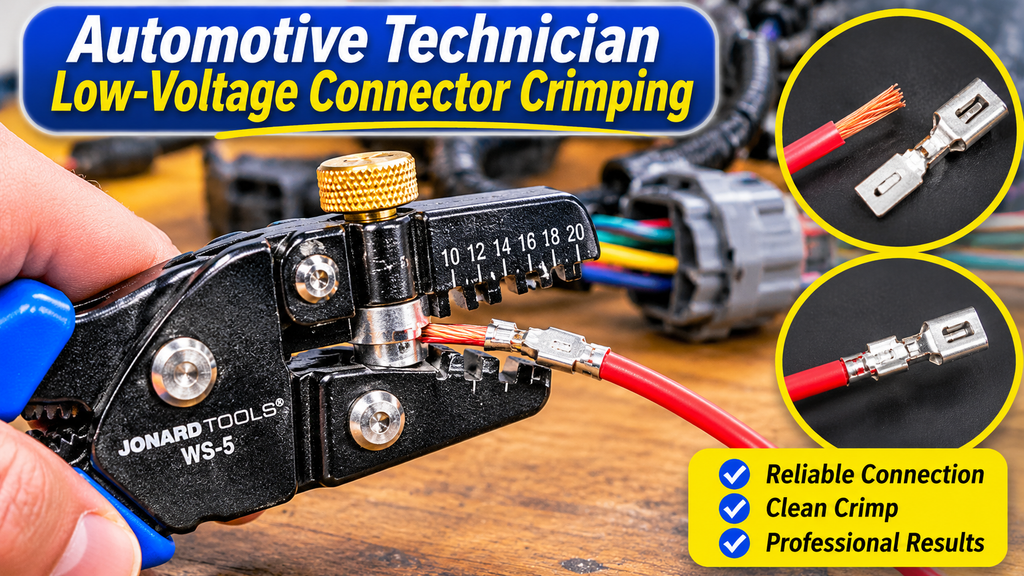
Step 6: Complete the Approved Connection
Install the correct terminal or splice using the specified crimp tool, sealing components, and verification procedure.
Wire stripping alone does not establish a reliable electrical repair.
Common Automotive Wire-Stripping Mistakes
Even a suitable wire stripper can damage a conductor when it is used incorrectly.
- Using the wrong gauge opening: May cut into copper strands or leave insulation partially attached.
- Ignoring stranded-wire specifications: A tool’s solid-wire range may differ from its stranded-wire range.
- Stripping excessive insulation: May leave exposed conductor outside the intended terminal or connector.
- Using damaged blades: Worn cutting edges can produce inconsistent results.
- Assuming all automatic tools work on every wire: Insulation materials and conductor constructions vary.
- Twisting or pulling aggressively: Can distort flexible stranded conductors.
- Using unsuitable crimping tools: Can create a mechanically weak or electrically unreliable terminal connection.
- Working on unsafe or restricted circuits: Can expose the user to serious electrical, vehicle-system, or deployment hazards.
Automotive Wire Stripper Buying Guide
Before buying a stripper, consider the actual wiring tasks you expect to perform.
1. Supported AWG Range
AWG stands for American Wire Gauge. Higher AWG numbers represent smaller conductors, while lower numbers represent larger ones.
A stripper must support the exact conductor size. Check whether its published specification applies to solid, stranded, or both types of wire.
2. Automotive Insulation Compatibility
A stripping tool must be appropriate for the insulation surrounding the wire. This is especially important when working with thin-wall or specialized automotive wiring.
Do not rely on the AWG rating alone to establish compatibility.
3. Control Over Stripping Length
An adjustable length stop can be useful when preparing several identical connections.
The setting should match the terminal or splice specification.
4. Tool Size and Access
Automotive wiring can be difficult to reach around dashboards, trim panels, engine compartments, and tightly routed harnesses.
Consider whether the tool’s head can reach the intended work area without pulling or damaging the harness.
5. Blade Replacement and Maintenance
Tools with replaceable blades may be easier to maintain over repeated use. Check whether replacement parts are available for the specific model.
Which Wire Stripper Fits Common Automotive Projects?
Vehicle wiring projects vary widely. A suitable tool for a simple accessory wire may not be appropriate for a sealed factory connector or sensitive control circuit.
| Project | What Matters Most | Tool Type to Consider |
|---|---|---|
| Dash cam accessory installation | Correct wire size, protection, and connection method | Compatible manual or automatic stripper, if stripping is required |
| Aftermarket lighting connection | Circuit load, wire gauge, sealing, and approved connection | Gauge-matched manual or self-adjusting tool |
| Audio or accessory wiring | Conductor size and connector requirements | Appropriately rated stripper with reliable strip-length control |
| Fine-gauge low-voltage wiring | Delicate strands and insulation compatibility | Fine-wire-rated adjustable tool |
| Factory connector or harness repair | Manufacturer procedure and specialized terminals | Specified service tooling |
| Airbag or high-voltage electrical work | Specialized safety and repair restrictions | Qualified service personnel and approved equipment |
When Should You Leave Automotive Wiring Repairs to a Professional?
Some electrical projects require more than basic hand tools. A professional inspection or repair is appropriate when a circuit involves safety-critical functions, complex vehicle electronics, or damage that cannot be properly assessed.
Seek qualified assistance when dealing with:
- Airbag, seat-belt pretensioner, or other SRS circuits.
- Hybrid or electric-vehicle high-voltage components.
- Repeatedly blowing fuses or unexplained electrical shorts.
- Burned wiring, melted connectors, or significant heat damage.
- Damaged factory harnesses requiring specialized repair procedures.
- Intermittent vehicle faults involving control modules or network communication.
Do not assume that cutting out a damaged wire and installing a generic connector is an acceptable repair for every vehicle system.
Which Wire Stripper Should You Buy?
Based on published specifications and design differences, these are useful starting points:
For occasional compatible wire repairs: Klein Tools 11055.
For repeated stripping with adjustable length: KNIPEX 12 62 180.
For compound-action stripping: Klein Tools 11063W Katapult.
For a multifunction self-adjusting design: IRWIN VISE-GRIP 2078300.
For adjustable fine-wire work: Jonard Tools WS-5.
For a broad specified conductor range: Wiha 42062.
None of these recommendations replaces checking tool compatibility with the specific automotive wire. A model with more features or a larger published range is not automatically better for a particular repair.
Frequently Asked Questions About Automotive Wire Strippers
1. What is the best wire stripper for automotive wiring?
The best tool depends on the wire gauge, insulation, conductor construction, and work required. Klein Tools 11055 is a simple manual option for supported sizes, while KNIPEX 12 62 180 and IRWIN 2078300 provide self-adjusting alternatives.
2. Can I use regular wire strippers on car wires?
Yes, if the tool supports the exact conductor and insulation and the vehicle manufacturer’s repair procedure permits the work. Not all general-purpose strippers are appropriate for every automotive wire.
3. Are automatic wire strippers better for automotive repairs?
Automatic models can make repeated stripping more convenient, but they do not guarantee better results. Proper wire compatibility and technique are more important than the mechanism alone.
4. What size wire stripper do I need for car wiring?
You need a stripper rated for the conductor sizes in your specific project. Automotive wiring uses different gauges depending on the circuit. Consult the vehicle service information rather than choosing one universal size.
5. What does AWG mean on a wire stripper?
AWG stands for American Wire Gauge. It is a system for describing conductor size. A higher AWG number indicates a smaller conductor, while a lower number indicates a larger one.
6. Can a wire stripper damage copper strands?
Yes. An incorrect stripping opening, excessive blade pressure, damaged blades, or incompatible insulation can nick or break copper strands.
7. Which wire stripper is suitable for fine automotive wires?
The Jonard Tools WS-5 has a manufacturer-rated range extending to 30 AWG. The Wiha 42062 also lists a broad size range. Compatibility with the actual insulation and conductor must still be verified.
8. Can I use a wire stripper to crimp automotive terminals?
Some combination tools include crimping features, but the crimping die must match the terminal and wire specification. Certain automotive connectors require dedicated service tools.
9. Should I strip wires while the car battery is connected?
Electrical circuits must be made safe according to the applicable vehicle service procedure before repair. Simply switching off the ignition may not de-energize every circuit. Do not work on an energized wire using ordinary stripping tools.
10. Can I repair airbag or electric-vehicle high-voltage wiring myself?
These systems can present serious risks and have strict manufacturer requirements. Such work should be handled by appropriately qualified personnel using approved procedures and equipment.
FINAL VERDICT
Final Verdict: Choose the Right Wire Stripper for Your Automotive Project
A good automotive wiring repair starts with correct wire identification, suitable tools, and careful preparation.
The six wire strippers compared in this guide offer different approaches to insulation removal. Klein Tools provides manual and compound-action options, KNIPEX and IRWIN offer self-adjusting designs, Jonard provides adjustable fine-wire capability, and Wiha covers a broad published range of conductor sizes.
However, no wire stripper is universally suitable for every vehicle circuit.
Choose a tool that supports the exact wire and insulation, preserve the copper strands, and follow manufacturer-approved connection procedures.
Traditional Manual Stripping
Klein Tools 11055
Repeated Stripping Work
Milwaukee
One-Squeeze Operation
Klein Tools 1106
Adjustable Fine-Wire Work
Jonard WS-5
Broad Conductor Size Range
Wiha 42062
Key Takeaway: For automotive electrical work, wire compatibility, clean insulation removal, and a properly completed connection matter more than the brand name or the number of features on the tool.