
You’re working on your car’s cooling system and need to grip a stubborn component. You reach into the toolbox, pick up a pair of adjustable pliers, and realize the jaws are too wide, the adjustment keeps shifting, or the handles leave little room to work inside the engine bay.
Choosing the right water pump pliers can make general automotive gripping tasks easier and more controlled. But not every pair is suitable for every vehicle component, and the biggest pliers are not necessarily the best choice.
Jaw capacity, overall length, adjustment mechanism and jaw geometry all matter. A tool that works comfortably on a robust metal part may damage a plastic cooling-system fitting or a delicate hose connection.
This guide explains what water pump pliers are, how different designs compare, which sizes are useful in garages, and how to choose a dependable pair for appropriate automotive maintenance tasks.
You’ll also learn when dedicated hose-clamp pliers, sockets or other purpose-built tools are safer than using adjustable serrated jaws.
How Do You Choose the Right Water Pump Pliers?
Choose water pump pliers by matching their jaw opening, overall length, adjustment mechanism, jaw geometry and handle design to the component you’re working on.
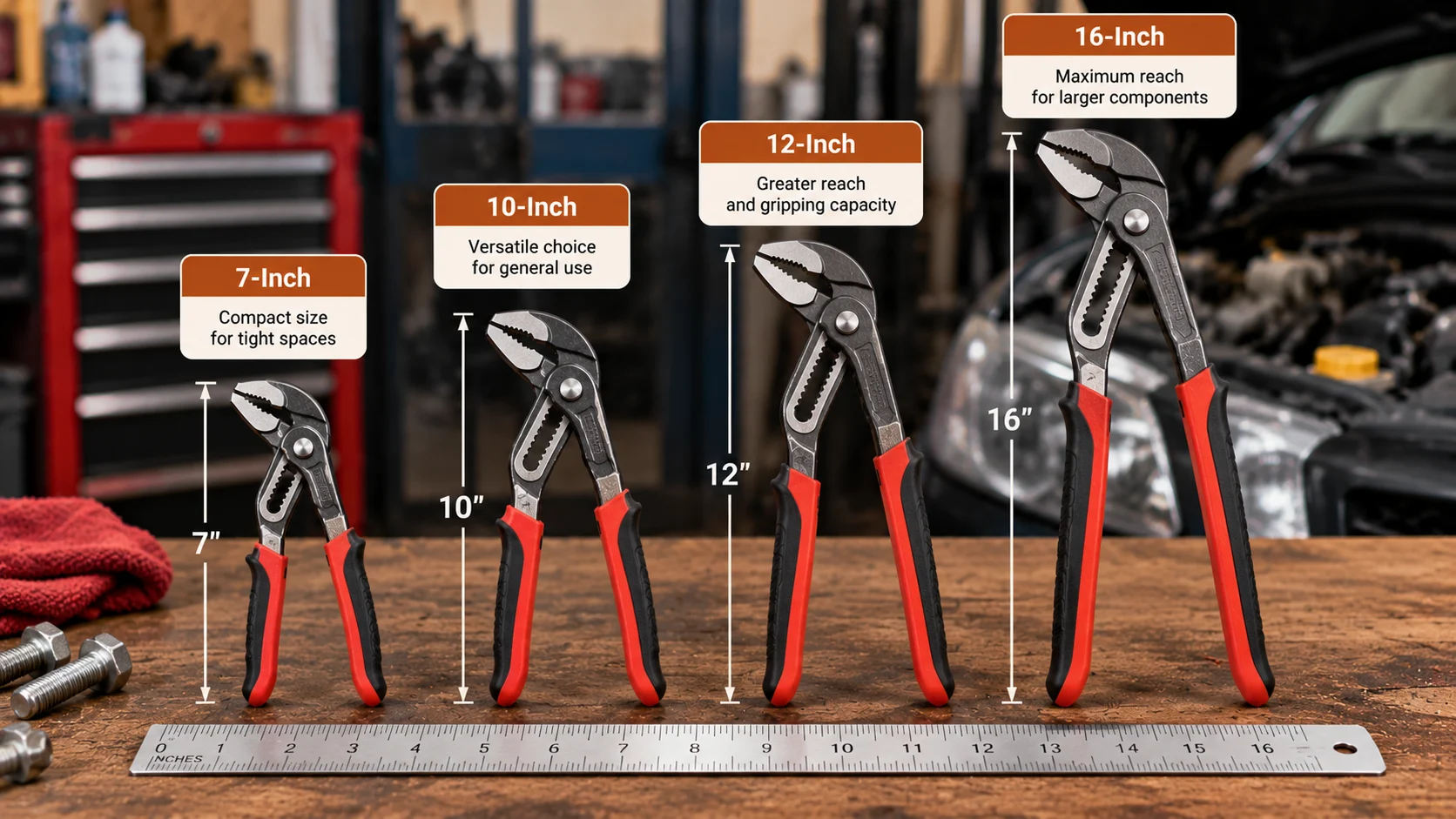
For general automotive workshop tasks, a well-made 10-inch adjustable pair is a reasonable starting point. Compact 7-inch pliers can be useful when access is restricted, while longer 12-inch models may suit larger, durable components.
However, the correct tool depends on the job. Dedicated hose-clamp pliers should be used where the clamp design requires them, and suitable wrenches or sockets are preferable for many hexagonal fittings.
The jaws must fit the intended component securely.
A versatile length for many general workshop tasks.
Serrated jaws can damage soft, plastic or precision fittings.
What Are Water Pump Pliers and What Are They Used For?
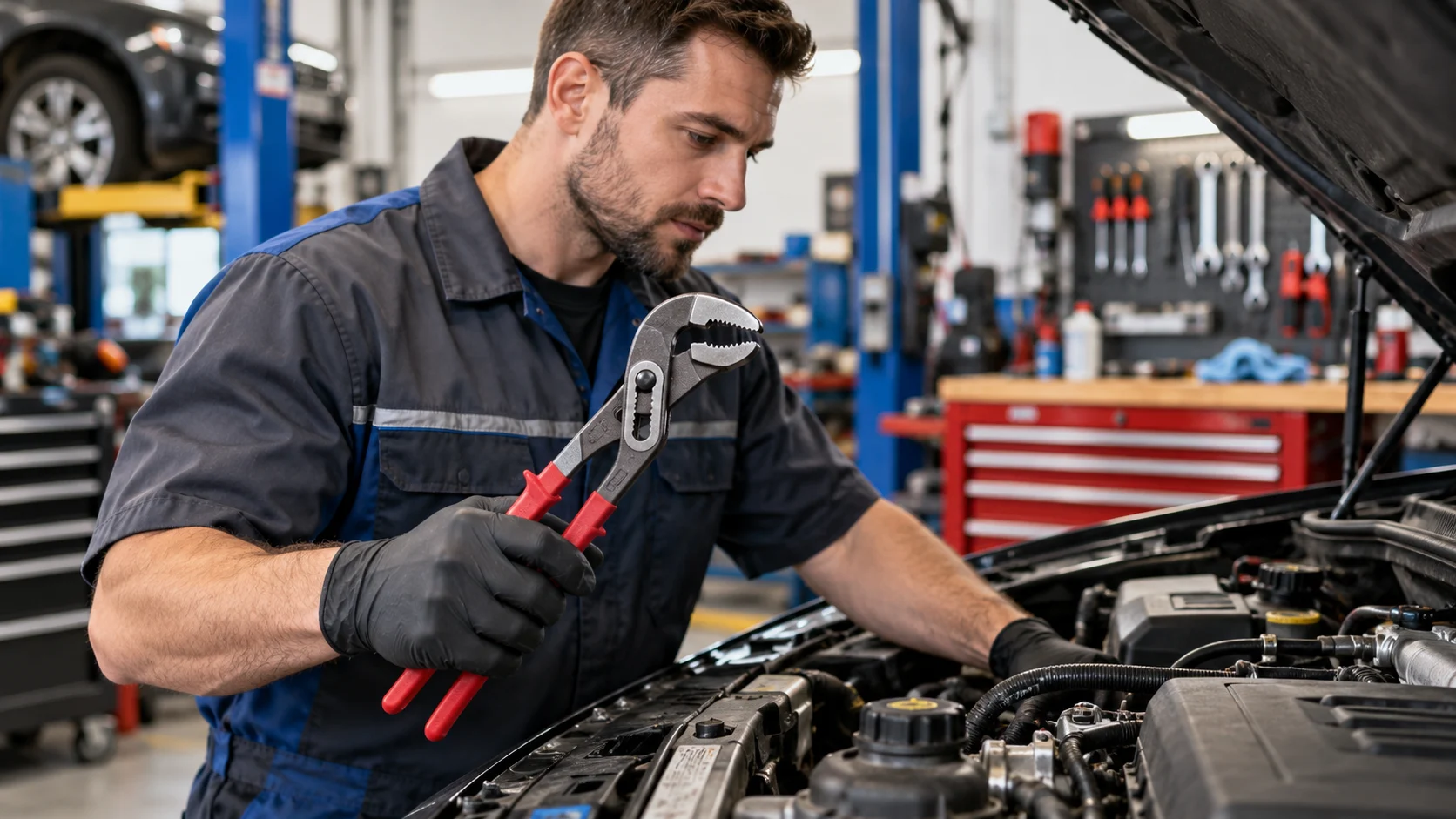
Water pump pliers are adjustable gripping tools with movable jaws and a joint that allows the opening to be changed for different-sized objects.
Many have angled, serrated jaws designed to grip suitable cylindrical, irregular or otherwise difficult-to-hold parts.
The name can be misleading. Water pump pliers are widely used for general maintenance and fitting work; they are not exclusively designed for removing automotive water pumps.
Why Do Mechanics Keep Them in Their Toolboxes?
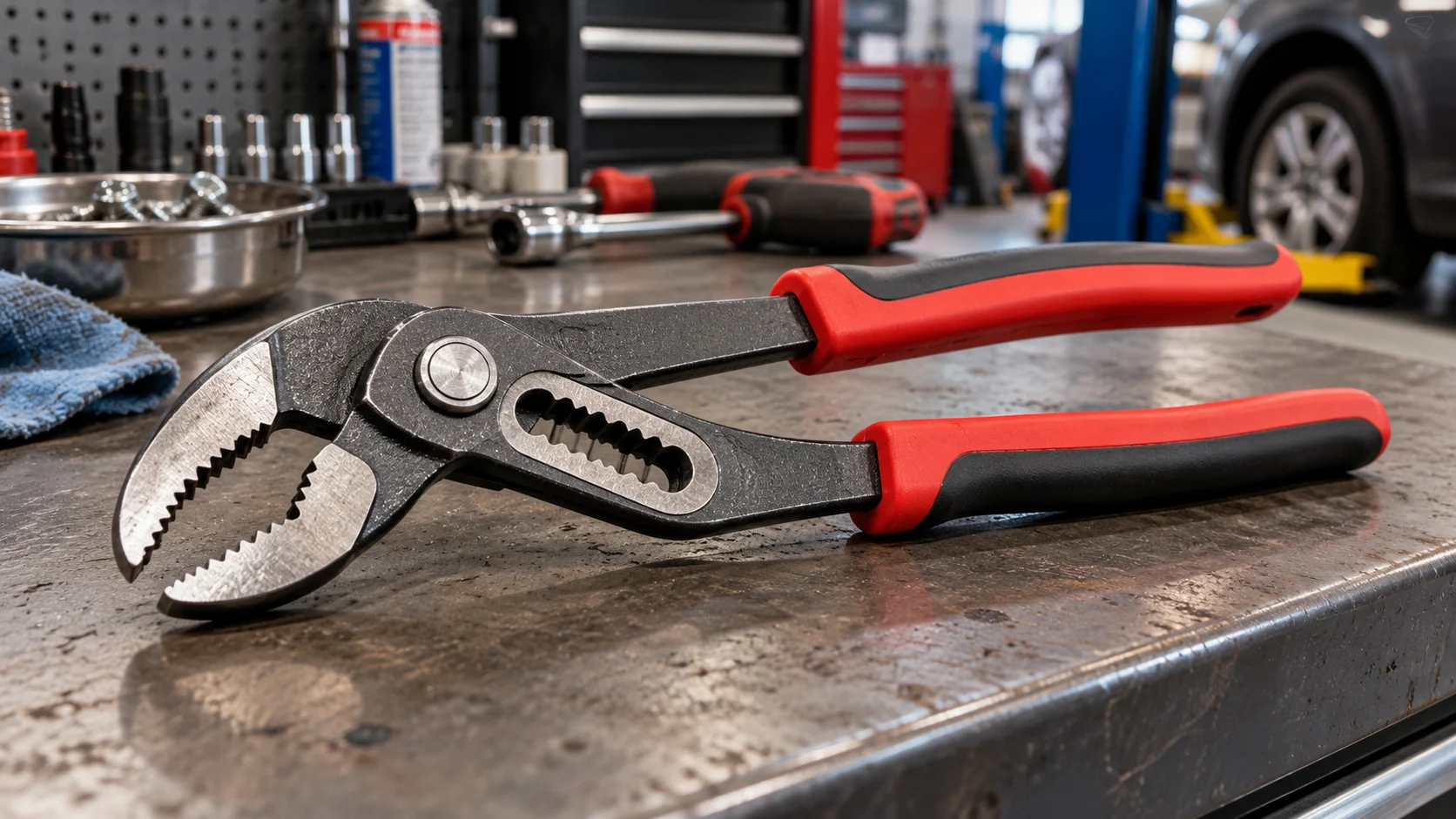
Their main advantage is versatility. A single pair can accommodate different shapes and sizes within its rated gripping capacity.
In an automotive workshop, they may help hold certain sturdy metal components, support some noncritical maintenance work and grip suitable objects during assembly or disassembly.
However, the serrated jaws that make the tool effective can also leave marks or deform sensitive surfaces.
Are Water Pump Pliers the Same as Tongue-and-Groove Pliers?
The terms frequently overlap. Traditional tongue-and-groove pliers are a common form of water pump pliers, using interlocking grooves to select different jaw positions.
Other modern models use push-button or alternative adjustment systems. Manufacturers may describe similar tools as adjustable water pump pliers, groove-joint pliers or multipurpose gripping pliers.
Automotive tip: Water pump pliers are general-purpose gripping tools. Before using them on a vehicle, check whether the service procedure specifies a dedicated clamp tool, wrench or socket.
Parts of Water Pump Pliers and How They Work
Understanding the main components helps explain why certain models provide better access, adjustment or control.
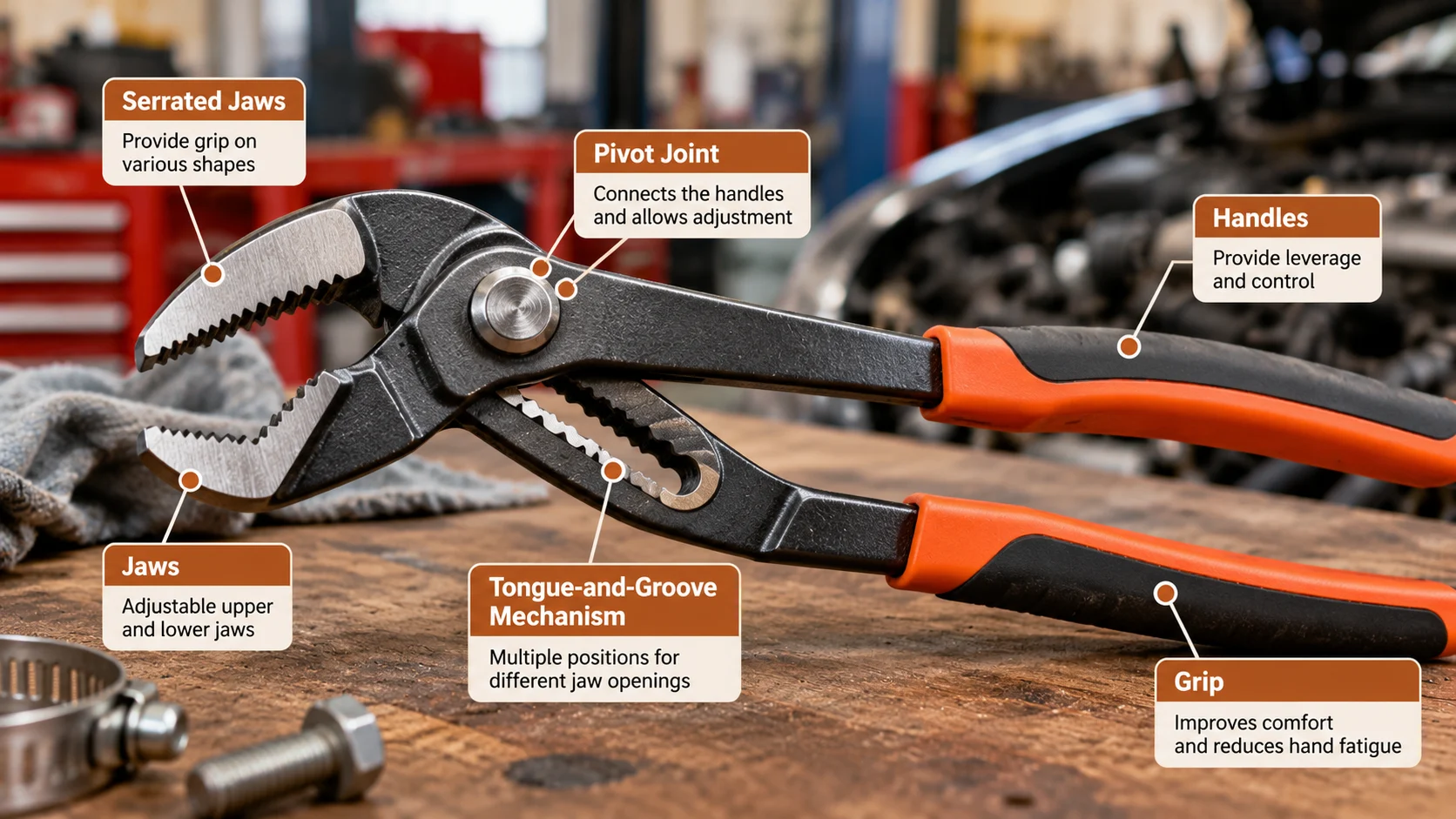
| Component | Purpose | What to Inspect |
|---|---|---|
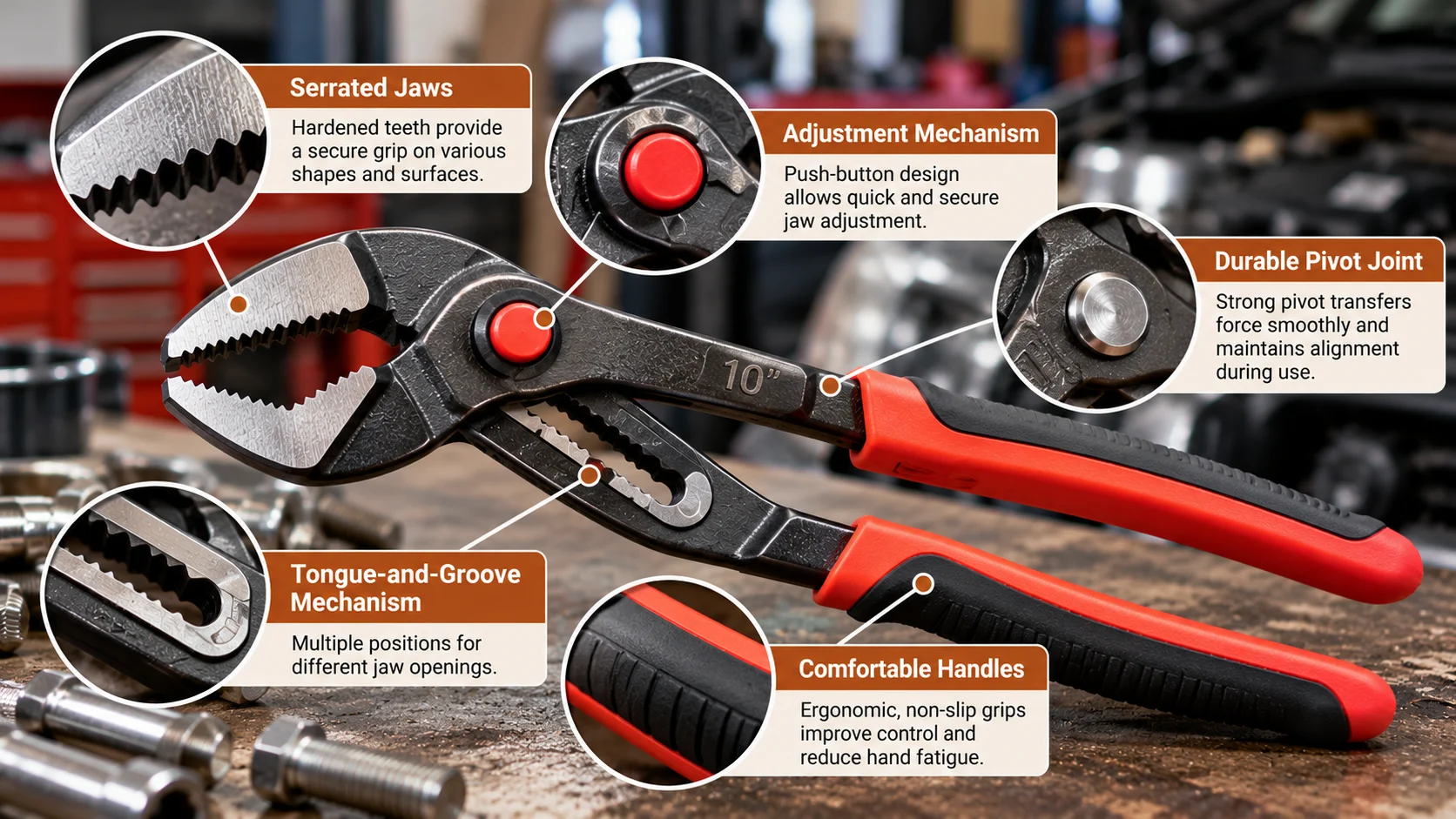
| Jaws | Engage the workpiece. | Shape, opening capacity and condition. |
| Serrations | Increase grip on suitable surfaces. | Wear and risk of surface damage. |
| Pivot | Connects the handles and transfers force. | Excessive looseness or stiffness. |
| Adjustment mechanism | Changes the jaw opening. | Secure engagement and ease of operation. |
| Handles | Provide leverage and manual control. | Length, clearance and comfort. |
| Grips | Improve handling comfort on some models. | Damage, looseness and suitability. |
How Does the Adjustment Mechanism Work?
The movable jaw changes position relative to the other jaw, allowing the tool to grip objects of different sizes.
A traditional tongue-and-groove mechanism locks into selected positions. Push-button designs typically allow the user to move the jaw while operating a release button, with the exact number of adjustment positions varying by model.
Why Does Jaw Position Matter?
A poor adjustment can place the handles at an uncomfortable angle or cause insufficient jaw engagement.
Set the pliers so the jaws contact a suitable area of the component and the handles can be controlled without interference from surrounding vehicle parts.
Types of Water Pump Pliers: Which Design Should You Choose?
Water pump pliers are available in several designs. The best option depends on adjustment convenience, available working space, jaw capacity and the intended workpiece.
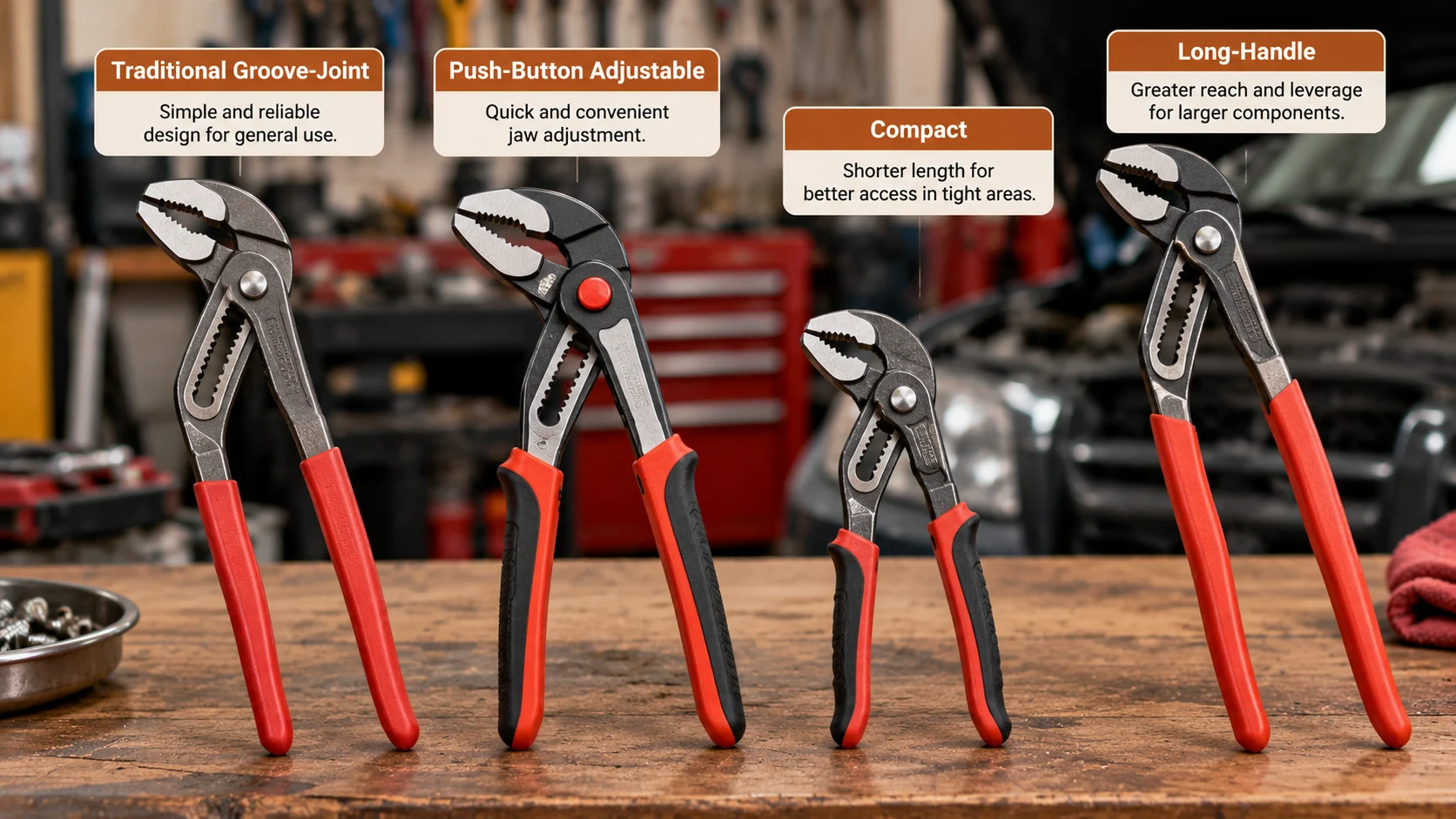
Traditional Groove-Joint Pliers
A familiar adjustable design with multiple joint positions. They are useful for general gripping tasks and often have relatively simple construction.
Push-Button Adjustable Pliers
Many models offer numerous adjustment positions and convenient jaw setting. Check that the locking mechanism engages securely.
Compact Water Pump Pliers
Shorter overall length can improve access in restricted areas, although jaw opening, reach and leverage may be reduced.
Long-Handle Water Pump Pliers
Larger models may offer greater reach and jaw capacity for suitable robust components but can be awkward in crowded engine bays.
Are Push-Button Pliers Better?
Push-button adjustment is convenient when frequent changes in jaw opening are needed, but quality varies between products.
A well-made traditional model can still be an excellent choice. Compare the security of the joint, available adjustment positions and ease of operation rather than selecting a tool solely because it uses a button.
Water Pump Pliers Size Guide: 7-Inch vs. 10-Inch vs. 12-Inch
Overall length affects leverage and access, but it does not tell you the tool’s exact jaw capacity.
Two pliers with the same nominal length may have different maximum jaw openings, head shapes and adjustment systems.
| Nominal Size | Potential Advantage | Main Limitation | Garage Consideration |
|---|---|---|---|
| 7-inch | Compact design | Less reach and leverage | Restricted access around suitable components |
| 10-inch | Balanced reach and handling | May not fit very narrow spaces | General workshop gripping |
| 12-inch | Greater reach and potential capacity | Bulkier in engine compartments | Larger robust workshop components |
| 16-inch+ | Long handles and large capacity options | Cumbersome for routine engine work | Specialized heavier-duty tasks |
Is a 10-Inch Pair Good for Automotive Work?
A quality 10-inch pair is a reasonable starting option for general automotive workshop tasks because it offers a useful compromise between size and leverage.
However, it is not automatically suitable for every cooling system or fitting. Confirm the actual jaw capacity, access and component compatibility.
When Should You Choose Smaller Pliers?
Compact pliers may be easier to position when surrounding hoses, wiring and engine components restrict movement.
The smaller tool still needs adequate gripping capacity, and the component must be appropriate for serrated jaws.
When Are Larger Pliers Useful?
Longer models may provide additional reach or leverage for suitable heavy-duty workshop tasks.
Avoid using a larger tool simply to force a stubborn component. Excessive leverage can deform a fitting or damage the surrounding assembly.
Important Water Pump Pliers Features for Automotive Mechanics
The most useful features are those that improve fit, controlled gripping and adjustment reliability.
Consider how frequently you will use the tool, the materials you intend to grip and how much clearance is available.
| Feature | Why It Matters | Buying Tip |
|---|---|---|
| Jaw opening | Determines what the tool can accommodate. | Check manufacturer capacity figures. |
| Jaw geometry | Affects contact and access. | Match the shape to suitable workpieces. |
| Adjustment security | Helps prevent unwanted jaw movement. | Inspect engagement and joint operation. |
| Pivot quality | Affects movement and control. | Avoid excessive play or binding. |
| Handle length | Influences leverage and clearance. | Choose according to available space. |
| Grip comfort | Supports controlled use. | Look for secure, comfortable handles. |
| Material and finish | Influence service life and maintenance. | Review product quality and care requirements. |
Are More Aggressive Teeth Better?
Not always. Deep serrations can help grip some durable surfaces, but they can also scratch, crush or deform softer materials.
Do not use aggressive serrated jaws where a component requires a smooth-jaw tool, dedicated wrench or another specified method.
How Important Is Handle Comfort?
Comfort matters when applying controlled pressure, particularly in awkward workshop positions.
However, thick handles may reduce clearance in a confined engine bay. Handle design should complement the job rather than being considered in isolation.
Are Expensive Pliers Always Better?
Higher-priced models may offer durable construction, finer adjustments or improved ergonomics, but price alone does not establish suitability.
A moderately priced pair with the correct jaw capacity and reliable joint may be more useful than a premium model that is too bulky for your intended work.
Automotive Uses of Water Pump Pliers
Water pump pliers are versatile workshop tools, but their use on vehicles requires care because cooling system components, fittings and clamps can be sensitive to concentrated jaw pressure.
1. General Gripping During Garage Maintenance
For suitable sturdy workpieces, adjustable pliers can provide a secure hand grip when holding or positioning parts.
Inspect the material and surface before applying pressure. Serrated jaws may leave marks on the workpiece.
2. Working Around Cooling System Components
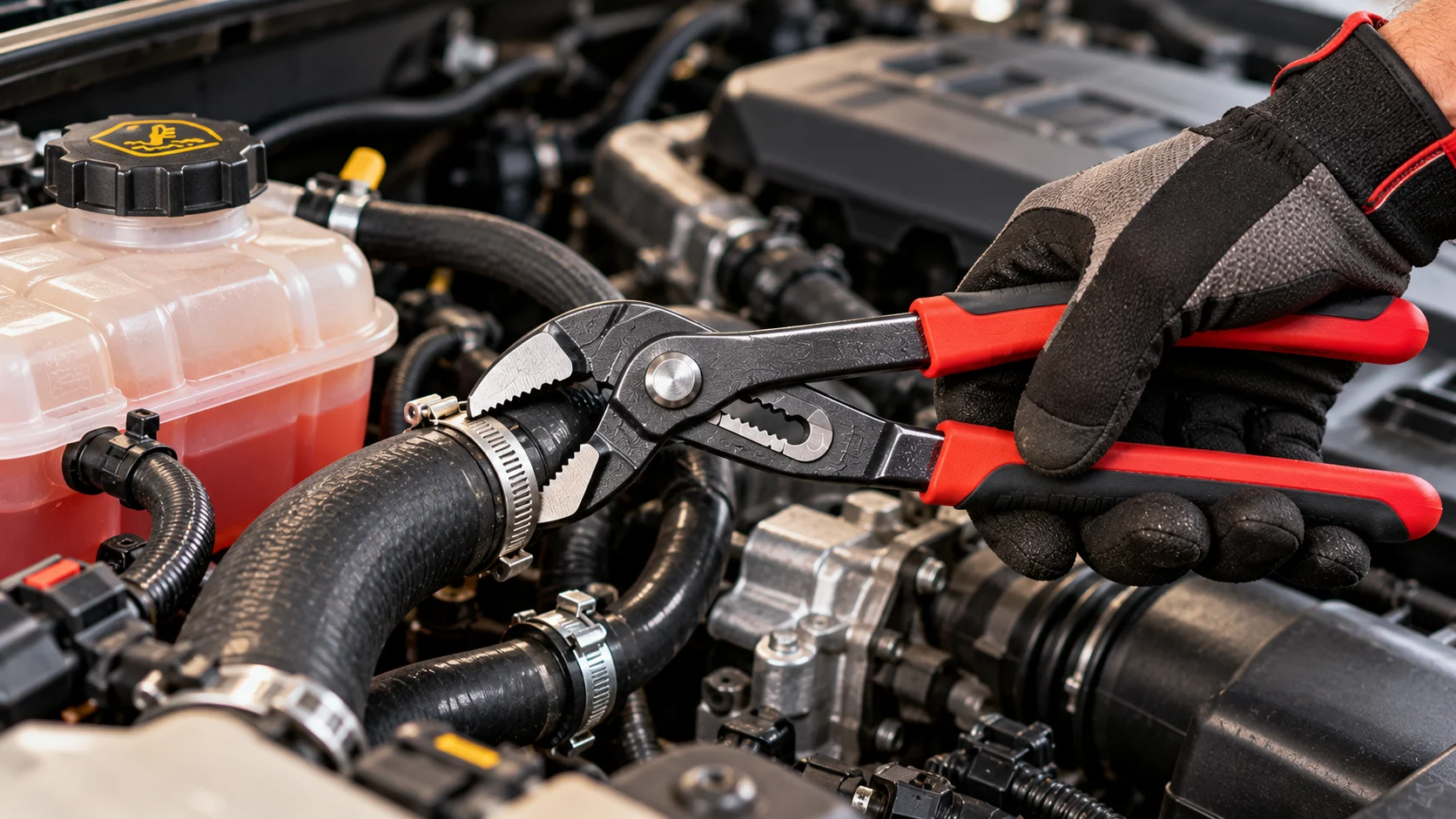
Mechanics frequently encounter adjustable hose clamps, spring clamps and metal fittings while servicing cooling systems.
However, a tool being called “water pump pliers” does not mean it should be used on every coolant connection.
Dedicated spring-clamp pliers are often the correct choice for spring hose clamps, while some coolant fittings require a wrench or special service tool.
3. Holding Suitable Metal Workshop Components
Water pump pliers may be useful when holding certain robust metal objects during general repair or maintenance work.
Avoid serrated gripping surfaces when the component has a precision fit, protective finish or easily damaged sealing area.
4. General Workshop Assembly
The adjustable jaws can be helpful for positioning suitable components while working at a bench.
Use a vise, clamp or dedicated holding fixture where stable support is required, particularly for tasks involving cutting, drilling or substantial force.
| Automotive Task | Preferred Tool Approach | Important Precaution |
|---|---|---|
| Holding a robust metal workpiece | Suitable gripping pliers, clamp or vise | Avoid damaging critical surfaces. |
| Removing a spring hose clamp | Dedicated hose-clamp pliers | Keep the clamp controlled. |
| Loosening a hexagonal fitting | Correct wrench or socket | Avoid rounding corners. |
| Handling a plastic coolant fitting | Manufacturer-specified tool | Avoid crushing or cracking plastic. |
| Vehicle body measurements | Dedicated measurement equipment | Follow vehicle-specific service information. |
Cooling system safety: Never loosen a hot, pressurized cooling system. Let the engine and system cool safely, and follow the vehicle manufacturer’s depressurization and repair procedure before working on coolant hoses or fittings.
Water Pump Pliers vs. Other Automotive Pliers
The most versatile tool is not always the correct tool. Automotive repair often requires different pliers and wrenches for different components.
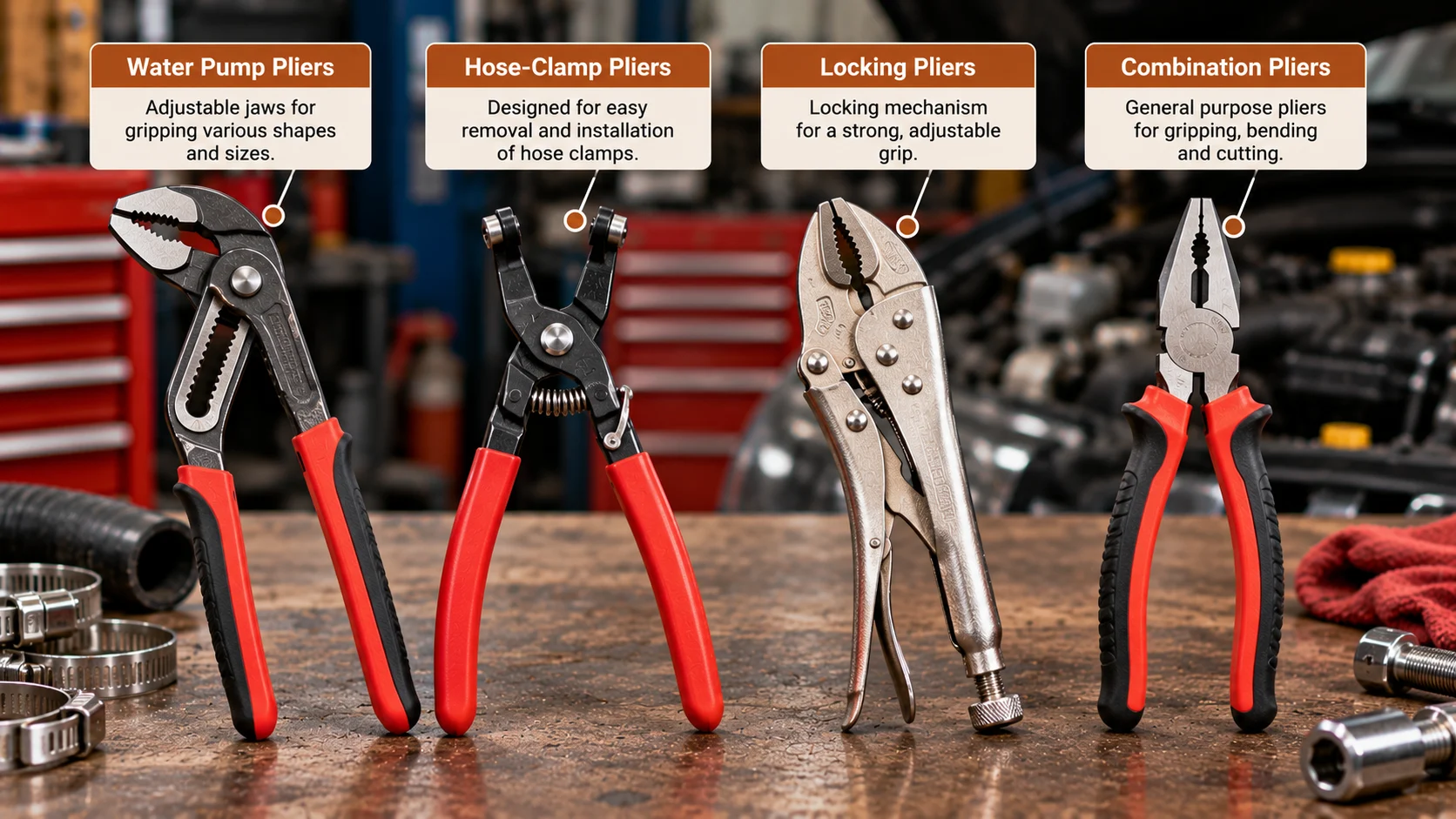
| Tool | Primary Function | Automotive Consideration |
|---|---|---|
| Water pump pliers | Adjustable gripping of suitable objects | Useful for robust parts; serrations may damage surfaces. |
| Hose-clamp pliers | Controlled engagement with compatible hose clamps | Often preferable for automotive spring clamps. |
| Locking pliers | Locking grip on suitable workpieces | Can create high local pressure and surface damage. |
| Combination pliers | General gripping and some cutting tasks | Usually less adjustable than water pump pliers. |
| Wrench or socket | Engaging matching fastener flats | Preferred for many nuts, bolts and hexagonal fittings. |
Can Water Pump Pliers Replace Hose-Clamp Pliers?
Not universally. Spring clamps can require controlled compression from a dedicated clamp tool.
Trying to substitute an inappropriate adjustable plier may cause the clamp to slip, damage the hose or create an injury risk.
Water Pump Pliers vs. Locking Pliers
Water pump pliers provide an adjustable hand-operated grip. Locking pliers use a mechanism to maintain a set grip until released.
Neither should be used indiscriminately on delicate automotive parts, and neither is a general replacement for properly sized sockets or wrenches.
How to Use Water Pump Pliers Correctly
Correct use starts with deciding whether the workpiece is suitable for the tool.
The following general procedure applies to an appropriate, durable workpiece—not a sensitive coolant fitting or a component with a manufacturer-specified special tool.
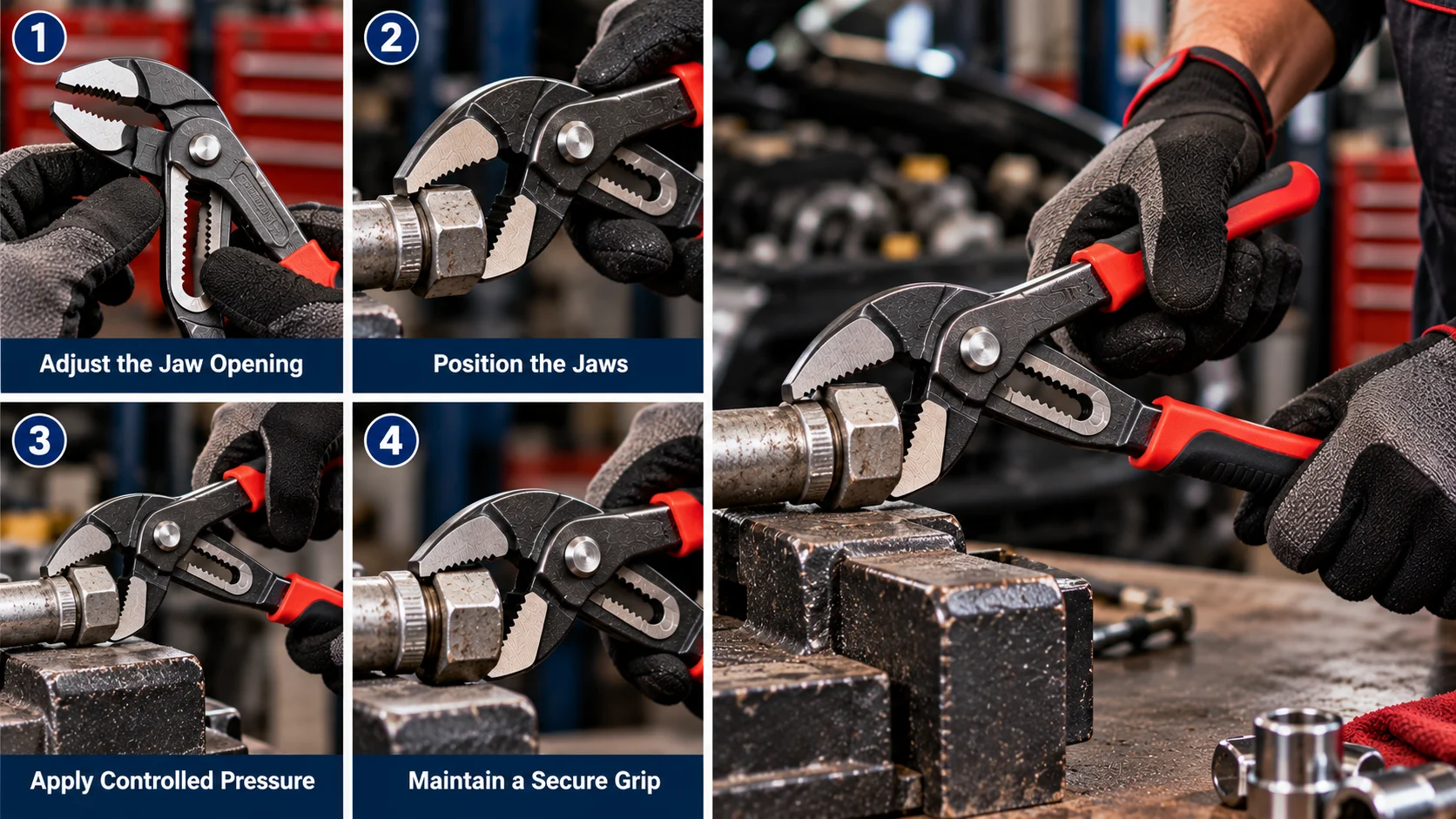
- Identify the component. Check its material, shape and service requirements. Confirm that serrated adjustable jaws are an acceptable choice.
- Choose an appropriate tool size. Ensure that the jaw capacity accommodates the workpiece and the handles have enough clearance.
- Inspect the pliers. Check for damaged teeth, a loose pivot, corrosion or an adjustment mechanism that does not lock securely.
- Adjust the jaw opening. Select a position that allows stable contact without excessive handle opening.
- Position the jaws. Grip a suitable area of the workpiece. Keep fingers clear of the joint and other pinch points.
- Apply controlled hand force. Avoid jerking, hammering or adding an improvised extension to the handles.
- Stop if the jaws slip. Reassess the tool choice, jaw condition, adjustment and workpiece before continuing.
- Inspect the component afterward. Check for marks, deformation or damage that could affect its function.
How Tight Should You Grip?
Use only the amount of pressure required to maintain controlled contact. Excessive squeezing may deform the workpiece or damage its surface.
Can You Use Water Pump Pliers on Hot Engine Components?
Avoid handling hot or pressurized engine components with general-purpose pliers. Follow the vehicle’s service instructions and allow systems to reach safe working conditions.
Should You Use a Cheater Bar?
No. Adding a pipe or improvised extension to the handles can overload the tool and damage the component. Use the appropriate purpose-built tool if the required force exceeds safe manual operation.
Common Mistakes When Using Water Pump Pliers
Many problems occur because the pliers are poorly adjusted or used on a component that requires another tool.
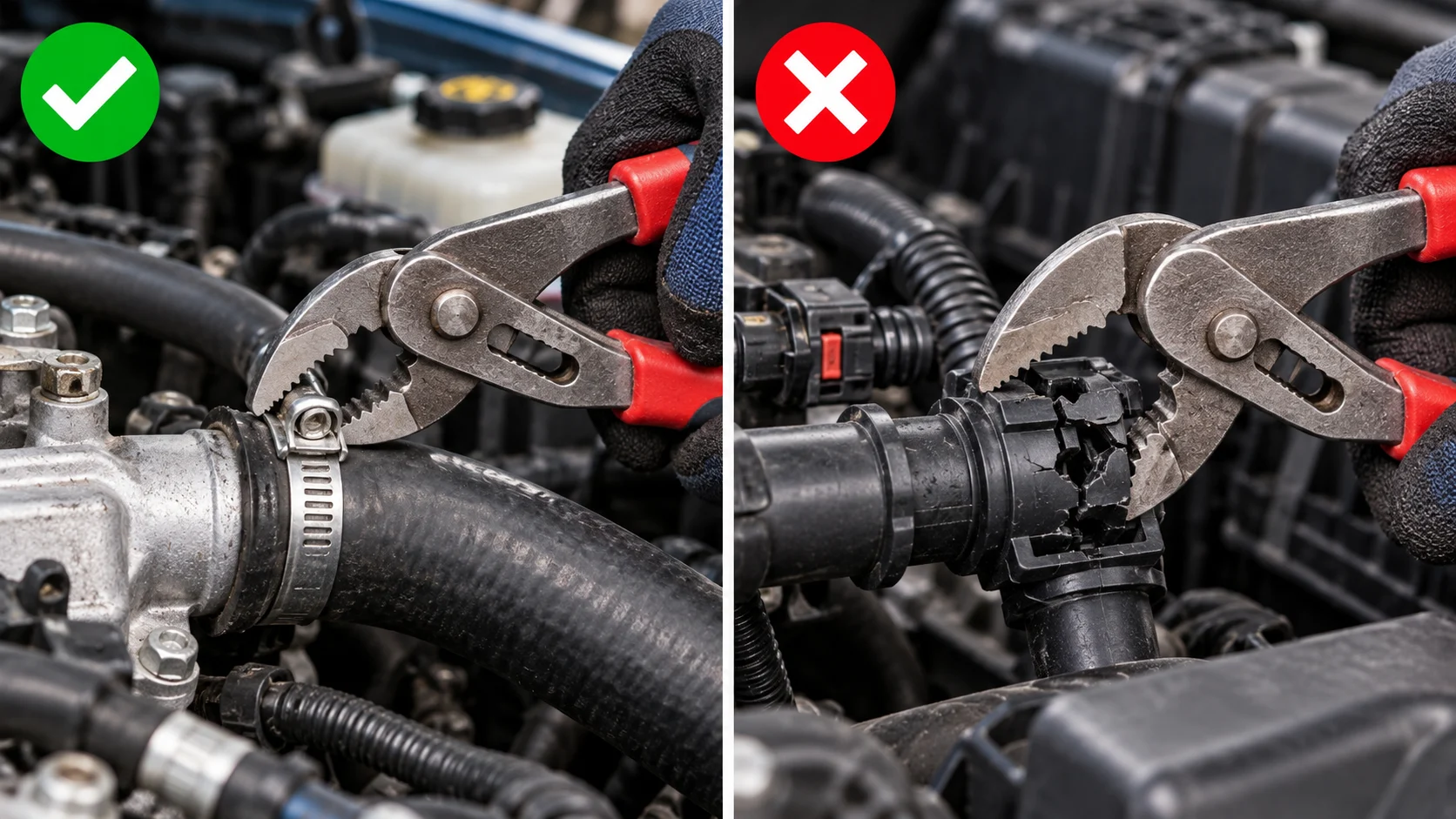
| Common Mistake | Possible Risk | Better Approach |
|---|---|---|
| Using pliers on a soft fitting | Scratches, crushing or deformation | Use the specified fitting tool. |
| Incorrect jaw adjustment | Slipping or poor engagement | Set a suitable jaw opening. |
| Applying excessive force | Damage to tool or component | Stop and reassess the repair method. |
| Using worn jaws | Uncontrolled gripping | Replace damaged tools. |
| Using pliers on fastener flats | Rounded nuts or fittings | Use the correct wrench or socket. |
| Working on a hot cooling system | Burn or pressurized coolant injury | Cool and depressurize safely. |
| Choosing an oversized tool | Limited clearance and control | Use a suitable compact tool. |
How to Clean and Maintain Water Pump Pliers
Keeping pliers clean and inspecting the moving joint helps maintain dependable operation.
Garage tools may be exposed to moisture, dirt, coolant residue and other contaminants. Regular maintenance can help identify wear before it affects gripping performance.
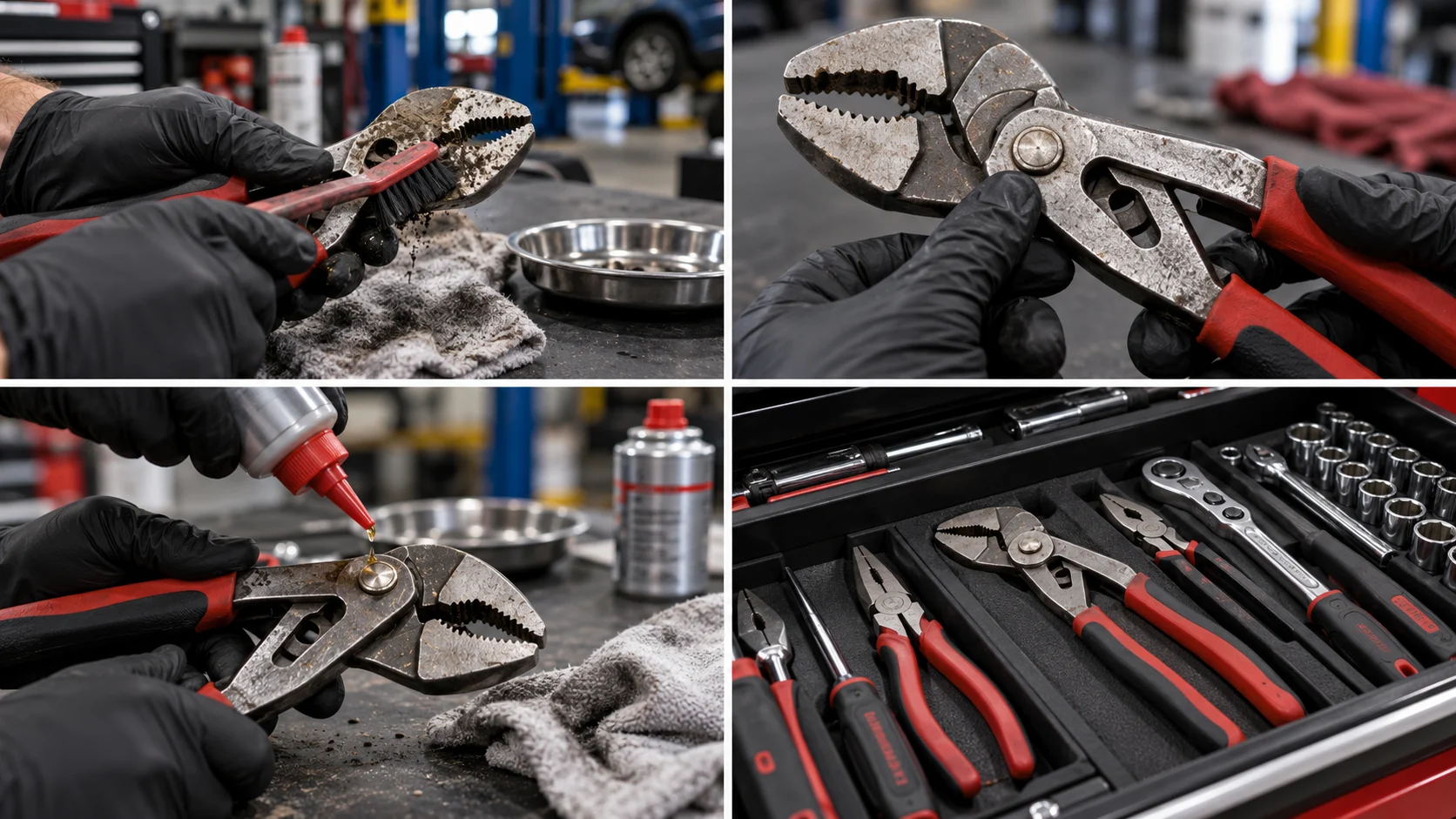
Clean the Jaws After Use
Remove debris and contamination using an appropriate cleaning method recommended by the manufacturer.
Avoid allowing grime to accumulate inside the adjustment mechanism.
Inspect the Pivot and Adjustment Mechanism
Check for excessive movement, cracking, bent components and unreliable engagement.
A damaged joint can affect control. Replace a defective tool rather than relying on an improvised repair.
Prevent Rust and Corrosion
Dry the pliers after exposure to moisture. Use any protective treatment or pivot lubrication according to the manufacturer’s care instructions.
Store Them Correctly
A dry toolbox, drawer or wall-mounted holder can help protect the pliers from contamination and accidental impact.
Find the Right Water Pump Pliers for Your Automotive Project
Choose your planned workshop task to see which type of pliers or alternative hand tool may be appropriate.
10-Inch Adjustable Water Pump Pliers
A quality 10-inch pair can be a reasonable starting point for general gripping of suitable robust workshop components.
Confirm the actual jaw capacity and whether serrated jaws are suitable for the workpiece.
Important: This selector is general buying guidance. It does not replace vehicle service instructions, component compatibility checks or manufacturer-specified special tools.
Expert Buying Checklist: How to Choose Water Pump Pliers
Before purchasing, compare the tool against the actual components and tasks you expect to handle.
One Pair or Multiple Sizes?
For occasional garage work, one properly selected pair may be enough.
Mechanics who frequently work in confined engine compartments and on larger workshop components may benefit from multiple lengths, provided the pliers are suitable for the work.
What Should Be Your First Purchase?
A dependable 10-inch model with the correct jaw capacity and a secure adjustment mechanism is a reasonable general-purpose starting point.
If the majority of your planned work involves hose clamps or sensitive fittings, the correct specialized tool may deserve higher priority.
FAQs About Water Pump Pliers for Automotive Work
What are water pump pliers used for?
Water pump pliers are adjustable tools for gripping suitable objects of different sizes and shapes. In automotive workshops, they may be useful for general gripping tasks on appropriate robust components.
What size water pump pliers should a mechanic buy?
A quality 10-inch pair is a practical general-purpose starting point. A smaller pair may improve access, while larger models can suit certain robust components. Always check actual jaw capacity.
Are water pump pliers the same as tongue-and-groove pliers?
The terms often refer to overlapping tool categories. Traditional tongue-and-groove pliers are one common water pump plier design, while modern variants may use push-button adjustment.
Can water pump pliers remove automotive hose clamps?
Some clamps may be compatible with particular plier designs, but many automotive spring hose clamps require dedicated clamp pliers. Follow the clamp or vehicle manufacturer’s procedure.
Can I use water pump pliers on radiator hose fittings?
Only when the component and service procedure permit it. Serrated jaws can damage plastic, soft metal and sealing surfaces, so a different tool may be necessary.
Are push-button water pump pliers better?
Push-button models can offer convenient, fine adjustment, but their usefulness depends on the specific tool’s design and quality. Traditional groove-joint pliers can also perform well.
Are longer water pump pliers stronger?
Longer handles can provide additional leverage, but that does not mean they are appropriate for every component or that the tool can withstand unlimited force.
How do I prevent water pump pliers from slipping?
Check that the workpiece is suitable, adjust the jaws correctly, inspect the teeth and joint, and apply controlled pressure. If slipping continues, reassess the tool selection.
Can water pump pliers replace an adjustable wrench?
Not generally. A proper wrench or socket is preferable for many nuts, bolts and hexagonal fittings because serrated plier jaws may damage their surfaces.
What is the difference between water pump pliers and locking pliers?
Water pump pliers use hand pressure through adjustable jaws, while locking pliers have a mechanism that maintains a set grip until released. The correct choice depends on the workpiece and task.
How should I maintain water pump pliers?
Clean the jaws, dry the tool, inspect the pivot and adjustment mechanism, and follow the manufacturer’s instructions for lubrication and storage.
Are expensive water pump pliers worth buying?
Higher-priced models may provide improved adjustment systems, materials or comfort. The value depends on how frequently you use them and whether their features match your tasks.
Editorial information: This guide provides general automotive hand-tool selection advice. It does not claim independent product testing, a named expert interview or specific professional credentials. Always follow vehicle service instructions, tool manufacturer guidance and appropriate workshop safety procedures.
Choosing the Right Water Pump Pliers for Your Garage
The best water pump pliers are not necessarily the largest or most expensive. They are the pair that provides the right jaw capacity, controlled adjustment and workable access for the job.
For general automotive workshop gripping, a well-made 10-inch adjustable model can be a useful starting point. Compact versions may help in restricted areas, while larger models may suit suitable heavy-duty workshop tasks.
Remember that serrated plier jaws are not appropriate for every vehicle component. Dedicated hose-clamp pliers, sockets, wrenches and specialized service tools remain essential when the repair requires them.
Choose based on the component, inspect your tools before use and prioritize safe, controlled gripping over unnecessary force.