
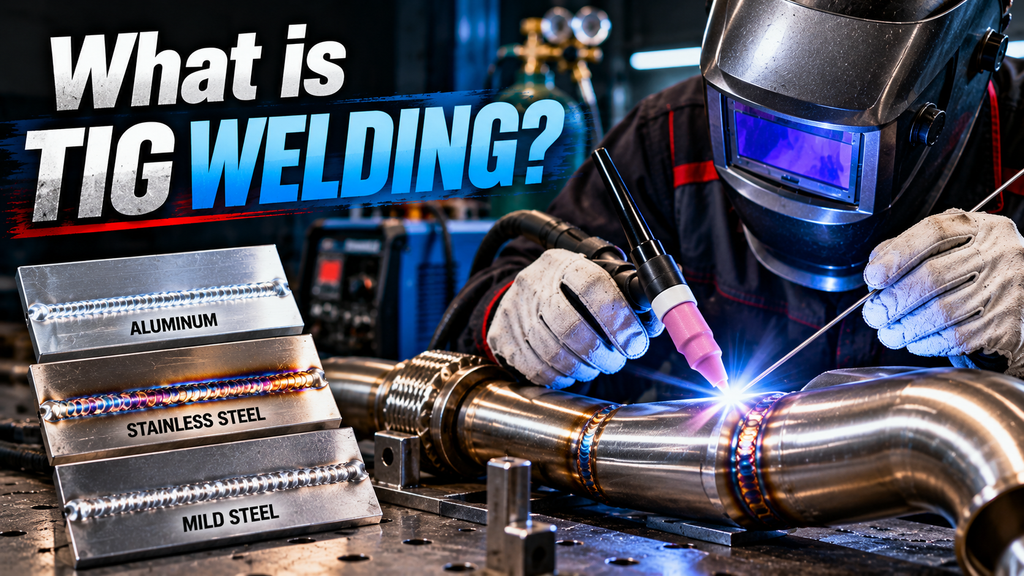
Have you ever watched a professional fabricator join two stainless-steel tubes with a bright, controlled welding arc and a clean-looking finished bead? That process may have been TIG welding.
For automotive enthusiasts, TIG welding can be useful when creating custom exhaust systems, joining suitable metal tubing, or producing detailed fabricated components. But before buying a TIG machine, it is important to understand what the process actually does and why it requires practice.
This complete beginner’s guide explains how TIG welding works, its equipment, welding techniques, AC and DC operation, suitable metals, automotive applications, safety precautions, and common problems.
What Is TIG Welding?
TIG welding is an arc welding process that uses a tungsten electrode to create enough heat to melt the edges of suitable metals. A separate shielding gas protects the weld area from atmospheric contamination.
The process is called Gas Tungsten Arc Welding (GTAW) in technical welding terminology. The tungsten electrode is described as non-consumable because it is not intended to melt into the weld as filler metal.
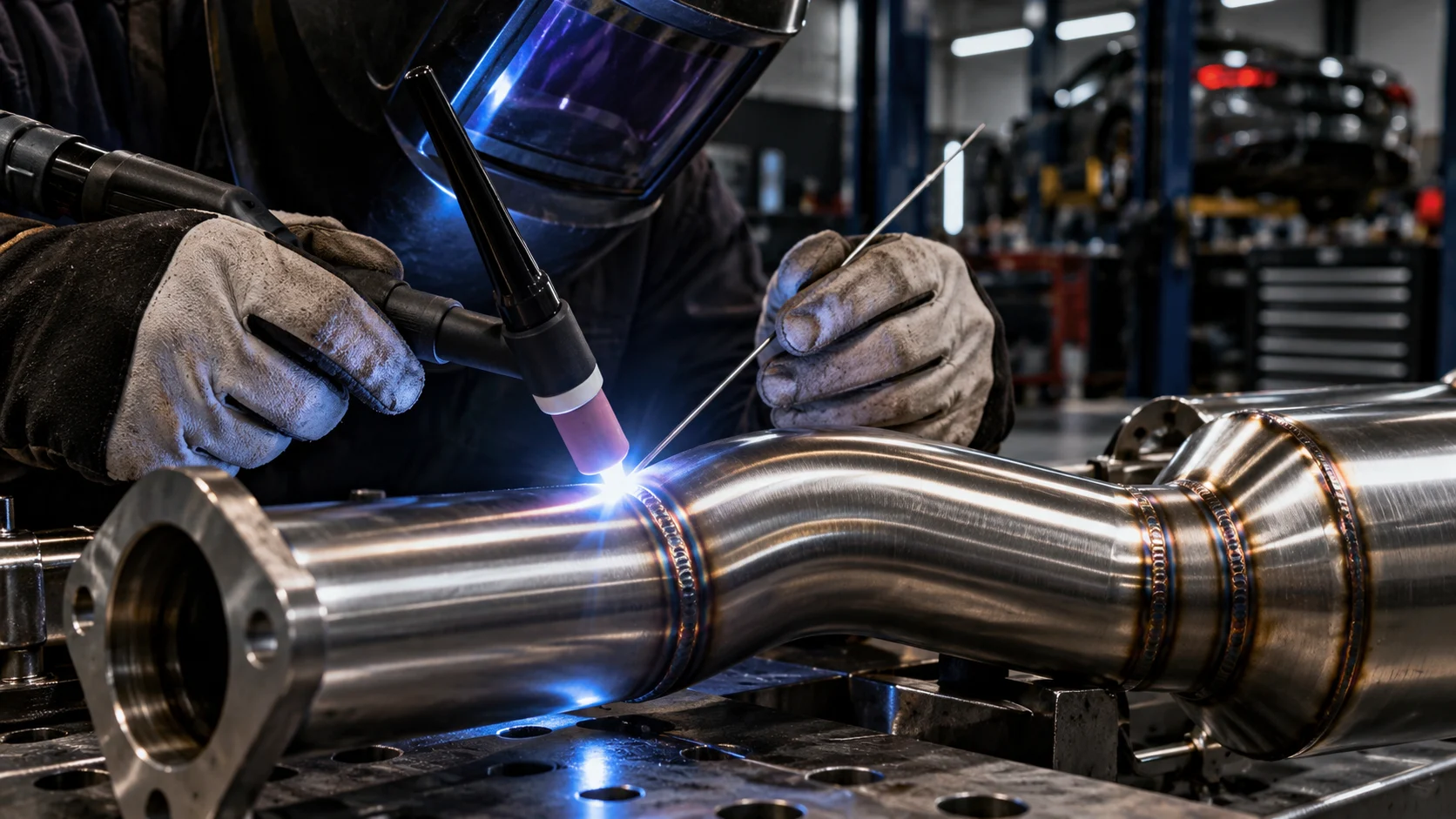
What Does TIG Stand For?
TIG stands for Tungsten Inert Gas. The term comes from the tungsten electrode used to form the arc and the inert gas shielding that protects the weld.
What Makes TIG Welding Different?
Non-Consumable Electrode
The tungsten electrode generates the arc without serving as the weld filler.
Separate Filler Control
Filler metal can be introduced by hand when the joint requires additional material.
Precise Heat Control
Many TIG systems provide adjustable amperage through a foot pedal or torch control.
Clean-Looking Welds
Proper TIG technique can produce detailed, smooth-looking welds with relatively little spatter.
Where Is TIG Welding Commonly Used?
TIG welding is used in automotive fabrication, aerospace manufacturing, stainless-steel work, aluminum fabrication, specialized metal repairs, and precision metalworking.
It is particularly attractive where accessibility, appearance, and control over the weld pool matter.
How Does TIG Welding Work?
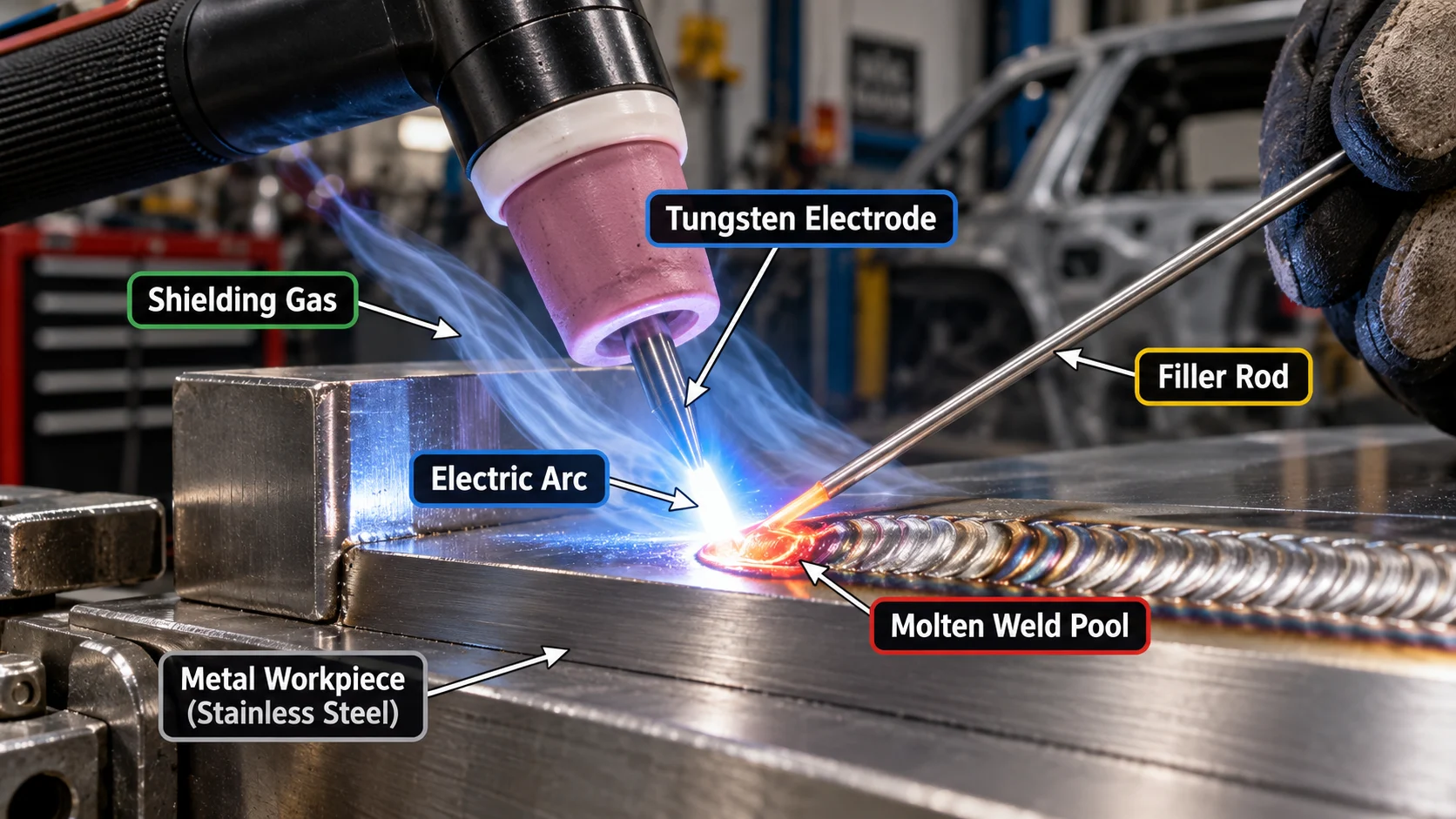
TIG welding works by establishing an electric arc between a tungsten electrode and the conductive metal workpiece. The arc generates heat that creates a molten weld pool.
Inert shielding gas flows around the electrode and weld area to limit exposure to oxygen and other atmospheric contaminants.
The TIG Welding Process Explained
Electricity Reaches the Torch
The welding power source supplies controlled current to the TIG torch through its welding circuit.
An Arc Is Established
An electrical arc forms between the tungsten electrode and the metal workpiece.
The Weld Pool Forms
Arc heat melts a localized area of the base metal to create a molten weld pool.
Shielding Gas Protects the Weld
Argon or another suitable shielding gas helps protect the molten metal from atmospheric contamination.
Filler Metal Is Added if Required
The operator may add a compatible filler rod as the weld pool travels along the prepared joint.
The Weld Solidifies
When the heat source moves away, the molten material cools and forms the completed weld.
TIG Welding Equipment and Tools
Before beginning TIG welding, it is important to understand the equipment used in the process.
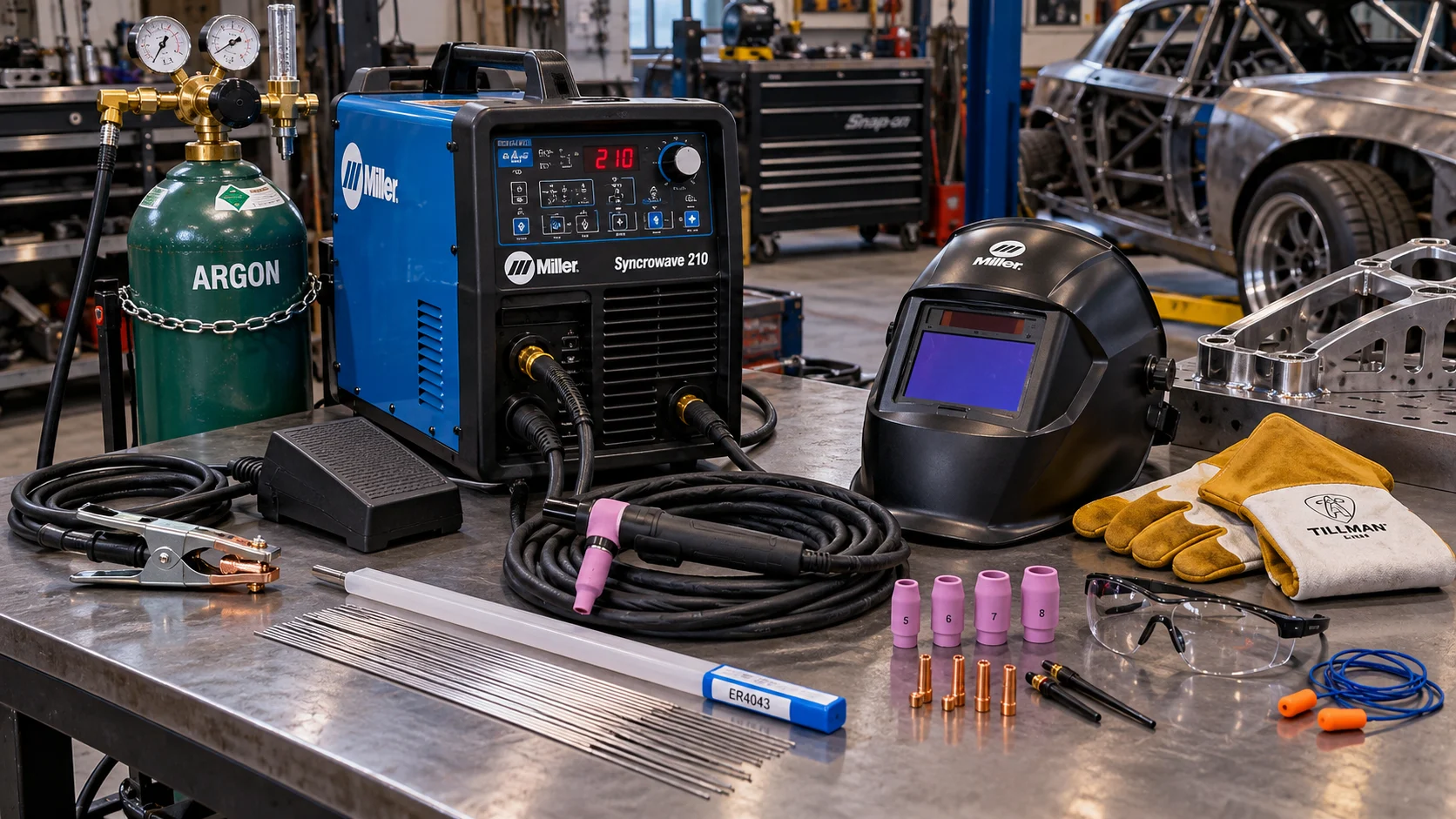
| Equipment | Purpose |
|---|---|
| TIG Welding Machine | Supplies controlled welding current. |
| TIG Torch | Holds the tungsten electrode and directs shielding gas. |
| Tungsten Electrode | Creates and maintains the welding arc. |
| Shielding Gas Cylinder | Stores suitable welding gas such as argon. |
| Regulator/Flowmeter | Controls and indicates shielding-gas flow. |
| Filler Rod | Adds compatible metal to the joint when needed. |
| Work Clamp | Provides the workpiece connection for the welding circuit. |
| Foot Pedal | Allows remote welding-current control on supported machines. |
| Protective Equipment | Helps protect the welder from arc radiation, heat and other hazards. |
Do Beginners Need an Expensive TIG Machine?
Not necessarily. A suitable beginner machine should match the metals and thicknesses you intend to practice on. A DC-only TIG unit can be useful for learning on suitable steels, while conventional TIG welding of aluminum usually calls for an AC-capable machine.
Remember to budget for shielding gas, the correct electrical supply, consumables, protective equipment, and training.
Understanding the Tungsten Electrode and Filler Rod
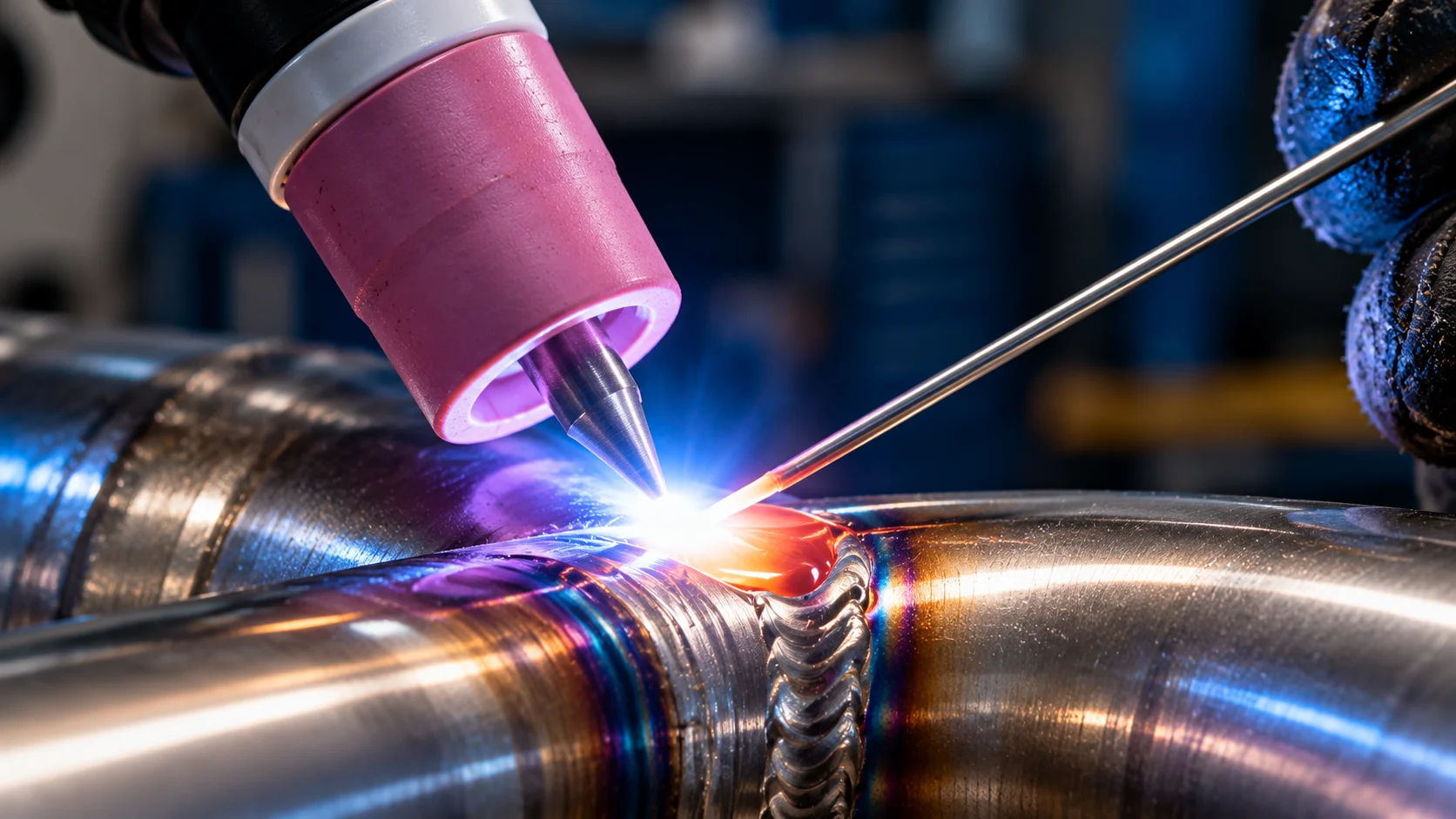
The tungsten electrode is one of the most important components in TIG welding. It must tolerate high temperatures while producing a stable arc.
Why Is Tungsten Used?
Tungsten has a very high melting point, making it suitable for generating the welding arc without being deliberately consumed as filler metal.
Different Tungsten Electrode Types
Common modern electrode choices include lanthanated and ceriated tungsten. Electrode selection depends on machine capability, welding current, metal type, and other welding conditions.
What Does the Filler Rod Do?
The filler rod provides additional metal that becomes part of the weld. Its composition should be compatible with the base material and the requirements of the finished joint.
For example, stainless steel normally requires filler selection that accounts for the specific stainless alloy and intended service conditions.
What Gas Is Used for TIG Welding?
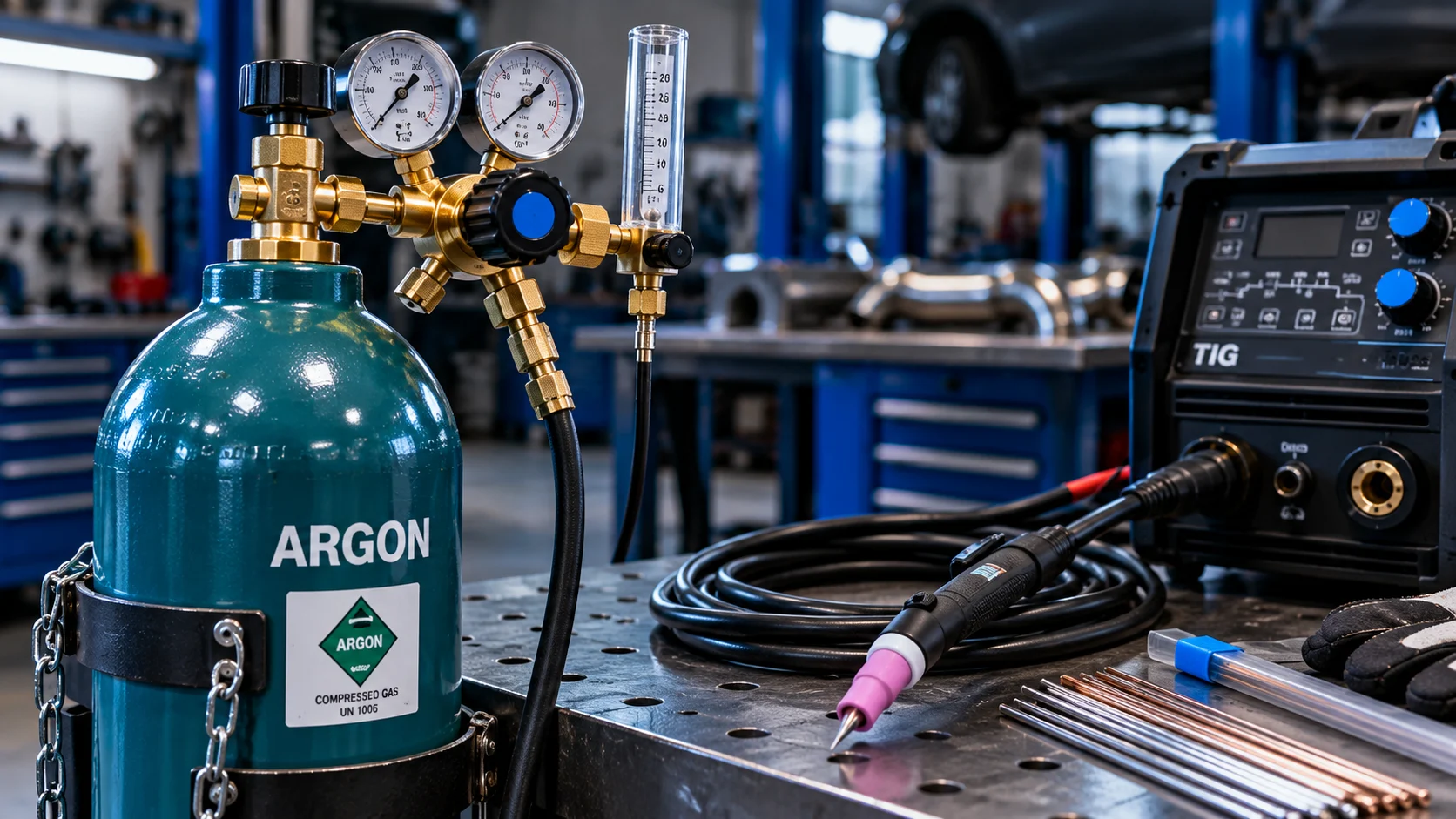
Argon is among the most common shielding gases used for TIG welding because it provides effective shielding and supports stable arc operation across many applications.
Why Is Shielding Gas Necessary?
Molten metal can react with atmospheric oxygen, nitrogen, and other contaminants. Proper shielding reduces unwanted exposure and helps produce sound welds.
Common TIG Shielding Gases
| Gas | Common Use | Consideration |
|---|---|---|
| Argon | General TIG welding | Widely used across many materials. |
| Helium | Specialized welding applications | Changes arc characteristics and heat transfer. |
| Argon/Helium Blend | Selected applications needing different heat characteristics | Requires an application-appropriate procedure. |
What Happens Without Proper Gas Coverage?
Insufficient or disrupted shielding can contribute to porosity, discoloration, electrode contamination, and poor weld quality.
Incorrect gas flow, leaks, drafts, and contaminated equipment are among the issues worth checking.
How to TIG Weld: Beginner Step-by-Step Guide
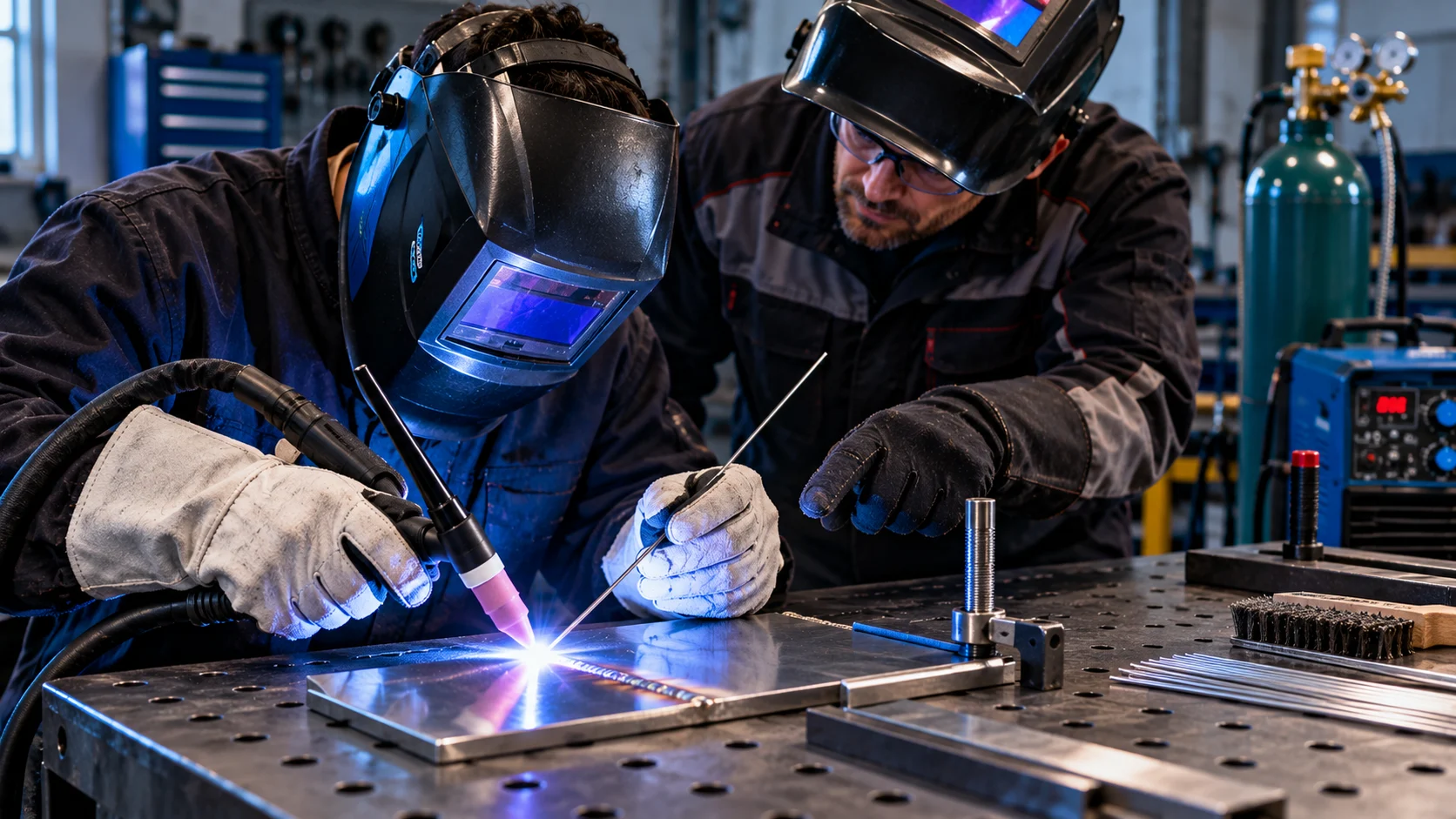
TIG welding requires controlled coordination between the torch, weld pool, filler rod, and welding current. Beginners should practice in an approved training environment, ideally under qualified supervision.
Prepare a Safe Work Area
Remove combustible materials, arrange appropriate fume extraction and fire protection, and wear suitable welding PPE.
Inspect and Set Up Equipment
Follow your machine’s instructions for torch, work clamp, shielding-gas connections, and electrical supply.
Prepare the Metal
Clean and fit the practice workpieces. Remove incompatible coatings, moisture, oils, and contaminants using appropriate methods and precautions.
Select the Welding Parameters
Choose suitable polarity, current range, tungsten preparation, gas settings, and filler according to the machine and material guidance.
Position the Torch
Use a stable position and follow your instructor’s guidance for the torch angle, electrode distance, and movement.
Establish the Arc and Weld Pool
Start the arc using your equipment’s approved procedure and observe how the base metal forms a controlled molten pool.
Add Filler Metal When Required
Feed compatible filler carefully while maintaining the desired weld-pool behavior and shielding.
Finish and Inspect the Weld
Stop the arc using the proper shutdown procedure, maintain the required gas post-flow, and allow the workpiece to cool safely before inspection.
AC vs DC TIG Welding Explained
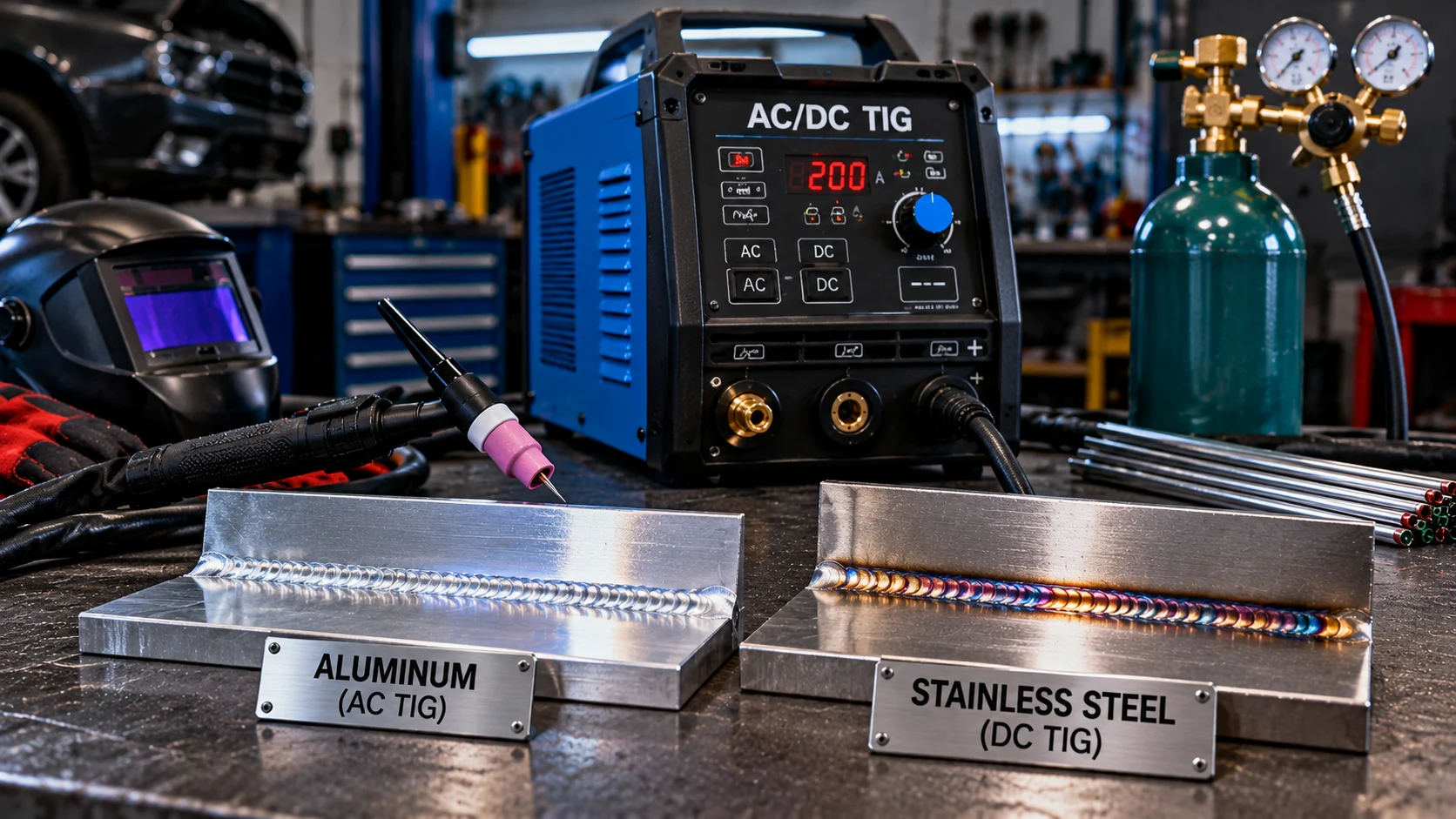
TIG welding machines may provide direct current (DC), alternating current (AC), or both. Selecting the correct mode depends primarily on the material and the welding procedure.
DC TIG Welding
Direct-current electrode-negative (DCEN) TIG is commonly used for mild steel and stainless steel. It provides suitable heat distribution and arc control for many steel welding applications.
AC TIG Welding
Alternating-current TIG is commonly used for aluminum. Its electrode-positive portion helps disrupt the oxide layer, while the electrode-negative portion supports heat input into the workpiece.
| Feature | AC TIG | DC TIG |
|---|---|---|
| Typical Materials | Aluminum and selected alloys | Steel and stainless steel |
| Output Current | Alternating current | Direct current |
| Oxide Cleaning | AC can provide cleaning action | DCEN does not provide the same AC cleaning cycle |
| Machine Requirement | AC-capable TIG power source | Suitable DC TIG power source |
What Metals Can You TIG Weld?
TIG welding is suitable for many metals and alloys, provided the equipment, filler selection, preparation, and procedure are appropriate.
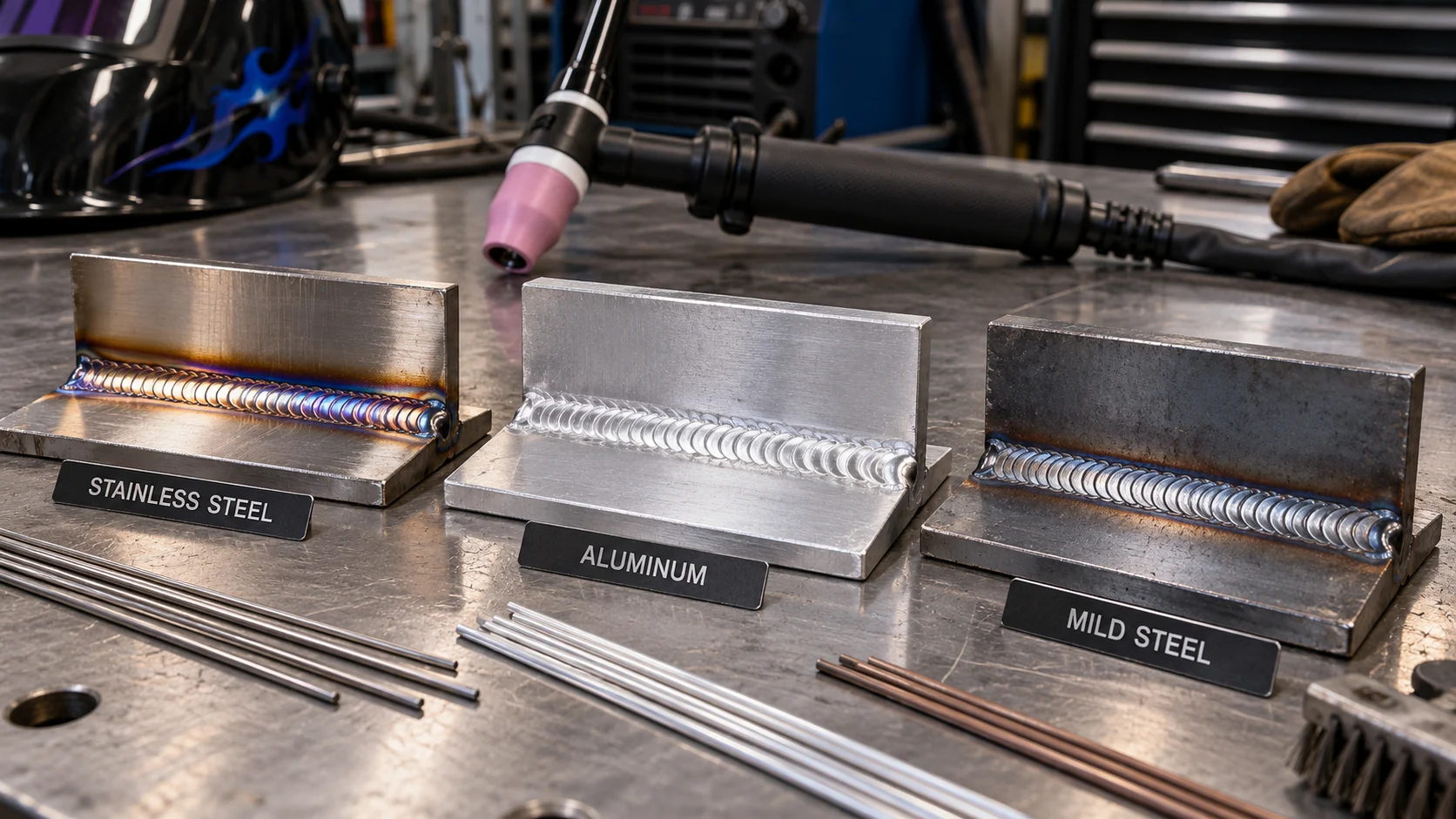
| Metal | Typical TIG Approach | Common Applications |
|---|---|---|
| Mild Steel | Usually DCEN | Fabricated brackets and practice joints |
| Stainless Steel | Usually DCEN | Exhaust tubing and specialty fabrication |
| Aluminum | Usually AC TIG | Selected aluminum components and custom fabrication |
| Chromoly Steel | Procedure-dependent DC TIG | Specialized tubular fabrication |
| Copper and Nickel Alloys | Application-specific settings | Specialized industrial metalwork |
Is TIG Welding Good for Thin Metal?
TIG welding’s precise current and filler control can make it useful for thin materials. However, thin metal remains sensitive to distortion and overheating.
Successful welding depends on joint preparation, heat control, material properties, and operator skill.
Can TIG Welding Join Different Metals?
Some dissimilar metal combinations can be joined using specialized procedures, but not all material combinations are metallurgically compatible.
Do not assume two metals can be reliably joined just because a welding arc can melt them.
TIG vs MIG Welding: What’s the Difference?
TIG and MIG welding are both widely used arc welding processes. However, they differ in how filler metal is supplied, the equipment used, and the level of manual control.
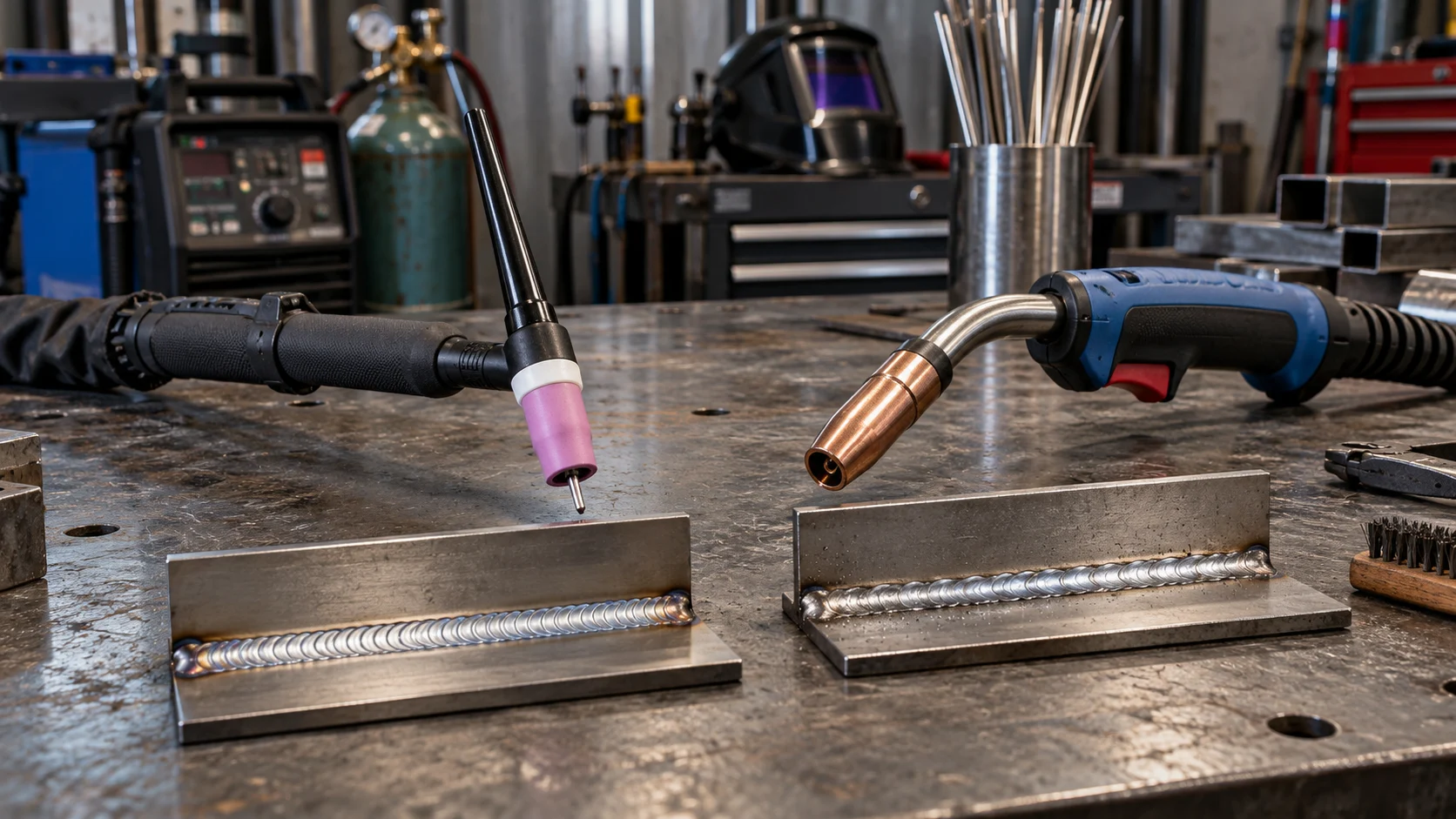
| Feature | TIG Welding | MIG Welding |
|---|---|---|
| Electrode | Non-consumable tungsten electrode | Continuously fed consumable wire electrode |
| Filler Metal | Separate rod when required | Continuously fed wire supplies filler |
| Speed | Often slower | Often faster for production work |
| Skill Requirement | Generally steeper learning curve | Often easier for beginners to start |
| Heat Control | High level of manual control | Controlled through wire feed, voltage and technique |
| Typical Applications | Precision welding and specialty fabrication | General fabrication and repair |
| Appearance | Can produce exceptionally neat welds | Can also produce sound, attractive welds |
Is TIG Welding Stronger Than MIG Welding?
Neither method is automatically stronger. Weld strength depends on joint design, base metals, filler metal, welding procedure, penetration, and workmanship.
Which Process Should a Beginner Learn?
MIG welding may allow a beginner to become productive sooner for many general fabrication tasks. TIG welding can be a good choice for learners interested in precision and detailed weld-pool control.
Automotive Applications of TIG Welding
TIG welding is particularly valuable in specialized automotive fabrication, including some stainless-steel and aluminum projects.
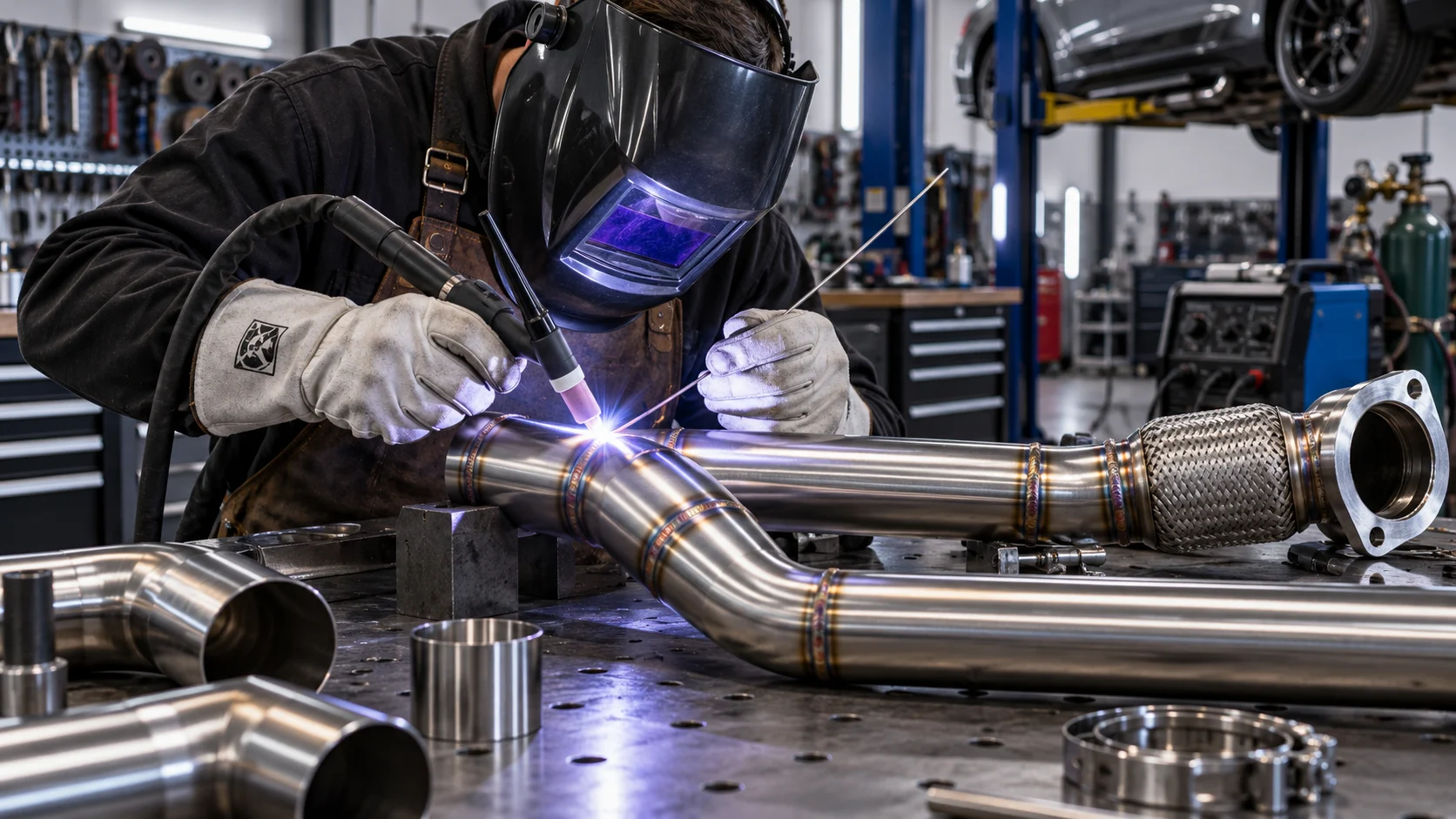
Custom Exhaust Systems
TIG welding is frequently used for selected stainless-steel exhaust tubing and custom exhaust components.
Custom Metal Piping
Appropriate TIG procedures may be used to fabricate specialized metal pipes and tubing.
Automotive Brackets
Noncritical metal brackets and fabricated fittings may be suitable projects when material and design requirements are understood.
Specialty Fabrication
TIG welding is used in selected performance and custom automotive metalworking applications.
Can You TIG Weld Car Exhaust Pipes?
Yes. TIG welding is commonly used for stainless-steel exhaust fabrication.
The correct filler, fit-up, material preparation, and shielding procedures depend on the metal and project.
Should You TIG Weld Structural Car Parts?
Common TIG Welding Mistakes and Problems
TIG welding requires careful control. Incorrect preparation, contamination, and poor technique can result in defective welds.
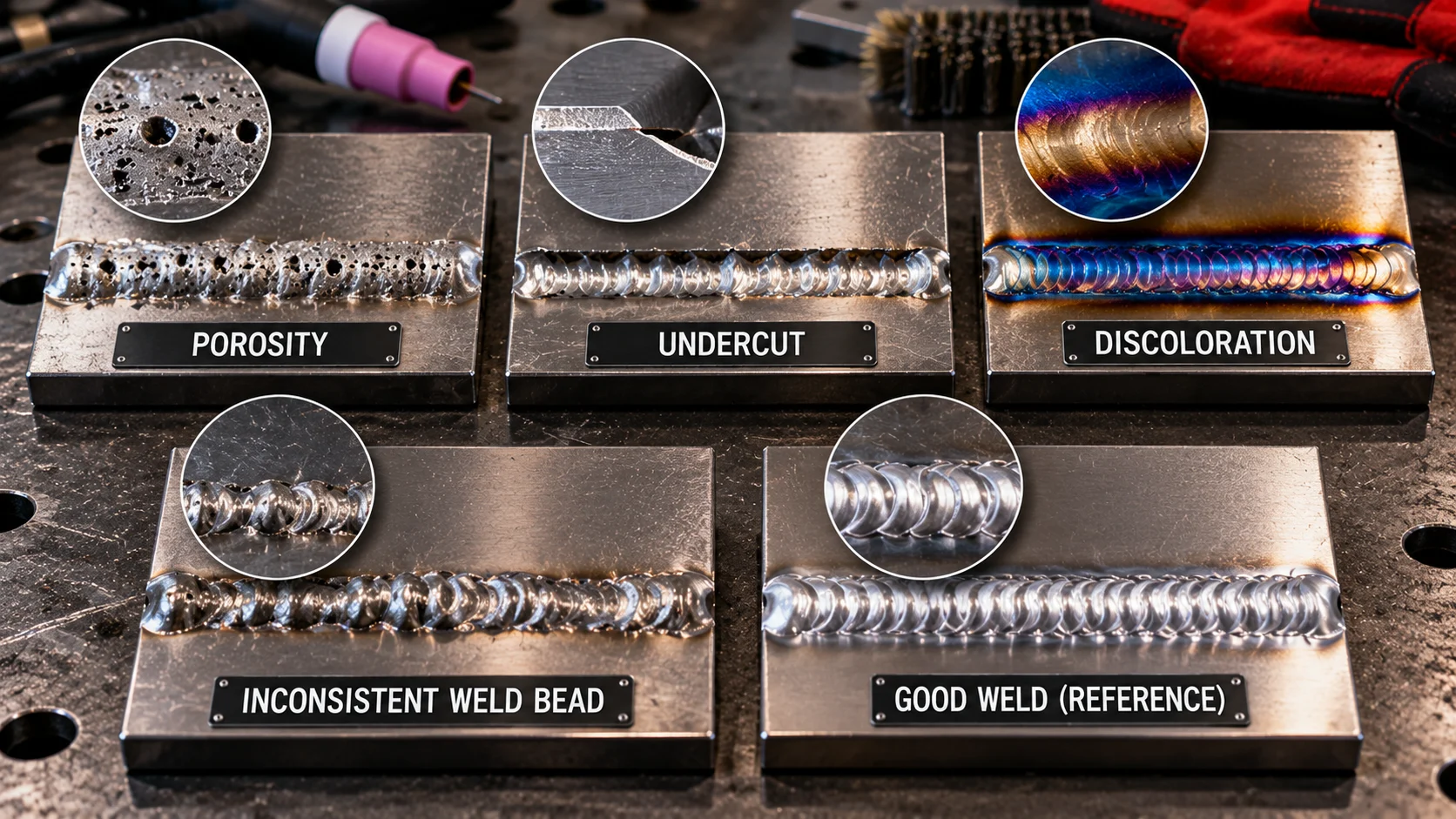
| Problem | Possible Cause | Prevention |
|---|---|---|
| Tungsten Contamination | Electrode contacting the molten pool or filler | Maintain proper technique and reprepare contaminated tungsten |
| Porosity | Contamination or inadequate shielding | Clean material and check gas delivery |
| Undercut | Excessive heat or incorrect manipulation | Review current, filler addition and travel technique |
| Discoloration | Excessive heat or insufficient shielding | Follow the proper thermal and gas-shielding procedure |
| Inconsistent Bead | Irregular travel or filler control | Practice consistent movement and heat management |
| Incomplete Fusion | Incorrect heat input, preparation or joint technique | Follow qualified procedures and inspect the joint |
Why Do TIG Welds Develop Porosity?
Porosity can develop when gas becomes trapped as molten metal solidifies. Contamination, poor shielding, moisture, and gas-system problems can contribute.
What Does a Good TIG Weld Look Like?
A sound TIG weld generally has a consistent profile appropriate to the joint and material. However, appearance alone cannot prove adequate penetration, fusion, or mechanical strength.
TIG Welding Safety Precautions
TIG welding exposes operators to several potential hazards. Appropriate training, protective equipment, ventilation, and workplace preparation are essential.
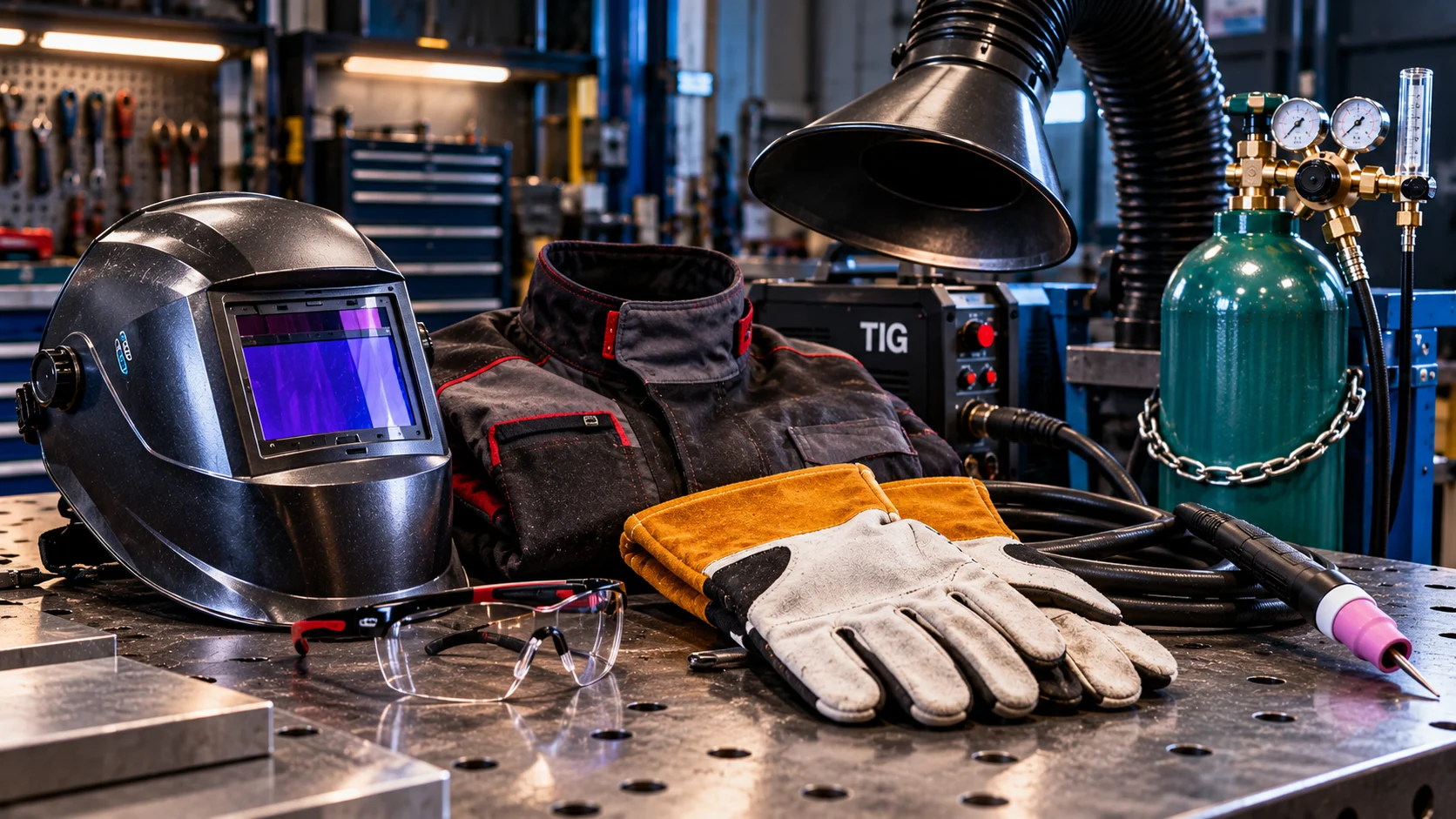
Essential Welding Safety Equipment
Welding Helmet
Use an appropriate welding helmet and filter shade for the process and welding current.
Protective Clothing
Wear flame-resistant clothing, appropriate welding gloves, and protective footwear.
Ventilation and Fume Control
Use suitable local exhaust ventilation and any respiratory protection required by a hazard assessment.
Fire Prevention
Remove combustible materials, control sparks and hot metal, and keep suitable fire protection available.
Important Welding Hazards
- Arc radiation can damage eyes and skin.
- Welding fumes and gases may pose respiratory hazards.
- Electrical equipment can present shock risks.
- Metal remains dangerously hot after welding.
- Compressed shielding gas cylinders require proper handling and securing.
- Automotive fuel systems and residues can create serious fire or explosion risks.
Interactive Welding Safety Checklist
Complete this checklist before starting any welding practice. It is a basic reminder rather than a complete workplace safety assessment.
How to Choose a TIG Welding Machine
Choosing a TIG welder means matching the power source and its features to the metals, material thicknesses, and welding conditions you expect to encounter.
Important TIG Welder Features
| Feature | What to Consider |
|---|---|
| AC/DC Capability | Important if you intend to weld aluminum using conventional AC TIG. |
| Amperage Range | Should suit the thickness and type of your workpieces. |
| Duty Cycle | Indicates how long the machine can operate at specified output and conditions. |
| Power Supply | Must match a properly installed and rated electrical circuit. |
| Arc Starting | Consider suitable high-frequency or lift-start options. |
| Current Control | Look for compatible foot pedal or torch controls if needed. |
| Accessories | Include proper torch, work clamp, consumables and gas equipment in the budget. |
| Support | Consider warranty, manuals, parts and authorized service availability. |
Which TIG Welder Is Best for Beginners?
A beginner focused on suitable steel practice workpieces may find a quality DC TIG machine sufficient for learning.
A beginner who wants to practice on aluminum should consider an AC/DC model designed for that purpose.
Interactive TIG Welder Buying Checklist
Is TIG Welding Hard to Learn? Beginner Practice Tips
TIG welding often has a steeper learning curve than basic MIG welding because the operator must coordinate the torch, arc length, weld pool, and sometimes filler rod and amperage control simultaneously.
Start With Basic Skills
Understand Equipment
Learn the purpose of the torch, work clamp, shielding gas, electrode, and current controls.
Observe Weld-Pool Behavior
Under supervision, practice recognizing how the molten metal responds to heat.
Develop Consistent Movement
Practice stable positioning and repeatable torch travel on noncritical coupons.
Learn Weld Evaluation
Understand that appearance, fusion, and mechanical quality are separate considerations.
Beginner Learning Progression
- Learn fundamental welding safety and equipment identification.
- Observe a qualified instructor demonstrating the process.
- Practice on approved, noncritical metal coupons.
- Learn basic weld-pool and heat control.
- Introduce appropriate filler addition under instruction.
- Practice simple joints and understand common defects.
- Progress to more demanding material and joint types only after demonstrating proficiency.
Frequently Asked Questions About TIG Welding
What is TIG welding in simple terms?
TIG welding is an arc welding process that melts and joins metal using a non-consumable tungsten electrode and inert shielding gas. Filler metal is added separately when necessary.
What does TIG stand for?
TIG stands for Tungsten Inert Gas. The technical process name is Gas Tungsten Arc Welding (GTAW).
Can TIG welding be done without filler metal?
Yes. Certain suitable joints can be welded autogenously, using only the molten base metal to form the weld.
Is TIG welding stronger than MIG welding?
Neither method automatically produces a stronger weld. Strength depends on the material, joint, qualified procedure, penetration and workmanship.
Is TIG welding difficult for beginners?
It can be challenging initially because of the coordination required. Proper instruction and progressive practice make the process easier to learn.
What gas is used for TIG welding?
Argon is widely used for TIG shielding. Helium and selected argon-helium mixtures may be used for specialized applications.
Can TIG welding be used for aluminum?
Yes. AC TIG is commonly used to weld aluminum with appropriate electrodes, filler metal, cleaning, shielding and technique.
Can TIG welding be used on car exhaust systems?
Yes. TIG welding is commonly used in selected custom exhaust fabrication, especially with stainless-steel tubing.
What causes porosity in TIG welds?
Possible causes include surface contamination, moisture, poor gas shielding, gas leaks, and unsuitable technique.
What is the difference between AC and DC TIG?
DCEN TIG is commonly used for steels, while AC TIG is commonly used for aluminum because it provides useful oxide-cleaning action.
What equipment does a beginner need?
A suitable TIG machine, torch, work clamp, approved shielding gas equipment, compatible electrodes, appropriate filler when required, PPE, ventilation, and proper training.
Is TIG welding suitable for vehicle frame repairs?
Vehicle structural repairs may require specialized procedures, engineering requirements, and qualified personnel. Beginners should not attempt these repairs using general welding tutorials.
Final Thoughts: Is TIG Welding Right for You?
TIG welding is a versatile welding process known for precise control and its ability to create high-quality welds on many suitable metals.
It uses a non-consumable tungsten electrode, shielding gas, and a separate filler rod when needed. These characteristics make TIG welding particularly useful in detailed fabrication work.
For automotive enthusiasts, the process can be valuable for custom stainless-steel exhaust components, tubing, and selected fabrication projects.
However, TIG welding is not automatically the best process for every job. Equipment costs, welding speed, material selection, operator skill and safety all influence the decision.
Editorial note: This article is educational and does not replace qualified welding instruction, manufacturer procedures, workplace safety assessments or vehicle-specific repair standards.