
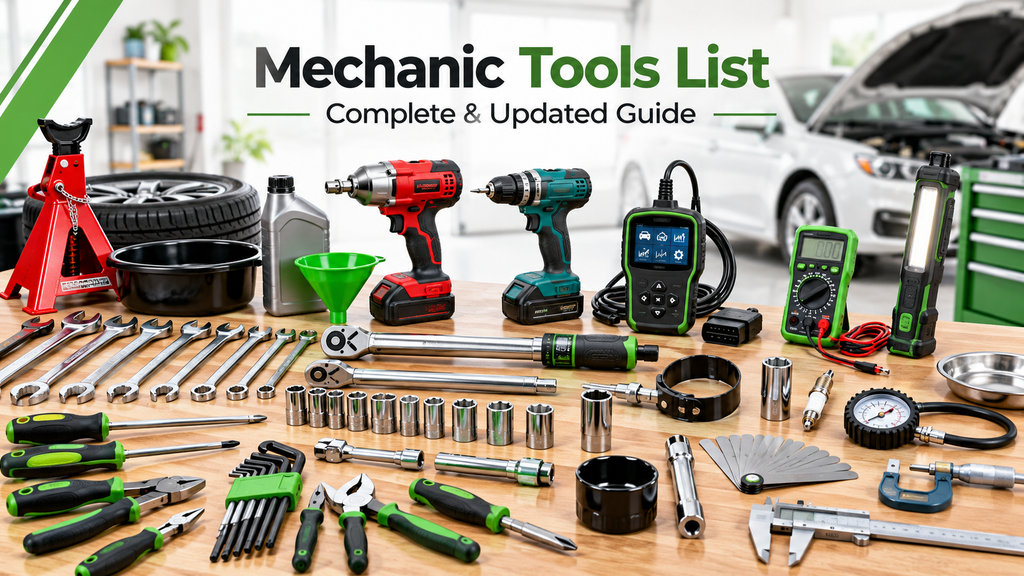
Saturday morning is supposed to be simple. You’ve bought the oil, filter, and supplies for a routine car maintenance job. But when you open your toolbox, you find three mismatched sockets, a worn screwdriver, and no wrench that properly fits the fastener in front of you.
That’s a familiar problem for many first-time DIY mechanics. Having a toolbox full of equipment isn’t the same as owning the correct tools for your vehicle.
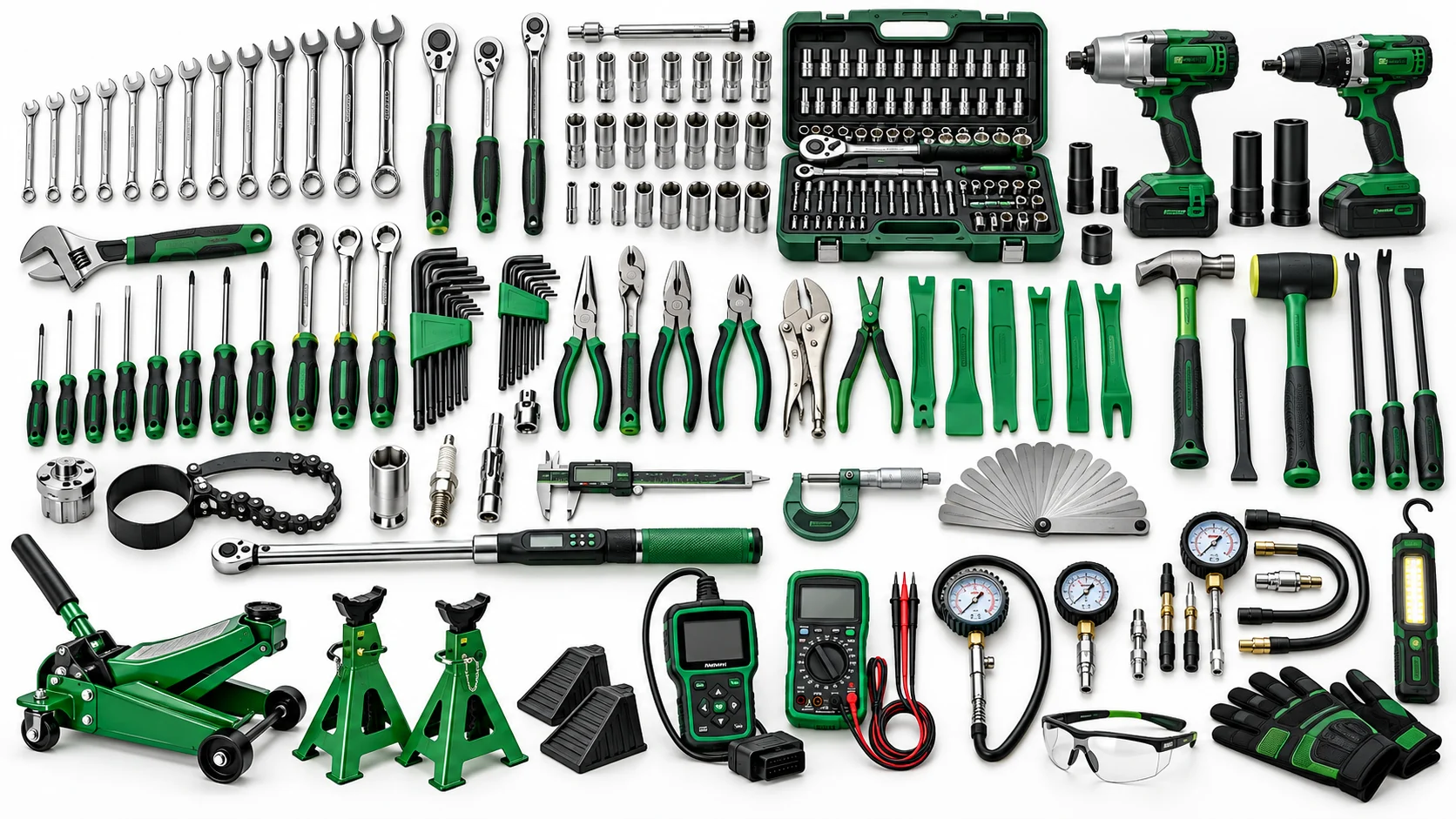
This complete mechanic tools list explains 51 important tools used in automotive maintenance and repair, from basic sockets and combination wrenches to diagnostic equipment, lifting tools, and specialized service accessories.
You’ll learn what each tool does, where it is used, which items beginners should prioritize, and how to avoid common buying and safety mistakes. Whether you’re setting up a home garage or preparing for automotive technician training, this guide will help you choose tools with a purpose.
What Are Mechanic Tools?
Mechanic tools are instruments and equipment used to inspect, maintain, diagnose, assemble, and repair mechanical systems. In automotive work, they include hand tools such as wrenches, sockets, screwdrivers, and pliers, along with powered tools, diagnostic equipment, measuring instruments, and vehicle-support accessories.
The most useful beginner mechanic tools typically include a compatible socket and ratchet set, combination wrenches, screwdrivers, pliers, appropriate lifting and safety equipment, and a suitable torque wrench for jobs requiring specified tightening.
Specialty tools should be selected according to the vehicle, repair procedure, and technician’s experience.
Complete Mechanic Tools List With Names and Uses
A well-equipped mechanic doesn’t rely on one tool for every job. Different fastener heads, component designs, working spaces, and maintenance tasks require different equipment.
The 51 tools below are grouped into eight practical categories. Some are essential for routine repairs, while others are only needed for particular vehicles or specialized maintenance.
| Tool Category | Number | Main Purpose |
|---|---|---|
| Wrenches and sockets | 9 | Fasteners and tightening |
| Screwdrivers and fastening | 6 | Screws and small fasteners |
| Pliers and gripping | 5 | Holding and cutting |
| Striking and removal | 6 | Disassembly work |
| Power tools | 5 | Powered repair tasks |
| Measuring and diagnostics | 8 | Testing and inspection |
| Lifting and safety | 6 | Vehicle support and protection |
| Specialty automotive tools | 6 | Specific maintenance jobs |
| Total | 51 | Complete guide |
No matching tools found. Try another name.
Wrenches and Socket Tools Every Mechanic Should Know
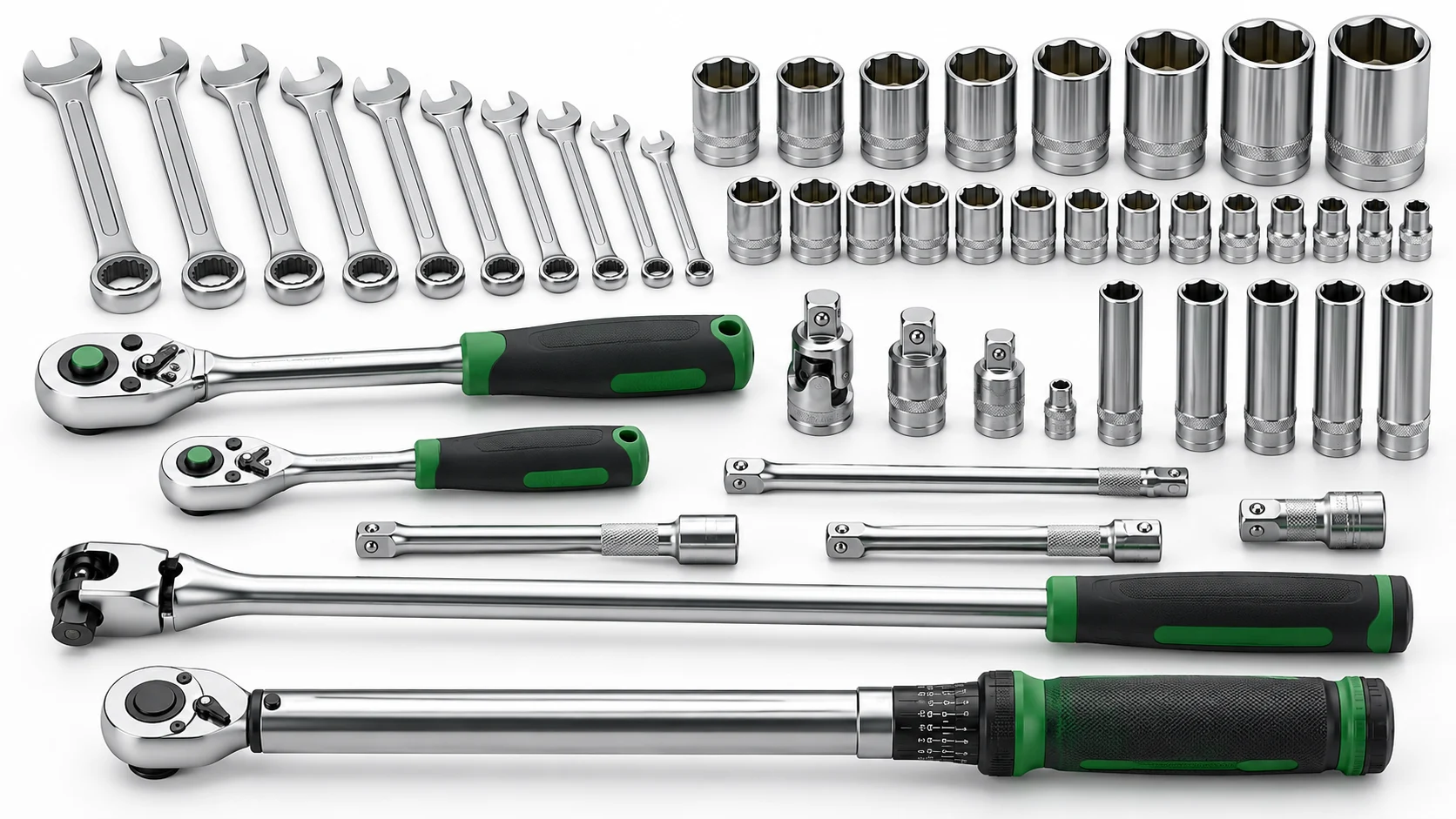
Wrenches and sockets form the foundation of many automotive toolkits. They help remove and install compatible threaded fasteners on engines, brackets, wheels, and other mechanical assemblies.
A good set should match the sizes and fastener designs used on the specific vehicle. Proper fit matters more than owning an unnecessarily large collection.
Combination Wrench
A combination wrench has an open end and an enclosed box end, usually sized for the same fastener. The open end provides side access, while the box end generally offers more secure engagement when it fits fully over the fastener.
Automotive use: Engine brackets, battery terminal hardware and accessible nuts and bolts. Priority: Essential.
Ratchet Handle
A ratchet uses a reversing mechanism that allows you to turn a compatible socket without removing it after every stroke. Ratchets come in different square-drive sizes and handle lengths.
Automotive use: Repeated loosening and tightening of compatible fasteners. Priority: Essential.
Socket Set
Sockets engage fastener heads and attach to compatible drive tools. Sets may include shallow and deep sockets in metric or SAE sizes, with different engagement profiles.
Six-point sockets are often useful for conventional hex fasteners. Use impact-rated sockets with powered impact tools.
Automotive use: Engine, accessory and chassis fasteners. Priority: Essential.
Torque Wrench
A torque wrench applies or indicates specified tightening torque. Common designs include click-type, beam-type and electronic instruments.
It is important for fasteners requiring manufacturer-defined tightening. Some procedures also require angle stages or new fasteners.
Automotive use: Wheel fasteners and specified engine or chassis assemblies. Priority: Essential when required.
Breaker Bar
A breaker bar is a long, non-ratcheting socket-drive handle that provides additional leverage when loosening suitable fasteners.
Use appropriately rated tools. Excessive leverage can break hardware and is not a substitute for a proper removal procedure.
Automotive use: Stubborn compatible bolts and wheel fasteners. Priority: Useful.
Adjustable Wrench
An adjustable wrench has a movable jaw that fits various compatible fastener sizes. It is convenient for general workshop tasks and uncommon fittings.
Jaw clearance may cause slipping. A correctly sized fixed wrench is generally preferable for demanding fastener work.
Automotive use: Selected noncritical fittings and workshop tasks. Priority: Useful.
Flare-nut Wrench
A flare-nut wrench has a slotted ring head that passes around tubing while engaging more of a compatible fitting than an ordinary open-end wrench.
This design is commonly used for brake-line and other fluid fittings that can be vulnerable to rounding.
Automotive use: Compatible brake and fluid-line fittings. Priority: Specialized.
Socket Extensions
Socket extensions increase the distance between a ratchet and its socket, helping reach recessed fasteners and bolts obstructed by nearby components.
Choose extensions of suitable drive size and rating.
Automotive use: Recessed engine and accessory bolts. Priority: Essential.
Universal Joint Adapter
A universal joint adapter permits an angled drive connection between the handle and socket, improving access where a straight approach is unavailable.
Follow its loading and torque restrictions.
Automotive use: Restricted engine-bay fasteners. Priority: Useful.
Screwdrivers and Fastening Tools for Automotive Repairs
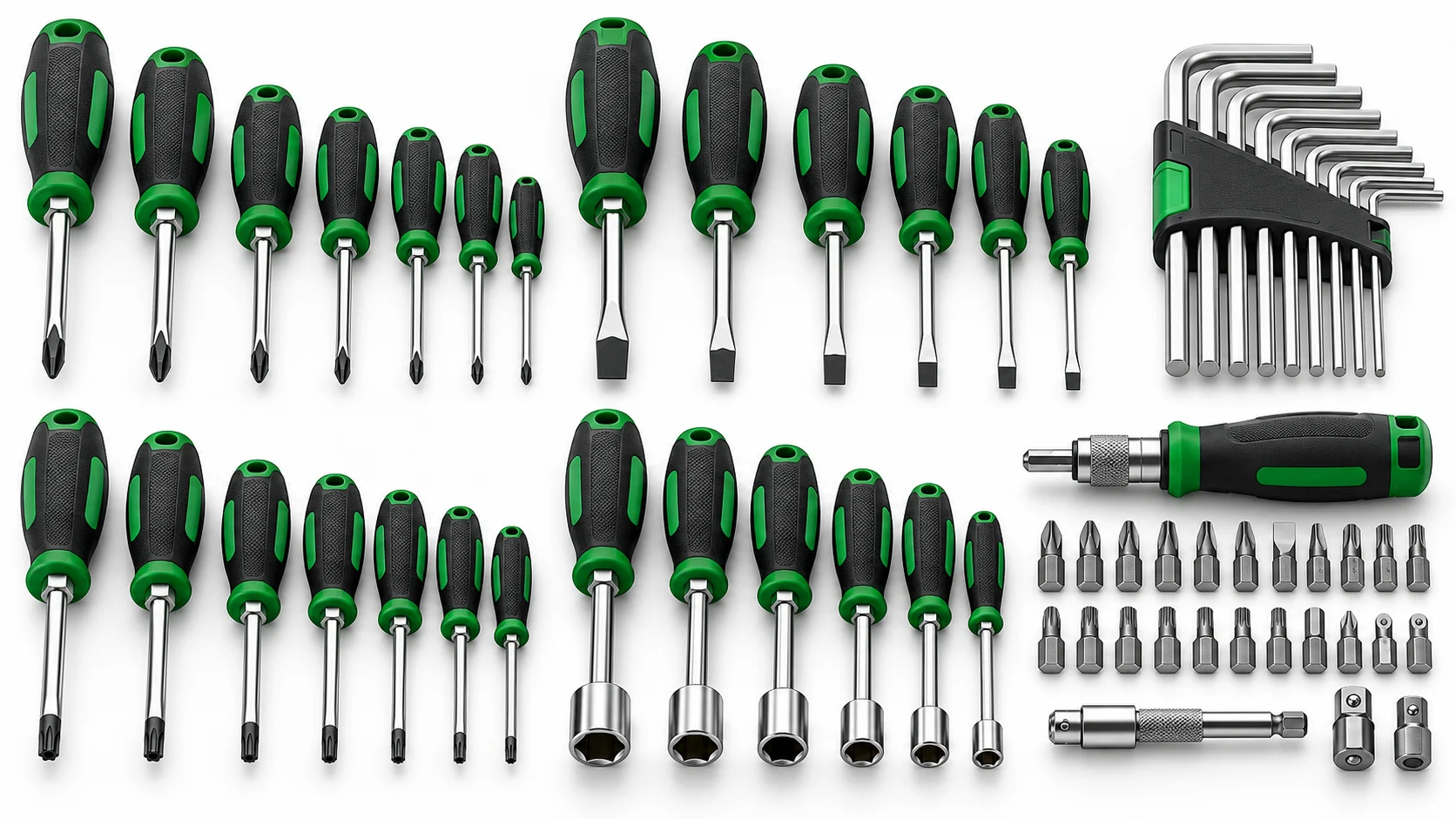
Screwdrivers and fastening tools are used for compatible screws, clamps, housings and interior fasteners. The tool should match the recess type and size.
Phillips Screwdriver
A Phillips screwdriver uses a cross-shaped tip designed for compatible Phillips screws. Correct tip size helps reduce cam-out and screw-head damage.
Automotive use: Selected interior and accessory fasteners. Priority: Essential.
Slotted Screwdriver
A slotted screwdriver has a flat blade for straight-slot screws. Choose a suitable blade width and thickness.
Avoid using precision screwdrivers as pry bars or chisels.
Automotive use: Older fasteners and suitable adjustment screws. Priority: Essential.
Torx Driver
Torx drivers engage six-lobed screw recesses. A properly sized Torx tip helps preserve fastener engagement and reduces the risk of stripping.
Automotive use: Compatible trim and mechanical fasteners. Priority: Essential when used on your vehicle.
Hex / Allen Keys
Allen keys are six-sided tools for internal hex fasteners. They come in metric and SAE sizes, including L-shaped, T-handle and socket-style versions.
Automotive use: Accessory hardware and selected assemblies. Priority: Useful.
Nut Driver
A nut driver resembles a screwdriver but has a socket-shaped tip for small hex nuts or compatible hex-head screws.
It is convenient for certain low-torque assembly tasks.
Automotive use: Small clamps and light-duty fasteners. Priority: Useful.
Interchangeable Bit Driver
A bit driver accepts replaceable screwdriver bits, allowing one handle to engage different compatible screw heads.
Check bit size, retention and rating before use.
Automotive use: Interior components and small varied fasteners. Priority: Useful.
Pliers and Gripping Tools Used by Mechanics
Pliers help grip small components, position clips, hold suitable parts and cut appropriate materials. They should not replace properly fitting wrenches for reusable hex fasteners.
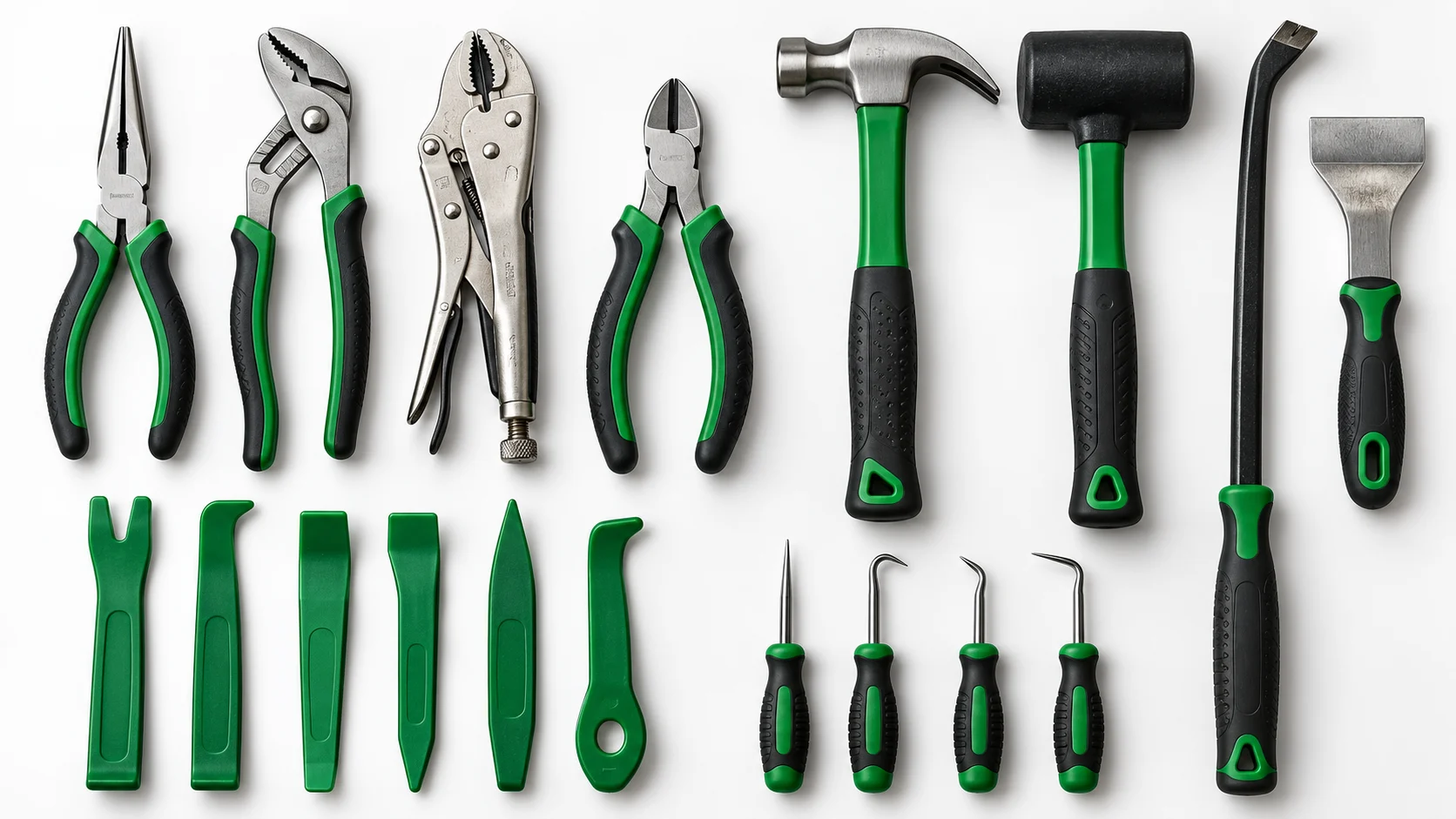
Needle-nose Pliers
Needle-nose pliers have long, narrow jaws for gripping and positioning small items in restricted locations.
Automotive use: Small clips and compatible connectors. Priority: Essential.
Slip-joint Pliers
Slip-joint pliers have an adjustable pivot that provides different jaw openings for general gripping and holding tasks.
Automotive use: Selected small fittings and workshop components. Priority: Useful.
Locking Pliers
Locking pliers clamp onto compatible objects using an adjustable locking mechanism.
Their serrated jaws can damage finished surfaces and reusable fastener heads.
Automotive use: Suitable holding and extraction tasks. Priority: Useful.
Diagonal Cutting Pliers
Diagonal cutters have angled cutting edges for suitable wire, cable ties and similar materials. Use within the manufacturer’s ratings.
Automotive use: Cable ties and appropriate wiring materials. Priority: Useful.
Hose-clamp Pliers
Hose-clamp pliers grip or compress compatible spring-style clamps. Some versions use a flexible cable to reach confined locations.
Automotive use: Suitable cooling-system and fluid hose clamps. Priority: Specialized.
Striking, Cutting and Removal Tools
Certain automotive repairs require controlled striking, surface preparation or removal of clips and components. The correct tool helps prevent avoidable damage.
Mechanic’s Hammer
A mechanic’s hammer is used for suitable striking operations, sometimes with approved punches or other striking tools. Use appropriate eye protection and follow component service instructions.
Automotive use: Selected disassembly and workshop operations. Priority: Useful.
Dead-blow Mallet
A dead-blow mallet reduces rebound and provides controlled blows. Many versions use nonmetallic contact surfaces.
Automotive use: Appropriate component positioning and tapping. Priority: Useful.
Pry Bar
A pry bar provides leverage for approved tasks. Different lengths and tip geometries fit different access requirements. Avoid prying against fragile or unapproved surfaces.
Automotive use: Suitable mechanical separation tasks. Priority: Useful.
Gasket Scraper
A gasket scraper removes compatible gasket residue and contamination from sealing surfaces. Incorrect scraping can damage softer materials or create sealing problems.
Automotive use: Approved gasket-surface preparation. Priority: Specialized.
Trim-removal Tools
Trim-removal tools help release compatible interior panels, clips and decorative components. Plastic designs can reduce marking.
Automotive use: Interior panels and compatible exterior trim. Priority: Useful.
Pick Set
A pick set includes small hooked, angled and straight tools for manipulating appropriate clips, seals and small parts. Sharp picks should be handled carefully around hands and delicate components.
Automotive use: Small clips, accessible O-rings and precision handling. Priority: Useful.
Automotive Power Tools and Their Uses
Power tools can make suitable tasks quicker, but greater speed and torque introduce additional risks when incorrect tools or accessories are used.
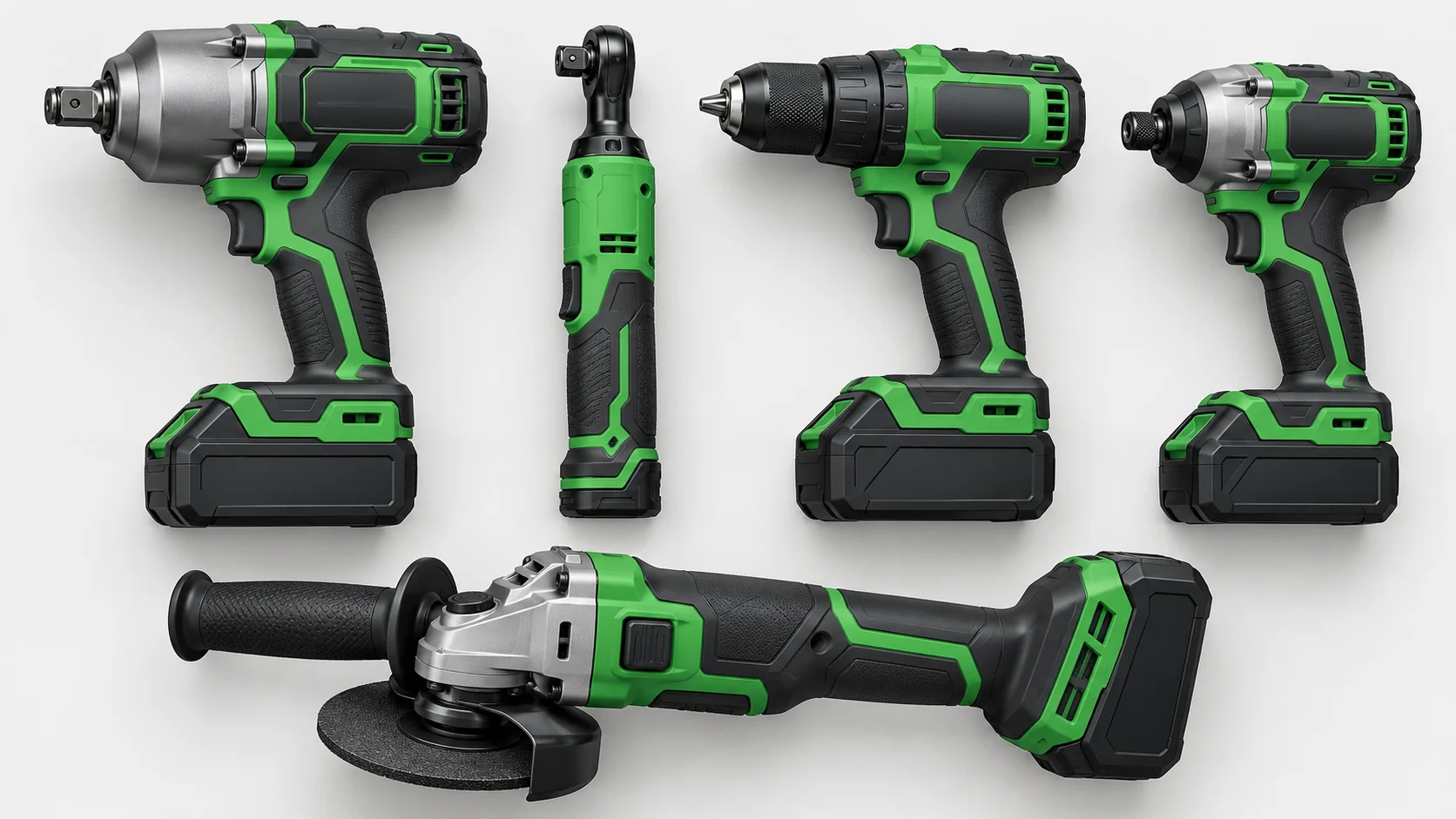
Impact Wrench
An impact wrench delivers short rotational impacts to help loosen or turn compatible fasteners. Most automotive models use a square-drive connection with impact sockets.
Final tightening must still follow the required torque procedure.
Automotive use: Suitable wheel-fastener removal and demanding fastening. Priority: Advanced.
Cordless Ratchet
A cordless ratchet drives compatible sockets electrically and reduces repeated manual handle movement. Follow its load limitations, especially around tight fasteners.
Automotive use: Repetitive turning of accessible bolts. Priority: Optional.
Cordless Drill
A cordless drill rotates suitable drill bits for hole-making. Many also have speed and clutch settings for screwdriving. Choose the correct bit, speed and method for the material.
Automotive use: Selected accessories and workshop fabrication. Priority: Useful.
Impact Driver
An impact driver typically uses a 1/4-inch hex quick-change interface and rotational impacts for driving compatible screws and fasteners. It is different from the socket-driven impact wrench.
Automotive use: Compatible accessory fastening and fabrication. Priority: Optional.
Angle Grinder
An angle grinder uses compatible cutting or grinding accessories for approved metalwork. Correct guards, PPE, workpiece control and awareness of sparks and nearby hazards are essential.
Automotive use: Suitable fabrication and metal preparation. Priority: Specialized.
Power-tool safety: Use properly rated impact sockets with impact tools. Follow equipment instructions and never replace specified final tightening with uncontrolled impact-wrench use.
Automotive Diagnostic and Measuring Tools
Mechanical repair often begins with testing or measuring the problem. Diagnostic tools gather information, while measuring instruments help inspect dimensions and mechanical conditions.
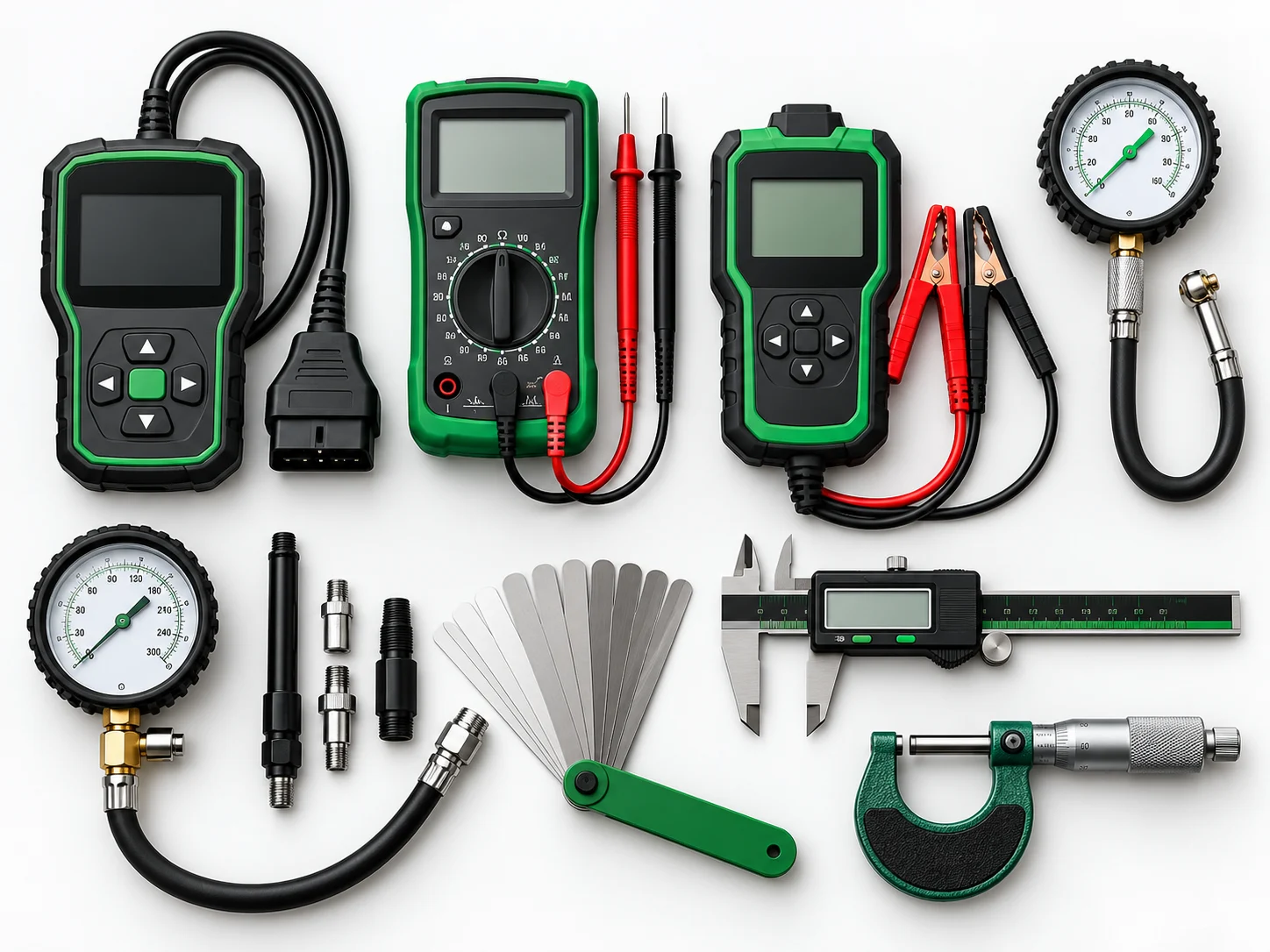
OBD-II Scanner
An OBD-II scanner retrieves supported diagnostic information. Depending on the device and vehicle, it may provide fault codes, readiness status and live data.
Trouble codes indicate a starting point for diagnosis, not necessarily a failed component.
Automotive use: Engine and emissions diagnostics; some devices support additional systems. Priority: Useful.
Digital Multimeter
A digital multimeter measures electrical quantities such as voltage and resistance. Other functions depend on the model. Incorrect current measurements or unsuitable test connections can create hazards.
Automotive use: Appropriate battery and low-voltage circuit checks. Priority: Useful.
Battery Tester
A battery tester evaluates selected battery characteristics using its supported testing method. Results may include voltage, conductance estimates or load-test information, depending on the device.
Automotive use: Starting-battery assessment. Priority: Useful.
Tire Pressure Gauge
A tire pressure gauge measures inflation pressure. Designs include digital, dial and pencil-style instruments. Check pressure according to vehicle guidance, generally with cold tires.
Automotive use: Routine tire maintenance. Priority: Essential.
Compression Tester
A compression tester measures cylinder pressure during a suitable compression-test procedure. Results must be interpreted against correct engine specifications and test conditions.
Automotive use: Selected engine condition diagnosis. Priority: Specialized.
Feeler Gauge
Feeler gauges use thin blades of known thickness to measure narrow gaps and clearances. Some procedures require combined blades or specialized shapes.
Automotive use: Suitable clearance checks. Priority: Useful.
Digital Caliper
A digital caliper measures external, internal, depth and step dimensions where its design supports them. Precision-critical measurements may require more specialized instruments.
Automotive use: General dimensional inspection. Priority: Useful.
Micrometer
A micrometer measures specific small dimensions using precise measuring contacts. Outside versions are often used for machined shafts and component thicknesses. Alignment, measuring force and instrument condition affect accuracy.
Automotive use: Crankshaft journal and other precision-part inspections. Priority: Advanced.
Vehicle Lifting and Safety Equipment
Lifting equipment and personal protection are essential for applicable workshop tasks. Incorrect vehicle support can cause serious injury.
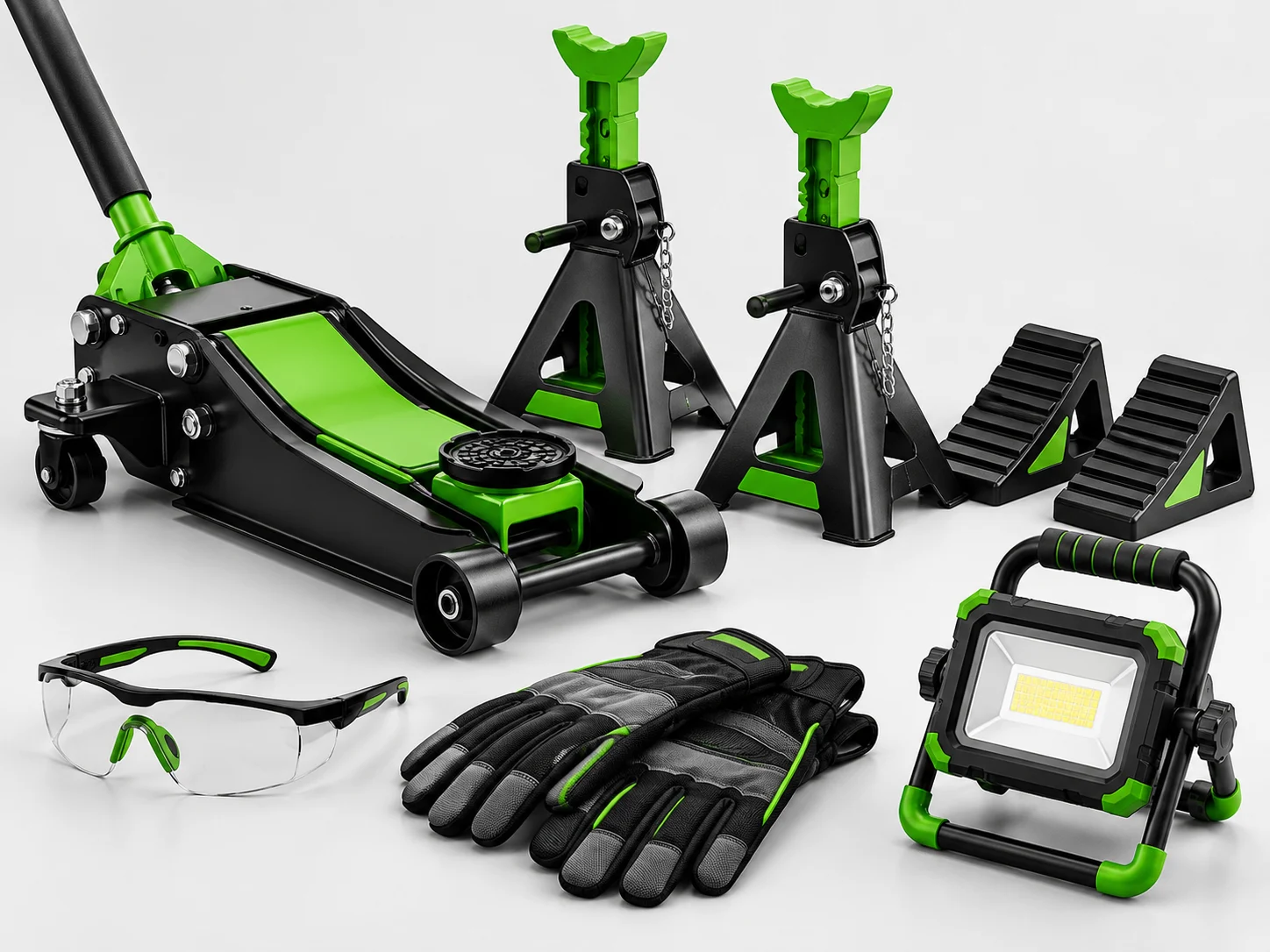
Hydraulic Floor Jack
A hydraulic floor jack lifts vehicles using a hydraulic mechanism. Choose a suitable load rating and manufacturer-approved lifting points. A jack is not a substitute for proper vehicle support.
Automotive use: Approved vehicle lifting. Priority: Essential for applicable work.
Jack Stands
Jack stands support a raised vehicle when correctly rated and placed according to both the equipment and vehicle instructions. The supporting surface must also be suitable.
Automotive use: Supporting vehicles for appropriate underbody work. Priority: Essential when required.
Wheel Chocks
Wheel chocks help prevent unintended vehicle movement when properly selected and positioned.
Automotive use: Safe vehicle positioning during specified maintenance. Priority: Essential when required.
Eye Protection
Appropriate safety eyewear protects against relevant impact, splash and other hazards. Certain jobs also require additional face protection.
Automotive use: Inspection, repair and workshop tasks. Priority: Essential.
Protective Gloves
Suitable gloves may protect hands against cuts, abrasion, chemicals or other hazards. Gloves must match the task; loose gloves may create entanglement risks around rotating equipment.
Automotive use: Suitable component handling and maintenance. Priority: Essential when required.
Workshop Work Light
A work light illuminates dark repair spaces so fasteners, leaks and wiring can be inspected. Select lighting appropriate to the environment and electrical hazards.
Automotive use: Engine-bay, interior and underbody inspections. Priority: Essential.
Critical safety rule: Never work beneath a vehicle supported only by a hydraulic jack. Follow approved lifting and support procedures using properly rated equipment.
Specialty Automotive Mechanic Tools
Specialty tools are designed for particular components and service methods. They should be selected according to the actual vehicle and planned repair.
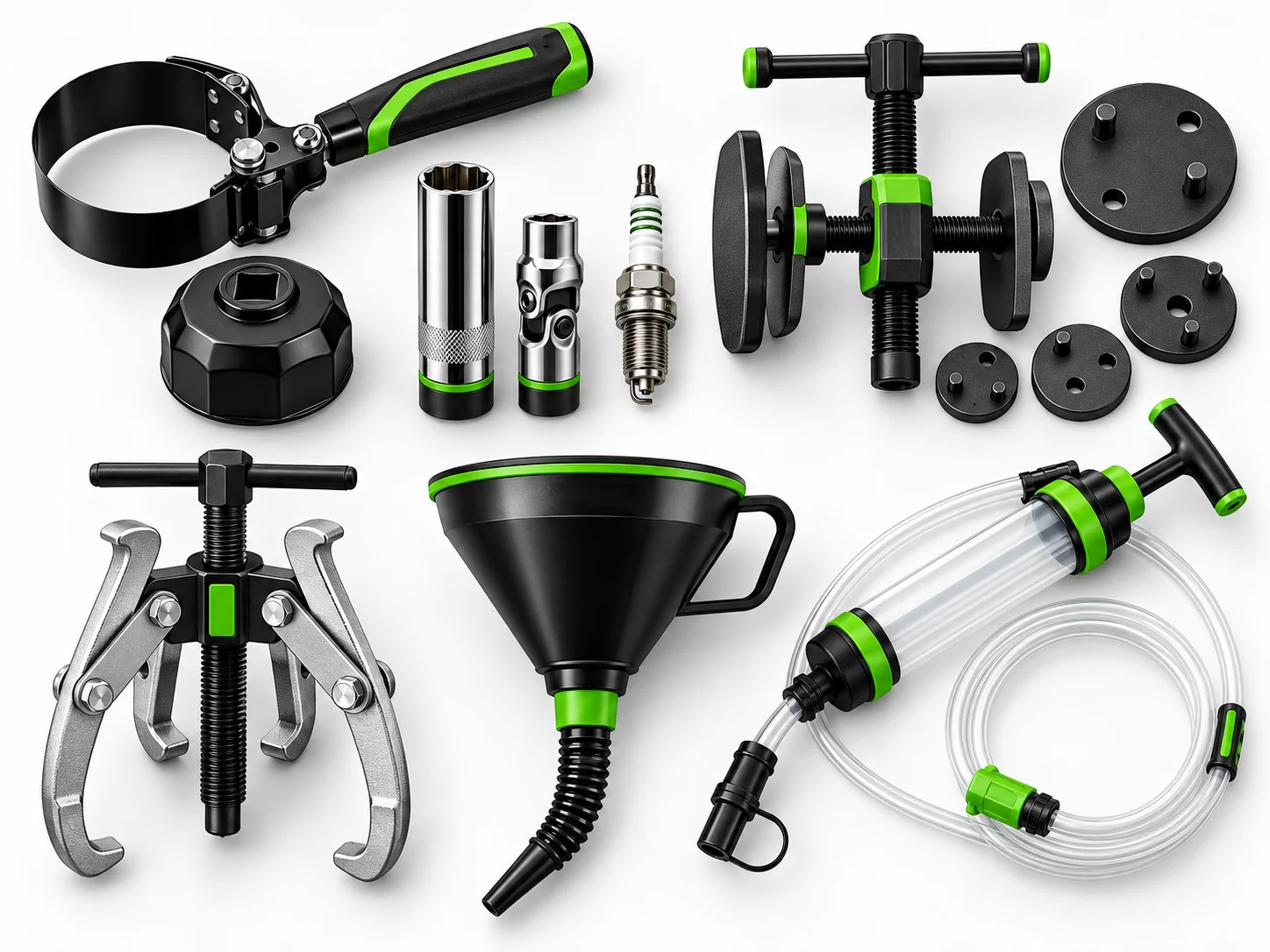
Oil-filter Wrench
An oil-filter wrench grips compatible filters or housings for removal. Cap, strap, band and other designs serve different filter types. Some cartridge housings require model-specific tools and tightening procedures.
Automotive use: Engine oil-filter servicing. Priority: Essential for applicable oil changes.
Spark-plug Socket
A spark-plug socket fits compatible plugs and may include features that help protect or retain them during handling. Correct engagement and tightening procedures protect plug and cylinder-head threads.
Automotive use: Spark-plug replacement. Priority: Useful when needed.
Brake Service Tool
Brake tools include piston retractors, wind-back adapters and other brake-system-specific equipment. Some electronic parking brake systems require additional service procedures.
Automotive use: Compatible brake component servicing. Priority: Specialized.
Mechanical Puller
A mechanical puller removes suitable fitted components using controlled force. Designs include two-jaw, three-jaw and application-specific pullers. Incorrect placement or loading may damage parts or release suddenly.
Automotive use: Selected pulley, gear and bearing work. Priority: Specialized.
Funnel
A funnel guides compatible fluids into suitable openings while helping limit spills. Keep filling equipment clean and avoid cross-contamination.
Automotive use: Suitable vehicle-fluid filling. Priority: Essential when needed.
Fluid Transfer Tool
A fluid transfer device moves suitable fluids with a pump or another approved mechanism. Check chemical compatibility, cleanliness and service requirements.
Automotive use: Selected fluid draining, filling and transfer. Priority: Specialized.
Which Mechanic Tools Do You Need for Common Car Repairs?
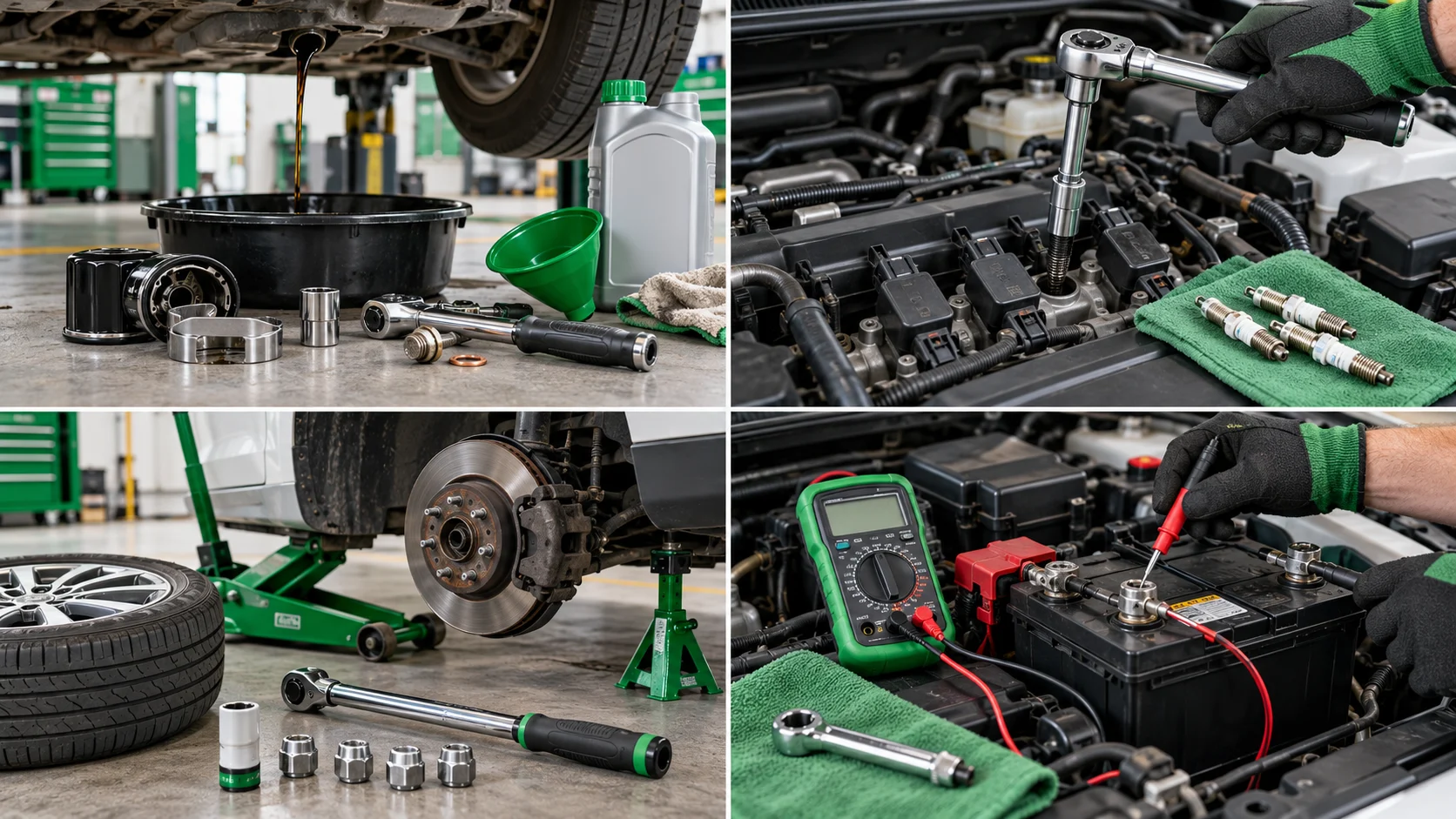
Choosing tools becomes easier when you start with a repair task rather than a large product catalog. Vehicle components require different sizes, ratings and safety procedures.
| Repair Task | Typical Tools | Key Requirement |
|---|---|---|
| Engine oil change | Socket, oil-filter tool, drain pan, funnel | Correct oil, filter and procedure |
| Spark-plug replacement | Plug socket, ratchet, torque tool as specified | Thread and torque requirements |
| Wheel service | Wheel socket, lifting equipment, chocks, torque wrench | Approved support and final tightening |
| Battery service | Correct wrench and protective equipment | Battery electrical safety |
| Brake service | Suitable sockets and brake-specific tools | Safety-critical procedures |
| Electrical diagnosis | Multimeter, scan tool, service documentation | Correct circuit-testing methods |
Interactive Repair-to-Tool Finder
Select a repair task to see suggested starting tools and an important safety consideration.
Compatible Socket, Oil-filter Tool and Funnel
Check the vehicle’s drain-plug and oil-filter requirements. Prepare a suitable drain pan and specified oil and filter.
Important: Follow the vehicle’s service procedure and dispose of used oil responsibly.
Reminder: This tool finder provides general information, not a vehicle-specific repair procedure. Confirm compatibility, safety and fastener specifications before beginning work.
Socket Drive Sizes and Metric vs. SAE Mechanic Tools
Beginners sometimes confuse a socket’s square-drive size with its opening size. Another common mistake is assuming metric and SAE tools can always be used interchangeably.
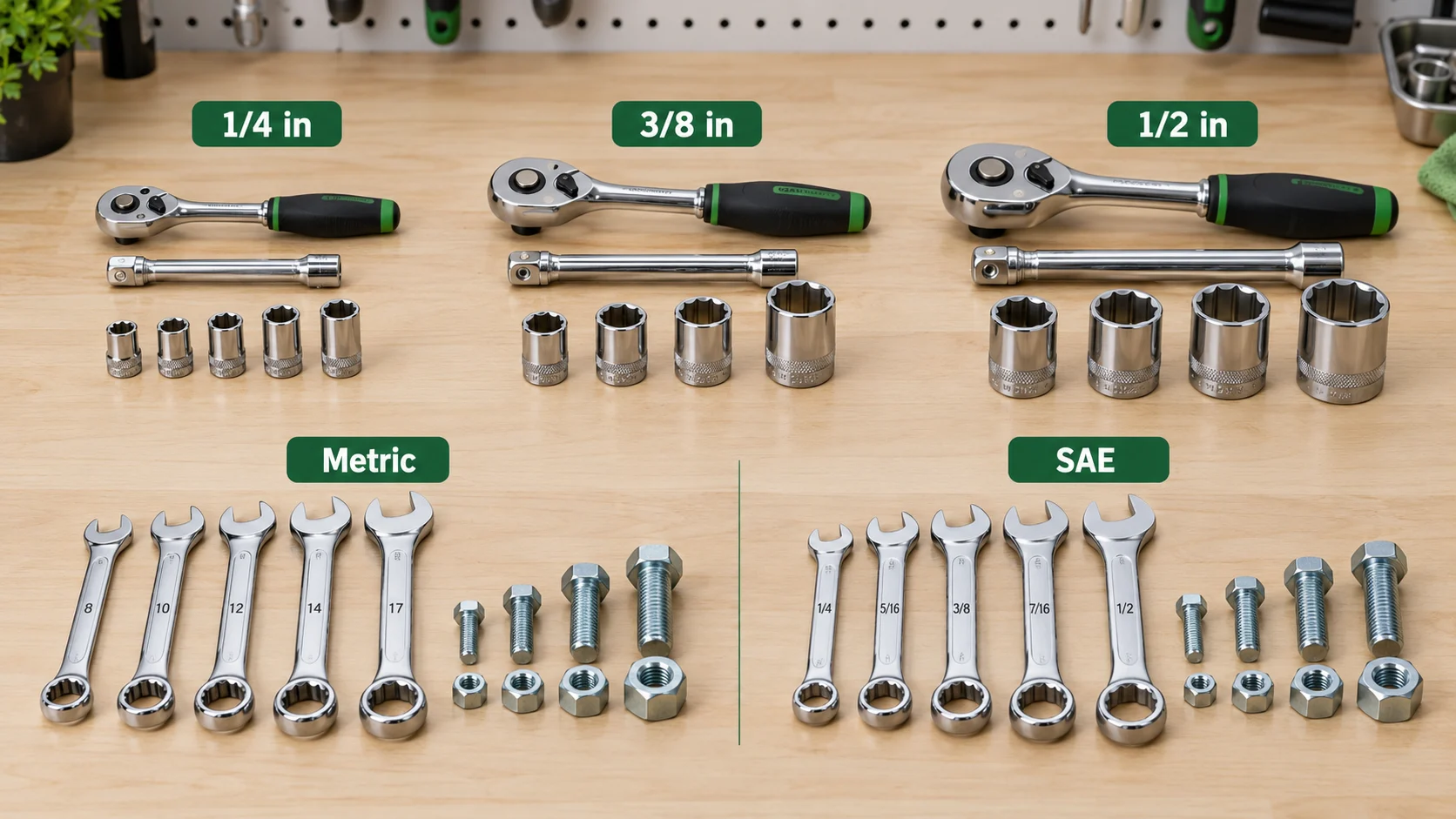
Understanding Socket Drive Sizes
| Drive Size | Characteristics | Typical Use |
|---|---|---|
| 1/4-inch | Compact tools and smaller sockets | Smaller compatible fasteners |
| 3/8-inch | Versatile general-purpose system | Many everyday vehicle repairs |
| 1/2-inch | Larger sockets and drive equipment | Suitable larger fasteners |
Drive size describes the connection between a socket and its handle, not the size of the fastener being turned.
Metric vs. SAE Wrenches
Metric sizes are marked in millimeters, such as 10 mm, 13 mm or 17 mm. SAE tools use inch measurements, including 3/8 inch, 1/2 inch and 9/16 inch.
Many modern vehicles use metric fasteners, but requirements vary. An almost-fitting socket or wrench can slip or round a fastener, so identify the correct size.
Do You Need Both Metric and SAE Tools?
It depends on which vehicles and equipment you service. Review actual fastener requirements before investing in full tool sets.
Beginner vs. Professional Mechanic Toolkits
Professional mechanics may own hundreds of additional tools because of the variety and frequency of their work. A home mechanic can begin with a smaller, reliable collection.
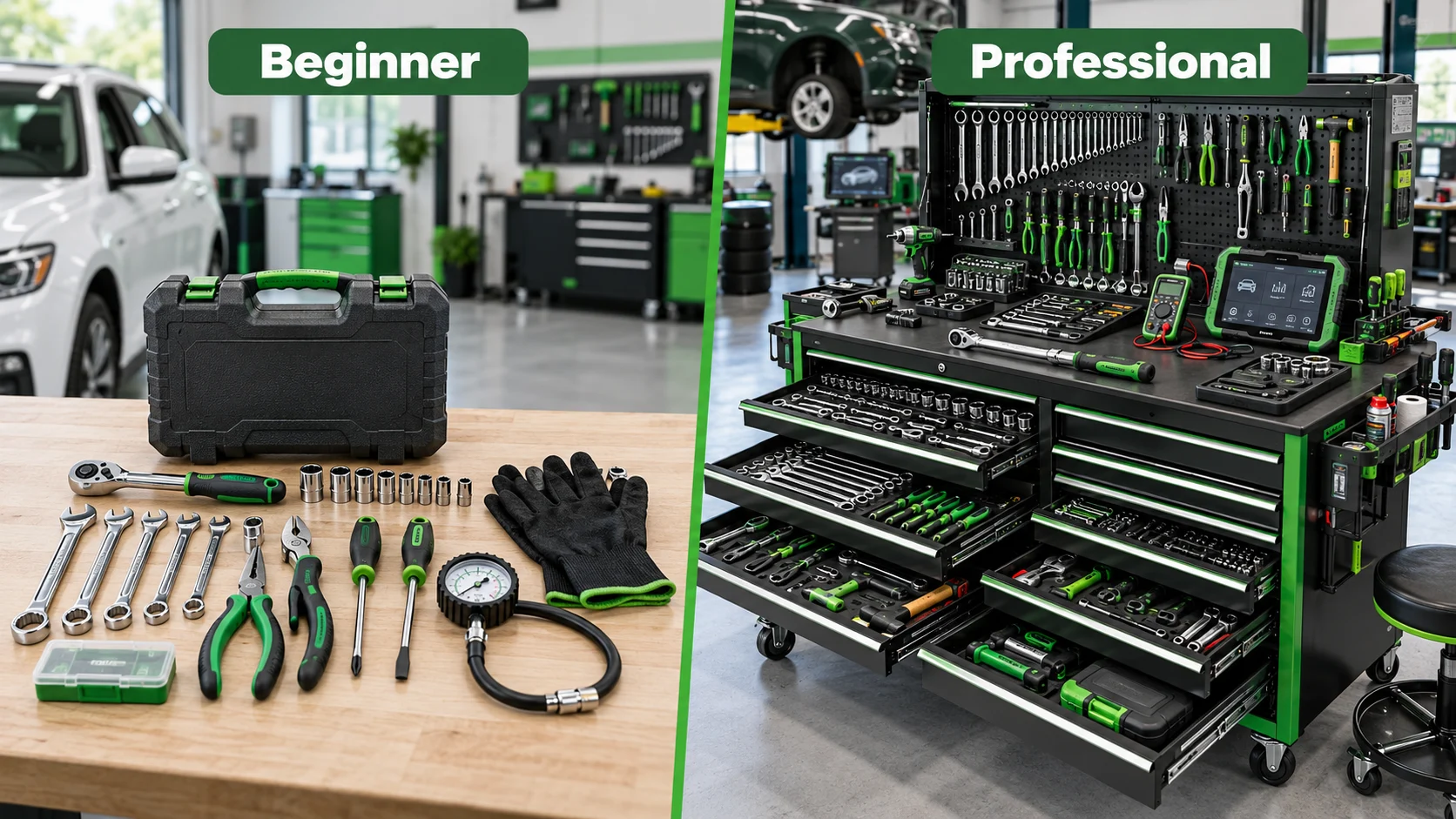
Beginner Toolkit
Compatible sockets, ratchets, wrenches, screwdrivers, pliers, work lights and appropriate safety equipment.
Intermediate Toolkit
Additional sizes, torque tools, diagnostic equipment and selected vehicle-specific accessories.
Professional Toolkit
Advanced diagnostics, specialized equipment and calibrated measuring instruments for demanding service work.
Should Beginners Buy Professional Tool Sets?
Not automatically. Large professional sets may include tools that a home garage rarely needs. Start with tools that fit your vehicle and planned repairs, then expand as required.
How to Build a Mechanic Toolkit Without Wasting Money
The most useful mechanic toolkit is built around the jobs you expect to perform, not the largest advertised number of pieces.
- List your planned repairs. Identify routine maintenance, battery service, wheel work and other realistic tasks.
- Check vehicle service information. Determine fastener sizes, tightening requirements and recommended tools.
- Buy reliable basic hand tools. Start with compatible sockets, ratchets, combination wrenches, screwdrivers and pliers.
- Prioritize safety. Obtain appropriate lifting, support and protective equipment before attempting applicable jobs.
- Add specialty tools when needed. Expand your collection as specific repairs require additional instruments.
What Makes a Good Mechanic Tool?
Look for correct fit, suitable ratings, durable construction, clear size markings, useful handle design and reliable manufacturer support.
A tool does not need to be the most expensive option to be appropriate for a task. Compatibility and quality matter more than price alone.
How Should Mechanic Tools Be Stored?
Keep tools clean, dry and organized. Socket rails, labeled drawers, protective cases and orderly wrench storage make tools easier to find and inspect.
Precision instruments and torque tools may require additional handling and storage procedures.
Common Mechanic Tool Mistakes to Avoid
Using the wrong equipment can damage fasteners, tools or vehicle components. Some mistakes also create serious safety hazards.
| Mistake | Possible Result | Better Practice |
|---|---|---|
| Wrong socket size | Rounded fastener | Use the correct fitting size |
| Hand sockets on impact equipment | Tool damage or failure | Use rated impact sockets |
| Uncontrolled impact final tightening | Incorrect fastener torque | Follow specified tightening method |
| Vehicle supported only by a jack | Serious crushing hazard | Use approved support procedures |
| Buying incompatible tools | Unused equipment | Verify vehicle requirements |
| Pliers instead of a fitted wrench | Damaged fastener | Use the correct tool |
| Assuming a trouble code proves a failed part | Incorrect diagnosis | Perform appropriate testing |
Important: Brakes, steering, suspension, high-voltage vehicle systems and lifting procedures can involve serious hazards. Seek qualified assistance when needed.
51 Mechanic Tools Checklist: What Do You Already Own?
Mark the tools already in your garage and copy a list of the remaining items. The checklist includes essential and specialized tools, so you do not need to purchase everything.
Wrenches and Sockets
Screwdrivers and Fastening Tools
Pliers and Gripping Tools
Striking and Removal Tools
Automotive Power Tools
Measuring and Diagnostic Tools
Lifting and Safety Equipment
Specialty Automotive Tools
Checklist choices stay on this page during your current visit and are not saved automatically for future visits.
Frequently Asked Questions About Mechanic Tools
What are the most essential mechanic tools?
Common essentials include suitable wrenches, a socket and ratchet set, screwdrivers, pliers, tire pressure gauge, lighting and appropriate safety equipment. A torque wrench is important for tasks requiring specified tightening.
What hand tools are used in automotive repair?
Common automotive hand tools include combination wrenches, ratchets, sockets, screwdrivers, hex keys, Torx tools, pliers, hammers, pry bars and specialty fastener tools.
What is the difference between mechanic tools and mechanical tools?
Mechanic tools commonly refers to equipment used by mechanics for maintenance and repair. Mechanical tools is a broader term applying across different mechanical trades.
What socket drive size is best for beginners?
A 3/8-inch drive set is a versatile starting point for many general automotive fasteners. Some smaller and larger fasteners require other drive sizes.
Do mechanics need both metric and SAE tools?
That depends on the vehicles and equipment serviced. Many modern cars primarily use metric fasteners, while some vehicles and equipment also require SAE sizes.
What is the difference between a torque wrench and an impact wrench?
A torque wrench applies or indicates specified tightening torque. An impact wrench uses rotational impacts to turn compatible fasteners. An impact wrench should not replace a required final tightening procedure.
What tools do I need for basic car maintenance?
Depending on the job, basic maintenance may require suitable sockets, wrenches, screwdrivers, an oil-filter wrench, a drain pan, funnel, tire pressure gauge and protective equipment.
Can I work under a car supported only by a jack?
No. A hydraulic jack is a lifting device, not the sole support for working underneath a vehicle. Use approved support methods and properly rated equipment.
Which auto repair tools should beginners buy first?
Start with suitable sockets and ratchets, combination wrenches, screwdrivers, pliers, a work light and safety equipment. Add torque and specialty tools as the planned tasks require.
How should mechanic tools be organized and maintained?
Clean and inspect tools, keep them dry, organize sockets and wrenches by size, and follow manufacturer instructions for powered and precision tools.
Are expensive mechanic tools always better?
Not necessarily. Suitable fit, strength, appropriate ratings, durability, useful features and manufacturer support matter more than price alone.
About this guide: This article explains common mechanic tools and general automotive applications. It does not claim firsthand testing of specific products. Manufacturer instructions, equipment ratings and vehicle-specific service procedures take priority. Safety-critical work may require professional assistance.
Mechanic Tools List: Build a Toolkit That Matches Your Repairs
A complete collection of mechanic tools does not have to begin with expensive professional equipment. Understanding the tools needed for your planned maintenance is a better starting point.
Combination wrenches, sockets, ratchets, screwdrivers and pliers cover many routine tasks. Measuring and diagnostic instruments help identify problems, while specialty tools are necessary for some repairs.
Appropriate safety equipment, correct fastener engagement and manufacturer-specified service procedures should always come first.
Use the 51-tool checklist to identify what you already own, plan future purchases and build a practical home garage toolkit.