
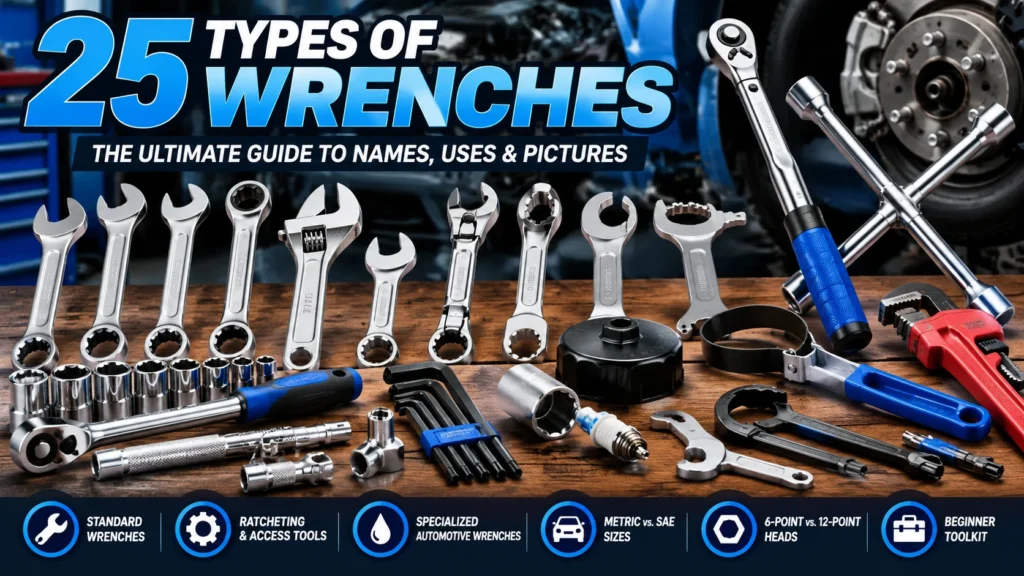
You’re working on your car and discover a stubborn nut hidden behind an engine bracket. Your ordinary wrench keeps slipping, an adjustable wrench won’t fit, and the ratcheting tool in your toolbox looks promising. Which should you use?
Understanding the different types of wrenches makes automotive maintenance easier, helps protect fasteners from damage, and saves time when access is limited.
This guide explains 25 common wrench types, from open-end and combination wrenches to torque wrenches, flare-nut wrenches, and specialized automotive tools. You’ll learn what each tool does, where it works best, which ones to buy first, and how to avoid common mistakes.
What Is a Wrench, and What Is It Used For?
A wrench is a hand tool designed to grip and turn compatible nuts, bolts, fittings, or other fasteners. Some wrenches use fixed jaws, others surround a fastener, and specialized designs may apply measured torque or provide access to difficult locations.
In automotive repair, common wrench types include combination, box-end, open-end, ratcheting, adjustable, torque, flare-nut, and socket wrenches.
The best wrench depends on the fastener’s size and shape, available working space, required force, and any manufacturer-specified tightening procedure.
Standard Wrenches
Open-end, box-end, combination, and adjustable designs for everyday fasteners.
Ratcheting & Specialty
Ratcheting, flex-head, stubby, offset, and crowfoot tools for restricted spaces.
Precision & Service
Torque, flare-nut, oil-filter, spark-plug, and other application-specific tools.
25 Types of Wrenches With Names and Uses
Wrenches come in many designs because fasteners are not always accessible from the same angle. Some tools grip two sides of a nut, others surround the entire head, and specialized tools work with unusual fittings or tight spaces.
Use this directory to locate a wrench by its name. Each entry links to its detailed explanation and automotive application.
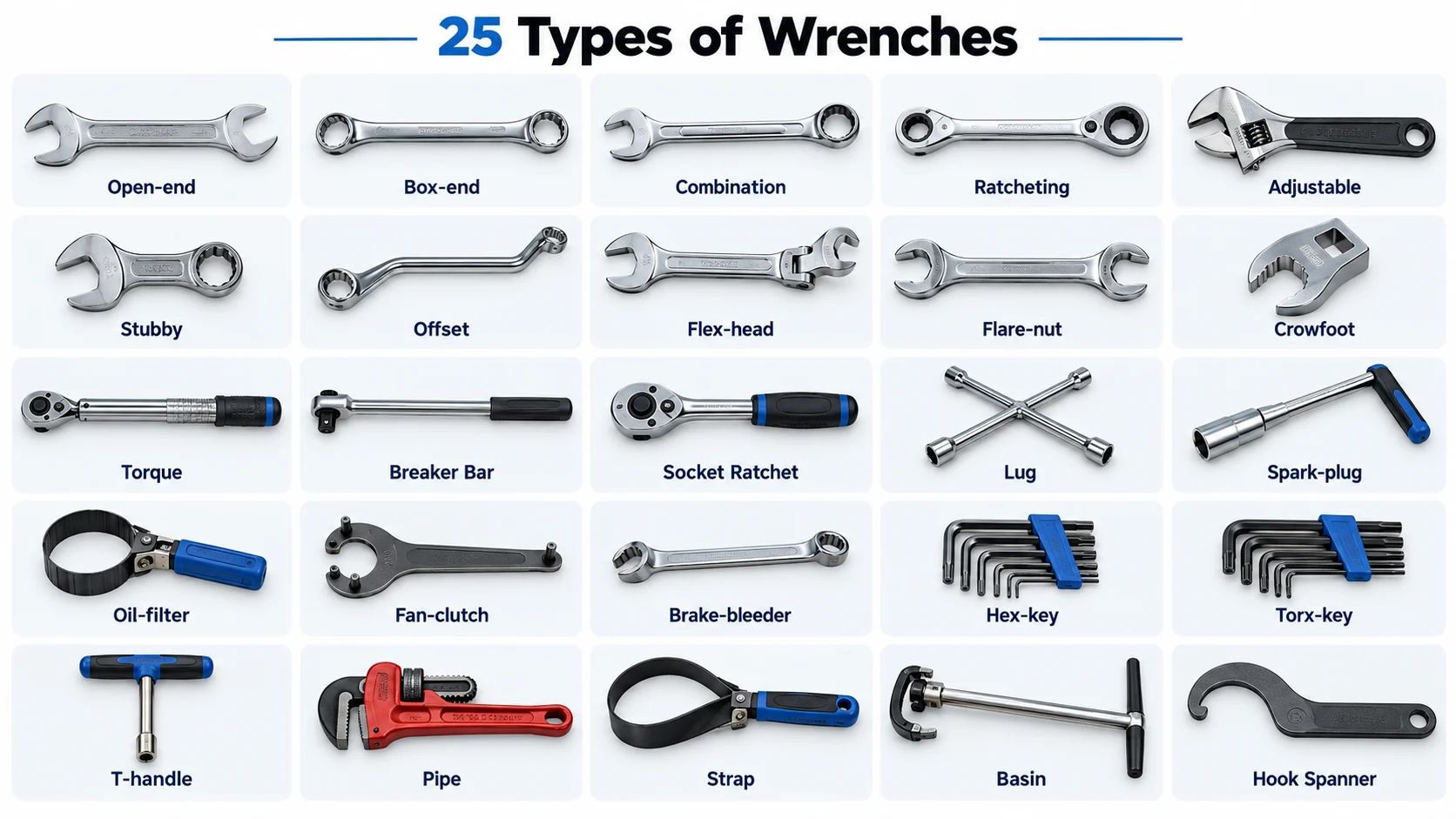
No matching wrench found. Try another tool name.
Essential Wrenches for Everyday Automotive Repairs
The first eight wrench types cover many routine tasks, including accessible nuts and bolts, engine-bay fasteners, battery terminal hardware, and restricted working spaces.
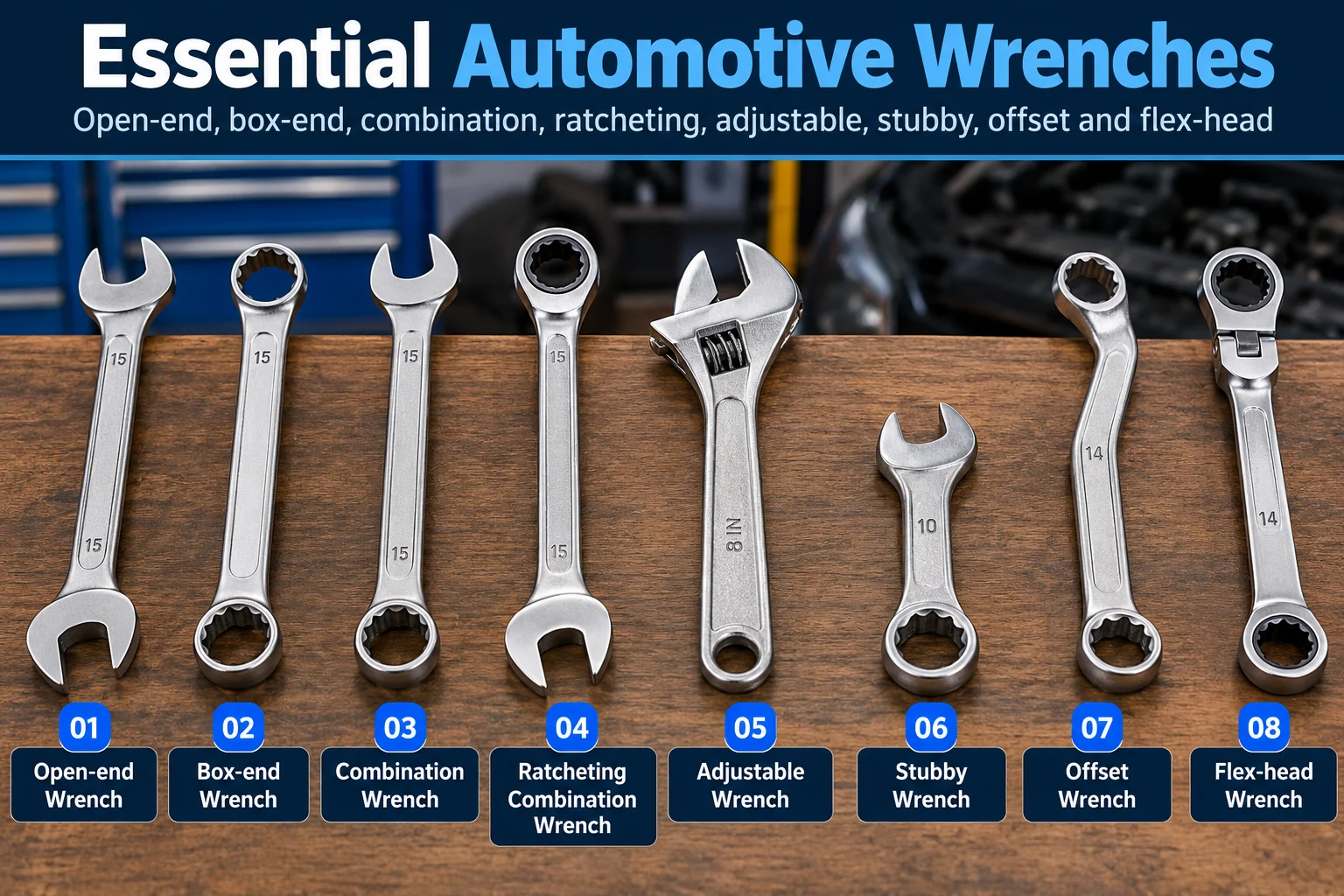
Open-end Wrench
An open-end wrench has a U-shaped opening that engages two opposite flats of a nut or bolt head. Its open design lets you approach a fastener from the side rather than sliding the tool over its end.
This is useful when tubing, nearby components, or limited clearance prevent a ring-shaped wrench from fitting over the fastener.
Automotive use: Accessible nuts, small engine-bay fittings, and general maintenance fasteners.
Limitation: Because it contacts fewer sides than an enclosed wrench, poor fit or excessive force can increase slipping and rounding risk.
Box-end Wrench
A box-end wrench has an enclosed ring-shaped head that surrounds the fastener. Depending on the design, the interior may use a six-point, twelve-point, or other engagement profile.
The enclosed head generally provides more secure engagement than a conventional open end when sufficient access is available.
Automotive use: General engine and chassis fasteners where the ring head can fit fully over the nut or bolt.
Limitation: The tool requires room to place the ring over the fastener.
Combination Wrench
A combination wrench has an open-end head at one end and a box-end head at the other. Both ends normally fit the same fastener size.
This arrangement allows you to choose between side access and enclosed engagement without reaching for another wrench.
Automotive use: Battery terminal hardware, accessible engine-bay bolts, brackets, and general garage repairs.
Buying tip: A correctly sized combination wrench set is one of the most useful starting purchases for a home mechanic.
Ratcheting Combination Wrench
A ratcheting combination wrench commonly has a traditional open end and an enclosed ratcheting head. The ratchet mechanism lets you move the handle backward without removing the head from the fastener.
This can save time in areas where there isn’t enough space for repeated wrench removal and repositioning.
Automotive use: Accessible engine brackets, small accessory mounting bolts, and fasteners in narrow compartments.
Limitation: Ratchet mechanisms have load limits. Do not assume every ratcheting wrench is suitable for breaking loose severely seized fasteners.
Adjustable Wrench
An adjustable wrench uses a movable jaw controlled by a screw mechanism, allowing one tool to fit several compatible fastener sizes.
It is convenient when the exact fixed-size wrench is unavailable or when working with an uncommon fitting.
Automotive use: Selected noncritical fittings and general workshop maintenance where an adjustable wrench is suitable.
Limitation: Jaw play and an imperfect adjustment may increase slipping and fastener damage. A correctly fitting fixed-size wrench is often preferable.
Stubby Wrench
A stubby wrench is a shortened version of a conventional wrench. Its compact handle improves access in confined areas where a full-length wrench cannot swing freely.
Stubby wrenches may have combination, box-end, or ratcheting designs, so the term describes handle length rather than one unique head mechanism.
Automotive use: Tight spaces around engines, accessory mounts, and brackets.
Limitation: A shorter handle usually provides less leverage than a standard-length wrench.
Offset Wrench
An offset wrench has a bent or raised head that positions the handle away from the fastener’s plane. The shape provides clearance around nearby surfaces or recessed hardware.
Offset box-end designs are common when fasteners sit below surrounding components.
Automotive use: Recessed mounting nuts, difficult engine-bay access, and hardware partly obstructed by surrounding components.
Limitation: The head angle must suit the specific access geometry.
Flex-head Wrench
A flex-head wrench has a pivoting head that changes its angle relative to the handle. Some designs combine this feature with a ratcheting mechanism.
The articulated head can help when a straight wrench handle would contact a nearby obstruction.
Automotive use: Awkward engine-bay fasteners and narrow spaces around accessories.
Limitation: Always consider the pivot mechanism’s load limits and the risk of the head moving unexpectedly under force.
Specialized Wrenches Used in Automotive Repair
Some automotive fasteners demand more than a standard combination wrench. These specialized tools provide access, protect delicate fittings, apply controlled tightening torque, or work with components that have unusual shapes.
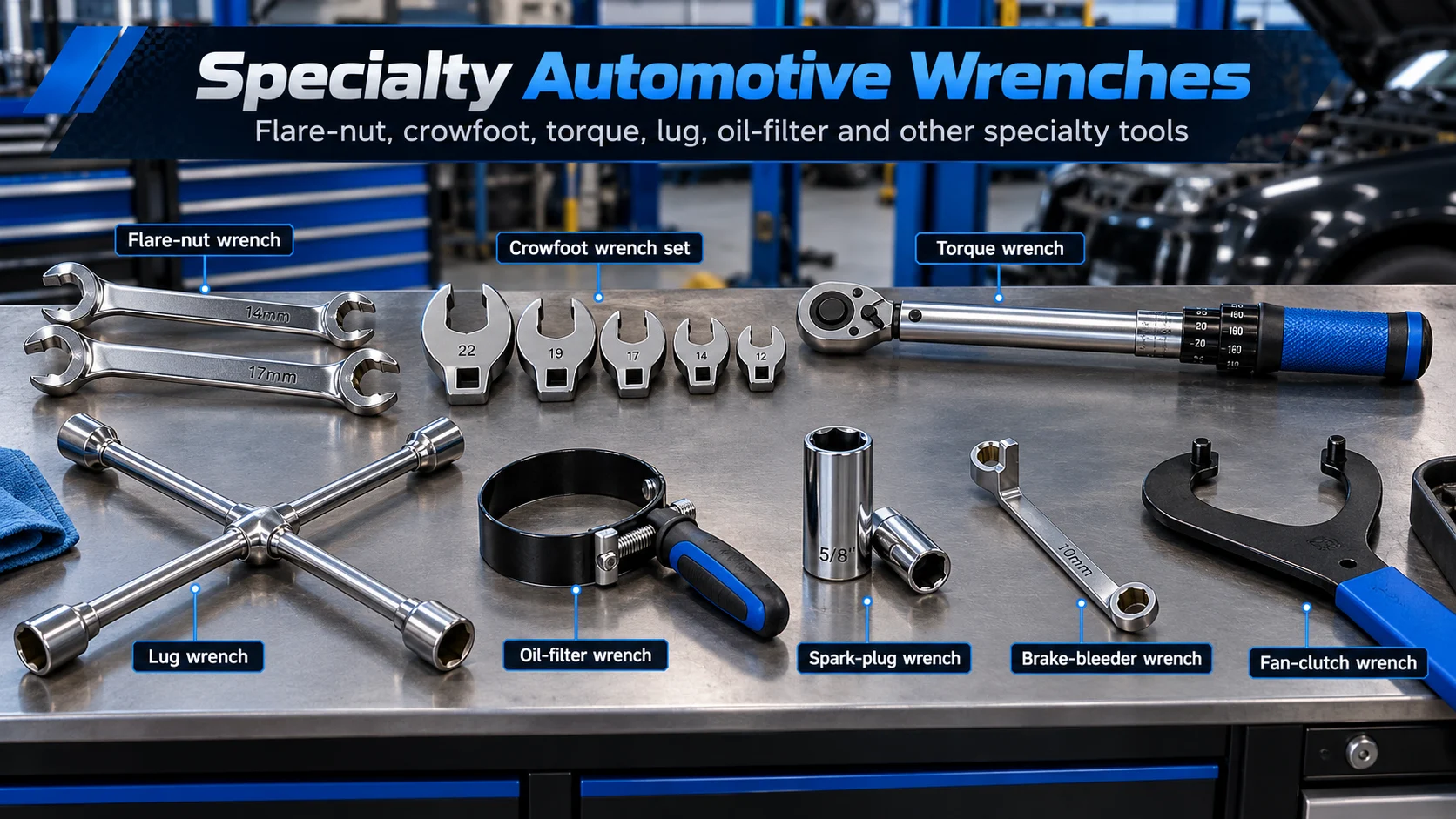
Flare-nut Wrench
A flare-nut wrench resembles a box-end wrench with a narrow opening that allows the head to pass around a tube. It engages more of the fitting than a conventional two-jaw open-end wrench.
This design is commonly used for suitable tubing fittings that could be damaged by poor engagement.
Automotive use: Certain brake-line and fluid-line fittings.
Safety note: Brake-system work requires correct service procedures. A flare-nut wrench does not eliminate the risk of damaging a seized fitting.
Crowfoot Wrench
A crowfoot wrench is a compact wrench head that attaches to a compatible square-drive handle, extension, or torque wrench. It can reach fasteners where a full-length wrench head and handle combination cannot fit.
Crowfoot designs may be open-end, flare-nut, or other specialized profiles.
Automotive use: Restricted engine and fluid-system fittings.
Important: When used with a torque wrench, crowfoot orientation and the change in effective lever length may affect the required wrench setting. Follow the applicable calculation and tool instructions.
Torque Wrench
A torque wrench is designed to apply or indicate a specified turning torque. Common designs include click-type, beam-type, dial, and electronic torque wrenches.
A correct tightening procedure helps produce the intended fastener clamping conditions when the specified components and instructions are followed.
Automotive use: Wheel fasteners, selected engine fasteners, suspension hardware, and other assemblies with specified torque requirements.
Important: Use the correct torque range, units, sequence, and manufacturer procedure. Some fasteners require angle tightening or replacement after use.

Breaker Bar
A breaker bar is a long, non-ratcheting socket-drive handle designed to apply substantial manual leverage to suitable fasteners.
It is commonly used when initial loosening requires more leverage than an ordinary ratchet is intended to provide.
Automotive use: Loosening suitable wheel fasteners and other stubborn bolts with properly rated sockets.
Limitation: Increased leverage can also break tools or fasteners. Do not use uncontrolled force on unknown or safety-critical components.
Socket Wrench / Ratchet
A socket wrench uses an interchangeable socket to engage a fastener. A ratcheting handle allows repeated turning without removing the socket after every stroke.
Sockets are available in different drive sizes, depths, point configurations, and special designs.
Automotive use: Engine maintenance, accessible mounting bolts, interior hardware, and numerous other mechanical tasks.
Tip: Choose the correct socket size, profile, drive system, and rating. Use impact-rated sockets with compatible powered impact tools.
Lug Wrench
A lug wrench is designed to turn compatible wheel lug nuts or bolts. Common styles include L-shaped and cross-shaped designs.
Some vehicles include a compact lug wrench with their roadside equipment.
Automotive use: Wheel removal and initial installation of compatible wheel fasteners.
Important: Final tightening must follow the manufacturer’s torque specification, wheel installation sequence, and applicable procedure.
Spark-plug Wrench
A spark-plug wrench or socket is designed to reach and engage spark plugs. Many spark-plug sockets have a retaining insert or similar feature to help handle the plug.
Special shapes and lengths help reach spark plugs in recessed cylinder-head locations.
Automotive use: Spark-plug removal and installation during ignition-system maintenance.
Safety note: Follow the engine and spark-plug manufacturer’s thread engagement and tightening instructions. Avoid cross-threading or overtightening.
Oil-filter Wrench
An oil-filter wrench is designed to grip a compatible oil filter or filter housing. Common designs include cap-style, strap, band, and adjustable-jaw tools.
Different oil filters require different access and gripping methods.
Automotive use: Removing compatible spin-on oil filters or servicing certain cartridge-filter housings.
Limitation: Plastic cartridge-filter housings often require a specific service tool and specified tightening torque.
Fan-clutch Wrench
A fan-clutch wrench is a specialized tool used on certain engine-driven cooling-fan assemblies. Depending on the vehicle, the procedure may require a thin wrench and a separate holding tool.
These tools are model-specific and are not commonly needed on vehicles without that type of fan-clutch assembly.
Automotive use: Servicing compatible mechanical cooling-fan clutch systems.
Safety note: Confirm the fastener’s thread direction and vehicle-specific procedure before attempting removal.
Brake-bleeder Wrench
A brake-bleeder wrench is intended to turn compatible bleeder screws on hydraulic brake components. Some designs are compact box-end wrenches, while others incorporate hose or fluid-control features.
Correct engagement is particularly important because bleeder screws can be relatively small and vulnerable to damage.
Automotive use: Brake-fluid bleeding and specified hydraulic brake service.
Safety note: Follow vehicle-specific brake service instructions, fluid requirements, and applicable bleeding procedures. Brake-system errors can seriously affect vehicle safety.
Other Types of Wrenches Used in Workshops
Some tools are especially common in general mechanical work, furniture assembly, equipment maintenance, or plumbing. They are still useful to recognize because automotive projects occasionally involve unusual fastener designs.
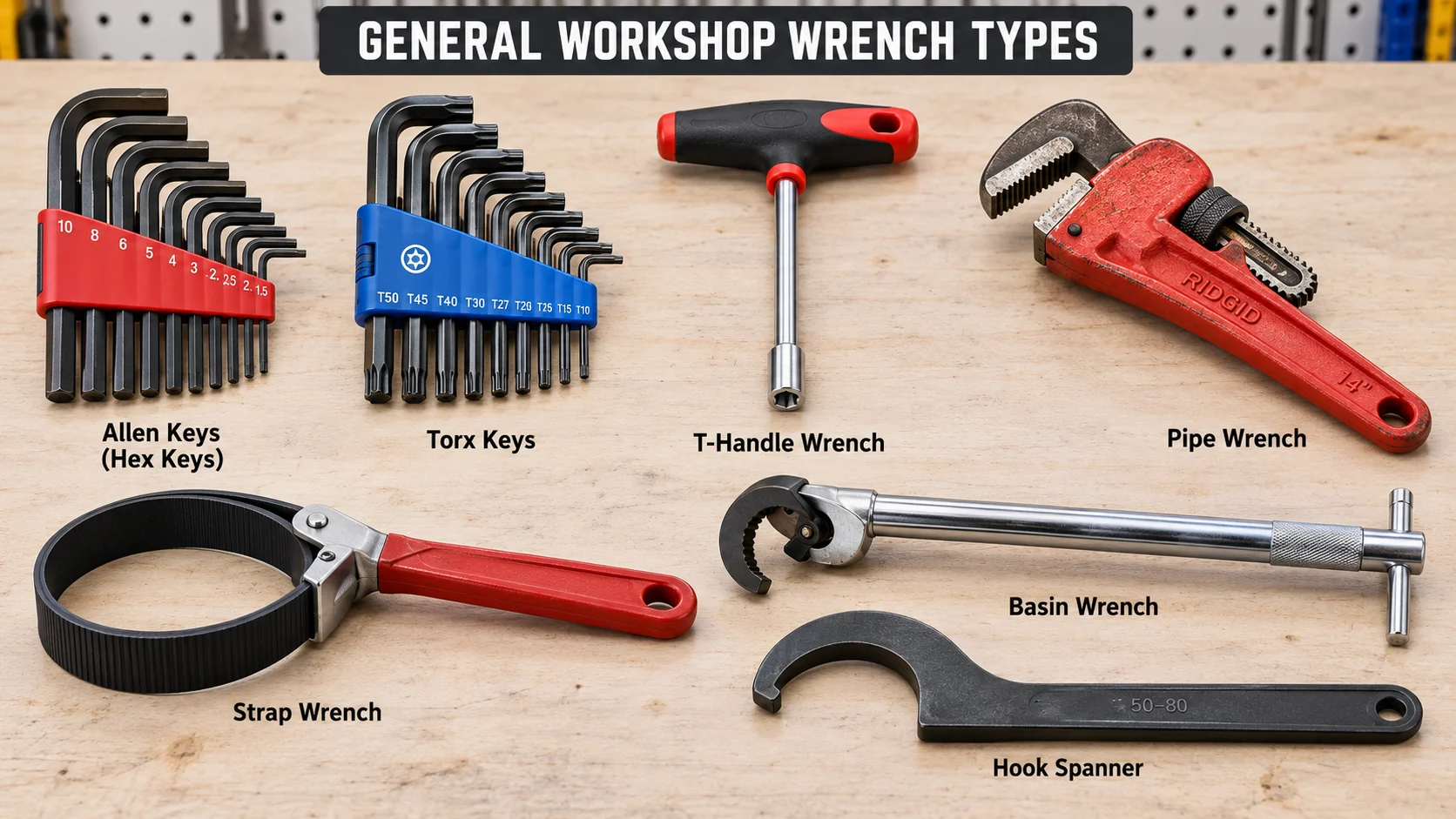
Hex-key Wrench (Allen Wrench)
A hex-key wrench has a six-sided profile that fits an internal hexagonal recess. L-shaped and straight designs are common.
Hex keys are available in metric and inch sizes, and using an almost-fitting key can damage the recess.
Automotive use: Compatible accessory screws, internal-hex fasteners, and selected equipment adjustments.
Torx-key Wrench
A Torx key engages a six-lobed internal Torx recess. Torx sizes use designated markings such as T20, T25, or T30, with the correct size determined by the fastener.
Torx tools are common across automotive components, equipment housings, and various accessories.
Automotive use: Compatible trim fasteners, brackets, and service components.
Tip: Standard Torx, security Torx, and external Torx are different interfaces. Use the correct tool type.
T-handle Wrench
A T-handle wrench has a transverse handle that provides a comfortable grip and improved control during repeated turning.
T-handle tools can use hex, Torx, socket, or other compatible tips. The handle shape is therefore a configuration rather than one specific fastener interface.
Automotive use: Accessible hex or Torx screws and selected repetitive maintenance tasks.
Pipe Wrench
A pipe wrench uses adjustable serrated jaws designed to grip suitable round metal pipe and fittings.
Its tooth design can bite into the surface, making it unsuitable for many finished, precision-machined, or delicate automotive components.
Workshop use: General pipe and utility-system maintenance rather than ordinary vehicle nuts and bolts.
Strap Wrench
A strap wrench uses a flexible strap that wraps around a cylindrical object. It distributes gripping force over a broad surface, potentially reducing marking compared with serrated jaws.
The suitability of a strap wrench depends on the material, surface condition, torque required, and tool design.
Automotive use: Selected compatible cylindrical components, including some filter-removal applications.
Basin Wrench
A basin wrench has a long shaft and pivoting jaw mechanism designed to reach plumbing nuts in confined spaces beneath fixtures.
It is a specialized plumbing tool rather than an essential automotive wrench.
Workshop use: Sink and utility fixture maintenance in a garage or service facility.
Hook Spanner
A hook spanner has a shaped hook or lug that engages a notch or slot in a compatible round retaining ring or adjustment collar.
Different hook-spanner designs suit different ring diameters and engagement features.
Automotive use: Certain threaded adjustment collars, suspension-related adjustment hardware, and specialized machinery components when specified.
Limitation: Follow the component manufacturer’s procedure and use the correct spanner geometry.
Comparison Table: All 25 Wrench Types and Their Uses
This quick-reference table summarizes how each wrench works and whether it is generally useful for everyday automotive repairs or a more specialized task.
| # | Wrench | Design | Typical Application | Category |
|---|---|---|---|---|
| 1 | Open-end | Two jaws | Accessible nuts | General |
| 2 | Box-end | Enclosed ring | Secure fastener engagement | General |
| 3 | Combination | Open and box heads | Everyday vehicle service | General |
| 4 | Ratcheting combination | Ratcheting ring | Repeated turning | General |
| 5 | Adjustable | Movable jaw | Suitable variable-size fittings | General |
| 6 | Stubby | Short handle | Limited clearance | Access |
| 7 | Offset | Bent head or handle | Recessed fasteners | Access |
| 8 | Flex-head | Pivoting head | Awkward approach angles | Access |
| 9 | Flare-nut | Slotted ring | Suitable tubing fittings | Specialty |
| 10 | Crowfoot | Drive-mounted head | Restricted access | Specialty |
| 11 | Torque | Torque-setting mechanism | Specified tightening | Precision |
| 12 | Breaker bar | Long socket-drive handle | High-leverage loosening | Specialty |
| 13 | Socket wrench | Interchangeable sockets | General fasteners | General |
| 14 | Lug wrench | Wheel-fastener head | Wheel service | Automotive |
| 15 | Spark-plug | Deep plug engagement | Ignition service | Automotive |
| 16 | Oil-filter | Filter-gripping head | Oil-filter service | Automotive |
| 17 | Fan-clutch | Specialized thin head | Applicable cooling fans | Automotive |
| 18 | Brake-bleeder | Small fitting engagement | Brake hydraulic service | Automotive |
| 19 | Hex-key | Internal hex tip | Hex-socket screws | General |
| 20 | Torx-key | Six-lobed tip | Torx screws | General |
| 21 | T-handle | T-shaped grip | Repeated turning | General |
| 22 | Pipe | Serrated jaws | Pipework | Specialty |
| 23 | Strap | Flexible gripping strap | Cylindrical components | Specialty |
| 24 | Basin | Long pivoting jaw | Plumbing fixtures | Specialty |
| 25 | Hook spanner | Hooked engagement | Slotted collars | Specialty |
Metric vs. SAE Wrenches: What’s the Difference?
Wrench sizing is just as important as wrench type. A wrench that nearly fits can still damage a fastener if the engagement is loose.
Metric wrenches are labeled in millimeters, such as 10 mm, 13 mm, or 17 mm. SAE wrenches commonly use inch-based measurements, such as 3/8 inch, 1/2 inch, and 9/16 inch.
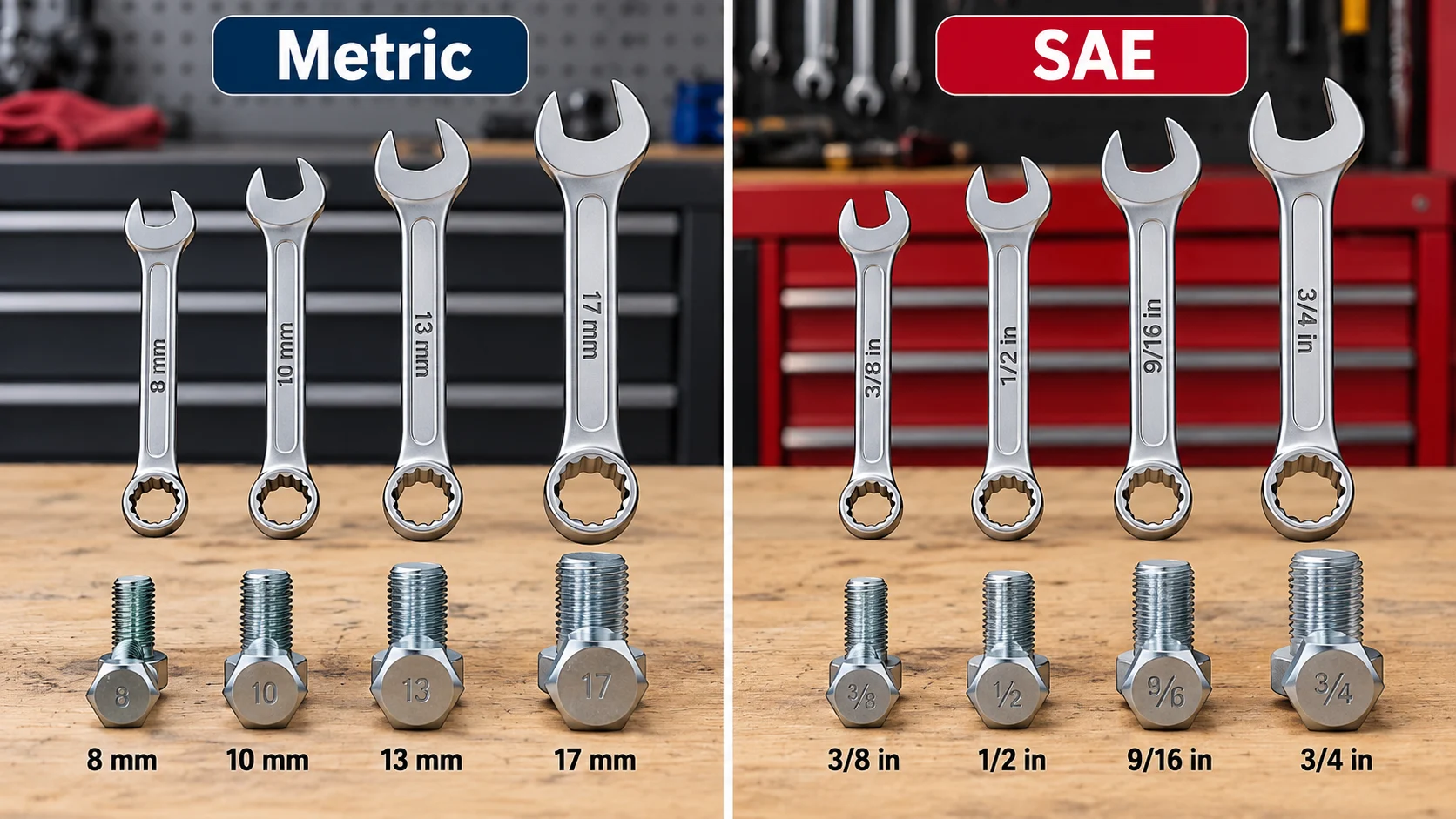
| Feature | Metric | SAE |
|---|---|---|
| Unit | Millimeter | Inch |
| Example markings | 10 mm, 13 mm, 17 mm | 3/8 in, 1/2 in, 9/16 in |
| Common applications | Many modern vehicles | Selected vehicles and equipment |
| Selection rule | Match exact fastener dimension | Match exact fastener dimension |
Can You Use Metric and SAE Wrenches Interchangeably?
Not as a general rule. Some sizes are close enough to appear interchangeable, but a loose fit can increase rounding risk.
Choose the exact tool size recommended for the fastener. If a nut or bolt head is damaged or corroded, use an appropriate removal procedure rather than forcing an almost-fitting wrench.
6-Point vs. 12-Point Wrenches: Which Is Better?
Many enclosed wrenches and sockets have either six-point or twelve-point internal profiles. These describe the engagement geometry inside the tool head.
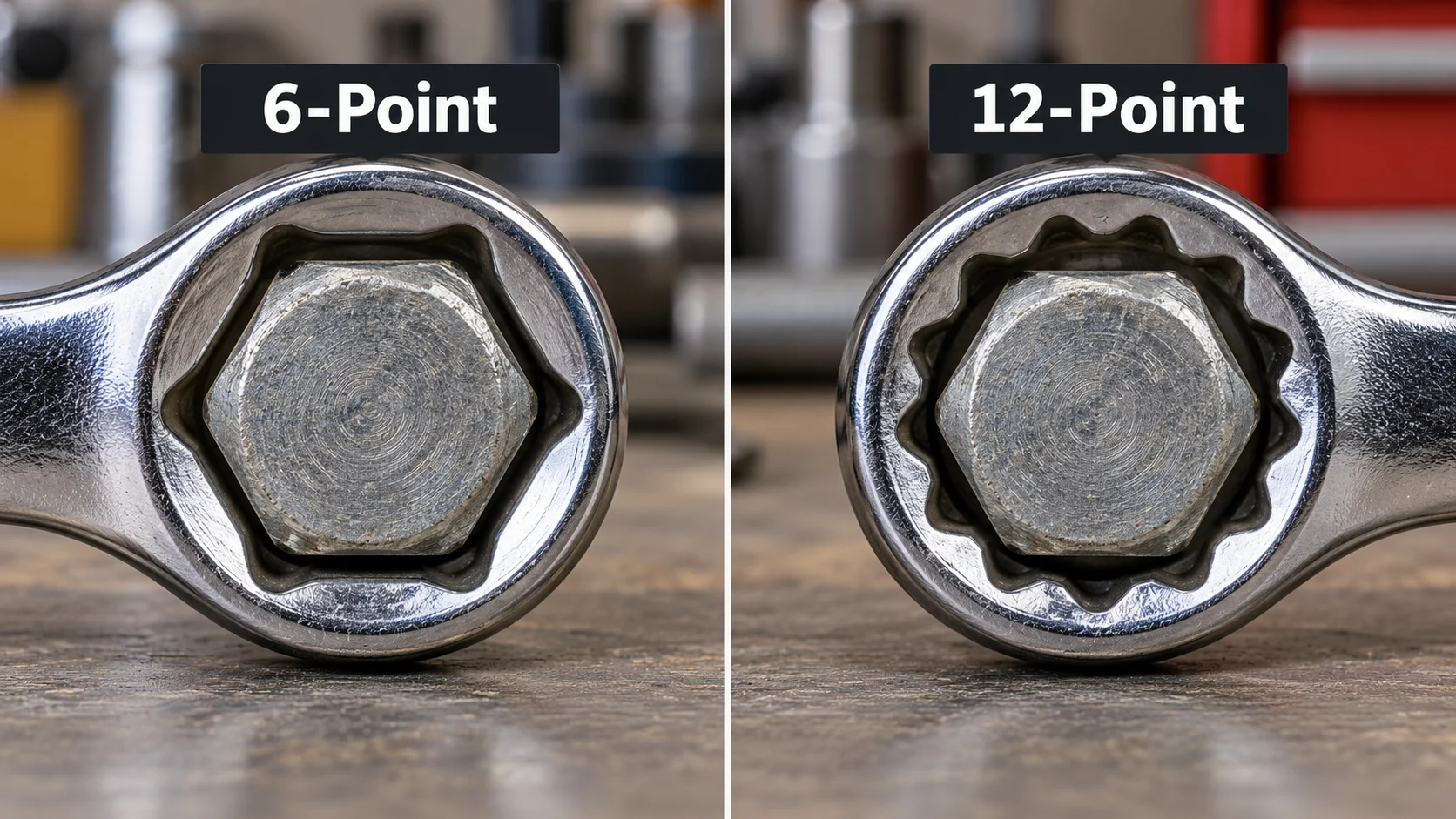
| Feature | 6-Point | 12-Point |
|---|---|---|
| Internal geometry | Six-point | Twelve-point |
| Engagement positions | Fewer | More |
| High-load hex fasteners | Often preferred | Depends on tool design and fit |
| Tight swing access | May require more repositioning | Can be advantageous |
| Fastener compatibility | Suitable hex fasteners | Suitable hex and applicable 12-point fasteners |
Which Should You Use on Stubborn Bolts?
For a conventional six-sided fastener under substantial load, a correctly fitting, quality six-point tool is often a good starting choice.
However, fastener condition, manufacturing tolerances, tool wear, and engagement design also affect the outcome. A twelve-point tool is not automatically unsafe, and some fasteners require a twelve-point design.
Find the Right Wrench for Your Automotive Repair
Select a common repair task below to see a recommended starting wrench category and an important consideration before beginning.
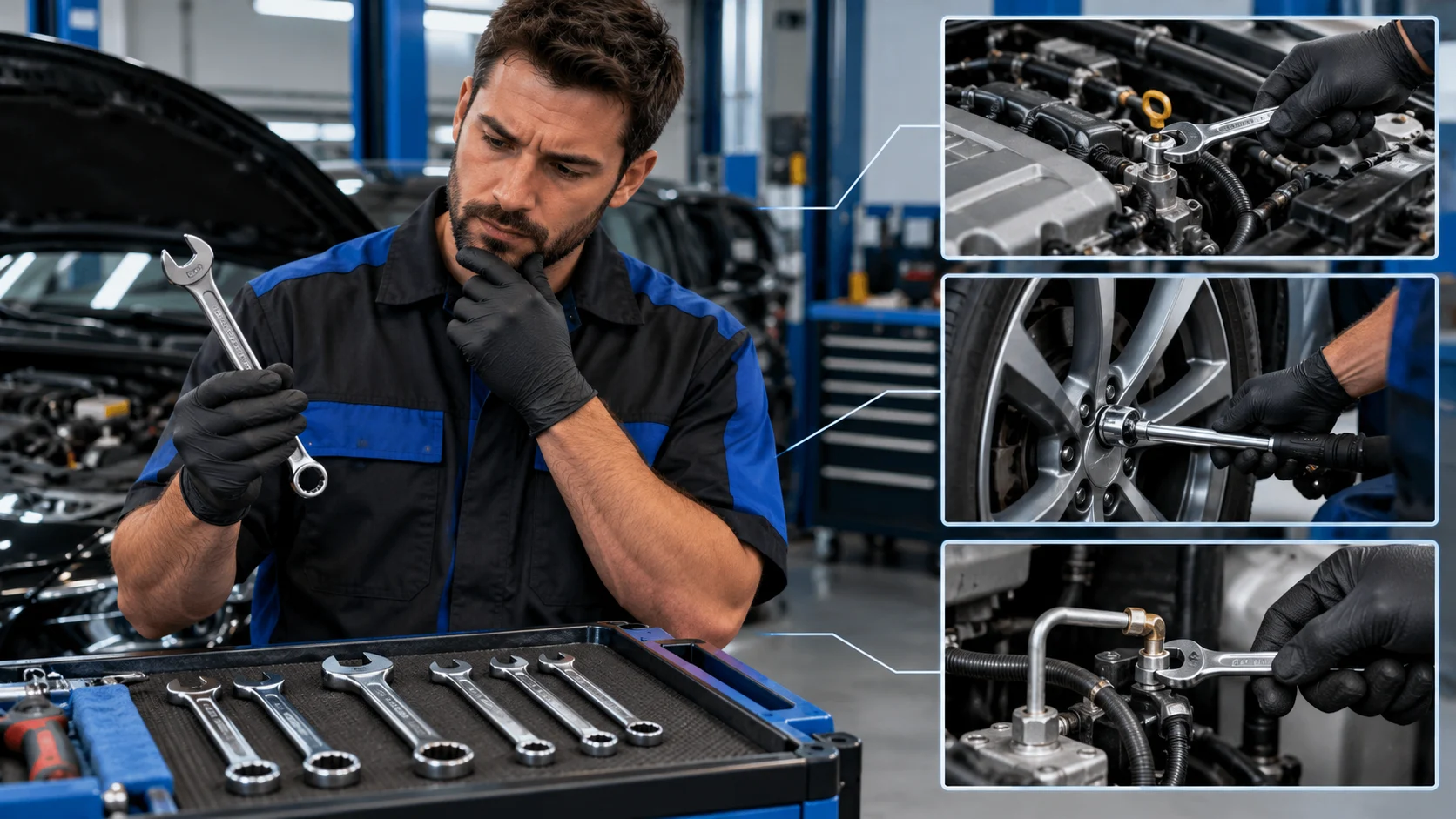
Combination Wrench or Socket Wrench
For ordinary accessible nuts and bolts, use a correctly fitting combination wrench or socket. Choose the head shape based on clearance and fastener condition.
Important: The tool must fit fully and securely before force is applied.
Important: This selector offers general tool categories, not vehicle-specific repair instructions. Verify the fastener size, tool compatibility, and manufacturer’s service procedure.
Common Wrench Mistakes That Damage Fasteners
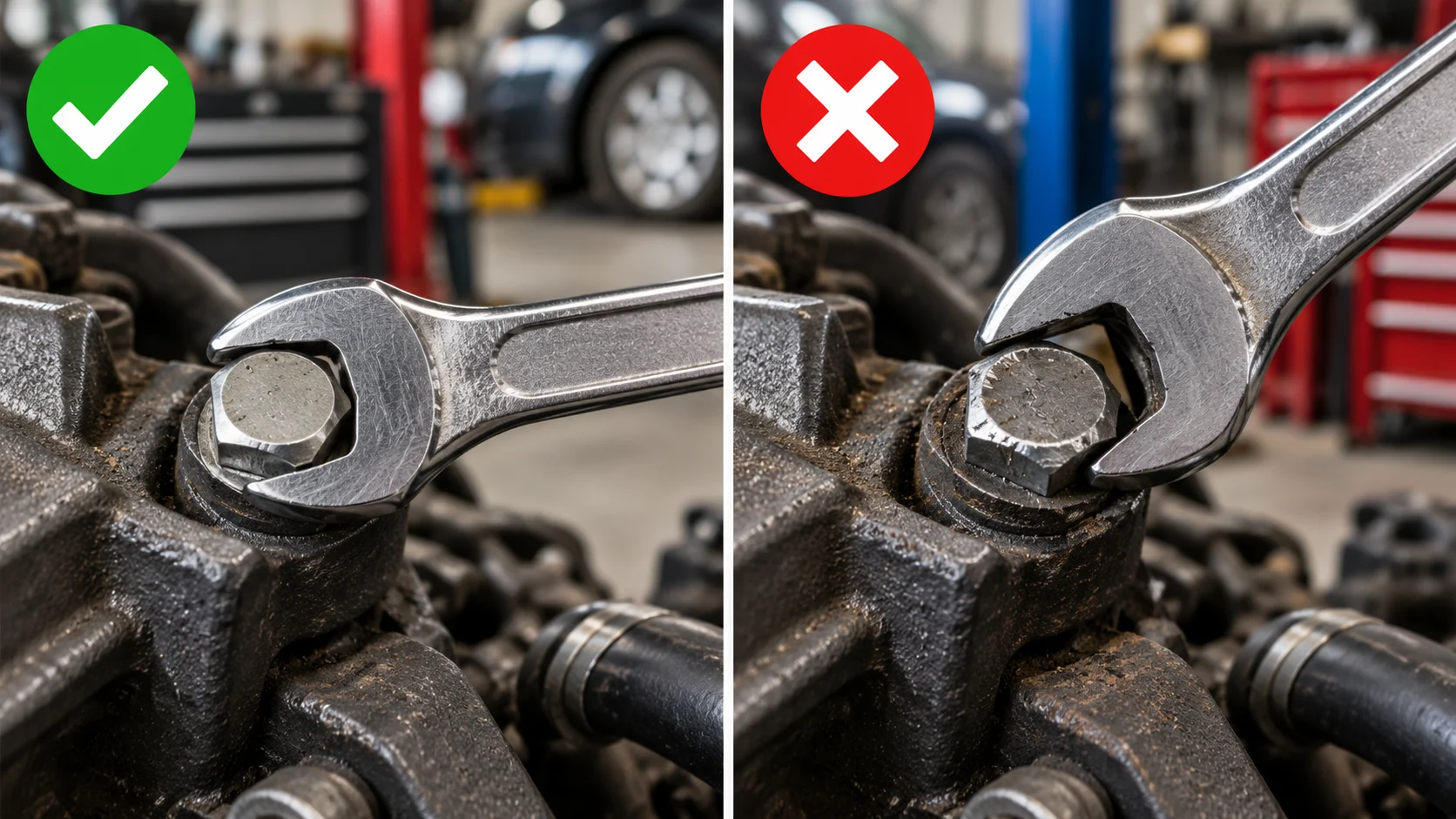
Even a good wrench can damage a fastener if it is used incorrectly. Proper size, full engagement, controlled force, and the correct service procedure matter.
| Mistake | Possible Result | Better Approach |
|---|---|---|
| Wrong wrench size | Rounded fastener | Use the exact fitting size |
| Partial engagement | Slipping or wrench movement | Seat the tool fully |
| Loose adjustable jaw | Jaw slip and damaged flats | Adjust firmly or use a fixed-size wrench |
| Excessive force | Broken tool or fastener | Follow an appropriate loosening procedure |
| Using a torque wrench for uncontrolled loosening | Possible tool damage or accuracy concerns | Use an appropriate loosening tool |
| Ignoring damaged fasteners | Further rounding or breakage | Inspect and select a proper removal method |
| Guessing tightening torque | Incorrect clamping force | Use applicable specifications and procedures |
How Can You Avoid Rounding a Bolt?
Start by cleaning the fastener head where appropriate and identifying its actual size and shape. Select a quality wrench or socket that fits securely.
Use full engagement, maintain control of the handle, and avoid applying sideways forces that encourage the tool to slip off.
If the fastener is already rounded or severely corroded, stop and consider a proper extraction method instead of repeatedly forcing the wrench.
Automotive safety: Brake, steering, suspension, and wheel-fastener work can be safety-critical. Follow applicable service instructions, support vehicles properly, and never guess required torque or tightening sequence.
Which Wrenches Should a Beginner Buy First?
You do not need all 25 wrench types on your first day of automotive maintenance. A good starter collection should cover the fasteners on your vehicle and expand as your repair work becomes more advanced.
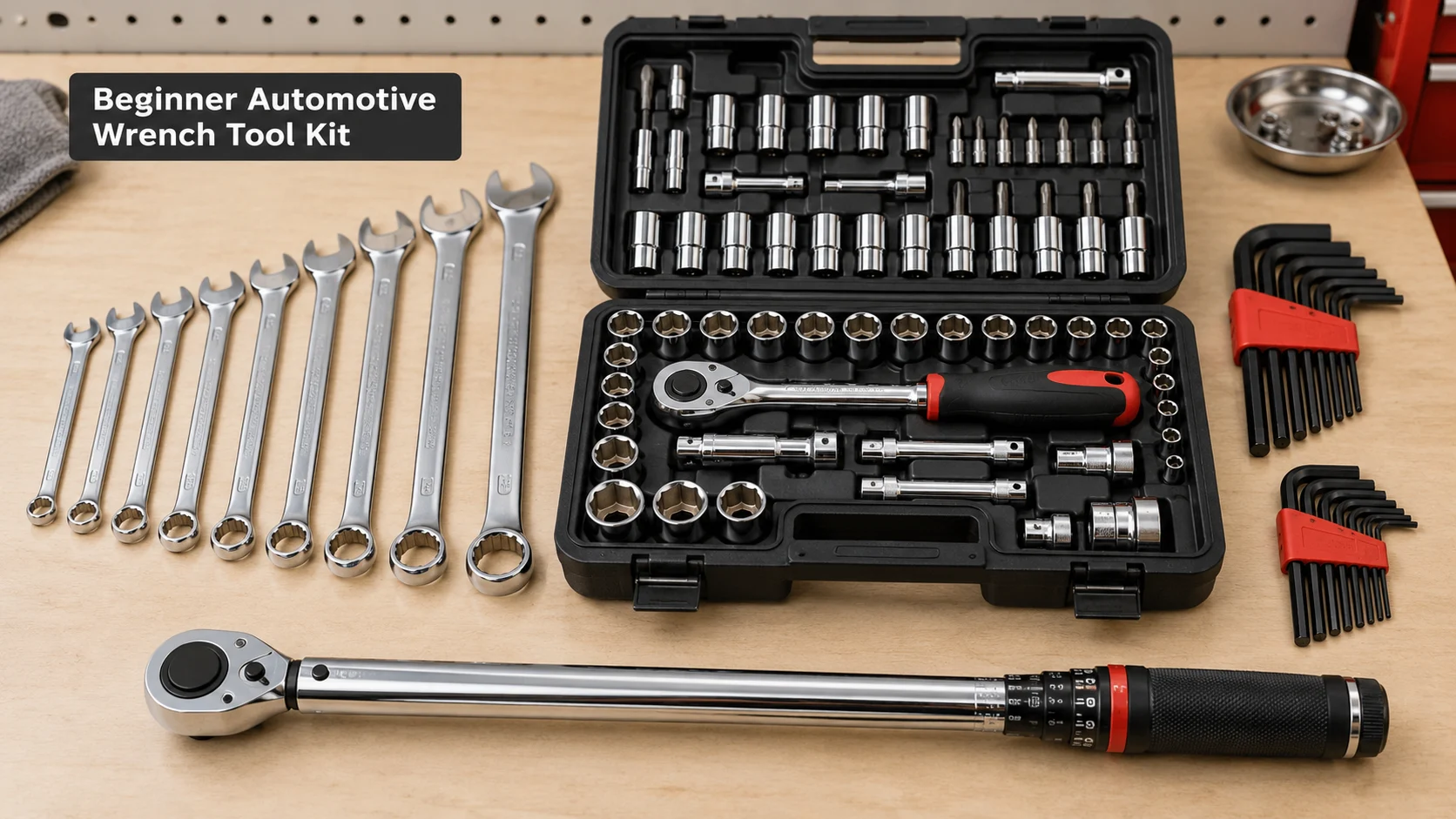
Starter Toolkit
Begin with suitable metric and/or SAE combination wrenches, a compatible socket set, and commonly needed hex and Torx tools.
Growing DIY Toolkit
Add ratcheting wrenches, a suitable breaker bar, and a calibrated torque wrench appropriate to your vehicle’s service tasks.
Specialized Tools
Purchase flare-nut, crowfoot, oil-filter, spark-plug, and other specialty tools when your planned work requires them.
What Should You Consider Before Buying?
Look for accurate sizing, proper fastener engagement, clear markings, appropriate load ratings, comfortable handling, and reliable manufacturer support.
Also consider storage and access. A compact wrench set that fits neatly in a home garage is often more useful than an oversized collection containing rarely needed specialty tools.
Are Metric Wrenches Enough for Most Cars?
Metric fasteners are common in many modern vehicles, but some vehicles and equipment use inch-based fittings or a mixture of systems.
Inspect the specific vehicle and planned service procedures before deciding which sizes are necessary.
Buying recommendation: Start with the fasteners and tasks you actually encounter. Expand with specialized tools only when a job makes their benefit clear.
Frequently Asked Questions About Wrench Types
What are the most common types of wrenches?
Common types include open-end, box-end, combination, ratcheting, adjustable, torque, and socket wrenches. These cover many everyday mechanical tasks, while specialty wrenches serve specific fittings or access requirements.
What is the difference between a wrench and a spanner?
The terms vary by region. In American English, “wrench” is widely used for tools that turn nuts, bolts, and fittings. In British English, “spanner” is commonly used for many of the same tools. Exact usage depends on the tool and context.
What are wrenches used for in cars?
Wrenches are used to loosen or tighten compatible nuts, bolts, fittings, and adjustment components. Common automotive applications include engine maintenance, wheel service, bracket removal, fluid fittings, and specified torque procedures.
How many types of wrenches are there?
There is no single universally accepted number. Manufacturers produce many wrench families, head designs, handle configurations, and specialized applications. This guide covers 25 common or recognizable categories.
Which wrench should a beginner buy first?
A correctly sized combination wrench set is an excellent starting point because it combines open-end and box-end engagement. A suitable socket set is another highly useful addition for automotive maintenance.
What is the difference between a ratchet and a wrench?
A wrench is a broad category of fastener-turning tool. A ratchet is a mechanism that allows turning in one direction while the handle resets in the other. Ratcheting wrench heads and socket-wrench handles use this mechanism.
Is an adjustable wrench as good as a fixed-size wrench?
An adjustable wrench is versatile, but a correctly fitting fixed-size wrench often provides more consistent engagement. Adjustable jaw clearance can increase the chance of slipping when the tool is incorrectly fitted or heavily loaded.
Which wrench should I use to tighten lug nuts?
Use the correct socket or other approved tool for installation, then follow the vehicle manufacturer’s final tightening procedure and specified torque using a suitable calibrated torque wrench when required.
Are 6-point wrenches better than 12-point wrenches?
For many conventional hex fasteners under high load, a properly fitting six-point tool is often preferred. Twelve-point designs can offer more engagement positions and may be required for certain fasteners. Tool quality and correct fit also matter.
Can a torque wrench be used to loosen bolts?
Follow the torque-wrench manufacturer’s instructions. Many precision torque wrenches should not be used as general breaker bars. A suitable ratchet or breaker bar is generally the better choice for initial loosening.
About this guide: This article explains common wrench designs and typical automotive applications. It is an educational reference, not a hands-on performance test or a substitute for vehicle-specific repair information. Verify fastener sizes, tightening specifications, tool compatibility, and safety procedures using the relevant manufacturer documentation.
Types of Wrenches: How to Choose the Right Tool
Different types of wrenches exist because automotive fasteners vary in shape, size, access, and tightening requirements.
For everyday maintenance, a quality combination wrench set and suitable sockets handle many jobs. Ratcheting, offset, stubby, and flex-head wrenches improve access, while flare-nut, crowfoot, oil-filter, and other specialty wrenches address particular tasks.
A torque wrench is especially important when a service procedure requires controlled tightening.
Start with a practical wrench collection, select the exact tool for each fastener, and expand your toolbox as your repair experience grows. Proper wrench fit and correct service procedures matter more than owning the largest number of tools.